Kirjojen hintavertailu. Mukana 12 182 623 kirjaa ja 12 kauppaa.
Kirjailija
Sabrina P. Ramet
Kirjat ja teokset yhdessä paikassa: 36 kirjaa, julkaisuja vuosilta 1988-2025, suosituimpien joukossa Key Thinkers of the English, Scottish and American Enlightenments. Vertaile teosten hintoja ja tarkista saatavuus suomalaisista kirjakaupoista.
This groundbreaking treatment of post-communist developments in East Central Europe examines politics, economics, media, religious institutions, transitional justice, gender inequality, and literature, highlighting the overt functions, latent functions, and side effects associated with each sphere.Communism in East Central Europe had cracks from the beginning, as uprisings in East Germany in 1953 and Hungary in 1956 demonstrated. But with the establishment of the Independent Trade Union Solidarity in Poland in the Summer of 1980, communism went into steady decline and, between 1988 and 1991, crumbled. What followed has been an unsteady transition to various forms of often corrupt pluralism with democracy doing best in the Czech Republic (with the exception of the years 2017–2021) and Slovenia, and worst in Hungary, Albania, Serbia, and Bosnia-Herzegovina. Drawing on the functionalist theory of Robert K. Merton, the authors examine what policymakers – communist and post-communist – were or are trying to accomplish, the intended and unintended results of these policies, and the side-effects they have produced. This volume will be of interest not only to specialists in East Central Europe but also to graduate and undergraduate students, members of the diplomatic corps, and general readers.
This groundbreaking treatment of post-communist developments in East Central Europe examines politics, economics, media, religious institutions, transitional justice, gender inequality, and literature, highlighting the overt functions, latent functions, and side effects associated with each sphere.Communism in East Central Europe had cracks from the beginning, as uprisings in East Germany in 1953 and Hungary in 1956 demonstrated. But with the establishment of the Independent Trade Union Solidarity in Poland in the Summer of 1980, communism went into steady decline and, between 1988 and 1991, crumbled. What followed has been an unsteady transition to various forms of often corrupt pluralism with democracy doing best in the Czech Republic (with the exception of the years 2017–2021) and Slovenia, and worst in Hungary, Albania, Serbia, and Bosnia-Herzegovina. Drawing on the functionalist theory of Robert K. Merton, the authors examine what policymakers – communist and post-communist – were or are trying to accomplish, the intended and unintended results of these policies, and the side-effects they have produced. This volume will be of interest not only to specialists in East Central Europe but also to graduate and undergraduate students, members of the diplomatic corps, and general readers.
This book summarizes and explains the way in which political thinkers in England, Scotland, and North America reshaped Western thinking about government and citizens. Although the ideas of the Anglo-American Enlightenment can be traced back, in embryo, to the Italian Renaissance and the Protestant Reformation, it was responses to wars – the Thirty Years’ War (1618-1648) and the English Civil War (1642-1651) which were fought above all over religion – that defined it. Algernon Sidney demanded an end to royal absolutism. John Locke called for a government based on religious toleration. Benedictus de Spinoza, Samuel von Pufendorf and others elaborated on the ideas that society was composed of sovereign individuals endowed with reason and rights. Building on the works of these thinkers, Scottish philosophers including David Hume and Adam Smith, and American revolutionaries including Thomas Jefferson and James Madison advanced arguments defending human reason, individual freedom, including religious freedom, and democracy.
The communists of East Central Europe came to power promising to bring about genuine equality, paying special attention to achieving gender equality, to build up industry and create prosperous societies, and to use music, art, and literature to promote socialist ideals. Instead, they never succeeded in filling more than a third of their legislatures with women and were unable to make significant headway against entrenched patriarchal views; they considered it necessary (with the sole exception of Albania) to rely heavily on credits to build up their economies, eventually driving them into bankruptcy; and the effort to instrumentalize the arts ran aground in most of the region already by 1956, and, in Yugoslavia, by 1949. Communism was all about planning, control, and politicization. Except for Yugoslavia after 1949, the communists sought to plan and control not only politics and the economy, but also the media and information, religious organizations, culture, and the promotion of women, which they understood in the first place as involving putting women to work. Inspired by the groundbreaking work of Robert K. Merton on functionalist theory, this book shows how communist policies were repeatedly undermined by unintended consequences and outright dysfunctions.
The communists of East Central Europe came to power promising to bring about genuine equality, paying special attention to achieving gender equality, to build up industry and create prosperous societies, and to use music, art, and literature to promote socialist ideals. Instead, they never succeeded in filling more than a third of their legislatures with women and were unable to make significant headway against entrenched patriarchal views; they considered it necessary (with the sole exception of Albania) to rely heavily on credits to build up their economies, eventually driving them into bankruptcy; and the effort to instrumentalize the arts ran aground in most of the region already by 1956, and, in Yugoslavia, by 1949. Communism was all about planning, control, and politicization. Except for Yugoslavia after 1949, the communists sought to plan and control not only politics and the economy, but also the media and information, religious organizations, culture, and the promotion of women, which they understood in the first place as involving putting women to work. Inspired by the groundbreaking work of Robert K. Merton on functionalist theory, this book shows how communist policies were repeatedly undermined by unintended consequences and outright dysfunctions.
“This book brings fresh light to previously marginalized subject in German history. It is an original approach, up-to-date written without scholarly jargon, easily accessible to students, both at undergraduate and graduate. It is highly focused departing from the usual “histories” of a single country arguing for the “two German states”, and the three political systems.”- Prof. Dr. László Kürti, Institute of Applied Social Sciences, University of Miskolc, HungaryThis book contrasts three very different incarnations of Germany – the totalitarian Third Reich, the communist German Democratic Republic, and the democratic Federal Republic of Germany up to 1990 – in terms of their experiences with and responses to nonconformity, dissent, opposition, and resistance and the role played by those factors in each case. Although even innocent nonconformity came with a price in all three systems and in the post-war occupation zones, the price was the highest in Nazi Germany. . It is worth stressing that what qualifies as nonconformity and dissent depends on the social and political context and, thus, changes over time. Like those in active dissent, opposition, or resistance, nonconformists are rebels (whether they are conscious of it or not), and have repeatedly played a role in pushing for change, whether through reform of legislation, transformation of the public’s attitudes, or even regime change.
“This book brings fresh light to previously marginalized subject in German history. It is an original approach, up-to-date written without scholarly jargon, easily accessible to students, both at undergraduate and graduate. It is highly focused departing from the usual “histories” of a single country arguing for the “two German states”, and the three political systems.”- Prof. Dr. László Kürti, Institute of Applied Social Sciences, University of Miskolc, HungaryThis book contrasts three very different incarnations of Germany – the totalitarian Third Reich, the communist German Democratic Republic, and the democratic Federal Republic of Germany up to 1990 – in terms of their experiences with and responses to nonconformity, dissent, opposition, and resistance and the role played by those factors in each case. Although even innocent nonconformity came with a price in all three systems and in the post-war occupation zones, the price was the highest in Nazi Germany. . It is worth stressing that what qualifies as nonconformity and dissent depends on the social and political context and, thus, changes over time. Like those in active dissent, opposition, or resistance, nonconformists are rebels (whether they are conscious of it or not), and have repeatedly played a role in pushing for change, whether through reform of legislation, transformation of the public’s attitudes, or even regime change.
"What do Mao's Cockroach, a stuffed Jeremy Bentham, an ode to a semi-colon, and a rabbit in someone's brain all have in common? They all come from the wonderful and imaginative mind of Sabrina Ramet The Earth is a Spaceship reprints some of Sabrina's finest poetry from nearly 20 years of published verse, most of it in rhymed meter. This selection of hilarious poetry puts the world to right by posing the crucial question 'Were Adam and Eve really married', and continuing with such verses as 'You cannot be right against the party, or Trotsky agreed with himself', and musings on the theme 'If the mayor were a pigeon'. This collection brings together some of her material from her five previous collections of absurdist verse, demonstrating once again that Sabrina Ramet is nothing short of a comic genius." --Dave Collins, Assistant Professor, Department of Architecture and Planning, NTNU."Ribald and irreverent, Sabrina P. Ramet's new verse menagerie is a brilliant excursion into the depths of the absurd, with unexpected humor at every turn, as she romps through such subjects as religion, politics, world history, literature, and mental health. The lyrics of this collection are in many cases set to popular music from the twentieth century. Personal favorites include "Church-run brothels" (based on actual historical fact) set to the tune of "Happy Days Are Here Again " ("Church-run brothels in your town - / they banish sadness and your frown"), "The Mayan Calendar" sung to the tune of 1960s television program "Rawhide," and--another favorite--an address by an unnamed ordinary citizen to his mother, "O mamma, are you a virgin?" sung as a blues song. This collection provoked abundant smiles and uncontrollable guffaws." --David Hahn, composer of the opera Attack of the Trumpanzees and other musical works.
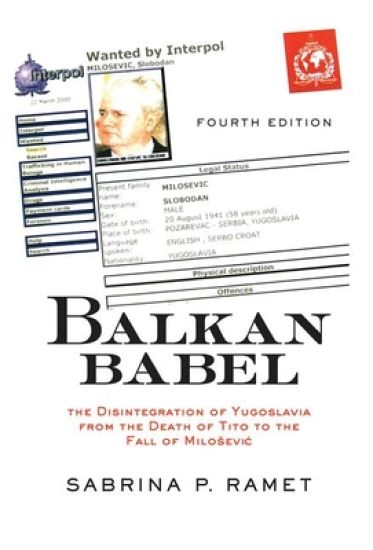
The fourth edition of this critically acclaimed work includes a new chapter, a new epilogue, and revisions throughout the book. Sabrina Ramet, a veteran observer of the Yugoslav scene, traces the steady deterioration of Yugoslavia's political and social fabric in the years since 1980, arguing that, while the federal system and multiethnic fabric la
Alternatives to Democracy in Twentieth-Century Europe: Collectivist Visions of Modernity, examines the historical examples of Soviet Communism, Italian Fascism, German Nazism, and Spanish Anarchism, suggesting that, in spite of their differences, they had some key features in common, in particular their shared hostility to individualism, representative government, laissez faire capitalism, and the decadence they associated with modern culture. But rather than seeking to return to earlier ways of working these movements and regimes sought to design a new future – an alternative future – that would restore the nation to spiritual and political health. The Fascists, for their part, specifically promoted palingenesis, which is to say the spiritual rebirth of the nation. The book closes with a long epilogue, in which I defend liberal democracy, highlighting its strengths and advantages. In this chapter, the author identifies five key choke points, which would-be authoritarians typically seek to control, subvert, or instrumentalize: electoral rules, the judiciary, the media, hate speech, and surveillance, and look at the cases of Viktor Orbán’s Hungary, Jaroslaw Kaczynski’s Poland, and Donald Trump’s United States.
Alternatives to Democracy in Twentieth-Century Europe: Collectivist Visions of Modernity, examines the historical examples of Soviet Communism, Italian Fascism, German Nazism, and Spanish Anarchism, suggesting that, in spite of their differences, they had some key features in common, in particular their shared hostility to individualism, representative government, laissez faire capitalism, and the decadence they associated with modern culture. But rather than seeking to return to earlier ways of working these movements and regimes sought to design a new future – an alternative future – that would restore the nation to spiritual and political health. The Fascists, for their part, specifically promoted palingenesis, which is to say the spiritual rebirth of the nation. The book closes with a long epilogue, in which I defend liberal democracy, highlighting its strengths and advantages. In this chapter, the author identifies five key choke points, which would-be authoritarians typically seek to control, subvert, or instrumentalize: electoral rules, the judiciary, the media, hate speech, and surveillance, and look at the cases of Viktor Orbán’s Hungary, Jaroslaw Kaczynski’s Poland, and Donald Trump’s United States.
The book chronicles the evolution of the church's political power throughout Poland's unique history. Beginning in the tenth century, the study first details how Catholicism overcame early challenges in Poland, from converting the early polytheists to pushing back the Protestant Reformation half a millennium later. It continues into the dawn of the modern age—including the division of Poland between Prussia, Russia, and Austria between 1772 and 1795, the interwar years, the National Socialist occupation of World War Two, and the communist and post-war communist eras—during which The Church only half-correctly presented itself as a steadfast protector of Poles, with clergy members who either stood up to foreign authorities or collaborated with those same Nazi and Communist leaders. This study ends with a consideration of how the Church has taken advantage of the fall of communism to push its own social agenda, at times against the wishes of most Poles.
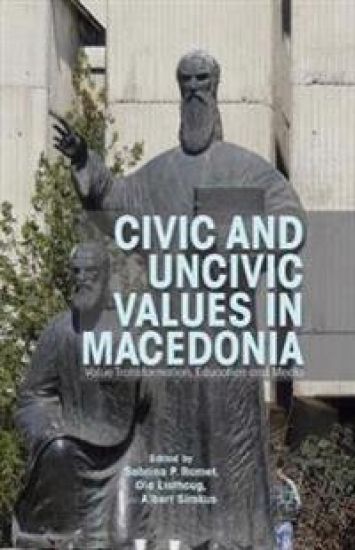
One of the central challenges facing Macedonia, along with other Yugoslav successor states, is to develop civic values and to combat such uncivic values as ethnic intolerance, religious bigotry, and homophobia. This volume brings together specialists in Macedonian affairs to offer insights into the experiences and values of the Macedonians.
One of the central challenges facing Macedonia, along with other Yugoslav successor states, is to develop civic values and to combat such uncivic values as ethnic intolerance, religious bigotry, and homophobia. This volume brings together specialists in Macedonian affairs to offer insights into the experiences and values of the Macedonians.
A valuable and objective reassessment of the role of Serbia and Serbs in WWII. Today, Serbian textbooks praise the Chetniks of Draža MIhailovi? and make excuses for the collaboration of Milan Nedi?'s regime with the Axis. However, this new evaluation shows the more complex and controversial nature of the political alliances during the period.