Kirjojen hintavertailu. Mukana 12 390 323 kirjaa ja 12 kauppaa.

Kirjailija

Sabu Thomas

Kirjat ja teokset yhdessä paikassa: 22 kirjaa, julkaisuja vuosilta 2011-2026, suosituimpien joukossa Holistic Healthcare. Vertaile teosten hintoja ja tarkista saatavuus suomalaisista kirjakaupoista.

22 kirjaa

Kirjojen julkaisuhaarukka 2011-2026.

Holistic Healthcare

Holistic Healthcare

Anne George; Snigdha S. Babu; M. P. Ajithkumar; Sabu Thomas

Apple Academic Press Inc.
2021
nidottu
Here is an insightful compilation of contributions from scientists, healthcare experts, and doctors working actively to bring about wholesome healing to individuals, looking at cuttingedge holistic therapies. It includes chapters that deal with improving the general health of people from various walks of life, to treating some very challenging diseases. Various schools of treatments, exercise regimes, and meditations are discussed. Specific topics include the use of alternative therapy for human health and healing, including yoga, meditation, acupuncture, prayer, herbs, Ayurvedic treatment, and homoeopathy. The volume showcases some recent trends in treating various diseases that plague mankind, including superbugs, drug sideeffects, drug abuse, and myriad lifestyle-related diseases and syndromes.

Holistic Healthcare

Holistic Healthcare

Anne George; Snigdha S. Babu; M. P. Ajithkumar; Sabu Thomas

Apple Academic Press Inc.
2019
sidottu
Here is an insightful compilation of contributions from scientists, healthcare experts, and doctors working actively to bring about wholesome healing to individuals, looking at cuttingedge holistic therapies. It includes chapters that deal with improving the general health of people from various walks of life, to treating some very challenging diseases. Various schools of treatments, exercise regimes, and meditations are discussed. Specific topics include the use of alternative therapy for human health and healing, including yoga, meditation, acupuncture, prayer, herbs, Ayurvedic treatment, and homoeopathy. The volume showcases some recent trends in treating various diseases that plague mankind, including superbugs, drug sideeffects, drug abuse, and myriad lifestyle-related diseases and syndromes.

Micro- and Nano-Structured Interpenetrating Polymer Networks

Micro- and Nano-Structured Interpenetrating Polymer Networks

Sabu Thomas; Daniel Grande; Uros Cvelbar; K. V. S. N. Raju; Ramanuj Narayan; Selvin P. Thomas; Akhina H.

John Wiley Sons Inc
2016
sidottu
This book examines the current state of the art, new challenges, opportunities, and applications of IPNs. With contributions from experts across the globe, this survey is an outstanding resource reference for anyone involved in the field of polymer materials design for advanced technologies. • Comprehensively summarizes many of the recent technical research accomplishments in the area of micro and nanostructured Interpenetrating Polymer Networks• Discusses various aspects of synthesis, characterization, structure, morphology, modelling, properties, and applications of IPNs• Describes how nano-structured IPNs correlate their multiscale structure to their properties and morphologies• Serves as a one-stop reference resource for important research accomplishments in the area of IPNs and nano-structured polymer systems• Includes chapters from leading researchers in the IPN field from industry, academy, government and private research institutions
Ultrathin Polymer Films

Ultrathin Polymer Films

Sabu Thomas; Jayanta Kumar Bal

Elsevier - Health Sciences Division
2026
nidottu
Ultrathin Polymer Films: Confinement Effects and Structural Properties brings together cutting-edge research into polymeric ultrathin films below 100nm, covering preparation, characterization, measurement of structural properties, and applications. The book begins by introducing polymer confinement and anomalous behavior, and then describes the latest techniques for the preparation and characterization of ultrathin film. Subsequent chapters provide detailed, methodical coverage of the various steps and key factors in the process, especially relating to properties, including glass transition behavior, density variation, dewetting and stability, effect of supercritical carbon dioxide, relaxation of the swollen polymer, and the structure and swelling of block copolymer thin films. Throughout the book, the authors address the existing discrepancies and challenges relating to the effect of confinement on structural properties and their measurement, and aim to guide the reader towards novel applications. This is a valuable resource for researchers and advanced students in polymer science, polymer chemistry, nanotechnology, materials science, and chemical engineering, as well as for engineers, scientists, and R&D professionals with an interest polymer-based ultrathin films for industrial applications.
Mathematical Property Models in Polymer Composite Materials

Mathematical Property Models in Polymer Composite Materials

Sabu Thomas; Ajay Vasudeo Rane; Abitha Vayyaprontavida Kaliyathan; Krishnan Kanny

ELSEVIER SCIENCE PUBLISHING CO INC
2025
nidottu
Mathematical Property Models in Polymer Composite Materials covers the various challenges for new property combinations and how these challenges can use fillers with different characteristics as reinforcements. Predictive calculations for structural and functional properties are often ignored. Consequently, the efforts for development of a product rely on an empirical approach to see what works. The gap between research and practice is still wide and needs to be narrowed. This book with its emphasis on Predictive estimations of properties will narrow that gap between research and practice. This book will be the first of its kind to detail the application and use of mathematical property models for estimating the properties of polymer composite materials.
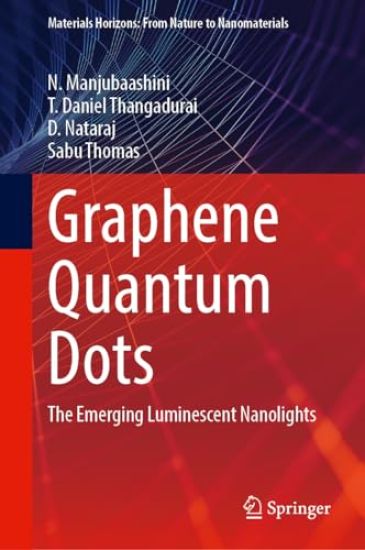
Graphene Quantum Dots

Graphene Quantum Dots

N. Manjubaashini; T. Daniel Thangadurai; D. Nataraj; Sabu Thomas

SPRINGER VERLAG, SINGAPORE
2024
sidottu
This book explores various unique characteristics of graphene quantum dots and their potential applications in a variety of fields. It provides an in-depth investigation of the present state of the art in graphene quantum dots, composites, hybrid structures, and other related topics. Various topics covered in this book are synthesis and characterization of graphene quantum dots, modelling and simulation, nanoscale applications nanosensors, bio-nanosensors, energy applications, industrial applications, healthcare applications, textile applications, and many more. Given the contents, this book is highly useful for material scientists and also the researchers and professionals in the areas of chemistry and physics.
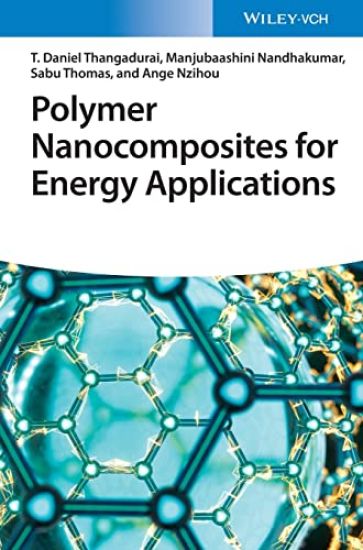
Polymer Nanocomposites for Energy Applications

Polymer Nanocomposites for Energy Applications

T. Daniel Thangadurai; Manjubaashini Nandhakumar; Sabu Thomas; Ange Nzihou

Wiley-VCH Verlag GmbH
2022
sidottu
Polymer Nanocomposites for Energy Applications Explore the science of polymer nanocomposites and their practical use in energy applications In Polymer Nanocomposites for Energy Applications, a team of distinguished researchers delivers a comprehensive review of the synthesis and characterization of polymer nanocomposites, as well as their applications in the field of energy. Succinct and insightful, the book explores the storage of electrical, magnetic, and thermal energy and hydrogen. It also discusses energy generation by polymer-based solar cells. Finally, the authors present a life cycle analysis of polymer nanocomposites for energy applications and provide four real-world case studies where these materials have been successfully used. Readers will also find: Thorough introductions to the origins and synthesis of polymer materials In-depth discussions of the characterization of polymeric materials, including UV-visible spectroscopy Comprehensive explorations of a wide variety of polymer material applications, including in biotechnology and for soil remediation Fulsome presentations of polymer nanocomposites and their use in energy storage systems Perfect for materials and engineering scientists and polymer chemists, Polymer Nanocomposites for Energy Applications will also earn a place in the libraries of professionals working in the chemical industry.
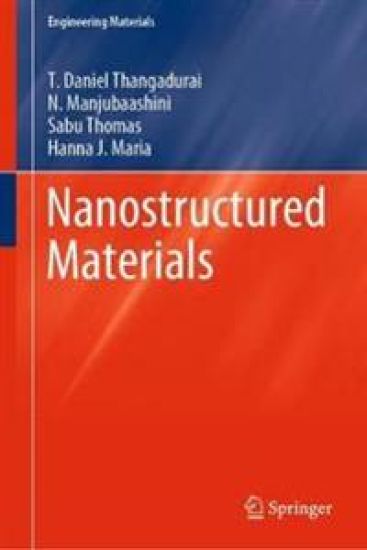
Nanostructured Materials

Nanostructured Materials

T. Daniel Thangadurai; N. Manjubaashini; Sabu Thomas; Hanna J. Maria

Springer Nature Switzerland AG
2021
nidottu
This book discusses the early stages of the development of nanostructures, including synthesis techniques, growth mechanisms, the physics and chemistry of nanostructured materials, various innovative characterization techniques, the need for functionalization and different functionalization methods as well as the various properties of nanostructured materials. It focuses on the applications of nanostructured materials, such as mechanical applications, nanoelectronics and microelectronic devices, nano-optics, nanophotonics and nano-optoelectronics, as well as piezoelectric, agriculture, biomedical and, environmental remediation applications, and anti-microbial and antibacterial properties. Further, it includes a chapter on nanomaterial research developments, highlighting work on the life-cycle analysis of nanostructured materials and toxicity aspects.
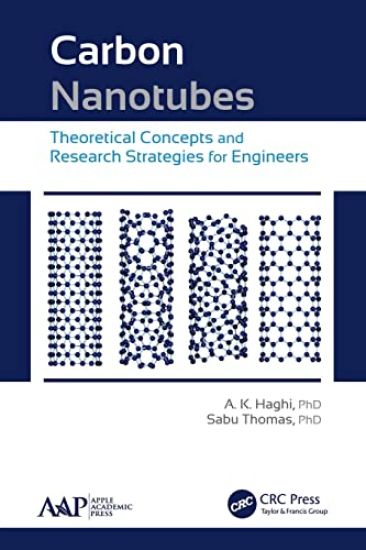
Carbon Nanotubes

Carbon Nanotubes

A. K. Haghi; Sabu Thomas

Apple Academic Press Inc.
2021
nidottu
This book presents the diversity of recent advances in carbon nanotubes from a broad perspective that will be useful for scientists as well as for graduate students and engineers. Presenting leading-edge research in this dynamic field, this volume is an introduction to the physical concepts needed for investigating carbon nanotubes and other one-dimensional solid-state systems. Written for a wide scientific readership, each chapter consists of an instructive approach to the topic and sustainable ideas for solutions. Carbon nanotubes, with their extraordinary mechanical and unique electronic properties, have garnered much attention in recent years. With a broad range of potential applications, including nanoelectronics, composites, chemical sensors, biosensors, microscopy, nanoelectromechanical systems, and many more, the scientific community is more motivated than ever to move beyond basic properties and explore the real issues associated with carbon nanotube-based applications. Carbon nanotubes are exceptionally interesting from a fundamental research point of view. They open up new perspectives for various applications, such as nano-transistors in circuits, field-emission displays, artificial muscles, or added reinforcements in alloys. This book reviews the recent progress in modeling of carbon nanotubes and their composites. The advantages and disadvantages of different methods are discussed. The ability of continuum methods to bridge different scales is emphasized. Recommendations for future research are given by focusing on what each method has to learn from the nano-scale. The scope of the book is to provide current knowledge aiming to support researchers entering the scientific area of carbon nanotubes to choose the appropriate modeling tool for accomplishing their study and place their efforts to further improve continuum methods.
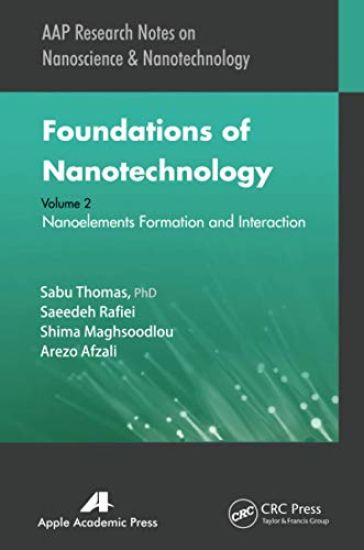
Foundations of Nanotechnology, Volume Two

Foundations of Nanotechnology, Volume Two

Sabu Thomas; Saeedeh Rafiei; Shima Maghsoodlou; Arezo Afzali

Apple Academic Press Inc.
2021
nidottu
The collection of topics in this book reflects the diversity of recent advances in nanoelements formation and interactions in nanosystems with a broad perspective that is useful for scientists as well as for graduate students and engineers. One of the main tasks in making nanocomposites is building the dependence of the structure and shape of the nanoelements, forming the basis for the composite of their sizes. This is because with an increase or a decrease in the specific size of nanoelements, their physical–mechanical properties such as the coefficient of elasticity, strength, and deformation parameter, vary by over one order. The calculations show that this is primarily due to a significant rearrangement of the atomic structure and the shape of the nanoelement. The investigation of the above parameters of the nanoelements is technically complicated and laborious because of their small sizes. When the characteristics of powder nanocomposites are calculated, it is also very important to take into account the interaction of the nanoelements since the changes in their original shapes and sizes in the interaction process and during the formation of the nanocomposite can lead to a significant change in its properties and a cardinal structural rearrangement. In addition, the studies show the appearance of the processes of the ordering and self-assembling leading to a more organized form of a nanosystem. The above phenomena play an important role in nanotechnological processes. They allow nanotechnologies to be developed for the formation of nanostructures by the self-assembling method (which is based on self-organizing processes) and building up complex spatial nanostructures consisting of different nanoelements. The study of the above dependences based on the mathematical modeling methods requires the solution of the aforementioned problem at the atomic level. This requires large computational aids and computational time, which makes the development of economical calculation methods urgent. The objective of this volume is the development of such a technique in various nanosystems.
Foundations of Nanotechnology, Volume One

Foundations of Nanotechnology, Volume One

A. K. Haghi; Sabu Thomas; Moein MehdiPour MirMahaleh

Apple Academic Press Inc.
2021
nidottu
This volume covers a wide range of adsorption activities of porous carbon (PC), CNTs, and carbon nano structures that have been employed so far for the removal of various pollutants from water, wastewater, and organic compounds. The low cost, high efficiency, simplicity, and ease in the upscaling of adsorption processes using PC make the adsorption technique attractive for the removal and recovery of organic compounds. The activated carbon modification process has also been of interest to overcome some of the limitations of the adsorbents. Due to a large specific surface area, and small, hollow, and layered structures, CNTs and carbon nano structures have been investigated as promising adsorbents for various metal ions. Inorganic and organic pollutants can be easily modified by chemical treatment to increase their adsorption capacity. There is the huge hope that nanotubes applications will lead to a cleaner and healthier environment. A brief summary of these modeling methods is reviewed in this volume. Also, two important simulation methods, the Monte Carlo and the Molecular Dynamic, are included in this volume. The presence of micro and mesopores is essential for many researchers aiming to control micro or mesoporosity. The present volume attempts to give a general view of the recent activities on the study of pore structure control, with application novel simulation and modeling methods and the necessity and importance of this controlling. This volume also provides a brief overview of the methodology and modeling beside simulation methods for characterization of nanoporous carbons by using adsorption isotherm parameters.
Nanostructured Materials

Nanostructured Materials

T. Daniel Thangadurai; N. Manjubaashini; Sabu Thomas; Hanna J. Maria

Springer Nature Switzerland AG
2020
sidottu
This book discusses the early stages of the development of nanostructures, including synthesis techniques, growth mechanisms, the physics and chemistry of nanostructured materials, various innovative characterization techniques, the need for functionalization and different functionalization methods as well as the various properties of nanostructured materials. It focuses on the applications of nanostructured materials, such as mechanical applications, nanoelectronics and microelectronic devices, nano-optics, nanophotonics and nano-optoelectronics, as well as piezoelectric, agriculture, biomedical and, environmental remediation applications, and anti-microbial and antibacterial properties. Further, it includes a chapter on nanomaterial research developments, highlighting work on the life-cycle analysis of nanostructured materials and toxicity aspects.
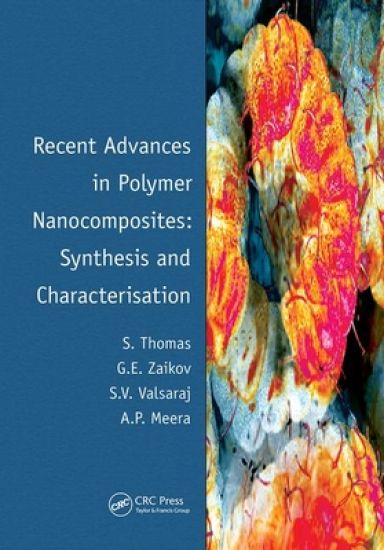
Recent Advances in Polymer Nanocomposites: Synthesis and Characterisation
This book examines the current state of the art, new challenges, opportunities, and applications in the area of polymer nanocomposites. Special attention has been paid to the processing-morphology-structure-property relationship of the system. Various unresolved issues and new challenges in the field of polymer nanocompostes are discussed. The influence of preparation techniques (processing) on the generation of morphologies and the dependence of these morphologies on the properties of the system are treated in detail. This book also illustrates different techniques used for the characterization of polymer nanocomposites. The handpicked selection of topics and expert contributors across the globe make this survey an outstanding resource reference for anyone involved in the field of polymer nanocompostes for advanced technologies.
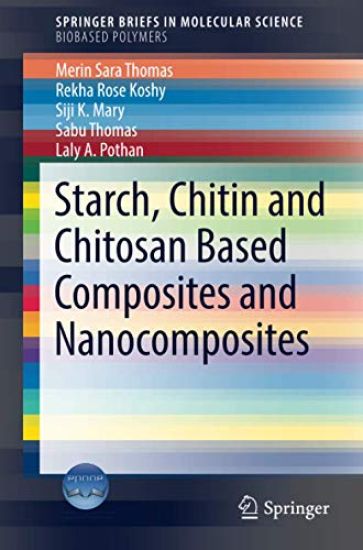
Starch, Chitin and Chitosan Based Composites and Nanocomposites

Starch, Chitin and Chitosan Based Composites and Nanocomposites

Merin Sara Thomas; Rekha Rose Koshy; Siji K. Mary; Sabu Thomas; Laly A. Pothan

Springer Nature Switzerland AG
2019
nidottu
This brief explores recent progress in the area of polysaccharides and their composites and nanocomposites. It is a complete resource for the evolving field of polysaccharide based biomaterials and their applications in different fields. The volume focuses on their composition, properties, characterization, chemistry and applications and also highlights recent developments in polysaccharide based composites and nanocomposites spurred by advances in polymer technology and biotechnology. Divided into different sections featuring alginates, carrageenans, cellulose, starch, chitin, chitosan, gums, etc, each chapter presents chemical, physical, and biological attributes, and reviews the recent research performed such as drug carriers, selective water absorption materials from oil-water emulsions, purification of water, biomedical applications, etc. The authors hope that this brief will help to inspire scientists towards novel sources for chemicals, materials, and energy in the years to come.
Clay-Polymer Nanocomposites

Clay-Polymer Nanocomposites

Khouloud Jlassi; Mohamed M. Chehimi; Sabu Thomas

Elsevier - Health Sciences Division
2017
sidottu
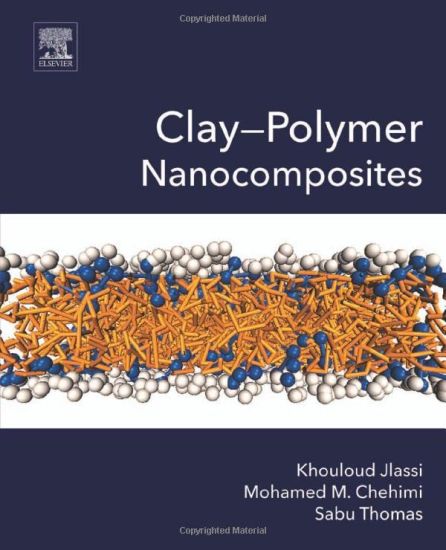
Clay–Polymer Nanocomposites is a complete summary of the existing knowledge on this topic, from the basic concepts of synthesis and design to their applications in timely topics such as high-performance composites, environment, and energy issues. This book covers many aspects of synthesis such as in- situ polymerization within the interlamellar spacing of the clays or by reaction of pristine or pre-modified clays with reactive polymers and prepolymers. Indeed, nanocomposites can be prepared at industrial scale by melt mixing. Regardless the synthesis method, much is said in this book about the importance of theclay pre-modification step, which is demonstrated to be effective, on many occasions, in obtaining exfoliated nanocomposites. Clay–Polymer Nanocomposites reports the background to numerous characterization methods including solid state NMR, neutron scattering, diffraction and vibrational techniques as well as surface analytical methods, namely XPS, inverse gas chromatography and nitrogen adsorption to probe surface composition, wetting and textural/structural properties. Although not described in dedicated chapters, numerous X-ray diffraction patterns of clay–polymer nanocomposites and reference materials are displayed to account for the effects of intercalation and exfoliations of layered aluminosilicates. Finally, multiscale molecular simulation protocols are presenting for predicting morphologies and properties of nanostructured polymer systems with industrial relevance. As far as applications are concerned, Clay–Polymer Nanocomposites examines structural composites such as clay–epoxy and clay–biopolymers, the use of clay–polymer nanocomposites as reactive nanocomposite fillers, catalytic clay-(conductive) polymers and similar nanocomposites for the uptake of hazardous compounds or for controlled drug release, antibacterial applications, energy storage, and more.
Foundations of Nanotechnology - Three Volume Set

Foundations of Nanotechnology - Three Volume Set

A. K. Haghi; Sabu Thomas; Moein MehdiPour MirMahaleh; Saeedeh Rafiei; Shima Maghsoodlou; Arezo Afzali

Apple Academic Press Inc.
2015
muu
Nanoscale science, engineering, and technology—commonly referred to collectively as nanotechnology—is believed by many to offer extraordinary economic and societal benefits. Nanotechnology is generally defined as the ability to create and use materials, devices, and systems with unique properties at the scale of approximately 1 to 100 nm. Nanotechnology offers society the promise of major benefits, but also raises questions of potential adverse effects. The first volume covers pore size in carbon-based nano-adsorbents, resulting in materials that exhibit unique sorptive properties with a general view of the recent activities on the study of pore structure control. The collection of topics in volume 2 reflects the diversity of recent advances in nanoelements formation and interactions in nanosystems with a broad perspective that will be useful for scientists and engineers as the use of nanotechnology in the consumer and industrial sectors is expected to increase significantly in the future. And the third volume discusses important issues and trends related to research strategy in mechanics of carbon nanotubes.
Carbon Nanotubes

Carbon Nanotubes

A. K. Haghi; Sabu Thomas

Apple Academic Press Inc.
2015
sidottu
This book presents the diversity of recent advances in carbon nanotubes from a broad perspective that will be useful for scientists as well as for graduate students and engineers. Presenting leading-edge research in this dynamic field, this volume is an introduction to the physical concepts needed for investigating carbon nanotubes and other one-dimensional solid-state systems. Written for a wide scientific readership, each chapter consists of an instructive approach to the topic and sustainable ideas for solutions. Carbon nanotubes, with their extraordinary mechanical and unique electronic properties, have garnered much attention in recent years. With a broad range of potential applications, including nanoelectronics, composites, chemical sensors, biosensors, microscopy, nanoelectromechanical systems, and many more, the scientific community is more motivated than ever to move beyond basic properties and explore the real issues associated with carbon nanotube-based applications. Carbon nanotubes are exceptionally interesting from a fundamental research point of view. They open up new perspectives for various applications, such as nano-transistors in circuits, field-emission displays, artificial muscles, or added reinforcements in alloys. This book reviews the recent progress in modeling of carbon nanotubes and their composites. The advantages and disadvantages of different methods are discussed. The ability of continuum methods to bridge different scales is emphasized. Recommendations for future research are given by focusing on what each method has to learn from the nano-scale. The scope of the book is to provide current knowledge aiming to support researchers entering the scientific area of carbon nanotubes to choose the appropriate modeling tool for accomplishing their study and place their efforts to further improve continuum methods.
Foundations of Nanotechnology, Volume Two

Foundations of Nanotechnology, Volume Two

Sabu Thomas; Saeedeh Rafiei; Shima Maghsoodlou; Arezo Afzali

Apple Academic Press Inc.
2014
sidottu
The collection of topics in this book reflects the diversity of recent advances in nanoelements formation and interactions in nanosystems with a broad perspective that is useful for scientists as well as for graduate students and engineers. One of the main tasks in making nanocomposites is building the dependence of the structure and shape of the nanoelements, forming the basis for the composite of their sizes. This is because with an increase or a decrease in the specific size of nanoelements, their physical–mechanical properties such as the coefficient of elasticity, strength, and deformation parameter, vary by over one order. The calculations show that this is primarily due to a significant rearrangement of the atomic structure and the shape of the nanoelement. The investigation of the above parameters of the nanoelements is technically complicated and laborious because of their small sizes. When the characteristics of powder nanocomposites are calculated, it is also very important to take into account the interaction of the nanoelements since the changes in their original shapes and sizes in the interaction process and during the formation of the nanocomposite can lead to a significant change in its properties and a cardinal structural rearrangement. In addition, the studies show the appearance of the processes of the ordering and self-assembling leading to a more organized form of a nanosystem. The above phenomena play an important role in nanotechnological processes. They allow nanotechnologies to be developed for the formation of nanostructures by the self-assembling method (which is based on self-organizing processes) and building up complex spatial nanostructures consisting of different nanoelements. The study of the above dependences based on the mathematical modeling methods requires the solution of the aforementioned problem at the atomic level. This requires large computational aids and computational time, which makes the development of economical calculation methods urgent. The objective of this volume is the development of such a technique in various nanosystems.
Foundations of Nanotechnology, Volume One

Foundations of Nanotechnology, Volume One

A. K. Haghi; Sabu Thomas; Moein MehdiPour MirMahaleh

Apple Academic Press Inc.
2014
sidottu
This volume covers a wide range of adsorption activities of porous carbon (PC), CNTs, and carbon nano structures that have been employed so far for the removal of various pollutants from water, wastewater, and organic compounds. The low cost, high efficiency, simplicity, and ease in the upscaling of adsorption processes using PC make the adsorption technique attractive for the removal and recovery of organic compounds. The activated carbon modification process has also been of interest to overcome some of the limitations of the adsorbents. Due to a large specific surface area, and small, hollow, and layered structures, CNTs and carbon nano structures have been investigated as promising adsorbents for various metal ions. Inorganic and organic pollutants can be easily modified by chemical treatment to increase their adsorption capacity. There is the huge hope that nanotubes applications will lead to a cleaner and healthier environment. A brief summary of these modeling methods is reviewed in this volume. Also, two important simulation methods, the Monte Carlo and the Molecular Dynamic, are included in this volume. The presence of micro and mesopores is essential for many researchers aiming to control micro or mesoporosity. The present volume attempts to give a general view of the recent activities on the study of pore structure control, with application novel simulation and modeling methods and the necessity and importance of this controlling. This volume also provides a brief overview of the methodology and modeling beside simulation methods for characterization of nanoporous carbons by using adsorption isotherm parameters.