Kirjojen hintavertailu. Mukana 12 657 676 kirjaa ja 12 kauppaa.

Kirjailija

Salamishah Tillet

Kirjat ja teokset yhdessä paikassa: 12 kirjaa, julkaisuja vuosilta 2012-2027, suosituimpien joukossa Roe v. Wade. Vertaile teosten hintoja ja tarkista saatavuus suomalaisista kirjakaupoista.

12 kirjaa

Kirjojen julkaisuhaarukka 2012-2027.

Roe v. Wade

Roe v. Wade

Deirdre Cooper Owens; Fiona de Londras; Alicia Gutierrez-Romine; Johanna Schoen; Salamishah Tillet; Karin Wulf

UNIVERSITY OF GEORGIA PRESS
2024
pokkari
Just over fifty years ago on January 22, 1973, the United States Supreme Court decision on Roe v. Wade assured millions of women that abortion was a protected constitutional right due to a woman’s right to privacy. In the context of the burgeoning women’s rights movement, it seemed like an inalienable victory: women might become equal to men in their right to determine what would happen to their bodies. This was a hard-won fight that reached back to colonial America and slavery, but on June 24, 2022, the decision was shockingly reversed by the Supreme Court in Dobbs v. Jackson Women’s Health Organization. What happened? What transpired socially, politically, legally, in religious institutions and in popular culture in the half-century when “the right to choose” led to this stunning transformation in American society? Roe v. Wade: Fifty Years After, coedited by Rhae Lynn Barnes and Catherine Clinton for the History in the Headlines series, brings together a team of world-renowned scholars, prizewinning historians, and Pulitzer Prize-winning public intellectuals who specialize in reproductive history. They assembled at Harvard University in the weeks following the Dobbs decision to talk through the centuries-long history of abortion in what became the United States, how its representation changed in the law and popular culture, and how a wellspring of social movements on both the right and left led to a fifty-year showdown over some of the most outstanding human questions: What is life? When does it begin? Who has the right to end it? Who has the right to determine what happens to someone else’s body? How can the law define and restrict women’s reproductive health? And how have race, class, geography, sexuality, and other factors shaped who gets to be a part of answering these questions? The international impact of the struggles for reproductive freedom for women within the United States comes into sharp focus within this important volume, shedding light on past, present, and future dimensions of reproductive freedom for all Americans.

Roe v. Wade

Roe v. Wade

Deirdre Cooper Owens; Fiona de Londras; Alicia Gutierrez-Romine; Johanna Schoen; Salamishah Tillet; Karin Wulf

UNIVERSITY OF GEORGIA PRESS
2024
sidottu
Just over fifty years ago on January 22, 1973, the United States Supreme Court decision on Roe v. Wade assured millions of women that abortion was a protected constitutional right due to a woman’s right to privacy. In the context of the burgeoning women’s rights movement, it seemed like an inalienable victory: women might become equal to men in their right to determine what would happen to their bodies. This was a hard-won fight that reached back to colonial America and slavery, but on June 24, 2022, the decision was shockingly reversed by the Supreme Court in Dobbs v. Jackson Women’s Health Organization. What happened? What transpired socially, politically, legally, in religious institutions and in popular culture in the half-century when “the right to choose” led to this stunning transformation in American society? Roe v. Wade: Fifty Years After, coedited by Rhae Lynn Barnes and Catherine Clinton for the History in the Headlines series, brings together a team of world-renowned scholars, prizewinning historians, and Pulitzer Prize-winning public intellectuals who specialize in reproductive history. They assembled at Harvard University in the weeks following the Dobbs decision to talk through the centuries-long history of abortion in what became the United States, how its representation changed in the law and popular culture, and how a wellspring of social movements on both the right and left led to a fifty-year showdown over some of the most outstanding human questions: What is life? When does it begin? Who has the right to end it? Who has the right to determine what happens to someone else’s body? How can the law define and restrict women’s reproductive health? And how have race, class, geography, sexuality, and other factors shaped who gets to be a part of answering these questions? The international impact of the struggles for reproductive freedom for women within the United States comes into sharp focus within this important volume, shedding light on past, present, and future dimensions of reproductive freedom for all Americans.
All the Rage

All the Rage

Salamishah Tillet

William Collins
2025
sidottu
The story of how one woman changed the course of the country when she desegregated that most maligned and misunderstood emotion-black rage-on our most hallowed stage.Through a retelling of the birth and afterlife of Nina Simone's protest music, All The Rage is a new biography of black rage, a counter-history that breaks the African-American singer free from the disparaging labels so frequently attributed to her.Salamishah Tillet, contributing Culture critic to the New York Times, argues that Nina embodies a new narrative of black rage. Through her voice and black female body, black rage was reborn. Her most famous protest songs decried not only racial crimes, but gender violence, enabling her to uniquely channel the despair of young people coming of age in civil rights, the women's liberation, and eventually black power movements.
All the Rage

All the Rage

Salamishah Tillet

HARPERCOLLINS PUBLISHERS
2025
nidottu
The story of how one woman changed the course of the country when she desegregated that most maligned and misunderstood emotion-black rage-on our most hallowed stage.
I Know What the Red Clay Looks Like

I Know What the Red Clay Looks Like

Rebecca Carroll; Salamishah Tillet

Haymarket Books
2024
sidottu
Thirty years after its original publication, this newly imagined edition brings the work and musings of fifteen Black literary luminaries in conversation with a new generation of writers and readers. The first edition of I Know What the Red Clay Looks Like, published in 1994, remains an essential text for readers of Black feminist literature in all genres. Featuring interviews with and excerpts by writers like Rita Dove, Pearl Cleage, Barbara Neely, June Jordan, and others, this indispensable work speaks to the intersections of politics and art-making along the lines of race, gender, sexuality, and class. Now, writer and cultural critic Rebecca Carroll presents the original conversations alongside personalized introductions by some of the brightest voices in today’s literary world, including Donika Kelly, Safiya Sinclair, Diamond Sharp, and Chanda Prescod-Weinstein, among others. This new edition also includes an introductory poem by Morgan Parker, a foreword by Salamishah Tillet, and a new author’s note. The new contributors carry the torch of the original interviewees’ lives and words with heart, rigor, gratitude, and radical imagination, illuminating how these conversations are about more than just writing—they are about life, relationships, joy, gratitude, wellness, and self-preservation. I Know What the Red Clay Looks Like is a book unbound by time, lifting up a chorus of past and present voices. Paying homage to a historic lineage of Black feminist writers and their impact on our current literary landscape, it is a book by and for the storytellers, the poets, the playwrights, the dreamers, and all readers interested in what it means to make art within and from marginalized spaces.
I Know What the Red Clay Looks Like

I Know What the Red Clay Looks Like

Rebecca Carroll; Salamishah Tillet

Haymarket Books
2024
pokkari
Thirty years after its original publication, this newly imagined edition brings the work and musings of fifteen Black literary luminaries in conversation with a new generation of writers and readers. The first edition of I Know What the Red Clay Looks Like, published in 1994, remains an essential text for readers of Black feminist literature in all genres. Featuring interviews with and excerpts by writers like Rita Dove, Pearl Cleage, Barbara Neely, June Jordan, and others, this indispensable work speaks to the intersections of politics and art-making along the lines of race, gender, sexuality, and class. Now, writer and cultural critic Rebecca Carroll presents the original conversations alongside personalized introductions by some of the brightest voices in today’s literary world, including Donika Kelly, Safiya Sinclair, Diamond Sharp, and Chanda Prescod-Weinstein, among others. This new edition also includes an introductory poem by Morgan Parker, a foreword by Salamishah Tillet, and a new author’s note. The new contributors carry the torch of the original interviewees’ lives and words with heart, rigor, gratitude, and radical imagination, illuminating how these conversations are about more than just writing—they are about life, relationships, joy, gratitude, wellness, and self-preservation. I Know What the Red Clay Looks Like is a book unbound by time, lifting up a chorus of past and present voices. Paying homage to a historic lineage of Black feminist writers and their impact on our current literary landscape, it is a book by and for the storytellers, the poets, the playwrights, the dreamers, and all readers interested in what it means to make art within and from marginalized spaces.
Radical Justice

Radical Justice

Salamishah Tillet

Convoke
2022
sidottu
Radical Justice brings together two bodies of socially-engaged photographic portraiture by Accra Shepp, who has documented New York City’s Occupy Wall Street movement starting in 2011 and its racial justice/BLM protests since 2020. Working in the style of August Sander with a large format camera and black and white film, Shepp pictures fellow New Yorkers on their city’s streets in acts of sit-ins and active protest, both unplanned and highly organized, both independent and unified, to address notions of the 99% and 1%, which have become part of the American political vernacular. Bearing witness to defining events of the last decade that echo the United States’ longer historical arch, Shepp’s empathetic depictions of fellow citizens standing up for the fair protection of the Constitution provide a prophetic mirror of current events, which reflects back centuries to where the American experiment began, to suggest where we’ll find ourselves in the years to come.
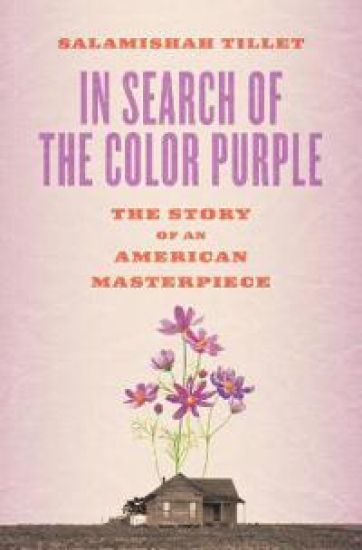
In Search of The Color Purple: The Story of an American Masterpiece

In Search of The Color Purple: The Story of an American Masterpiece

Salamishah Tillet; Gloria Steinem; Beverly Guy-Sheftall

Abrams Press
2022
nidottu
From a superstar academic and cultural critic, an exploration of Alice Walker’s critically acclaimed and controversial novel The Color PurpleIn 1982, Alice Walker made history when she became the first Black woman to win the Pulitzer Prize and the National Book Award for The Color Purple. But Walker’s novel, which tells the story of a young girl in Jazz Age Georgia, received as much criticism as praise. It launched heated conversations about race, gender, language, and sexual violence that echo to today.In this gem-like examination of the novel, the film by Steven Spielberg, and the hit Broadway musical, prominent academic and activist Salamishah Tillet combines cultural criticism, history, and memoir to explore Walker’s work and its lasting importance. Based on archival research and interviews with Walker, Oprah Winfrey, and Quincy Jones, among others, In Search of The Color Purple is a provocative and personal book, a bold debut from an important public intellectual.
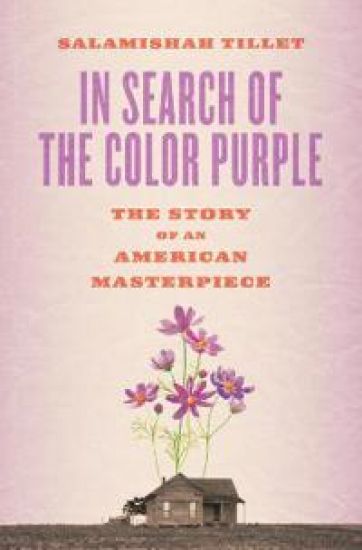
In Search of the Color Purple: The Story of an American Masterpiece
Mixing cultural criticism, literary history, biography, and memoir in an exploration of Alice Walker’s critically acclaimed and controversial novel, The Color Purple Alice Walker made history in 1982 when she became the first black woman to win the Pulitzer Prize and the National Book Award, both for The Color Purple. Published in the Reagan Era amid a severe backlash to civil rights, the jazz age novel tells the story of an African-American woman haunted by domestic and sexual violence. Prominent academic and activist Salamishah Tillet combines cultural criticism, history, and memoir to explore Walker’s epistolary novel, and shows how it has influenced and been informed by the zeitgeist of the time. The Color Purple received both praise and criticism upon publication, and the conversation it sparked around race and gender still continues today. It has been adapted for an Oscar-nominated film and a hit Broadway musical. Through interviews with Walker, Oprah Winfrey, Quincy Jones, and others, as well as archival research, Tillet studies Walker’s life and the origins of her subjects, including violence, sexuality, gender, and politics. Reading The Color Purple at age 15 was a groundbreaking experience for Tillet. It continues to resonate with her—as a sexual violence survivor, as a teacher of the novel, and as an accomplished academic. Provocative and personal, In Search of the Color Purple is a bold work from an important public intellectual.
Sites of Slavery

Sites of Slavery

Salamishah Tillet

Duke University Press
2012
sidottu
More than forty years after the major victories of the civil rights movement, African Americans have a vexed relation to the civic myth of the United States as the land of equal opportunity and justice for all. In Sites of Slavery Salamishah Tillet examines how contemporary African American artists and intellectuals-including Annette Gordon-Reed, Barbara Chase-Riboud, Bill T. Jones, Carrie Mae Weems, and Kara Walker-turn to the subject of slavery in order to understand and challenge the ongoing exclusion of African Americans from the founding narratives of the United States. She explains how they reconstruct "sites of slavery"-contested figures, events, memories, locations, and experiences related to chattel slavery-such as the allegations of a sexual relationship between Thomas Jefferson and Sally Hemings, the characters Uncle Tom and Topsy in Harriet Beecher Stowe's novel Uncle Tom's Cabin, African American tourism to slave forts in Ghana and Senegal, and the legal challenges posed by reparations movements. By claiming and recasting these sites of slavery, contemporary artists and intellectuals provide slaves with an interiority and subjectivity denied them in American history, register the civic estrangement experienced by African Americans in the post–civil rights era, and envision a more fully realized American democracy.
Sites of Slavery

Sites of Slavery

Salamishah Tillet

Duke University Press
2012
pokkari
More than forty years after the major victories of the civil rights movement, African Americans have a vexed relation to the civic myth of the United States as the land of equal opportunity and justice for all. In Sites of Slavery Salamishah Tillet examines how contemporary African American artists and intellectuals-including Annette Gordon-Reed, Barbara Chase-Riboud, Bill T. Jones, Carrie Mae Weems, and Kara Walker-turn to the subject of slavery in order to understand and challenge the ongoing exclusion of African Americans from the founding narratives of the United States. She explains how they reconstruct "sites of slavery"-contested figures, events, memories, locations, and experiences related to chattel slavery-such as the allegations of a sexual relationship between Thomas Jefferson and Sally Hemings, the characters Uncle Tom and Topsy in Harriet Beecher Stowe's novel Uncle Tom's Cabin, African American tourism to slave forts in Ghana and Senegal, and the legal challenges posed by reparations movements. By claiming and recasting these sites of slavery, contemporary artists and intellectuals provide slaves with an interiority and subjectivity denied them in American history, register the civic estrangement experienced by African Americans in the post–civil rights era, and envision a more fully realized American democracy.