Kirjojen hintavertailu. Mukana 12 595 353 kirjaa ja 12 kauppaa.

Kirjailija

Salla Sariola

Kirjat ja teokset yhdessä paikassa: 3 kirjaa, julkaisuja vuosilta 2009-2019, suosituimpien joukossa Gender and Sexuality in India. Vertaile teosten hintoja ja tarkista saatavuus suomalaisista kirjakaupoista.

3 kirjaa

Kirjojen julkaisuhaarukka 2009-2019.

Research As Development

Research As Development

Salla Sariola; Robert Simpson

Cornell University Press
2019
sidottu
In Research as Development, Salla Sariola and Bob Simpson show how international collaboration operates in a setting that is typically portrayed as "resource-poor" and "scientifically lagging." Based on their long-term fieldwork in Sri Lanka, Sariola and Simpson bring into clear ethnographic focus the ways international scientific collaborations feature prominently in the pursuit of global health in which research operates "as" development and not merely "for" it. The authors follow the design, inception, and practice of two clinical trials: one a global health charity funded trial and the other a pharmaceutical industry-sponsored trial. Research as Development situates these two trials within their historical, political and cultural contexts and thus counters the idea that local actors are merely passive recipients of new technical and scientific rationalities. While social studies of clinical trials are beginning to be an established niche in academic writing, Research as Development helps fill important gaps in the literature through its examination of clinical research situated in cultures in low-income settings. Research as Development is noteworthy for the way it highlights the critical and creative role that local researchers play in establishing international collaborations and making them work into locally viable forms. The volume shows how these clinical and research interactions bring about changes in culture, technologies and expertise in Sri Lanka, contexts that have not previously been written about in any detail.
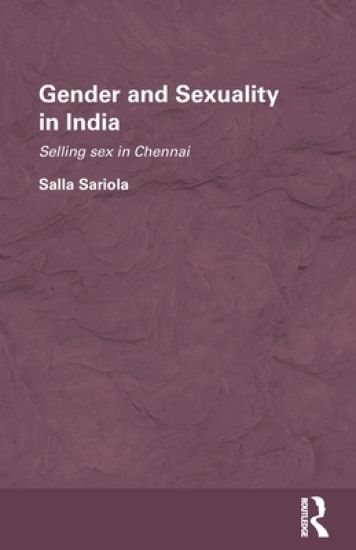
Gender and Sexuality in India

Gender and Sexuality in India

Salla Sariola

Routledge
2012
nidottu
India has one of the highest numbers of HIV carriers in the world. HIV has remained associated with sex work, and large sums of money provided to fund public health interventions have come from global institutions such as UNAIDS, the World Bank and USAID. In the midst of these processes, however, sex workers and their everyday lives have been hidden behind the rhetorics of control and prevention. This book offers a detailed analysis of the experiences of sex workers in Chennai. Based on ethnographic fieldwork, it draws out themes of agency; notions of gender and sexuality; and the HIV prevention industry. While the women’s experiences are closely knit into the medical discourse regarding sex workers, sex work emerges as a complicated knot of poverty, desire, women’s oppression, love, co-option, and motherhood. The author examines how the sex workers actively negotiate the risks of their industry and suggests alternative discourses on women’s sexuality, sexual behaviour and desire, arguing that unless the power imbalances affecting women are addressed, such policies and activities will have little impact. She brings attention to the problems of current policies, discourses and attitudes regarding HIV, sexuality and sex work, and shows how new policies could help to reduce vulnerabilities not only for sex workers, but perhaps for all women in India.
Gender and Sexuality in India

Gender and Sexuality in India

Salla Sariola

Routledge
2009
sidottu
India has one of the highest numbers of HIV carriers in the world. HIV has remained associated with sex work, and large sums of money provided to fund public health interventions have come from global institutions such as UNAIDS, the World Bank and USAID. In the midst of these processes, however, sex workers and their everyday lives have been hidden behind the rhetorics of control and prevention. This book offers a detailed analysis of the experiences of sex workers in Chennai. Based on ethnographic fieldwork, it draws out themes of agency; notions of gender and sexuality; and the HIV prevention industry. While the women’s experiences are closely knit into the medical discourse regarding sex workers, sex work emerges as a complicated knot of poverty, desire, women’s oppression, love, co-option, and motherhood. The author examines how the sex workers actively negotiate the risks of their industry and suggests alternative discourses on women’s sexuality, sexual behaviour and desire, arguing that unless the power imbalances affecting women are addressed, such policies and activities will have little impact. She brings attention to the problems of current policies, discourses and attitudes regarding HIV, sexuality and sex work, and shows how new policies could help to reduce vulnerabilities not only for sex workers, but perhaps for all women in India.