
Kirjailija
Sallust
Kirjat ja teokset yhdessä paikassa: 95 kirjaa, julkaisuja vuosilta 1991-2025, suosituimpien joukossa OEuvres De Salluste. Vertaile teosten hintoja ja tarkista saatavuus suomalaisista kirjakaupoista.
95 kirjaa
Kirjojen julkaisuhaarukka 1991-2025.
C. Sallusti Crispi Catilina, Iugurtha, Historiarum Fragmenta (1856)
Sallust
KESSINGER PUBLISHING, LLC
2008
nidottu
C. Sallusti Crispi Opera Quae Supersunt V1: Catilinam Continens (1828)
Sallust
KESSINGER PUBLISHING, LLC
2008
nidottu
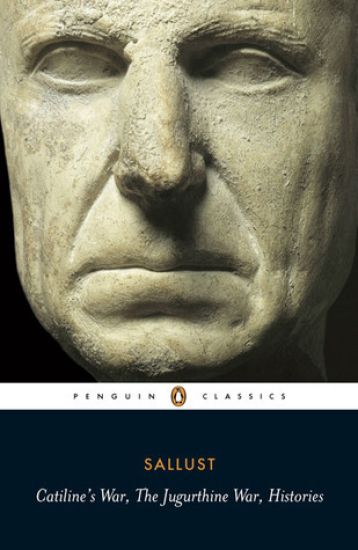
Sallust (86–c. 35 bc) is the earliest Roman historian of whom complete works survive, a senator of the Roman Republic and younger contemporary of Cicero, Pompey and Julius Caesar. His Catiline’s War tells of the conspiracy in 63 bc led by L. Sergius Catilina, who plotted to assassinate numerous senators and take control of the government, but was thwarted by Cicero. Sallust’s vivid account of Roman public life shows a Republic in decline, prey to moral corruption and internal strife. In The Jugurthine War he describes Rome’s fight in Africa against the king of the Numidians from 111 to 105 bc, and provides a damning picture of the Roman aristocracy. Also included in this volume are the major surviving extracts from Sallust’s now fragmentary Histories, depicting Rome after the death of the dictator Sulla.

Sallust'S History of the War Against Jugurtha, and of the Conspiracy of Catiline
Sallust
University of Michigan Library
2006
pokkari


The period covered by Sallust's Histories - 78-67 BC - forms part of the less well-documented eras of the late Republic. Sallust's contribution, despite its fragmentary transmission (about five hundred fragments of narrative, four speeches, and two letters preserved intact), remains of major importance to ancient historians. For nearly a century, scholars have consulted the edition of B. Maurenbrecher (1891-3) - a work, for its time, of considerable merit. Continuing research on the period has produced material with a bearing on the interpretation of the text; in addition, several fragments not known to Maurenbrecher have subsequently been discovered. For this new translation, Dr McGushin has freshly revised Maurenbrecher's placement and ordering of the fragments, and incorporated this newly discovered material. Together with a comprehensive introduction, he also provides a detailed interpretation in the first ever full-length commentary on the work.
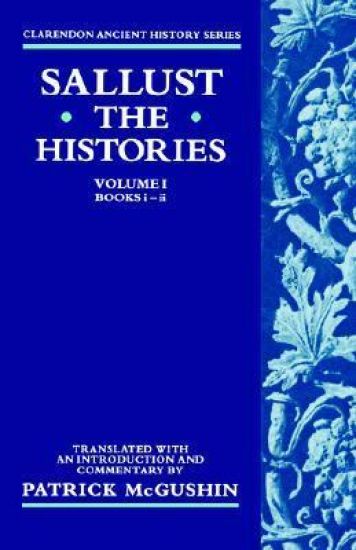
Sallust (86-35 BC) was a historian of major importance, writing at the time of the late Roman Republic. This is the first ever full-length commentary and English translation of one of his major works, the Histories, covering the years 78-67 BC, one of the least well-documented periods of the era. The translation is based on a text freshly examined for the first time since the original edition of 1891-3, and also includes newly discovered material.
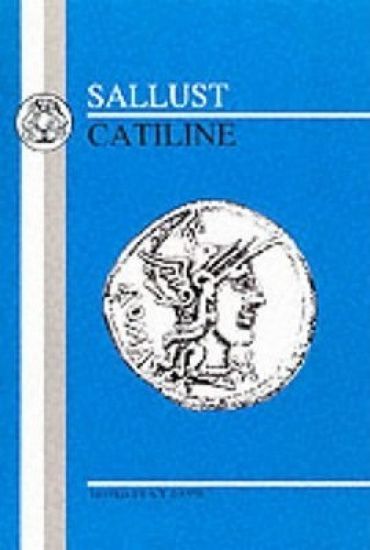
Sallust's account of the conspiracy raises considerable historical problems, and the moral intention and political bias and style can make him a difficult author for Middle School level students to understand, so this text makes Catiline as concise and comprehensible as possible. To clarify and simplify the Latin text of Sallust's Catiline, this school edition omits speeches and passages of moral reflection, and the style and spelling have been modified to introduce more common words and to suit those with an elementary knowledge of Latin. The editor has removed historic infinitives, phrase or sentence whose difficulty seemed to outweigh its significance, and rephrased where it would seem helpful to understanding. The text is supplemented by an introduction giving necessary background, comprehensive questions, classified vocabulary, passages for retranslation, and Ciceronian passages in eight appendixes. A classified vocabulary list provides scope for the methodical acquisition and revision of vocabulary; the number of words listed for each chapter is distributed fairly evenly,
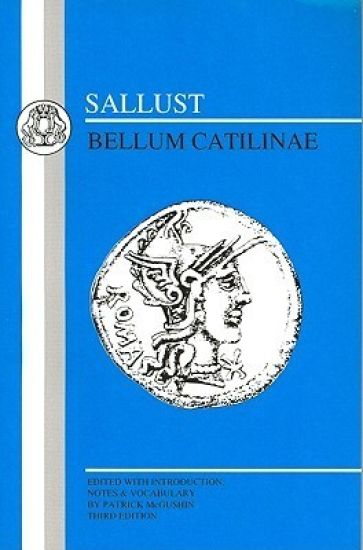
This is Sallust's text, Bellum Catilinae, in Latin with English introduction and notes. It is intended primarily for use by sixth-formers (upper high / secondary school) and undergraduates. The commentary concentrates on the elucidation of historical points and on the analysis of character and motive, and also explains points of grammar as they arise. The Introduction gives essential information on the life and work of Sallust along with a full explosition of his unique style. A Bibliography and Vocabulary are included.