Kirjojen hintavertailu. Mukana 12 341 675 kirjaa ja 12 kauppaa.

Kirjailija

Sally Banes

Kirjat ja teokset yhdessä paikassa: 7 kirjaa, julkaisuja vuosilta 1987-2007, suosituimpien joukossa Before, Between, and Beyond. Vertaile teosten hintoja ja tarkista saatavuus suomalaisista kirjakaupoista.

7 kirjaa

Kirjojen julkaisuhaarukka 1987-2007.

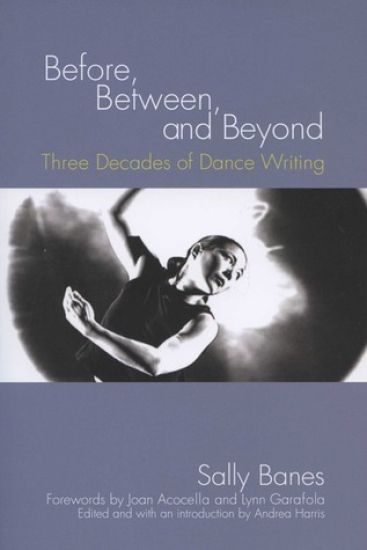
Before, Between, and Beyond

Before, Between, and Beyond

Sally Banes; Joan Ross Acocella; Lynn Garafola

University of Wisconsin Press
2007
nidottu
Sally Banes has been a pre-eminent critic and scholar of American contemporary dance, and ""Before, Between, Beyond"" spans more than thirty years of her prolific work. Beginning with her first published review and including previously unpublished papers, this collection presents some of her finest works on dance and other artistic forms. It concludes with her most recent research on George Balanchine's dancing elephants. In each piece, Banes' detailed eye and sensual prose strike a rare balance between description, context, and opinion, delineating the American artistic scene with remarkable grace. With contextualizing essays by dance scholars Andrea Harris, Joan Acocella, and Lynn Garafola, this is a compelling, insightful, indispensable summation of Banes' critical career.
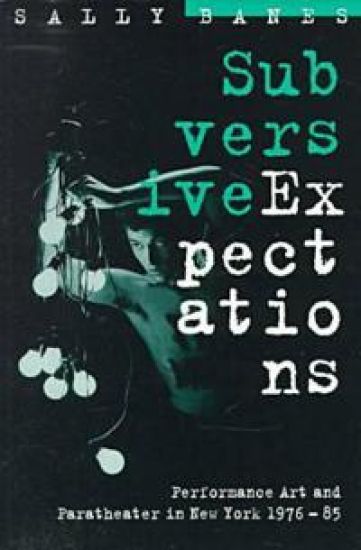
Subversive Expectations

Subversive Expectations

Sally Banes

The University of Michigan Press
1998
nidottu
As critic for the Soho Weekly News and the Village Voice during the 1970s and 1980s, Sally Banes enjoyed an incomparable perspective on the development of what she describes as "the mongrel, elusive, indefinable genre of performance art." In fact, Banes was present during a crucial point in that development, when a previously marginalized form took, quite literally, center stage and emerged as the preeminent form of avant-garde activity. Her reviews and articles explore the work of established artists such as Meredith Monk, Robert Wilson, Ping Chong, and Joan Jonas; events by the Bread and Puppet Theater, Robert Whitman, Charlotte Moorman, and Chris Burden; revivals of classic avant-garde performances; and the emergence of famous (and some notorious) performers such as Anne Bogart, Karen Finley, Spalding Gray, Steve Buscemi, Tim Miller, and Whoopi Goldberg. The depth and breadth of Banes's criticism realizes not only the continuing growth and development of American performance, but also the complex and sometimes surprising intersection of performance with the "other side" of the art/life divide, the "paratheater" of Japanese tea ceremonies, cat shows, circuses, art exhibits, and amateur nights at the Apollo. Banes's work recognizes the crucial importance of the critic as a situated self that must understand not only the concepts and techniques of avant-garde art, but the rich textures of the community spaces in which that art occurs. Much as her earlier book Greenwich Village 1963: Avant-Garde Performance and the Effervescent Body captured the elusive artistic communities of America's postwar avant-garde activity, Subversive Expectations revels in the invigorating energies of Soho. The author's approach to this complex matrix of art, community, and culture is as interdisciplinary as performance itself, drawing on the histories and theories of painting, photography, dance, theater, and folklore. Her vivid descriptions of ephemeral events and her provocative interpretations fill a gap in the history of contemporary performance, when the avant-garde met the mainstream. Sally Banes is Marian Hannah Winter Professor of Theatre and Dance History, University of Wisconsin-Madison.
Dancing Women

Dancing Women

Sally Banes

Routledge
1998
sidottu
Dancing Women: Female Bodies Onstage is a spectacular and timely contribution to dance history, recasting canonical dance since the early nineteenth century in terms of a feminist perspective. Setting the creation of specific dances in socio-political and cultural contexts, Sally Banes shows that choreographers have created representations of women that are shaped by - and that in part shape - society's continuing debates about sexuality and female identity. Broad in its scope and compelling in its argument Dancing Women: * provides a series of re-readings of the canon, from Romantic and Russian Imperial ballet to contemporary ballet and modern dance * investigates the gaps between plot and performance that create sexual and gendered meanings * examines how women's agency is created in dance through aspects of choreographic structure and style * analyzes a range of women's images - including brides, mistresses, mothers, sisters, witches, wraiths, enchanted princesses, peasants, revolutionaries, cowgirls, scientists, and athletes - as well as the creation of various women's communities on the dance stage * suggests approaches to issues of gender in postmodern dance Using an interpretive strategy different from that of other feminist dance historians, who have stressed either victimization or celebration of women, Banes finds a much more complex range of cultural representations of gender identities.
Dancing Women

Dancing Women

Sally Banes

Routledge
1998
nidottu
Dancing Women: Female Bodies Onstage is a spectacular and timely contribution to dance history, recasting canonical dance since the early nineteenth century in terms of a feminist perspective. Setting the creation of specific dances in socio-political and cultural contexts, Sally Banes shows that choreographers have created representations of women that are shaped by - and that in part shape - society's continuing debates about sexuality and female identity. Broad in its scope and compelling in its argument Dancing Women: * provides a series of re-readings of the canon, from Romantic and Russian Imperial ballet to contemporary ballet and modern dance * investigates the gaps between plot and performance that create sexual and gendered meanings * examines how women's agency is created in dance through aspects of choreographic structure and style * analyzes a range of women's images - including brides, mistresses, mothers, sisters, witches, wraiths, enchanted princesses, peasants, revolutionaries, cowgirls, scientists, and athletes - as well as the creation of various women's communities on the dance stage * suggests approaches to issues of gender in postmodern dance Using an interpretive strategy different from that of other feminist dance historians, who have stressed either victimization or celebration of women, Banes finds a much more complex range of cultural representations of gender identities.
Democracy's Body

Democracy's Body

Sally Banes

Duke University Press
1993
pokkari
Democracy's Body offers a lively, detailed account of the beginnings of the Judson Dance Theater--a popular center of dance experimentation in New York's Greenwich Village--and its place in the larger history of the avant-garde art scene of the 1960s. JDT started when Robert Dunn, a student of John Cage, offered a dance composition class in Merce Cunningham's studio. The performers--many of whom included some of the most prominent figures in the arts in the early sisties--found a welcome performance home in the Judson Memorial Church in the Village. Sally Banes's account draws on interviews, letters, diaries, films, and reconstructions of dances to paint a portrait of the rich culture of Judson, which was the seedbed for postmodern dance and the first avant-garde movement in dance theater since the modern dance of the 1930s and 1940s. Originally published in 1983, this edition brings back into print a highly regarded work of dance history.
Greenwich Village 1963

Greenwich Village 1963

Sally Banes

Duke University Press
1993
sidottu
The year was 1963 and from Birmingham to Washington, D.C., from Vietnam to the Kremlin to the Berlin Wall, the world was in the throes of political upheaval and historic change. But that same year, in New York's Greenwich Village, another kind of history and a different sort of politics were being made. This was a political history that had nothing to do with states or governments or armies--and had everything to do with art. And this is the story that Sally Banes tells, a year in the life of American culture, a year that would change American life and culture forever. It was in 1963, as Banes's book shows us, that the Sixties really began. A leading writer on cultural history, Banes draws a vibrant portrait of the artists and performers who gave the 1963 Village its exhilarating force, the avant-garde whose interweaving of public and private life, work and play, art and ordinary experience, began a wholesale reworking of the social and cultural fabric of America. Among these young artists were many who went on to become acknowledged masters in their fields, including Andy Warhol, John Cage, Yoko Ono, Yvonne Rainer, Lanford Wilson, Sam Shepard, Brian de Palma, Harvey Keitel, Kate Millet, and Claes Oldenburg. In live performance--Off-Off Broadway theater, Happenings, Fluxus, and dance--as well as in Pop Art and underground film, we see this generation of artists laying the groundwork for the explosion of the counterculture in the late 1960s and the emergence of postmodernism in the 1970s. Exploring themes of community, freedom, equality, the body, and the absolute, Banes shows us how the Sixties artists, though shaped by a culture of hope and optimism, helped to galvanize a culture of criticism and change. As 1963 came to define the Sixties, so this vivid account of the year will redefine a crucial generation in recent American history.
Terpsichore in Sneakers

Terpsichore in Sneakers

Sally Banes

Wesleyan University Press
1987
nidottu
Drawing on the postmodern perspective and concerns that informed her groundbreaking Terpischore in Sneakers, Sally Bane's Writing Dancing documents the background and development of avant-garde and popular dance, analyzing individual artists, performances, and entire dance movements. With a sure grasp of shifting cultural dynamics, Banes shows how postmodern dance is integrally connected to other oppositional, often marginalized strands of dance culture, and considers how certain kinds of dance move from the margins to the mainstream.Banes begins by considering the act of dance criticism itself, exploring its modes, methods, and underlying assumptions and examining the work of other critics. She traces the development of contemporary dance from the early work of such influential figures as Merce Cunningham and George Balanchine to such contemporary choreographers as Molissa Fenley, Karole Armitage, and Michael Clark. She analyzes the contributions of the Judson Dance Theatre and the Workers' Dance League, the emergence of Latin postmodern dance in New York, and the impact of black jazz in Russia. In addition, Banes explores such untraditional performance modes as breakdancing and the "drunk dancing" of Fred Astaire.