Kirjailija
Sally Brown
Kirjat ja teokset yhdessä paikassa: 43 kirjaa, julkaisuja vuosilta 1995-2025, suosituimpien joukossa Professionalism in Practice. Vertaile teosten hintoja ja tarkista saatavuus suomalaisista kirjakaupoista.
Mukana myös kirjoitusasut: Sally ( Brown
43 kirjaa
Kirjojen julkaisuhaarukka 1995-2025.
With a focus on practical, implementable strategies to enhance learning experiences, the extensively updated sixth edition of The Lecturer’s Toolkit is an essential guide for those new to teaching in Higher Education, as well as a companion to improve the practice of more experienced teachers.Centred around the Race model of learning, which proposes a pragmatic exploration of how students learn, it offers research-informed practical tips and advice, with question prompts to cement knowledge, key tips to enhance best practice, and chapter outcomes to help shape learning. This edition has been fully updated to recognise changing approaches to higher education learning including online and distance learning and consideration of how of AI and Large Language Models are impacting on ways of teaching and assessing students. Covering all of the need-to-know information that is essential to thrive in tertiary teaching environments, this book includes information on:Understanding how students really learn, including online and hybrid learningWays to increase student motivation and engagementWays to design assessments that are both authentic and compassionatePragmatic and positive ways of using feedback to enhance learningPractical advice on large and small group teachingAdvice on looking after yourself in stressful working contextsSome thoughts on where higher education is moving next.This accessible toolkit is based on decades of experience of higher education and is written with authority and clarity in a jargon-free style. An invaluable guide, it is a must-read for every higher education professional.
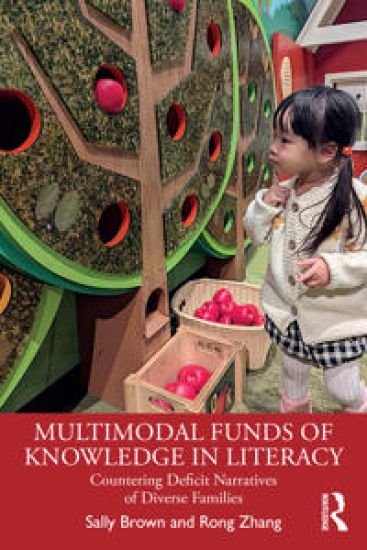
Applying an asset-based approach, Multimodal Funds of Knowledge in Literacy prepares educators to teach and support diverse students and their families as they negotiate multimodal aspects of literacy learning. Framed by sociocultural theory, multiliteracies, multimodality, and posthumanism, the text combats deficit narratives by providing concrete alternatives that push educators to rethink their practices and support students’ and families’ cultural and linguistic strengths.Chapters include case studies, vignettes, prompts, and learning samples that will leave readers with valuable insights and new understandings of multimodal funds of knowledge. Comprehensive and instructive, this book is a key text in literacy education, family literacy, and community engagement.
Young Emergent Bilinguals as Meaning Makers takes readers on a journey of the multimodal literacy experiences of over 125 young children learning English as a new language in U.S. public school classrooms. The book is filled with a plethora of student work samples, transcripts, and artwork produced with the author/researcher as part of their literacy centers. These examples illustrate the rich and sophisticated ways emergent bilinguals make meaning using everyday resources. This often goes unnoticed by monolingual educators who tend to value linguistic forms of learning. Insight is offered into using endpapers as cultural invitations for meaning-making during reading instruction as well as ways to assess the multimodal productions of children. There are plenty of implications for practice that include ways to use technology to enhance digital literacy skills, discursive moves, and specifics about ways to value artwork produced by emergent bilinguals. The book pushes for changes in school curricula and policy as a way to move beyond monomodal, monolingual, and monocultural ideologies and practices.
This book will help you change your life and help you and your family live a greener, healthier lifestyle. Are you wanting to live greener, but don't know where to start? Or are you already on your zero-waste journey but stuck for ideas of what you can change next? Having been there myself, I know how overwhelming it can be trying to reduce waste. So I have captured what I have learnt on my journey to help others like you. This book will become your new best friend (a.k.a your 'Eco-Pal'). I have packed it to the brim with tips and tricks covering all the main sections of your lifestyle, from what you keep in your bathroom and kitchen, to parenting and cleaning. It not only gives you examples and personal recommendations for alternatives but also goes through the process of how to make these changes quickly and easily. This book's invaluable information will transform your outlook on waste and live a more eco-conscious lifestyle. You can also visit my resource page which includes links to various product examples and relevant websites for inspiration. There is something in here for everyone, including budget-friendly options and DIY recipes. Chapters include: Kitchen Bathroom Out & About Parenting Pages Cleaning Pages Other Changes Conclusion Bibliography With every small change, we can make a big difference.
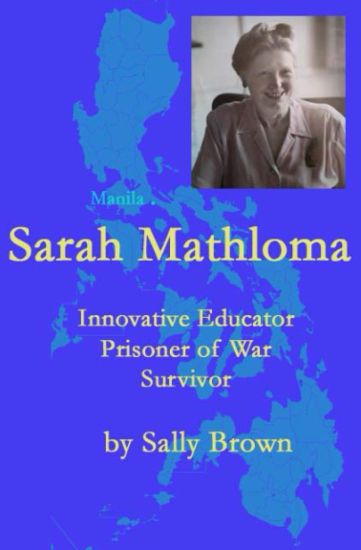
Sarah Mathloma: Innovative Educator, Prisoner of War, Survivor
Sally Brown
Gorman House Publishing
2020
nidottu
Sarah Mathloma England, the mother of two small children, was living in the Philippines in 1920 when she was abandoned by her husband, who suffered from undiagnosed schizophrenia. Left behind in Manila with a young son and daughter, Sarah Mathloma found work as a teacher. She soon rose to become the first woman principal of a Filipino high school in a country where free public education was not yet the norm. As World War Two broke out in the South Pacific, she sent both her children to live with relatives in the U.S. Imprisoned by the Japanese for the duration of the war, Sarah Mathoma survived cancer, the constant threat of brutality, and a starvation diet. Drawing on historic documents, personal journals, and eyewitness accounts, Sally Brown (Sarah Mathloma's daughter) weaves this past into a tapestry that becomes a testament to the survival of the human spirit. Set against the dramatic backdrop of the unfolding Twentieth Century, Sarah Mathloma is the story of a remarkably modern woman-a feminist before feminism. About the author: Sally Brown grew up in the Philippines with her mother and younger brother. She is also the co-author, with her husband David, of A Biography of Mrs. Marty Mann: The First Lady of Alcoholics Anonymous.
Professionalism in Practice
Kay Sambell; Sally Brown; Linda Graham
Springer International Publishing AG
2018
nidottu
This book acts as a highly practical guide for new and experienced lecturers, learning supporters and leaders in Higher Education; and offers plentiful examples and vignettes showing how learning can be brought to life through activity and engagement. It offers numerous pragmatic illustrations of how to design and deliver an engaging curriculum, and assess students’ learning authentically. Sound scholarship and research-informed approaches to Higher Education teaching and learning underpins the myriad accessible and readily recognizable examples of how real educators solve the challenges of contemporary Higher Education. Additionally, guidance is offered on how to present evidence for those seeking accreditation of their teaching and leadership in Higher Education, as well as useful advice for experienced HE teachers seeking to advance their careers into more senior roles, on the basis of their strong teaching and pedagogic leadership. The book will be of great interest to studentsand researchers working in Education, and will be invaluable reading for both new and experienced lecturers working in HE institutions.
Professionalism in Practice
Kay Sambell; Sally Brown; Linda Graham
Springer International Publishing AG
2017
sidottu
This book acts as a highly practical guide for new and experienced lecturers, learning supporters and leaders in Higher Education; and offers plentiful examples and vignettes showing how learning can be brought to life through activity and engagement. It offers numerous pragmatic illustrations of how to design and deliver an engaging curriculum, and assess students’ learning authentically. Sound scholarship and research-informed approaches to Higher Education teaching and learning underpins the myriad accessible and readily recognizable examples of how real educators solve the challenges of contemporary Higher Education. Additionally, guidance is offered on how to present evidence for those seeking accreditation of their teaching and leadership in Higher Education, as well as useful advice for experienced HE teachers seeking to advance their careers into more senior roles, on the basis of their strong teaching and pedagogic leadership. The book will be of great interest to studentsand researchers working in Education, and will be invaluable reading for both new and experienced lecturers working in HE institutions.
500 Tips for Further and Continuing Education Lecturers
David Anderson; Sally ( Brown; Phil Race
Routledge
2017
sidottu
Following changes in education over the years, lecturers are under increased pressure with heavier workloads and more complex assessment duties. This practical manual seeks to provide ideas on all aspects from coping with heavier workloads to working with support staff, and has a "dip-into" format.
This manual provides practical advice and tips on dealing with aspects of the primary teacher's role, from classroom organization to professional development.
Including sections on creative thinking, problems in groups, feedback mechanisms, dealing with conflict, and gender issues within groups, this volume is designed to aid educators and trainers to create more effective group learning situations.
500 Tips for Quality Enhancement in Universities and Colleges
Sally Brown; Phil Race; Brenda Smith
Routledge
2017
sidottu
This handbook seeks to provide practical, realistic suggestions about how quality can be measured, maintained and improved in institutions. It is addressed to a cross-section of staff who make up colleges and universities, not just those responsible for quality audit.
This updated text takes account of the changes that have occurred through technological advances, and has sections to cover ICT in the classroom. It is suitable for both new and experienced teachers in primary, further and higher education.
This text offers researchers practical hints and advice as well as support/guidance in planning, carrying out, writing up and publishing research findings. Topics covered include: information handling; time and self-management; writing; dealing with others; and publishing and profile.
This study examines the factors influencing the changes in teaching assessment at the higher education level and studies the range of techniques and methods available to the assessor. It evaluates the effectiveness of certain methods and discusses their implementation.
Essential Tips for Organizing Conferences & Events
Sally Brown; Fiona Campbell; Phil Race; Alison Robinson
Routledge
2016
sidottu
Many conferences and training events are organised by individuals who have little experience of doing so. Some have had the task thrust upon them without being offered adequate training, and have little idea of the time, experience and care needed to plan and manage events effectively. Each conference is different, and each can present a new problem to the unprepared, even to the most experienced conference organiser. This book provides immediate, accessible advice on how to run an effective event, featuring a wealth of practical tips, guidelines, case studies, action checklists, and useful sample material and templates. All areas of organisation are covered, including: managing, planning, contingency planning, targeting, costing and budgeting, housekeeping, administering, assuring the quality of content, evaluating, disseminating and ensuring continuity.
This book presents over 500 practical suggestions designed to help tutors establish active learning amongst their students. Divided into useful sections the tips cover the entire range of teaching and learning situations and comprise a 'start anywhere', dip-in resource suitable for both the newcomer and the old hand.Intended mainly for the university or college lecturer involved in learner-centred learning, this resource offers fresh ideas and food for thought on six broad areas of the job:getting the students goingstarting off, and working togetherthe programme itself - lectures, assignments and feedbackhelping students to learn from resourcesassessment: demonstrating evidence of achievementskills for career and life in general.This lively and stimulating book will prove invaluable to lecturers, tutors, teachers, trainers and staff developers.
Containing over 100 checklist grids of performance indicators on a wide range of teaching elements, this guide allows teachers to assess their own work, uncovering strengths and weaknesses. The text can also be used for formal peer assessment or as a basis for gathering feedback.
Lecturing can be a terror, a chore or an exhilarating experience. For most lecturers, at one time or another, it is all of these things. For many in HE & FE it remains the staple form of teaching and, as student groups get ever larger, good lecturing becomes ever more important.This is an accessible, friendly and confidence-boosting book for inexperienced and experienced lecturers alike. Written in a lively and straightforward style, it guides readers through the art of good lecturing. This is a book to use both to gain confidence, and to work with as the your lecturing becomes more assured. The authors show how to improve lecturing, and how lecturing is a flexible and essential tool for enhancing learning and understanding. Illustrated throughout with fascinating case studies and scenarios and with helpful hints and tips, key issues covered include: * the place and types of lecture* voice and body language* causing learning in lectures* making lectures more effective* lecturing tools and processes* engaging groups* ensuring and developing quality* tips for day-to-day use.