Kirjojen hintavertailu. Mukana 12 595 353 kirjaa ja 12 kauppaa.

Kirjailija

Saloni Mathur

Kirjat ja teokset yhdessä paikassa: 4 kirjaa, julkaisuja vuosilta 2007-2019, suosituimpien joukossa A Fragile Inheritance. Vertaile teosten hintoja ja tarkista saatavuus suomalaisista kirjakaupoista.

4 kirjaa

Kirjojen julkaisuhaarukka 2007-2019.

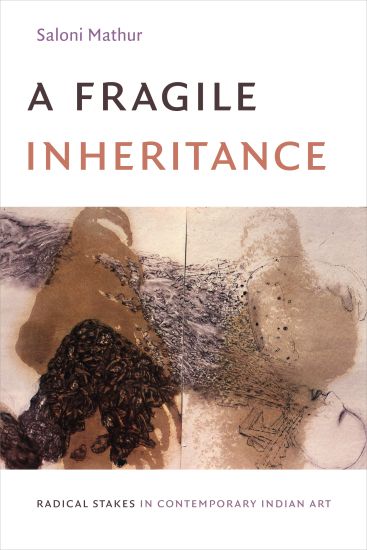
A Fragile Inheritance

A Fragile Inheritance

Saloni Mathur

Duke University Press
2019
pokkari
In A Fragile Inheritance Saloni Mathur investigates the work of two seminal figures from the global South: the New Delhi-based critic and curator Geeta Kapur and contemporary multimedia artist Vivan Sundaram. Examining their written and visual works over the past fifty years, Mathur illuminates how her protagonists’ political and aesthetic commitments intersect and foreground uncertainty, difficulty, conflict, and contradiction. This book presents new understandings of the culture and politics of decolonization and the role of non-Western aesthetic avant-gardes within the discourses of contemporary art. Through skillful interpretation of Sundaram's and Kapur’s practices, Mathur demonstrates how received notions of mainstream art history may be investigated and subjected to creative redefinition. Her scholarly methodology offers an impassioned model of critical aesthetics and advances a radical understanding of art and politics in our time.
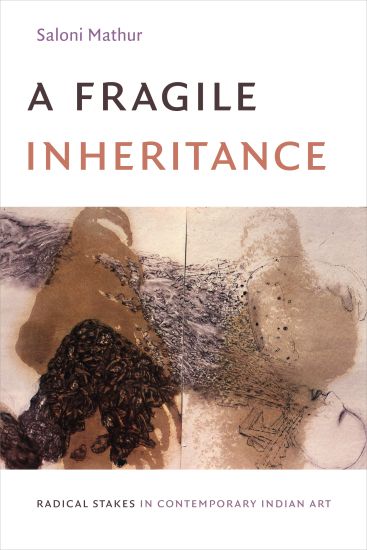
A Fragile Inheritance

A Fragile Inheritance

Saloni Mathur

Duke University Press
2019
sidottu
In A Fragile Inheritance Saloni Mathur investigates the work of two seminal figures from the global South: the New Delhi-based critic and curator Geeta Kapur and contemporary multimedia artist Vivan Sundaram. Examining their written and visual works over the past fifty years, Mathur illuminates how her protagonists’ political and aesthetic commitments intersect and foreground uncertainty, difficulty, conflict, and contradiction. This book presents new understandings of the culture and politics of decolonization and the role of non-Western aesthetic avant-gardes within the discourses of contemporary art. Through skillful interpretation of Sundaram's and Kapur’s practices, Mathur demonstrates how received notions of mainstream art history may be investigated and subjected to creative redefinition. Her scholarly methodology offers an impassioned model of critical aesthetics and advances a radical understanding of art and politics in our time.
Vivan Sundaram – History Project

Vivan Sundaram – History Project

Homi Bhabha; Geeta Kapur; Saloni Mathur; Arindam Dutta; Sibaji Bandyopadhyay

Tulika Book
2018
sidottu
This book is an intensive reconsideration of the very first site-specific installation staged in India. Vivan Sundaram, one of India's most innovative artists, located his History Project, marking fifty years of Indian independence, in a hugely visited and popular public institution, the Victoria Memorial and Museum in Kolkata. The artist's choice of setting was by way of a challenge: to 'occupy' an imperial edifice and change its orientation; to reflect India's struggle for independence and the emerging nation's stake in modernity through an anachronistic mirror; and to engage with postcolonial contradictions through recursive narration. It needed an artwork scaled to the proportion of these issues and the book examines how Sundaram met this challenge. His ideology and aesthetic, his formal choices and method, are critically investigated in a series of essays contributed by distinguished authors: cultural theorists, art and architectural historians. The book carries abundant, well-annotated illustrations of the complex installation.
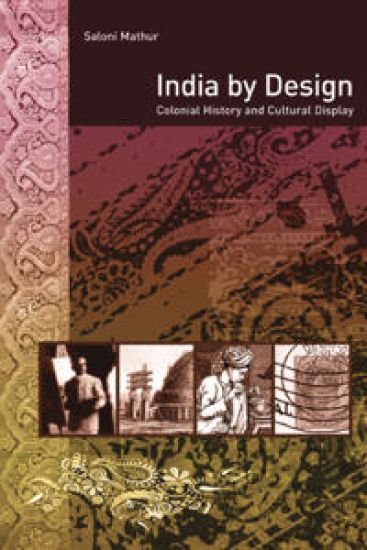
India by Design

India by Design

Saloni Mathur

University of California Press
2007
pokkari
"India by Design: Colonial History and Cultural Display" maps for the first time a series of historical events - from the Raj in the mid-nineteenth century up to the present day - through which India was made fashionable to Western audiences within the popular cultural arenas of the imperial metropole. Situated at the convergence of discussions in anthropology, art history, museum studies, and postcolonial criticism, this dynamic study investigates with vivid historical detail how Indian objects, bodies, images, and narratives circulated through metropolitan space and acquired meaning in an emergent nineteenth-century consumer economy. Through an examination of India as represented in department stores, museums, exhibitions, painting, and picture postcards of the era, the book carefully confronts the problems and politics of postcolonial display and offers an original and provocative account of the implications of colonial practices for visual production in our contemporary world.