
Kirjailija
Salvatore Settis
Kirjat ja teokset yhdessä paikassa: 9 kirjaa, julkaisuja vuosilta 2006-2024, suosituimpien joukossa The Cathedral of St. Lawrence in Genoa. Vertaile teosten hintoja ja tarkista saatavuus suomalaisista kirjakaupoista.
9 kirjaa
Kirjojen julkaisuhaarukka 2006-2024.
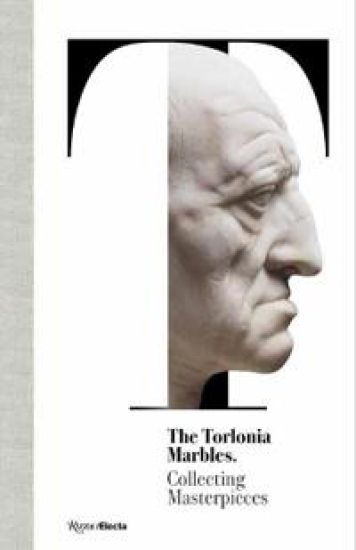
Last published in a nineteenth-century catalogue, the distinguished Torlonia Collection of more than 600 priceless Greek and Roman works marbles and bronzes, reliefs and sarcophagi, depictions of gods, and portraits of emperors is one of the most important assemblages of classical sculptures still in private hands anywhere in the world. This eagerly awaited volume presents a selection of nearly 100 sculptures, which have been chosen for their quality and historic significance and which will be featured in an unprecedented exhibition designed by David Chipperfield and held in the Villa Caffarelli, near the Musei Capitolini in Rome, before touring globally. The legendary aura surrounding this, Rome s last princely collection, is due not only to its extraordinary scope and the high quality of the works, but also to the fact that the collection has not been available to the public for decades. This revelatory book features multiple essays by leading experts on the history of the collection and scholarly entries for the works detailing important discoveries made through archaeological research as well as the cleaning and conservation of the sculptures.

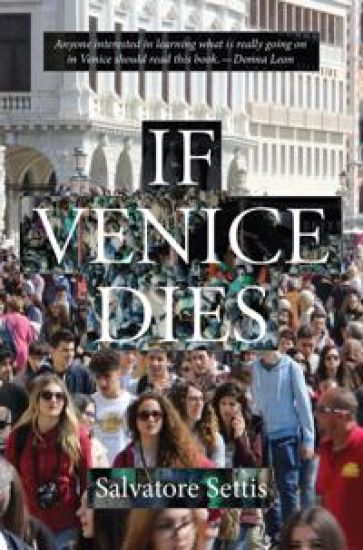
A passionate plea to defend Venice's fate from mass tourism, commodification and cultural homogenization, by art historian, archaeologist and 'conscience of Italy' Salvatore Settis.
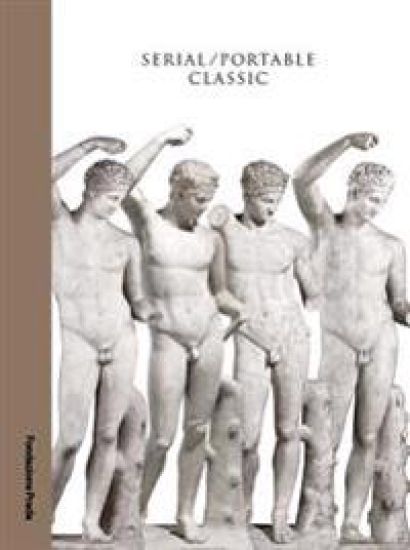
Serial / Portable Classic - The Greek Canon and its Mutations
Anna Anguissola; Salvatore Settis
Fondazione Prada
2015
nidottu
In no other period of Western art history was the creation of copies from great masterpieces of the past as important as in late Republican Rome and throughout the Imperial Age. Certain Greek and Roman sculptures were established as canonical, their prestige so high and their acquisition so impossible that their reproductions--even on a small, portable scale--became sought-after commodities among the well-read populace of ancient Rome and modern Europe. With almost 400 duotone illustrations, a wealth of explanatory and groundbreaking scholarship and beautiful, delicate paper changes, "Serial / Portable Classic" examines this culture of the copy. Published to accompany the Fondazione Prada exhibitions "Serial Classic" in Milan and "Portable Classic" in Venice, whose display has been conceived by OMA/Rem Koolhaas, it is bound to be treasured by the student of art history and casual reader alike.

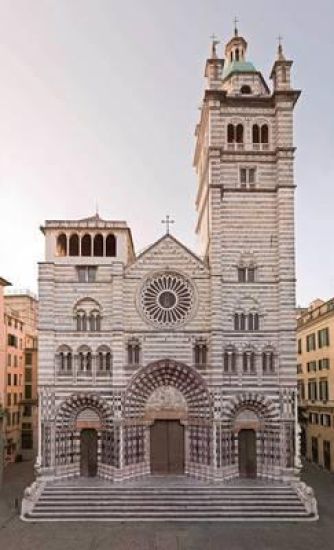
The Cathedral of St. Lawrence in Genoa
Gerhard Wolf; Anna Rosa Calderoni Masetti; Salvatore Settis
Franco Cosimo Panini Editore
2013
sidottu
Founded probably in the 5th or 6th century, the Cathedral of Genoa was later rebuilt in Romanesque style and devoted to St. Lawrence the martyr. Money came from the successful enterprises of the Genoese fleets in the Crusades. After a fire in 1296, the building was partly restored, the inner colonnades rebuilt and matronei and frescoes added. In 1550 the Perugian architect Galeazzo Alessi was commissioned by the city magistrates to plan the reconstruction of the entire building, but the construction of the cathedral didn't finish until the 17th century. Among the artworks inside the church are ceiling frescoes, paintings and altarpieces by Luca Cambiaso, Federico Barocci, Lazzaro Tavarone and Gaetano Previati, while sculpture include works by Domenico Gagini, Andrea Sansovino, Giacomo and Guglielmo Della Porta. Impressive are also the works of art and silverware kept in the Museum of the Treasury which lies under the cathedral. One of the most important pieces is the Sacred bowl brought by Guglielmo Embriaco after the conquest of Cesarea and supposed to be the chalice used by Christ during the Last Supper.
Every era has invented a different idea of the ‘classical’ to create its own identity. Thus the ‘classical’ does not concern only the past: it is also concerned with the present and a vision of the future. In this elegant new book, Salvatore Settis traces the ways in which we have related to our ‘classical’ past, starting with post-modern American skyscrapers and working his way back through our cultural history to the attitudes of the Greeks and Romans themselves. Settis argues that this obsession with cultural decay, ruins and a ‘classical’ past is specifically European and the product of a collective cultural trauma following the collapse of the Roman Empire. This situation differed from that of the Aztec and Inca empires whose collapse was more sudden and more complete, and from the Chinese Empire which always enjoyed a high degree of continuity. He demonstrates how the idea of the ‘classical’ has changed over the centuries through an unrelenting decay of ‘classicism’ and its equally unrelenting rebirth in an altered form. In the Modern Era this emulation of the ‘ancients’ by the ‘moderns’ was accompanied by new trends: the increasing belief that the former had now been surpassed by the latter, and an increasing preference for the Greek over the Roman. These conflicting interpretations were as much about the future as they were about the past. No civilization can invent itself if it does not have other societies in other times and other places to act as benchmarks. Settis argues that we will be better equipped to mould new generations for the future once we understand that the ‘classical’ is not a dead culture we inherited and for which we can take no credit, but something startling that has to be re-created every day and is a powerful spur to understanding the ‘other’.
Every era has invented a different idea of the ‘classical’ to create its own identity. Thus the ‘classical’ does not concern only the past: it is also concerned with the present and a vision of the future. In this elegant new book, Salvatore Settis traces the ways in which we have related to our ‘classical’ past, starting with post-modern American skyscrapers and working his way back through our cultural history to the attitudes of the Greeks and Romans themselves. Settis argues that this obsession with cultural decay, ruins and a ‘classical’ past is specifically European and the product of a collective cultural trauma following the collapse of the Roman Empire. This situation differed from that of the Aztec and Inca empires whose collapse was more sudden and more complete, and from the Chinese Empire which always enjoyed a high degree of continuity. He demonstrates how the idea of the ‘classical’ has changed over the centuries through an unrelenting decay of ‘classicism’ and its equally unrelenting rebirth in an altered form. In the Modern Era this emulation of the ‘ancients’ by the ‘moderns’ was accompanied by new trends: the increasing belief that the former had now been surpassed by the latter, and an increasing preference for the Greek over the Roman. These conflicting interpretations were as much about the future as they were about the past. No civilization can invent itself if it does not have other societies in other times and other places to act as benchmarks. Settis argues that we will be better equipped to mould new generations for the future once we understand that the ‘classical’ is not a dead culture we inherited and for which we can take no credit, but something startling that has to be re-created every day and is a powerful spur to understanding the ‘other’.