
Kirjailija
Sam Roberts
Kirjat ja teokset yhdessä paikassa: 13 kirjaa, julkaisuja vuosilta 2008-2026, suosituimpien joukossa History of New York in 27 Buildings. Vertaile teosten hintoja ja tarkista saatavuus suomalaisista kirjakaupoista.
13 kirjaa
Kirjojen julkaisuhaarukka 2008-2026.
Longlisted for the Brooklyn Public Library Book Prize in Nonfiction From award-winning New York Times reporter Sam Roberts, the story of the world's most exceptional city, told through 31 little-known yet pivotal inhabitants who helped define it-now in paperback. In Sam Roberts's pulsating history of the world's most exceptional metropolis, greet the city anew through thirty-one unique New Yorkers you've probably never heard of-just in time for the city's 400th birthday. The New Yorkers introduces the first woman to appear nude in a motion picture, becoming the face of Civic Fame as Miss Manhattan; the couple whose soir e ended the Gilded Age with an embarrassing bang; and the husband and wife who invented the modern celebrity talk show. It reveals the victim of the city's first recorded murder in the seventeenth century and the high school dropout who slashed crime rates in the twentieth. The notorious mobster who was imperiously banished from the city and the woman who successfully sued a bus company for racial discrimination a century before Rosa Parks. Some deserved monuments, but their grandeur was overlooked or forgotten. Others shepherded the city through its perpetual evolution, but discreetly. Virtually all have vanished into New York's uncombed history. The New Yorkers is a living biography of the world's greatest city, and no one knows New York better than Sam Roberts-or is better at bringing its history to life.

The most comprehensive account of ghost signs ever published, focusing on London's hand-painted relics of advertising past. Ghost signs are fascinating pieces of urban archaeology. Imposing yet hidden in plain sight, these faded advertisements are London's history written onto the contemporary cityscape. The book showcases around 250 of London's most impressive and historically significant ghost signs, geo-located, accompanied by archival and other contextual images. Introductory chapters include essays on how they were produced and their restoration and conservation. Signs are then featured in themed chapters that include building, entertaining, branding and, ultimately, burying the city.

This book introduces the fundamentals of sign painting, allowing readers to learn about the tools, materials and techniques needed to create painted signs. All the basics are covered, from choosing and using brushes, paints, mahl sticks, dippers and pencils, to how to prepare and finish surfaces, transfer designs, mix paint and work with the brush. A gallery section of original alphabets, created for the book by sign painters around the world, provides visual inspiration and demonstrates a wide variety of styles and approaches.
From the urban affairs correspondent of the New York Times comes the story of a city through the structures that define it, from the Empire State Building to the homeless shelter that pioneered modern art. New York Times correspondent Sam Roberts has told the story of New York through its people (Only in New York) and its artifacts (A History of New York in 101 Objects). Now, he rises to another challenge: Can bricks, glass, wood, and mortar reveal why and how, as New York is poised to celebrate its 400th anniversary, the city evolved into the nation's biggest and most influential?He culls the 600,000 or so buildings in New York for twenty-seven that, in the past four centuries, have been the most transformative or emblematic of transmutation in the city's economic, social, or political evolution. He describes not only the buildings and how they came to be, but also their enduring impact on the city and its people and, in most cases, how the consequences of the construction reverberated around the world.A few structures, such as the Empire State Building, are architectural icons, but Roberts goes beyond the familiar with intriguing tales of the personalities and exploits behind the unrivalled skyscraper's construction. Some stretch the definition of buildings, to include the city's oldest bridge and the landmark Coney Island Boardwalk. Others offer surprises: where the United Nations General Assembly first met; a hidden hub of global internet traffic; a nondescript factory that produced billions of dollars of currency in the poorest neighborhood in the country; and the buildings that triggered the Depression and launched the New Deal.
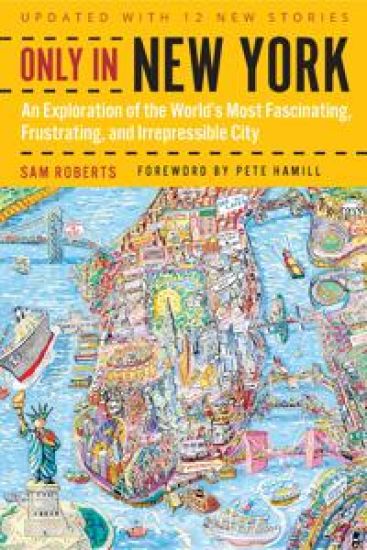
No one denies that New York City is unique—but what makes it sui generis? Sam Roberts, a longtime city reporter, has puzzled over this in print and in his popular New York Times podcasts for years. In Only in New York, updated with new tales and fascinating glimpses into uniquely NYC life, he writes about what makes this city tick and why things are the way they are in the greatest of all metropolises on earth. The more than 75 essays in this book cover a variety of topics, including: -How do New Yorkers react during disasters? -Maritime history (the Hudson River) -Crowds, space, and population growth -1908: a year in History history -Jewish Daily Forward -What happens when a neighborhood loses its tony ZIP code? A winning and informative gift book for every fan of "the city," Only in New York is elegantly written and solidly reported.
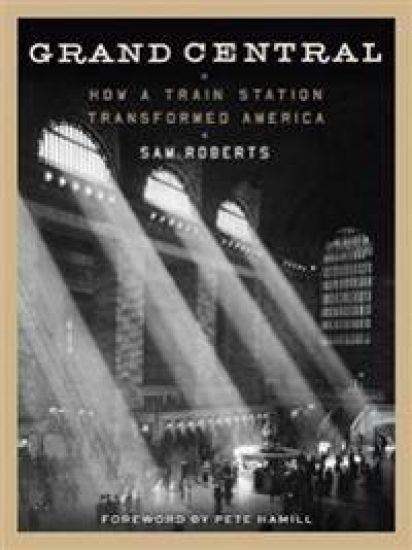
In the winter of 1913, Grand Central Station was officially opened and immediately became one of the most beautiful and recognizable Manhattan landmarks. In this celebration of the one hundred year old terminal, Sam Roberts of The New York Times looks back at the terminal's conception, amazing history, and the far-reaching cultural effects of Grand Central that continues to amaze tourists and shuttle busy commuters. Along the way, Roberts will explore how the Manhattan transit hub truly foreshadowed the evolution of suburban expansion in the country, and fostered the nation's westward expansion and growth via train.Featuring quirky anecdotes and behind-the-scenes information, this book will allow readers to peek into the secret and unseen areas of Grand Central -- from the tunnels, to the command center, to the hidden passageways. With stories about everything from the famous movies that have used Grand Central as a location to the forty-eight foot long snake that made the building his home, this is a fascinating and, exciting look at a true American institution.
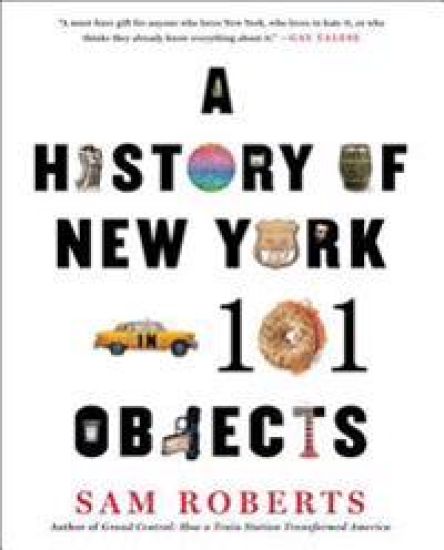
"Delightfully surprising....A portable virtual museum...an entertaining stroll through the history of one of the world's great cities" (Kirkus Reviews), told through 101 distinctive objects that span the history of New York, almost all reproduced in luscious, full color. Inspired by A History of the World in 100 Objects, Sam Roberts of The New York Times chose fifty objects that embody the narrative of New York for a feature article in the paper. Many more suggestions came from readers, and so Roberts has expanded the list to 101. Here are just a few of what this keepsake volume offers: -The Flushing Remonstrance, a 1657 petition for religious freedom that was a precursor to the First Amendment to the Constitution. -Beads from the African Burial Ground, 1700s. Slavery was legal in New York until 1827, although many free blacks lived in the city. The African Burial Ground closed in 1792 and was only recently rediscovered. -The bagel, early 1900s. The quintessential and undisputed New York food (excepting perhaps the pizza). -The Automat vending machine, 1912. Put a nickel in the slot and get a cup of coffee or a piece of pie. It was the early twentieth century version of fast food. -The "I Love NY" logo designed by Milton Glaser in 1977 for a campaign to increase tourism. Along with Saul Steinberg's famous New Yorker cover depicting a New Yorker's view of the world, it was perhaps the most famous and most frequently reproduced graphic symbol of the time. Unique, sometimes whimsical, always important, A History of New York in 101 Objects is a beautiful chronicle of the remarkable history of the Big Apple. "The story Sam Roberts] is telling is that of New York, and he nails it" (Daily News, New York).
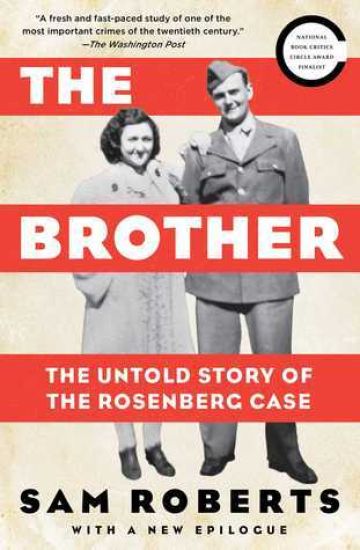
"A fresh and fast-paced study of one of the most important crimes of the twentieth century" (The Washington Post), The Brother now discloses new information revealed since the original publication in 2003--including an admission by his sons that Julius Rosenberg was indeed a Soviet spy and a confession to the author by the Rosenbergs' co-defendant. Sixty years after their execution in June 1953 for conspiring to steal atomic secrets, Julius and Ethel Rosenberg remain the subjects of great emotional debate and acrimony. The man whose testimony almost single-handedly convicted them was Ethel Rosenberg's own brother, David Greenglass, who recently died. Though the Rosenbergs were executed, Greenglass served a mere ten years in prison, after which, with a new name, he disappeared. But journalist Sam Roberts found Greenglass, and then managed to convince him to talk about everything that had happened. Since the original publication of The Brother, Roberts sued to release grand jury testimony, which further implicates Greenglass and demonstrates how the prosecution was tainted. One of the defendants, Morton Sobell, admitted to Roberts that he and Julius Rosenberg were spies. Furthermore, Michael and Robert Meeropol, the Rosenbergs' sons, acknowledged to Roberts that although their mother was not legally culpable, that the "secret" to the atomic bomb was not compromised, and that the death penalty was excessive, their father was, in fact, guilty of conspiracy to commit espionage on behalf of the Soviet Union. Now released with this important new information, The Brother is more than ever, "A gripping account of the most famous espionage case in US history...an excellent book, written with flair and alive with the agony of the age" (The Wall Street Journal).

Flying pigs, retro hairstyles and hand grenades are among some of the images found in this book celebrating the art and craft of Cambodia's hand-painted advertising. The book introduces the signs, the people who paint them, and explores their links to Cambodian art, culture and history.The stories of the signs and their makers are inseparable from events in Cambodia over the last 40 years, notably the impact of the infamous Khmer Rouge regime. This crushed both art and commerce, the two spheres of activity straddled by these hand-painted signs. Their rise and gradual fall since this time takes the reader up to the current day and the uncertain future faced by this characteristic feature of Cambodia's streets.In considering the signs, the sign painters speak and share their thoughts, while others provide insights from the perspective of outsiders living and working in Cambodia. These include the author's reflections on his own engagement with the signs, and the stories they tell. This book is his tribute to this charming piece of Cambodian culture that has endured a turbulent past and faces similarly rough waters ahead.The signs featured in this book are given full English translations in a comprehensive notes section. A Khmer translation of the text is also available on the website, alongside a host of other bonus material including videos, additional photographs, and useful links: http: //kratie.ghostsigns.co.uk
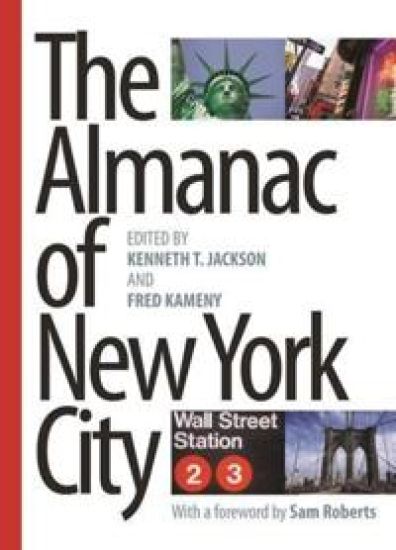
The Almanac of New York City is an innovative companion for urban enthusiasts. Nowhere else will you find the name of the city's first comptroller (Selah Strong) and Staten Island's most recently designated historic district (Our Lady of Mount Carmel Grotto) next to the city's best-attended cultural institution (The Metropolitan Museum of Art, with five million visitors annually) and its lowest recorded temperature (15 degrees below zero in February 1934). The Almanac identifies the borough with the most residents who relocate to Palm Beach (Queens) and the borough with the highest number of Panamanian immigrants (Brooklyn). It lists where New York currently ranks in the cost of apartment rentals, the rate of obesity in each borough, the details of executions dating back to 1639, per capita income by borough, the longest-running Broadway shows, the winners of the Wanamaker Mile, and the location of celebrated grave sites. Compiled by two longtime historians of the city, The Almanac treats readers to a real New York story, a tale that will delight anyone seeking a deeper understanding of the Big Apple's complex core.
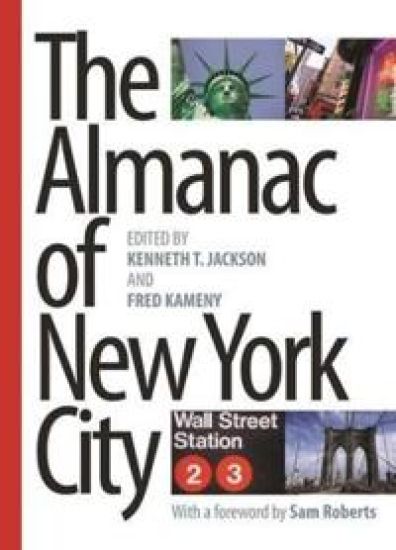
The Almanac of New York City is an innovative companion for urban enthusiasts. Nowhere else will you find the name of the city's first comptroller (Selah Strong) and Staten Island's most recently designated historic district (Our Lady of Mount Carmel Grotto) next to the city's best-attended cultural institution (The Metropolitan Museum of Art, with five million visitors annually) and its lowest recorded temperature (15 degrees below zero in February 1934). The Almanac identifies the borough with the most residents who relocate to Palm Beach (Queens) and the borough with the highest number of Panamanian immigrants (Brooklyn). It lists where New York currently ranks in the cost of apartment rentals, the rate of obesity in each borough, the details of executions dating back to 1639, per capita income by borough, the longest-running Broadway shows, the winners of the Wanamaker Mile, and the location of celebrated grave sites. Compiled by two longtime historians of the city, The Almanac treats readers to a real New York story, a tale that will delight anyone seeking a deeper understanding of the Big Apple's complex core.