Kirjojen hintavertailu. Mukana 12 595 353 kirjaa ja 12 kauppaa.

Kirjailija

Sam Solecki

Kirjat ja teokset yhdessä paikassa: 6 kirjaa, julkaisuja vuosilta 1990-2022, suosituimpien joukossa Prague Blues. Vertaile teosten hintoja ja tarkista saatavuus suomalaisista kirjakaupoista.

6 kirjaa

Kirjojen julkaisuhaarukka 1990-2022.

The Etruscans in the Modern Imagination

The Etruscans in the Modern Imagination

Sam Solecki

MCGILL-QUEEN'S UNIVERSITY PRESS
2022
sidottu
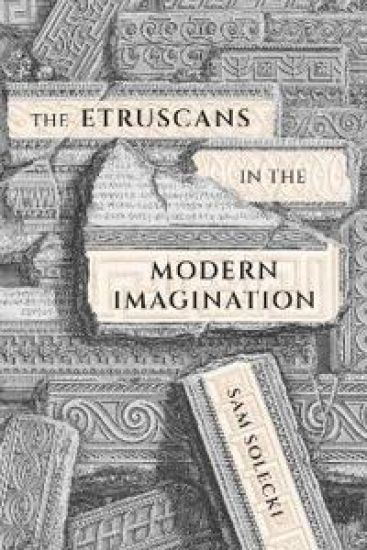
The Etruscans, a revenant and unusual people, had an Italian empire before the Greeks and Romans did. By the start of the Christian era their wooden temples and writings had vanished, the Romans and the early church had melted their bronze statues, and the people had assimilated. After the last Etruscan augur served the Romans as they fought back the Visigoths in 408 CE, the civilization disappeared but for ruins, tombs, art, and vases.No other lost culture disappeared as completely and then returned to the same extent as the Etruscans. Indeed, no other ancient Mediterranean people was as controversial both in its time and in posterity. Though the Greeks and Romans tarred them as superstitious and decadent, D.H. Lawrence praised their way of life as offering an alternative to modernity. In The Etruscans in the Modern Imagination Sam Solecki chronicles their unexpected return to intellectual and cultural history, beginning with eighteenth-century scholars, collectors, and archaeologists. The resurrection of this vanished kingdom occurred with remarkable vigour in philosophy, literature, music, history, mythology, and the plastic arts. From Wedgwood to Picasso, Proust to Lawrence, Emily Dickinson to Anne Carson, Solecki reads the disembodied traces of Etruscan culture for what they tell us about cultural knowledge and mindsets in different times and places, for the way that ideas about the Etruscans can serve as a reflection or foil to a particular cultural moment, and for the creative alchemy whereby artists turn to the past for the raw materials of contemporary creation. The Etruscans are a cultural curiosity because of their disputed origin, unique language, and distinctive religion and customs, but their destination is no less worthy of our curiosity. The Etruscans in the Modern Imagination provides a fascinating meditation on cultural transmission between ancient and modern civilizations.
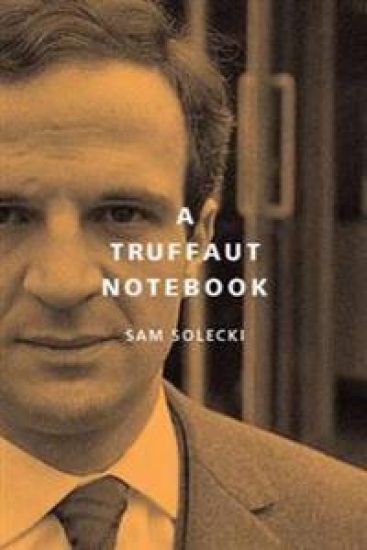
A Truffaut Notebook

A Truffaut Notebook

Sam Solecki

McGill-Queen's University Press
2015
sidottu
Francois Truffaut (1932-1984) ranks among the greatest film directors and has had a worldwide impact on filmmaking as a screenwriter, producer, film critic, and founding member of the French New Wave. His most celebrated films include The 400 Blows, Shoot the Piano Player, Jules and Jim, Day for Night, and The Last Metro. A Truffaut Notebook is a lively and eclectic introduction to the life and work of this major cinematic figure. In entries as brief as a page, as well as in full-length essays, it examines topics such as Truffaut's mentors, the autobiographical nature of his films, his place in the film tradition, his film criticism, his reputation, his relationships with other directors, and the formal and thematic coherence of his body of work. Sam Solecki also argues for Truffaut's continuing appeal and relevance by examining his influence on filmmakers like Woody Allen, Noah Baumbach, Alexander Payne, Patrice Leconte, and Jean-Pierre Jeunet, and on writers such as Julian Barnes, Ann Beattie, and Salman Rushdie. Because the book returns regularly to the author's shifting responses to Truffaut's work over the last fifty years, it also offers an autobiographical meditation on his own lifelong fascination with film. Consisting of over eighty short entries and essays, as well as provocative lists, dreams, and quizzes, A Truffaut Notebook is an original and exciting text and a model of passionate engagement with cinema.
Ragas of Longing

Ragas of Longing

Sam Solecki

University of Toronto Press
2003
pokkari
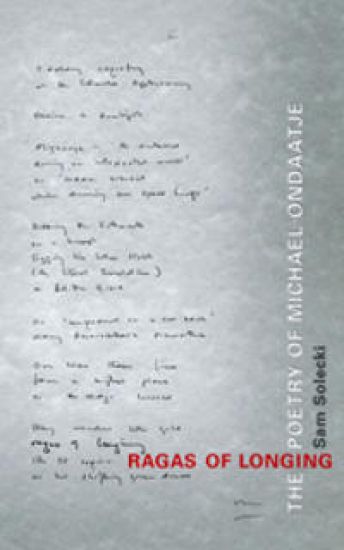
In Ragas of Longing, Sam Solecki offers the first book-length study of Michael Ondaatje's poetry and its place in his body of work. Relating the poetry to various poetic traditions from classical Tamil to postmodern, Solecki presents a chronological critical reading of Ondaatje's six volumes of poems. Among the study's concerns are the relationship between the poet's life and work, his poetic debts and development, his theory of poetry, and his central themes. Also present are close readings of Ondaatje's monographs on Leonard Cohen and Edwin Muir, the Scots' poet and critic. Solecki suggests that Ondaatje's poetry can be seen as constituting a relatively unified personal canon that has evolved with each book building on its predecessor while simultaneously preparing the groundwork for the following volume. The author argues that Ondaatje's writing has a narrative unity and trajectory - a figure in the carpet - determined by crucial events in his life, especially the early breakup of his family and his subsequent exile from his father and place of birth. The result is a body of major poetry whose vision is post-Christian, postmodern and, despite an often humourous tone, fundamentally tragic.
Ragas of Longing

Ragas of Longing

Sam Solecki

University of Toronto Press
2003
sidottu
In Ragas of Longing, Sam Solecki offers the first book-length study of Michael Ondaatje's poetry and its place in his body of work. Relating the poetry to various poetic traditions from classical Tamil to postmodern, Solecki presents a chronological critical reading of Ondaatje's six volumes of poems. Among the study's concerns are the relationship between the poet's life and work, his poetic debts and development, his theory of poetry, and his central themes. Also present are close readings of Ondaatje's monographs on Leonard Cohen and Edwin Muir, the Scots' poet and critic. Solecki suggests that Ondaatje's poetry can be seen as constituting a relatively unified personal canon that has evolved with each book building on its predecessor while simultaneously preparing the groundwork for the following volume. The author argues that Ondaatje's writing has a narrative unity and trajectory - a figure in the carpet - determined by crucial events in his life, especially the early breakup of his family and his subsequent exile from his father and place of birth. The result is a body of major poetry whose vision is post-Christian, postmodern and, despite an often humourous tone, fundamentally tragic.
The Last Canadian Poet

The Last Canadian Poet

Sam Solecki

University of Toronto Press
2000
pokkari
In The Last Canadian Poet Sam Solecki offers the first book-length study of the entire body of work of Al Purdy. The book grew out of Solecki's work as editor of The Canadian Forum (1979-82), and his growing sense that, despite being one of Canada's major poets, Purdy has been ignored by critics and academics. This book takes into account not only Purdy's more than forty published books, but also the manuscripts from the Purdy archives at the University of Saskatchewan and Queen's University. It is the first serious study of Purdy's work since George Bowering's monograph was published thirty years ago. The Last Canadian Poet suggests that Purdy's work articulates a vision of Canada, both of what it is and of what it might be. It is a poetic vision of one man's encounter with his country and the world. Purdy's poems record his sense of being in the world as a Canadian, of being rooted in a particular landscape, way of life, and history. They also show the struggle for a Canadian poetics, a way of writing in what might be called the Canadian grain. The book also argues that Purdy's forging of a native poetic idiom occurred at roughly the same time that the nationalist phase of Canadian political and cultural development was coming to an end. In the 1960s, at the very moment when Canadian nationalism had gained general acceptance, a crucial shift was occurring not only in how the Canadian state and nation were being defined but also in how Canadians viewed their relationship to literature. The book offers an essentially conservative defence of what some critics have called the 'national-referential aesthetic' that underlays much of the literary production and cultural criticism of Canada's first century. It also questions the influence of multiculturalism and postcolonial criticism on the contemporary devaluation of the traditions, works, and history of the past hundred years. In this context, Purdy's poetry plays an important role in a larger argument about Canadian identity and nationhood and the need for a more nuanced attitude towards the past.