Kirjojen hintavertailu. Mukana 12 399 833 kirjaa ja 12 kauppaa.

Kirjailija

Sami Pihlström

Kirjat ja teokset yhdessä paikassa: 35 kirjaa, julkaisuja vuosilta 2005-2026, suosituimpien joukossa Minerva 4. Vertaile teosten hintoja ja tarkista saatavuus suomalaisista kirjakaupoista.

35 kirjaa

Kirjojen julkaisuhaarukka 2005-2026.

Toward a Pragmatist Philosophy of the Humanities

Toward a Pragmatist Philosophy of the Humanities

Sami Pihlström

STATE UNIVERSITY OF NEW YORK PRESS
2022
sidottu
Develops a pragmatist approach to the philosophy of the humanities, interpreting history, literature, and religion in terms of pragmatic realism.Humanist scholars often feel the need to defend the humanities. The value of humanistic research is sometimes challenged, as the cultural "reality" investigated by disciplines such as history, literary studies, and theology may seem unclearIn particular, the ontology of the humanities might be considered obscure in comparison to the ontology of the natural sciences. Toward a Pragmatist Philosophy of the Humanities proposes to develop a comprehensive philosophical account of the humanities, focusing on the ontology and epistemology of humanistic inquiry from the standpoint of pragmatism. Sami Pihlström argues that humanistic cognitive pursuits can be interpreted along the lines of a pragmatist theory of inquiry, defending pragmatic realism about the humanities. However, far from leading to any reductive naturalization of the human world, the pragmatist philosophy of the humanities defended by Pihlström takes a distinctively Kantian critical turn in emphasizing the need for transcendental argumentation in the philosophy of the humanities, insisting on the irreducibly ethical dimensions of humanistic scholarship.

Toista ajatellen

Toista ajatellen

Sari Kivistö; Sami Pihlström

SUOMALAISEN KIRJALLISUUDEN SEURA
2022
nidottu
Miten toista tulisi ajatella? Kuinka kohdata toinen? Miten pitkälle toista voidaan ymmärtää?Elämäämme määrittää ratkaisevasti suhteemme toisiin ihmisiin. Toiseuden kohtaamisella on moninaisia eettisiä, poliittisia sekä ylipäänsä maailman merkityksellisenä kokemiseen kytkeytyviä ulottuvuuksia.Toista ajatellen pohtii kirjallisuudentutkimuksen, aatehistorian ja filosofian näkökulmia toisiinsa sulauttaen, mitä merkitsee sivistynyt ja kunnioittava tapa kohdata erilaisia toiseuksia - niin toisia ihmisiä ympärillämme kuin historian ja kulttuurin ajattelun ja toiminnan tapoja.Teos liittää toiseuden tarkastelun sekä kulttuurien vuorovaikutukseen että yksilöiden väliseen moninaisuutta arvostavaan keskusteluun. Toiseus näyttäytyy erotteluna ja etäisyytenä, joita meidän tulisi pyrkiä ylittämään oppiaksemme tuntemaan toisiamme paremmin. Toista voidaan aina ajatella toisin.
Pragmatist Truth in the Post-Truth Age

Pragmatist Truth in the Post-Truth Age

Sami Pihlström

Cambridge University Press
2021
sidottu
It is commonly believed that populist politics and social media pose a serious threat to our concept of truth. Philosophical pragmatists, who are typically thought to regard truth as merely that which is 'helpful' for us to believe, are sometimes blamed for providing the theoretical basis for the phenomenon of 'post-truth'. In this book, Sami Pihlström develops a pragmatist account of truth and truth-seeking based on the ideas of William James, and defends a thoroughly pragmatist view of humanism which gives space for a sincere search for truth. By elaborating on James's pragmatism and the 'will to believe' strategy in the philosophy of religion, Pihlström argues for a Kantian-inspired transcendental articulation of pragmatism that recognizes irreducible normativity as a constitutive feature of our practices of pursuing the truth. James himself thereby emerges as a deeply Kantian thinker.
Ihmisen maailma

Ihmisen maailma

Sami Pihlström

Eurooppalaisen filosofian seura
2021
nidottu
Professori Sami Pihlström tarkastelee uutuuskirjassaan ihmisen tietoa, vastuuta ja merkitystä. Hän lähtee liikkeelle kärsimyksestä inhimillisenä peruskokemuksena ja puolustaa itsekriittistä, omat rajansa ja tiedon rajat tunnustavaa humanismia.
Why Solipsism Matters

Why Solipsism Matters

Sami Pihlström

Bloomsbury Academic
2020
nidottu
Solipsism is one of the philosophical thesis or ideas that has generally been regarded as highly implausible, or even crazy. The view that the world is “my world” in the sense that nothing exists independently of my mind, thought, and/or experience is, understandably, frowned up as a genuine philosophical position. For this reason, solipsism might be regarded as an example of a philosophical position that does not “matter” at all. It does not seem to play any role in our serious attempts to understand the world and ourselves. However, by arguing that solipsism does matter, after all, Why Solipsism Matters more generally demonstrates that philosophy, even when dealing with highly counterintuitive and “crazy” ideas, may matter in surprising, unexpected ways. It will be shown that the challenge of solipsism should make us rethink fundamental assumptions concerning subjectivity, objectivity, realism vs. idealism, relativism, as well as key topics such as ethical responsibility – that is, our ethical relations to other human beings – and death and mortality. Why Solipsism Matters is not only an historical review of the origins and development of the concept of solipsism and a exploration of some of its key philosophers (Kant and Wittgenstein to name but a few) but it develops an entirely new account of the idea. One which takes seriously the global, socially networked world in which we live in which the very real ramifications of solipsism - including narcissism - can be felt.
Why Solipsism Matters

Why Solipsism Matters

Sami Pihlström

Bloomsbury Academic
2020
sidottu
Solipsism is one of the philosophical thesis or ideas that has generally been regarded as highly implausible, or even crazy. The view that the world is “my world” in the sense that nothing exists independently of my mind, thought, and/or experience is, understandably, frowned up as a genuine philosophical position. For this reason, solipsism might be regarded as an example of a philosophical position that does not “matter” at all. It does not seem to play any role in our serious attempts to understand the world and ourselves. However, by arguing that solipsism does matter, after all, Why Solipsism Matters more generally demonstrates that philosophy, even when dealing with highly counterintuitive and “crazy” ideas, may matter in surprising, unexpected ways. It will be shown that the challenge of solipsism should make us rethink fundamental assumptions concerning subjectivity, objectivity, realism vs. idealism, relativism, as well as key topics such as ethical responsibility – that is, our ethical relations to other human beings – and death and mortality.Why Solipsism Matters is not only an historical review of the origins and development of the concept of solipsism and a exploration of some of its key philosophers (Kant and Wittgenstein to name but a few) but it develops an entirely new account of the idea. One which takes seriously the global, socially networked world in which we live in which the very real ramifications of solipsism - including narcissism - can be felt.
Pragmatic Realism, Religious Truth, and Antitheodicy

Pragmatic Realism, Religious Truth, and Antitheodicy

Sami Pihlström

Helsinki University Press
2020
pokkari
Both as a traditional theological issue and in its broader secular varieties, theodicy remains a problem in the philosophy of religion. In this book, Professor Sami Pihlstr m provides a novel critical reassessment of the theodicy discourse addressing the problem of evil and suffering. He develops an antitheodicist view, arguing that theodicies seeking to render apparently meaningless suffering meaningful or justified from a "God's-Eye-View" ultimately rely on metaphysical realism failing to recognize the individual perspective of the sufferer. Pihlstr m thus shows that a pragmatist approach to the realism issue in the philosophy of religion is a vital starting point for a re-evaluation of the problem of theodicy.
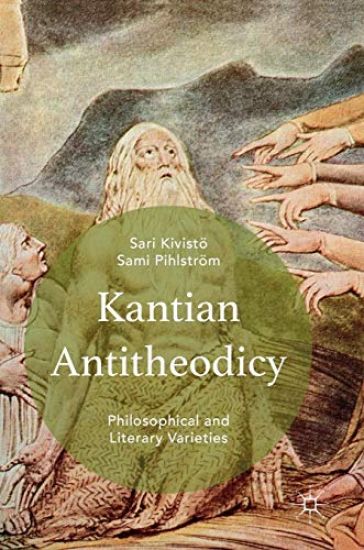
Kantian Antitheodicy

Kantian Antitheodicy

Sami Pihlström; Sari Kivistö

Springer International Publishing AG
2018
nidottu
This book defends antitheodicism, arguing that theodicies, seeking to excuse God for evil and suffering in the world, fail to ethically acknowledge the victims of suffering. The authors argue for this view using literary and philosophical resources, commencing with Immanuel Kant’s 1791 “Theodicy Essay” and its reading of the Book of Job. Three important twentieth century antitheodicist positions are explored, including “Jewish” post-Holocaust ethical antitheodicism, Wittgensteinian antitheodicism exemplified by D.Z. Phillips and pragmatist antitheodicism defended by William James. The authors argue that these approaches to evil and suffering are fundamentally Kantian. Literary works such as Franz Kafka’s The Trial, Samuel Beckett’s Waiting for Godot, and George Orwell’s Nineteen Eighty-Four, are examined in order to crucially advance the philosophical case for antitheodicism.
Kantian Antitheodicy

Kantian Antitheodicy

Sami Pihlström; Sari Kivistö

Springer International Publishing AG
2016
sidottu
This book defends antitheodicism, arguing that theodicies, seeking to excuse God for evil and suffering in the world, fail to ethically acknowledge the victims of suffering. The authors argue for this view using literary and philosophical resources, commencing with Immanuel Kant’s 1791 “Theodicy Essay” and its reading of the Book of Job. Three important twentieth century antitheodicist positions are explored, including “Jewish” post-Holocaust ethical antitheodicism, Wittgensteinian antitheodicism exemplified by D.Z. Phillips and pragmatist antitheodicism defended by William James. The authors argue that these approaches to evil and suffering are fundamentally Kantian. Literary works such as Franz Kafka’s The Trial, Samuel Beckett’s Waiting for Godot, and George Orwell’s Nineteen Eighty-Four, are examined in order to crucially advance the philosophical case for antitheodicism.
Death and Finitude

Death and Finitude

Sami Pihlström

Lexington Books
2016
sidottu
Death and Finitude offers an examination and defense of a pragmatic transcendental anthropology applicable to the concepts of limit, finitude, and mortality that are constitutive of human life as we know it. Sami Pihlström develops a special kind of philosophical anthropology—a pragmatic yet transcendental examination of the human condition—that interprets what is worth preserving in the tradition of transcendental philosophy in such a manner that this unusual combination will crucially enrich our understanding of a human problem we all share: mortality. In some sense, all serious philosophy inevitably reflects on the human condition and is thus philosophical anthropology, broadly conceived. There can hardly be any more serious problem concerning the human condition than the problem of death. Yet, mainstream analytic contributions to the philosophy of death usually addresses death in general, and it is far from obvious that such contributions are philosophically relevant in the sense of addressing the agony of an individual human being trying to understand their own mortal condition. “Continental” philosophy of death may be frustrating in a different sense, as it often fails to be conceptually as clear and argumentatively as rigorous as the analytic literature. Claiming to address my “being-toward-death”, such contributions may also fail to speak to the mortal individual if they end up in endless pseudo-philosophical jargon. It is against this background of frustration that Death and Finitude contributes to humanity’s on-going reflections on death, dying, and mortality—from a pragmatist yet transcendental perspective, seeking to accommodate these topics within a broader philosophical anthropology. The book is primarily intended for academic philosophers, but the potential readership includes not only scholars but also both graduate students and advanced undergraduates, as well as general educated readers. It is relevant to the concerns of philosophers specializing in transcendental philosophy, philosophical anthropology, pragmatism, Wittgenstein, and the philosophy of religion. As the book may be said to be an attempt to “philosophize historically,” it is in principle of interest to both systematically and historically oriented philosophers and students.
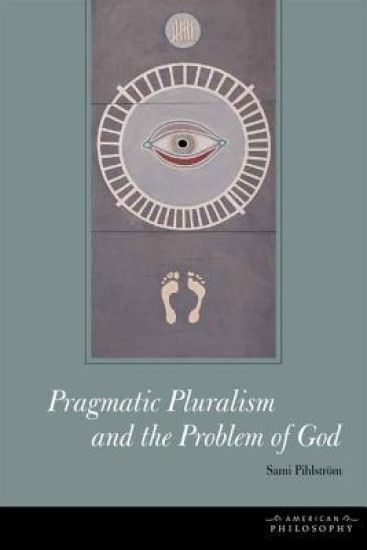
Pragmatic Pluralism and the Problem of God

Pragmatic Pluralism and the Problem of God

Sami Pihlström

Fordham University Press
2013
sidottu
Pragmatism mediates rival extremes, and religion is no exception: the problems of realism versus antirealism, evidentialism versus fideism, and science versus religion, along with other key issues in the philosophy of religion, receive new interpretations when examined from a pragmatist point of view. Religion is then understood as a human practice with certain inherent aims and goals, responding to specific human needs and interests, serving certain important human values, and seeking to resolve problematic situations that naturally arise from our practices themselves, especially our need to live with our vulnerability, finitude, guilt, and mortality.
Transcendental Guilt

Transcendental Guilt

Sami Pihlström

Lexington Books
2011
sidottu
In Transcendental Guilt: Reflections on Ethical Finitude, Sami Pihlsröm argues that the concept of guilt is fundamental to moral philosophy and to our self-understanding as moral agents. As the author emphasizes the constitutive role played by this concept, or by our capacity to experience the corresponding moral emotion(s), he labels the both ethically and metaphysically fundamental kind of guilt to be discussed transcendental guilt. However, the book does not merely illuminate this specific ethical concept. It also seeks to intensify our understanding of the nature of moral thought itself, especially of the seriousness of the moral point of view. Thus, Transcendental Guilt poses a challenge to our ethical self-conceptions, and also to our philosophical attempts to understand them. This book does not attempt a new ethical theory. Rather, it is critical of the very idea of ethical theory, especially if by ethical theory we mean a systematically organized structure setting us universal or absolute moral norms and principles. Nor does Pihlström engage in metaethical theorizing about the meaning of ethical concepts. Rather, the book engages in moral reflection, which is something significantly broader than (meta)ethical theorizing. In moral reflection, we are not establishing theoretically justified normative principles or constructing theories about the meaning of moral language; instead, we are reflecting on our finite human lives—our lives with other human beings—as presenting us with personal yet fundamental moral demands. Moreover, the moral reflection practiced in the book is both historically informed and philosophically systematic. Scholars, graduate or advanced undergraduate students, and general educated readers interested in fundamental issues in ethics will appreciate the novel perspective presented, which challenges mainstream ideas about moral theories and the foundations of ethical thought.
Pragmatist Metaphysics

Pragmatist Metaphysics

Sami Pihlström

Continuum International Publishing Group Ltd.
2009
sidottu
This book provides novel reading of the relations between two central philosophical disciplines - metaphysics and ethics. "Pragmatist Metaphysics" proposes a pragmatist re-articulation of the nature, aims and methods of metaphysics. Rather than regarding metaphysics as a 'first philosophy', an inquiry into the world independent of human perspectives, the pragmatist views metaphysics as an inquiry into categorizations of reality laden with human practices. Insofar as our categorizations of reality are practice-laden, they are also, inevitably, value-laden.Sami Pihlstrom argues that metaphysics does not, then, study the world's 'own' categorical structure, but a structure we, through our conceptual and practical activities, impose on the reality we experience and interact with. Engaging with the classical American pragmatists, in particular William James, and neopragmatists, including Hilary Putnam, the author seeks to correct long-held misconceptions regarding the nature of the relationship between metaphysics and pragmatism. He argues that a coherent metaphysical alternative to the currently fashionable realist metaphysics emerges from pragmatism and that pragmatism itself should be reinterpreted in a metaphysically serious manner. Moreover, the book argues that, from a pragmatist perspective, metaphysics must be inextricably linked with ethics.
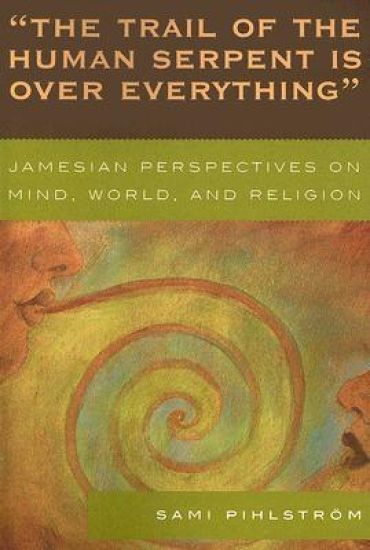
'The Trail of the Human Serpent Is over Everything'

'The Trail of the Human Serpent Is over Everything'

Sami Pihlström

University Press of America
2007
nidottu
This book takes a fresh look at how William James' (1842–1910) conceptions of the human mind, death (mortality and immortality), and religion provide us with a viable alternative to many contemporary philosophical approaches. The distinctive Jamesian perspective is illuminated through critical discussions of several different theories and conjectures. The overall argument of this volume is that pragmatist metaphysics, philosophy of mind, and philosophy of religion must be subordinated to ethics. To provide an historical and philosophical context for this revolutionary conception of the pragmatic method, an introductory discussion of James' views on pragmatism, realism, and truth is also included. Instead of focusing on the general issues of realism and pragmatism, however, the volume examines the applications of these issues to topics such as death, evil, and other minds. The book is vital reading not only for James scholars and pragmatists, but for anyone thinking seriously about human mortality and the endless ethical challenges our life with other human beings that confront us.
Pragmatic Moral Realism

Pragmatic Moral Realism

Sami Pihlström

BRILL
2005
nidottu
This book examines the issue of moral realism from a pragmatist point of view, drawing attention to our human practices of ethical evaluation and deliberation. It defends the essentially ungrounded and humanly fundamental place of ethics in our thought and action. Ethics must remain beyond justification and ubiquitous in our human form(s) of life.