Kirjailija
Samuel Beckett
Kirjat ja teokset yhdessä paikassa: 142 kirjaa, julkaisuja vuosilta 1974-2026, suosituimpien joukossa Novels I of Samuel Beckett. Vertaile teosten hintoja ja tarkista saatavuus suomalaisista kirjakaupoista.
142 kirjaa
Kirjojen julkaisuhaarukka 1974-2026.
I novella Fyrste kjærleik møter vi ein namnlaus uteliggar utan andre ønske enn å få vere i fred på benken sin. Lulu forstyrrar han, og etterkvart blir han forelska. Fyrste kjærleik var ein av dei første tekstane Beckett skreiv på fransk, rett etter krigen i 1945, men han vart først utgitt i 1970 og på engelsk i 1973. I boka har Jon Fosse valt ut denne saman med fem andre kortare. Beckett skreiv smått om det store. Med ei stadig meir minimalistisk tilnærming sirkla han rundt mennesket sitt komplekse tilvære. Personane i Becketts tekstar verkar på same tid både nyfødde og livstrøytte, og tilbyr lesaren eit nytt og uvant blikk på verda. Mest kjend er han for teaterstykka, men sjølv såg han på prosaen, og særleg dei kortare tekstane, som den viktigaste diktinga si. I utvalet Jon Fosse har gjort av Becketts kortprosa, finn vi Fyrste kjærleik og fem andre forteljingar: Kasta ut, Nok, Pling, Dei farne bort og Løyse. Tidlegare norske utgåver av Becketts korte tekstar har basert seg på dei franske originalane, men tekstane i omsetjinga til Fosse er sette om frå engelsk. Beckett sette sjølv om tekstane sine frå fransk til engelsk, og då endra han ofte ein god del slik at ein kan snakka om to versjonar av same verk. Ingen av dei engelske versjonane er tidlegare utgjevne på norsk.Skalds klassikarar er ein serie av vellagra, handplukka verk i ny, frisk og nynorsk språkdrakt som skal gi leseglede til folket.
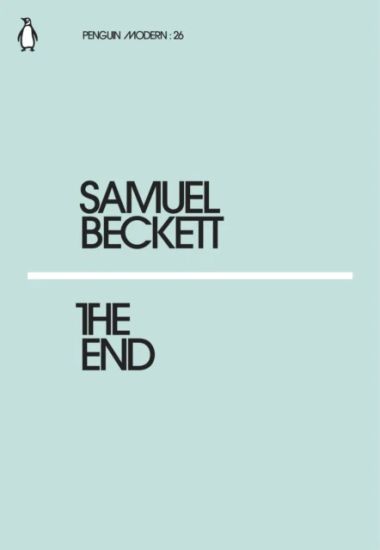
'They didn't seem to take much interest in my private parts which to tell the truth were nothing to write home about, I didn't take much interest in them myself.'From the master of the absurd, these two stories of an unnamed vagrant contending with decay and death combine bleakness with the blackest of humour. Penguin Modern: fifty new books celebrating the pioneering spirit of the iconic Penguin Modern Classics series, with each one offering a concentrated hit of its contemporary, international flavour. Here are authors ranging from Kathy Acker to James Baldwin, Truman Capote to Stanislaw Lem and George Orwell to Shirley Jackson; essays radical and inspiring; poems moving and disturbing; stories surreal and fabulous; taking us from the deep South to modern Japan, New York's underground scene to the farthest reaches of outer space.
Omkring det absurde
Jean Anouilh; Jean Genet; Eugène Ionesco; Samuel Beckett; Arthur Adamov; Jean Tardieu; Roland Dubillard; Fernando Arrabal
Solum Bokvennen
2018
sidottu
Omkring det absurde er en antologi som inneholder åtte enaktere og sketsjer skrevet på fransk av dramatikere forbundet med det absurde teater. Utvalg, oversettelse og etterord ved Kjell Helgheim
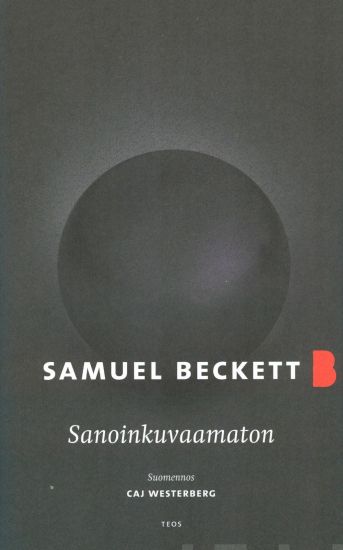
Samuel Beckettin vuonna 1953 ranskaksi ja 1958 englanniksi julkaistu romaani Sanoinkuvaamaton (L'Innomable; Unnameable) on löyhän ”trilogian” kolmas osa, jonkinlaista jatkoa teoksille Molloy ja Malone kuolee. On selvää, että tätä trilogiaa ei voi päättää, ja se onkin teoksen eräs sanoma.Sanoinkuvaamattoman monologin nimetön sankari on ehkä ihminen. Jonkinlaisessa epäpaikassa puhuva hahmo yrittää rakentaa itselleen sijaintia, ulottuvuuksia, ajatuksia, tunteitakin ehkä. Beckett on riisunut romaanistaan kaiken romaanimaisen: juonta ei ole, ei tunnistettavaa tilaa, sivuhenkilöt Mahood ja Mato saattavat hyvinkin olla puhujan kielen tuotosta - kuten tämä itsekin.Mitä jää jäljelle? Kirjan sankarin tukehduttavasta tilanteesta löytää huumoria, riemua ja lohtua, niin ankarasti Beckett pyrkii kohti ainakin erästä totuutta ihmisestä. Beckett etsii ja löytää ihmeellisen paikan kielen, ihmisen ja olemassaolon välissä. Hiljaisuus, ehkä kuolema, on lupaus, joka lunastuu pian, aivan pian, ehkä jo seuraavan lauseen jälkeen. Mutta elämä tuntuu jatkuvan. Beckettin sankarin yritys kuvata sanoin kuvaamatonta on yksi merkittävimpiä kysymyksiä ihmisenä olemisesta 1900-luvun kirjallisuudessa.
The Letters of Samuel Beckett: Volume 4, 1966–1989
Samuel Beckett
Cambridge University Press
2016
sidottu
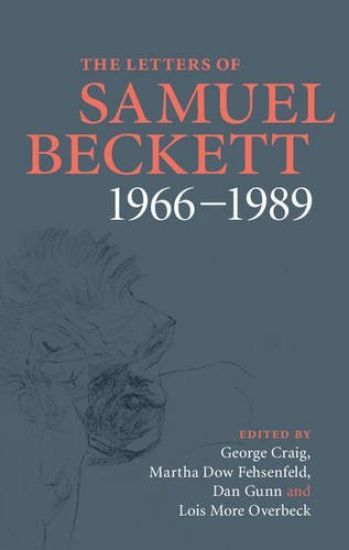
This fourth and final volume, which completes the Cambridge edition of The Letters of Samuel Beckett, covers the final twenty-four years of what was, as Beckett saw it, a surprisingly long life. During these years he produced many of his finest and most concentrated works for theatre, plays that included Not I, Ohio Impromptu, and Catastrophe; for television he wrote Eh Joe and Ghost Trio; while in prose, he produced the late 'trilogy' that comprises Company, Ill Seen Ill Said, and Worstward Ho. In 1969, Beckett was awarded the Nobel Prize in Literature, and the letters from this period show him struggling to cope with the pressures created by his ever-growing international fame. The letters reveal how, later, he turned his mind to his legacy, as seen through his interactions with biographers and archivists. This volume also provides chronologies, explanatory notes, translations, and profiles of Beckett's chief correspondents.
The Letters of Samuel Beckett 4 Volume Hardback Set
Samuel Beckett
Cambridge University Press
2016
muu
The complete, critically acclaimed Cambridge edition of The Letters of Samuel Beckett makes available for the first time a comprehensive range of letters by one of the twentieth century's greatest literary figures. The four volumes, spanning the period from 1929 to 1989, follow Beckett from his early writings, though the pivotal points in his personal life and career as he achieved ever-growing international fame, to his later work and life where he turned his mind to his legacy. Each volume provides detailed introductions, as well as translations of the letters, explanatory notes, year-by-year chronologies, profiles of correspondents and other contextual information.
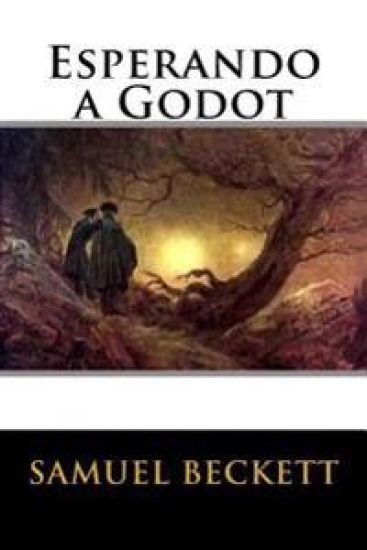
Esperando a Godot (en franc s: En attendant Godot), a veces subtitulada Tragicomedia en dos actos, es una obra perteneciente al teatro del absurdo, escrita a finales de los a os 40 por Samuel Beckett y publicada en 1952 por ditions de Minuit. Beckett escribi la obra originalmente en franc s, su segunda lengua. La traducci n al ingl s fue realizada por el mismo Beckett y publicada en 1955. La obra se divide en dos actos, y en ambos aparecen dos vagabundos llamados Vladimir y Estragon que esperan en vano junto a un camino a un tal Godot, con quien (quiz s) tienen alguna cita. El p blico nunca llega a saber qui n es Godot, o qu tipo de asunto han de tratar con l. En cada acto, aparecen el cruel Pozzo y su esclavo Lucky (en ingl s, afortunado), seguidos de un muchacho que hace llegar el mensaje a Vladimir y Estragon de que Godot no vendr hoy, "pero ma ana seguro que s ". Esta trama, que intencionalmente no tiene ning n hecho relevante y es altamente repetitiva, simboliza el tedio y la carencia de significado de la vida humana, tema recurrente del existencialismo. Una interpretaci n extendida del misteriosamente ausente Godot es que representa a Dios (en ingl s: God), aunque Beckett siempre neg esto.Como nombre propio, Godot puede ser un derivado de diferentes verbos franceses. Beckett afirm que derivaba de godillot, que en jerga francesa significa bota. El t tulo podr a entonces sugerir que los personajes est n esperando a la bota
This book contains the English and French texts and a complete record of the genesis of each. Besides CommentC'est How It Is, O'Reilly has included L'Image and an excerpt from Comment C'est that was published later inanother volume.
Written in French and first performed at the Théâtre du Bablyone in Paris, in 1953, En attendant Godot was subsequently translated by Samuel Beckett into English as Waiting for Godot. It was performed at the Arts Theatre in London in 1955, and first published by Faber in 1956.To mark the centenary of Beckett's birth and the fiftieth anniversary of its original publication, Faber are now publishing for the first time a bilingual edition of this great masterpiece. Subtitled 'a tragicomedy in two acts', and once famously described by the Irish critic Vivian Mercier as a play in which 'nothing happens, twice'. Waiting for Godot is also a play that was written twice. Here, on facing pages, the reader can watch it unfold simultaneously in two languages.
Samuel Beckett is the greatest Irish novelist of the later twentieth century, and this trilogy of novels is his masterpiece -which makes it perhaps the outstanding literary work of our time. Because Beckett has a reputation for being difficult, even obscure, readers of the trilogy are bound to be struck not only by the verbal brilliance and inventiveness of the three novels, but also by their extraordinary humour which ranges from wit to broad comedy and even farce in a recognizably Irish way. Each story records an episode of human endurance in the face of metaphysical adversity with compassion and wisdom and each is a compelling narrative in itself in the great tradition of European fiction from Flaubert to Joyce.
The three pieces that comprise this volume are among the most delicate and disquieting of Samuel Beckett's later prose. Each confined to a single consciousness in a closed space, these stories are a testament to the mind's boundless expanse. In Company, a man--"one on his back in the dark"--hears a voice speak to him, describing significant moments from his lifetime, and yet these memories may be merely fables and figments invented for the sake of companionship. Ill Seen Ill Said tells of a solitary old woman who paces around a cabin, burdened by existence itself. And Worstword Ho explores a world devoid of rationality and purpose, containing the famous directive: "Try again. Fail Again. Fail Better." The quintessential distillation of Beckett's philosophy on human existence and the ultimate example of his minimalist approach to fiction, Nohow On is a vital collection, concerned with conception and perception, memory and imagination.
The Letters of Samuel Beckett: Volume 3, 1957–1965
Samuel Beckett
Cambridge University Press
2014
sidottu
This third volume of The Letters of Samuel Beckett focuses on the years when Beckett is striving to find a balance between the demands put upon him by his growing international fame, and his need for the peace and silence from which new writing might emerge. This is the period in which Beckett launches into work for radio, film and, later, into television. It also marks his return to writing fiction, with his first major piece for a decade, Comment c'est (How It Is). Where hitherto he has been reticent about the writing process, now he devotes letter after letter to describing and explaining his work in progress. For the first time Beckett has a woman as his major correspondent: a relationship shown in his intense and abundant letters to Barbara Bray. The volume also provides critical introductions, chronologies, explanatory notes and profiles of Beckett's main correspondents.
'Echo's Bones' was intended by Samuel Beckett to form the 'recessional' or end-piece of his early collection of interrelated stories, More Pricks Than Kicks, published in 1934. The story was written at the request of the publisher, but was held back from inclusion in the published volume. 'Echo's Bones' has remained unpublished to this day, and the present edition will situate the work in terms of its biographical context, its intertextual references, and as a vital link in the evolution of Beckett's early work.The editor, Mark Nixon, is director of the Beckett International Foundation at the University of Reading.
Samuel Beckettin mestariteos ja absurdin teatterin klassikko Arto af Hällströmin suomennoksena ja Aki Salmelan esipuheella varustettuna. Kansallisteatterin kirja -sarjassa ilmestynyt teos julkaistaan nyt ntamon ja Kansallisteatterin yhteistyönä.
It was as a poet that Samuel Beckett launched himself in the little reviews of 1930s Paris, and as a poet that he ended his career.The Collected Poems is the most complete edition of Beckett's poetry and verse translations ever to be published, as well as the first critical edition. It establishes a significant new canon, and the commentary draws on a wide range of published sources, manuscripts and Beckett's extensive correspondence. The notes place each poem in context, detailing the history and circumstances of its composition; they indicate significant variants and help explain obscure turns of phrase and allusions (frequently sourced to Beckett's notebooks); they also identify resonances between poems and across Beckett's work as a whole. The commentary is written in a lively and engaging style and is intended equally for the general reader, the student of modernism and the Beckett specialist.
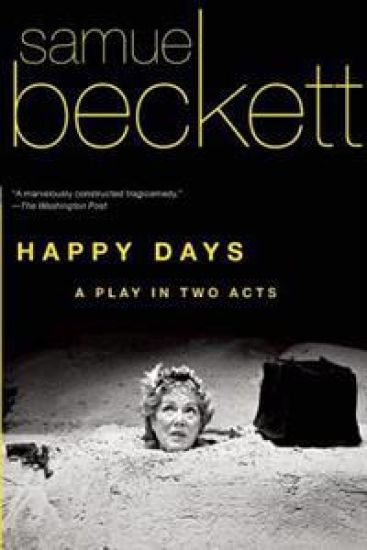
In Happy Days, Samuel Beckett pursues his relentless search for the meaning of existence, probing the tenuous relationships that bind one person to another, and each to the universe, top time past and time present. Once again, stripping theater to its barest essentials, Happy Days offers only two characters: Winnie, a woman of about fifty, and Willie, a man of about sixty. In the first act Winnie is buried up to her waist in a mound of earth, but still has the use of her arms and few earthly possessions--toothbrush, tube of toothpaste, small mirror, revolver, handkerchief, spectacles; in the second act she is embedded up to her neck and can move only her eyes. Willie lives and moves--on all fours--behind the mound, appearing intermittently and replying only occasionally into Winnie's long monologue, but the knowledge of his presence is a source of comfort and inspiration to her, and doubtless the prerequisite for all her "happy days."
Trilogin Molloy, Malone dör och Den Onämnbare har beskrivits som den moderna människans intellektuella och moraliska bankruttförklaring. Liksom karaktärerna krälar texten sakta men säkert fram mot sin logiska slutpunkt en värld där inga människor finns, inget medvetande.Mellan Molloys eskatologiska värld, Malones språkliga förvirring i dödens närhet och Den Onämnbare, som redan vid textens utgångspunkt saknar namn och identitet, reduceras människan och språket gradvis till någonting som närmar sig ingenting.Molloy, Malone dör och Den Onämnbare samlas här för första gången i pocket, i översättning av Lill-Inger Eriksson och med ett förord av Jesper Olsson.SAMUEL BECKETT föddes 1906 i Dublin av irländska föräldrar och var bosatt i Frankrike från 1938 till sin död. 1969 tilldelades han Nobelpriset i litteratur. »Becketts trilogi är en litteratur som får tanken att svindla. Att som vuxen tillåtas tillträde till den existentiella zon där varje liten rörelse framstår som ny och outforskad är lika omtumlande som den första förälskelsen. Det går igenom hela nervsystemet.« ANNA HALLBERG, DAGENS NYHETER»Jag skulle kunna gå i pension, binda fast mig vid en stol och ägna all min vakna tid åt Molloy, Malone dör och Den onämnbare.« JENNY TUNEDAL, AFTONBLADET»Beckett äger en obönhörlig intellektuell uppriktighet och hans prosa har en naken, intrikat rytm som blir närmast hypnotisk.« TIME MAGAZINE»Beckett utmärks av en svårmotståndig kombination av gnäll och stoicism, misantropi och vardagsburleskt uppsluppen glädje. Det är kallt som satan och oväntat varmt, nästan tillmötesgående.« HALLANDSPOSTEN»Beckett är ojämförlig, trollbindande... En seriös författare som har något allvarligt att säga om det mänskliga tillståndet.« THE NEW YORK TIMES
Samuel Beckett's first novel and "literary landmark" (St. Petersburg Times), Dream of Fair to Middling Women is a wonderfully savory introduction to the Nobel Prize-winning author. Written in the summer of 1932, when the twenty-six-year-old Beckett was poor and struggling to make ends meet, the novel offers a rare and revealing portrait of the artist as a young man. Later on, Beckett would call the novel "the chest into which I threw all my wild thoughts." When he submitted it to several publishers, all of them found it too literary, too scandalous, or too risky; it was never published during his lifetime. As the story begins, Belacqua--a young version of Molloy, whose love is divided between two women, Smeraldina-Rima and the little Alba--"wrestles with his lusts and learning across vocabularies and continents, before a final 'relapse into Dublin'" (The New Yorker). Youthfully exuberant and visibly influenced by Joyce, Dream of Fair to Middling Women is a work of extraordinary virtuosity. Beckett delights in the wordplay and sheer joy of language that mark his later work. Above all, the story brims with the black humor that, like brief stabs of sunlight, pierces the darkness of his vision.
Theater Arts, V40, No. 8, August, 1956
George Bernard Shaw; Samuel Beckett; Alice Griffin
Literary Licensing, LLC
2011
nidottu