Kirjailija
Samuel Butler
Kirjat ja teokset yhdessä paikassa: 532 kirjaa, julkaisuja vuosilta 1903-2026, suosituimpien joukossa The Way of All Flesh. Vertaile teosten hintoja ja tarkista saatavuus suomalaisista kirjakaupoista.
532 kirjaa
Kirjojen julkaisuhaarukka 1903-2026.


In the strange country of Erewhon, sick people are imprisoned while criminals are treated for sickness. Machines are are considered too dangerous to use. And children must choose whether or not to be born. This subtle satire of Victorian society is still as thought-provoking and entertaining as when it was first written. Newly designed and typeset for modern readers by Waking Lion Press.

Hudibras V1: With Dr. Grey's Annotations (1819)
Samuel Butler
KESSINGER PUBLISHING, LLC
2008
nidottu

A Sketch Of Modern And Ancient Geography (1813)
Samuel Butler
KESSINGER PUBLISHING, LLC
2008
nidottu

Hudibras V3: With Dr. Grey's Annotations (1819)
Samuel Butler
KESSINGER PUBLISHING, LLC
2008
nidottu
A First Year in Canterbury Settlement
Samuel Butler; Richard Alexander (EDT) Streatfeild
Kessinger Pub
2008
sidottu

A First Year In Canterbury Settlement
Samuel Butler; Richard Alexander (EDT) Streatfeild
Kessinger Pub
2008
pokkari




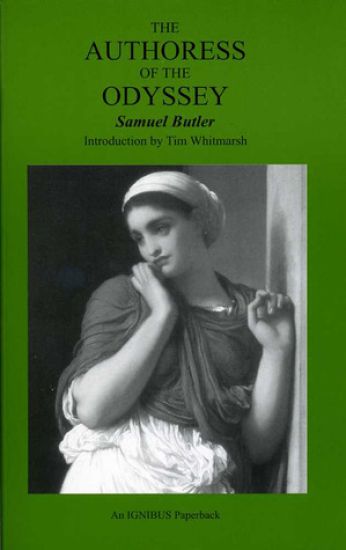
Samuel Butler, scholar, painter, pioneer photographer, and novelist (including 'Erewhon' and 'The Way of All Flesh'), was one of the less orthodox of Victorian intellectual provocateurs, who confronted powerful orthodoxies such as the Church, the academic establishment, and scientific Darwinism. During the last decade of his productive life (he died in 1902), his main concern became the 'Homeric question'. In his youth, he had been a classical scholar at St John's College, Cambridge; but 'The Authoress of the Odyssey' [1897] is unlike any work of mainstream Victorian classics. His theory - that the Odyssey was written by a woman and (even more startlingly) by one who configured herself in the epic as the Phaeacian princess, Nausicaa - set him on collision course with all the 'orthodoxies' of the stuffy, patriarchal establishment of 'Oxbridge' scholarship. His exposition hesitates (brilliantly, or accidentally?) in the grey area between closely reasoned argument, eccentric tomfoolery and knowing polemics. The establishment never could determine whether to take it seriously or as an elaborate spoof of their own methodologies. Certainly, Butler himself never let on what his intentions were. Now, in an age when gender studies and reception theory have a compelling influence on readings of the classical world, this book has been made available again. It is a work that continues to challenge, provoke and amuse. With a new introduction by Tim Whitmarsh, himself a former Fellow of St John's College, Cambridge, Reader in Greek Literature at the University of Exeter.