Kirjojen hintavertailu. Mukana 12 245 854 kirjaa ja 12 kauppaa.

Kirjailija

Samuel Charap

Kirjat ja teokset yhdessä paikassa: 15 kirjaa, julkaisuja vuosilta 2016-2025, suosituimpien joukossa Security Cooperation in a Strategic Competition. Vertaile teosten hintoja ja tarkista saatavuus suomalaisista kirjakaupoista.

15 kirjaa

Kirjojen julkaisuhaarukka 2016-2025.

Anticipating Flashpoints with Russia

Anticipating Flashpoints with Russia

Samuel Charap; Sean M Zeigler; Irina a Chindea; Molly Dunigan; Alyssa Demus; John J Drennan; Walter F Landgraf; Jonathan Welch; Grant Johnson; Gregory Weider Fauerbach; Nathan Vest; Melissa Shostak

RAND Corporation
2023
pokkari
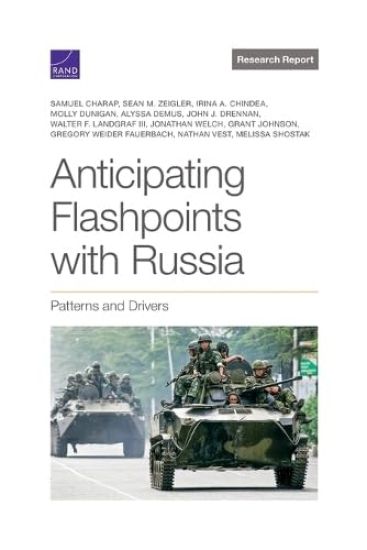
The authors sought to identify possible Russian flashpoints in Europe that could entangle the United States. Using quantitative and qualitative methods to analyze historical data on Russian disputes and conflicts, they identified the key drivers of such flashpoints. They derive planning implications for the United States and the U.S. Army in particular. This research was completed prior to Russia's full-scale invasion of Ukraine in February 2022.
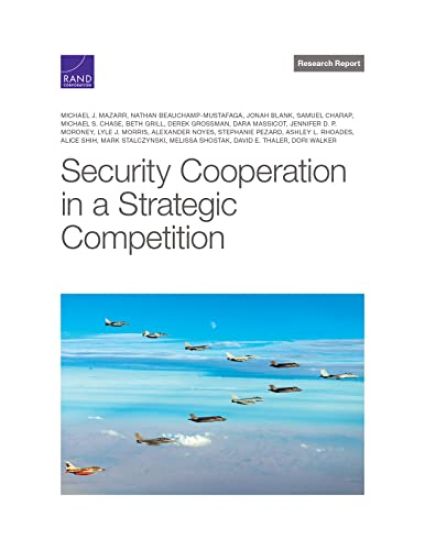
Security Cooperation in a Strategic Competition

Security Cooperation in a Strategic Competition

Michael J Mazarr; Nathan Beauchamp-Mustafaga; Jonah Blank; Samuel Charap; Michael S Chase; Beth Grill; Derek Grossman; Dara Massicot; Jennifer D P Moroney; Lyle J Morris; Alexander Noyes; Stephanie Pezard; Ashley L Rhoades; Alice Shih; Mark Stalczynski; Melissa Shostak; David E Thaler; Dori Walker

RAND Corporation
2022
pokkari
In this study, RAND researchers examined the current role of security cooperation efforts as a tool in the emerging strategic competition among the United States, Russia, and China. In particular, they sought to identify how, where, and to what degree the three major competitors?plus Australia, Japan, India, and several countries in Europe?are using security cooperation.
Understanding the Emerging Era of International Competition Through the Eyes of Others

Understanding the Emerging Era of International Competition Through the Eyes of Others

Michael J Mazarr; Jonah Blank; Samuel Charap; Benjamin N Harris; Timothy R Heath; Niklas Helwig; Jeffrey W Hornung; Lyle J Morris; Ashley L Rhoades; Ariane M Tabatabai; Sean M Zeigler

RAND Corporation
2022
pokkari
The U.S. National Security Strategy focuses on the expectation of a new era of growing international competition that the United States is expected to confront. The authors examine the nature of the emerging era, assess the perspectives of 16 countries (beginning with the primary challengers to the U.S.-led order), and evaluate various characteristics for each.
Stabilizing Great-Power Rivalries

Stabilizing Great-Power Rivalries

Michael J Mazarr; Samuel Charap; Abigail Casey; Irina a Chindea; Christian Curriden; Alyssa Demus; Bryan Frederick; Arthur Chan; John P Godges; Eugene Han; Timothy R Heath; Logan Ma; Elina Treyger; Teddy Ulin; Ali Wyne

RAND
2021
nidottu
The international system appears headed for a renewed era of intense competition among major powers. The authors sought to identify the factors that keep such rivalries stable and those that lead to conflictual outcomes. Leveraging theory and historical case studies, the authors created a framework for assessing the stability of a strategic rivalry, then applied it to the current U.S.-Russia and U.S.-China competitions.
A Consensus Proposal for a Revised Regional Order in Post-Soviet Europe and Eurasia

A Consensus Proposal for a Revised Regional Order in Post-Soviet Europe and Eurasia

Samuel Charap; Jeremy Shapiro; John J Drennan; H E Oleksandr Chalyi; Reinhard Krumm; Yulia Nikitina

RAND
2019
nidottu
Disputes over the regional order in post-Soviet Europe and Eurasia are at the core of the breakdown in relations between Russia and the West and have created major security and economic challenges for states caught in between. The authors of this volume propose a new approach to the regional order that bridges current disagreements on the security architecture, economic integration, and regional conflicts.
Planning for the Aftermath

Planning for the Aftermath

Samuel Charap; Miranda Priebe

RAND Corporation
2024
pokkari
U.S. policy choices made at the conclusions of past wars have had enduring consequences. Although there is no end in sight to the Russia-Ukraine war, U.S. policymakers should begin considering a postwar Russia strategy now. To facilitate these considerations, the authors of this report review U.S. strategic options and the trade-offs that different choices pose for long-term U.S. interests.
Proposals to Address Political Interference

Proposals to Address Political Interference

Samuel Charap; Reinhard Krumm

RAND Corporation
2023
pokkari
Prior to the events of February 2022, political interference was one of the most significant challenges in Russia-West relations. These proceedings reflect a series of discussions among U.S., Russian, and European Union nongovernmental experts who were convened in 2020-2021 to discuss mutual concerns regarding political interference and to find common ground on measures to address them.
Future U.S. Peacetime Policy Toward Russia

Future U.S. Peacetime Policy Toward Russia

Miranda Priebe; Bryan Frederick; Alexandra T Evans; Samuel Charap; Gabrielle Tarini; Bryan Rooney

RAND Corporation
2023
pokkari
After the Ukraine war ends, U.S.-Russian relations will remain hostile. But future U.S. policymakers will also need to balance competing demands and might therefore consider a peacetime limited less-hardline approach toward Russia. Using four historical case studies, the authors found that such approaches can lead to durable but narrow gains without emboldening the rival. But such policies may not prevent later deterioration of the relationship.
Mitigating Challenges to U.S.-Russia Strategic Stability

Mitigating Challenges to U.S.-Russia Strategic Stability

Samuel Charap; John J Drennan; Luke Griffith; Edward Geist; Brian G Carlson

RAND Corporation
2022
nidottu
U.S.-Russia strategic stability is based on mutual vulnerability to retaliation, which eliminates the incentive to strike first. Yet the United States has developed capabilities that Moscow fears could be used for a first strike. These threat perceptions have become a significant source of instability. The authors examine the origins of this dynamic and its impact on bilateral stability and evaluate policy changes that could mitigate that impact.
Russia's Military Interventions

Russia's Military Interventions

Samuel Charap; Edward Geist; Bryan Frederick; John J Drennan; Nathan Chandler; Jennifer Kavanagh

RAND
2021
nidottu
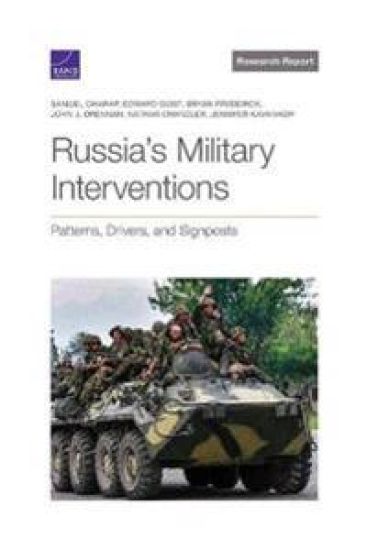
Despite Russia's relatively small global economic footprint, it has engaged in more interventions than any other U.S. competitor since the end of the Cold War. In this report, the authors assess when, where, and why Russia conducts military interventions by analyzing the 25 interventions that Russia has undertaken since 1991, including detailed case studies of the 2008 Russia-Georgia War and Moscow's involvement in the ongoing Syrian civil war.
Getting Out from "In-Between"

Getting Out from "In-Between"

Samuel Charap; Alyssa Demus; Jeremy Shapiro

RAND
2018
nidottu
The perspectives collected here explore alternatives to the current approaches to the regional order for the states "in between" the West and Russia--Ukraine, Belarus, Moldova, Georgia, Armenia, and Azerbaijan. These papers result from meetings of a working group of experts and former policy practitioners from the United States, the European Union, Russia and the in-between states.
Everyone Loses

Everyone Loses

Samuel Charap; Timothy J. Colton

Routledge
2016
nidottu
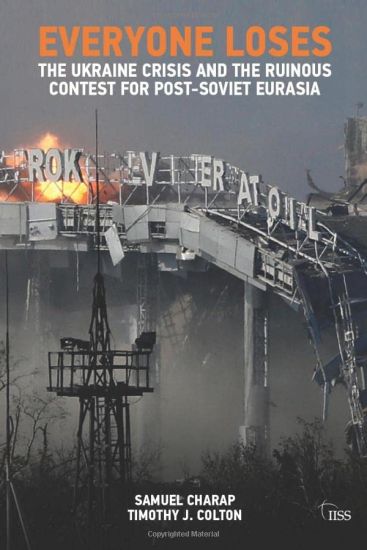
Disorder erupted in Ukraine in 2014, involving the overthrow of a sitting government, the Russian annexation of the Crimean peninsula, and a violent insurrection, supported by Moscow, in the east of the country.This Adelphi book argues that the crisis has yielded a ruinous outcome, in which all the parties are worse off and international security has deteriorated. This negative-sum scenario resulted from years of zero-sum behaviour on the part of Russia and the West in post-Soviet Eurasia, which the authors rigorously analyse. The rivalry was manageable in the early period after the Cold War, only to become entrenched and bitter a decade later. The upshot has been systematic losses for Russia, the West and the countries caught in between.All the governments involved must recognise that long-standing policies aimed at achieving one-sided advantage have reached a dead end, Charap and Colton argue, and commit to finding mutually acceptable alternatives through patient negotiation.