Kirjojen hintavertailu. Mukana 12 330 673 kirjaa ja 12 kauppaa.

Kirjailija

Samuel J.M.M. Alberti

Kirjat ja teokset yhdessä paikassa: 4 kirjaa, julkaisuja vuosilta 2011-2024, suosituimpien joukossa Curious Devices and Mighty Machines. Vertaile teosten hintoja ja tarkista saatavuus suomalaisista kirjakaupoista.

Mukana myös kirjoitusasut: Samuel J. M. M. Alberti

4 kirjaa

Kirjojen julkaisuhaarukka 2011-2024.

Cold War Scotland

Cold War Scotland

Samuel J.M.M. Alberti; Jessica Douthwaite; Holger Nehring; Sarah Harper

NMSE - PUBLISHING LTD
2024
nidottu
Scotland’s unique geography and topography provided a useful base for Allied military preparations during the Cold War, a 40-year nuclear stand-off between the USA and the Soviet Union ending with the collapse of the Soviet Union in 1991. This book accompanies an exhibition at the National Museum of Scotland (13 July-26 January 24) which explores Scotland’s critical position on the front line. Scots played active roles as soldiers, within intelligence services and as part of voluntary civil defences. Also drawn on is Scotland’s rich history of Cold War-era protest. The physical legacy of the Cold War is revealed too – the ruined bases, forgotten bunkers and decommissioned nuclear power stations still evident across the Scottish landscape.
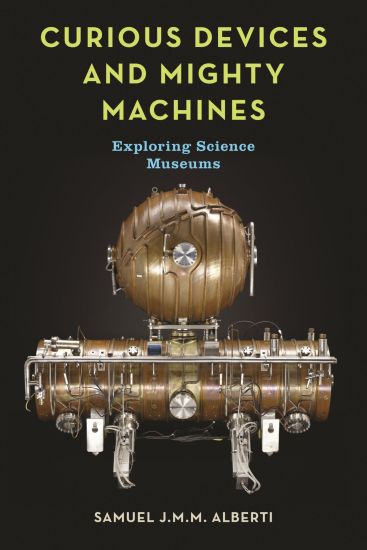
Curious Devices and Mighty Machines

Curious Devices and Mighty Machines

Samuel J.M.M. Alberti

REAKTION BOOKS
2022
sidottu
Science museums have paradoxes at their core. They must be accessible and fun while representing increasingly complex science. They must be both historic and contemporary. Their exhibits attract millions, but most of their objects remain in deep storage, seldom seen. This book delves into these conflicts, revealing the secret lives of science curators; where science objects come from and who uses them; and, ultimately, what science museums are for. With an insider’s eye, Samuel J.M.M. Alberti exposes the idiosyncratic past and intriguing current practice of these institutions, and sets out a map for their future.
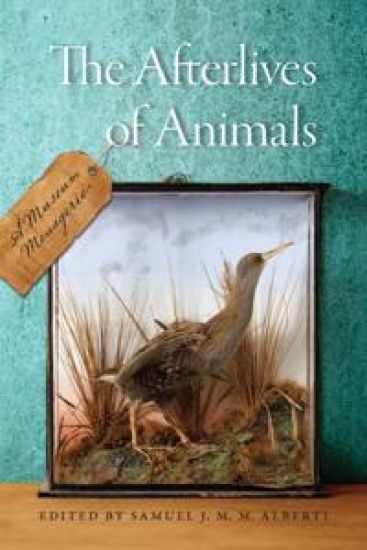
The Afterlives of Animals

The Afterlives of Animals

Samuel J. M. M. Alberti

University of Virginia Press
2011
sidottu
In the quiet halls of the natural history museum, there are some creatures still alive with stories, whose personalities refuse to be relegated to the dusty corners of an exhibit. The fame of these beasts during their lifetimes has given them an iconic status in death. More than just museum specimens, these animals have attained a second life as historical and cultural records. This collection of essays--from a broad array of contributors, including anthropologists, curators, fine artists, geographers, historians, and journalists--comprises short "biographies" of a number of famous taxidermized animals. Each essay traces the life, death, and museum "afterlife" of a specific creature, illuminating the overlooked role of the dead beast in the modern human-animal encounter through practices as disparate as hunting and zookeeping. The contributors offer fresh examinations of the many levels at which humans engage with other animals, especially those that function as both natural and cultural phenomena, including Queen Charlotte's pet zebra, Maharajah the elephant, and Balto the sled dog, among others. Readers curious about the enduring fascination with animals who have attained these strange afterlives will be drawn to the individual narratives within each essay, while learning more about the scientific, cultural, and museological contexts of each subject. Ranging from autobiographical to analytical, the contributors' varying styles make this delightful book a true menagerie.Contributors Samuel J. M. M. Alberti, Royal College of Surgeons * Sophie Everest, University of Manchester * Kate Foster * Michelle Henning, University of the West of England, Bristol * Hayden Lorimer, University of Glasgow * Garry Marvin, Roehampton University, London * Henry Nicholls * Hannah Paddon * Merle Patchett * Christopher Plumb, University of Manchester * Rachel Poliquin * Jeanne Robinson, Glasgow Museums * Mike Rutherford, University of the West Indies * Richard C. Sabin, Natural History Museum * Richard Sutcliffe, Glasgow Museums * Geoffrey N. Swinney, University of Edinburgh
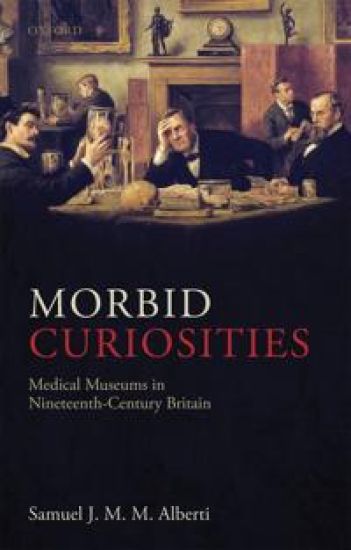
Morbid Curiosities

Morbid Curiosities

Samuel J.M.M. Alberti

Oxford University Press
2011
sidottu
In the first comprehensive study of nineteenth-century medical museums, Morbid Curiosities traces the afterlives of diseased body parts. It asks how they came to be in museums, what happened to them there, and who used them. This book is concerned with the macabre work of pathologists as they dismembered corpses and preserved them: transforming bodies into material culture. The fragmented body parts followed complex paths - harvested from hospital wards, given to one of many prestigious institutions, or dispersed at auction. Human remains acquired new meanings as they were exchanged and were then reintegrated into museums as physical maps of disease. On shelves curators juxtaposed organic remains with paintings, photographs, and models, and rendered them legible with extensive catalogues that were intended to standardize the museum experience. And yet visitors refused to be policed, responding equally with wonder and disgust. Morbid Curiosities is a history of the material culture of medical knowledge in the age of museums.