Kirjojen hintavertailu. Mukana 12 595 353 kirjaa ja 12 kauppaa.

Kirjailija

Samuel Mareel

Kirjat ja teokset yhdessä paikassa: 4 kirjaa, julkaisuja vuosilta 2016-2021, suosituimpien joukossa The Aura of the Word in the Early Age of Print (1450–1600). Vertaile teosten hintoja ja tarkista saatavuus suomalaisista kirjakaupoista.

4 kirjaa

Kirjojen julkaisuhaarukka 2016-2021.

Renaissance Children

Renaissance Children

Till-Holger Borchert; Hilde Ridder-Symoens; Annemarieke Willemsen; Samuel Mareel

Lannoo
2021
sidottu
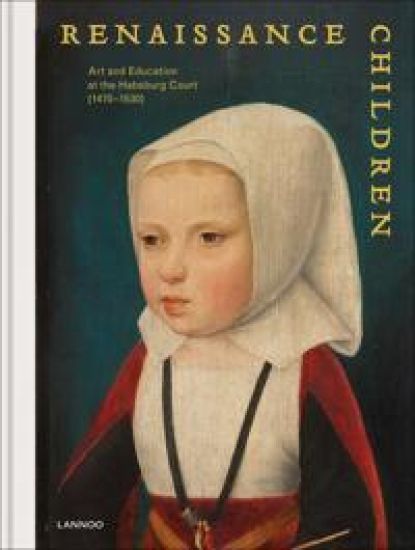
Renaissance Children puts child portrait painting from the 15th and 16th century in the spotlight and tells the historical, pedagogical and artistic story of the most remarkable paintings. In the 15th and 16th century, the House of Habsburg ruled over a large part of Europe, and would turn into one of the most important European royal families in world history. In that time, Mechelen was the centre of education, where many Habsburg princes and princesses spent a large part of their youth, among whom Margaret of Austria and Charles V. Other powerful families also sent their children to Mechelen – the most famous of whom is perhaps Anne Boleyn, who would later become queen of England. Renaissance Children goes back to that Belgian city, where many portrait paintings of children originated. The book specifically focusses on child portraits of top artists, such as Jan Gossart, Bernard van Orley and Juan de Flandes. Includes unique paintings by Flemish Masters, such as Jan Gossart, Bernard van Orley and Juan de Flandes Insight into educational values and techniques from the 15th and 16th century The first publication about art and education at one the most important royal houses in European history
The Aura of the Word in the Early Age of Print (1450-1600)
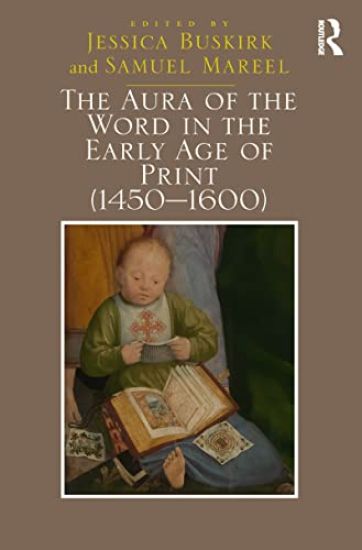
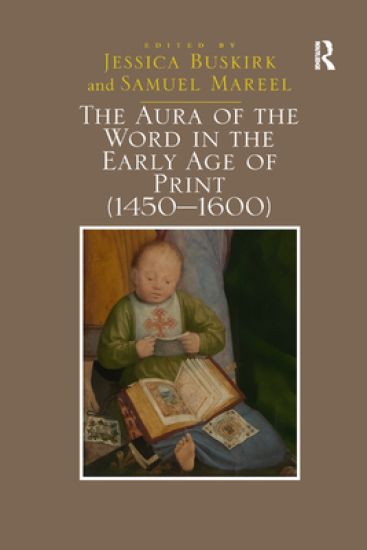
Did the invention of movable type change the way that the word was perceived in the early modern period? In his groundbreaking essay "The Work of Art in the Age of Mechanical Reproduction," the cultural critic Walter Benjamin argued that reproduction drains the image of its aura, by which he means the authority that a work of art obtains from its singularity and its embeddedness in a particular context. The central question in The Aura of the Word in the Early Age of Print (1450-1600) is whether the dissemination of text through print had a similar effect on the status of the word in the early modern period. In this volume, contributors from a variety of fields look at manifestations of the early modern word (in English, French, Latin, Dutch, German and Yiddish) as entities whose significance derived not simply from their semantic meaning but also from their relationship to their material support, to the physical context in which they are located and to the act of writing itself. Rather than viewing printed text as functional and lacking in materiality, contributors focus on how the placement of a text could affect its meaning and significance. The essays also consider the continued vitality of pre-printing-press kinds of text such as the illuminated manuscript; and how new practices, such as the veneration of handwriting, sprung up in the wake of the invention of movable type.
Call for Justice

Call for Justice

Samuel Mareel; Manfred Sellink

Uitgeverij Kannibaal
2018
sidottu
Call for Justice highlights the rich and fascinating interaction between art, the practice of law and the idea of justice in the territories governed by the Great Council of Mechelen when at the height of its powers. Works of art from the Burgundian Low Countries dating from the mid-fifteenth to mid-seventeenth century are situated within the turbulent legal, political and cultural context in which they were created: the unification of the Netherlands, the increasingly absolutist administration of Emperor Charles V, the Reformation and the uprising against Spain. Call for Justice reveals how these artworks make visible, and in a powerful way, one of the most universal of all human desires: the pursuit of justice. Including prestigious masterpieces by, amongst others, Quinten Matsys, Maarten van Heemskerck, Pieter Bruegel the Elder, Maarten de Vos, Peter Paul Rubens, Anthony van Dyck and Philippe de Champaigne.
The Aura of the Word in the Early Age of Print (1450–1600)
Did the invention of movable type change the way that the word was perceived in the early modern period? In his groundbreaking essay "The Work of Art in the Age of Mechanical Reproduction," the cultural critic Walter Benjamin argued that reproduction drains the image of its aura, by which he means the authority that a work of art obtains from its singularity and its embeddedness in a particular context. The central question in The Aura of the Word in the Early Age of Print (1450-1600) is whether the dissemination of text through print had a similar effect on the status of the word in the early modern period. In this volume, contributors from a variety of fields look at manifestations of the early modern word (in English, French, Latin, Dutch, German and Yiddish) as entities whose significance derived not simply from their semantic meaning but also from their relationship to their material support, to the physical context in which they are located and to the act of writing itself. Rather than viewing printed text as functional and lacking in materiality, contributors focus on how the placement of a text could affect its meaning and significance. The essays also consider the continued vitality of pre-printing-press kinds of text such as the illuminated manuscript; and how new practices, such as the veneration of handwriting, sprung up in the wake of the invention of movable type.