Kirjojen hintavertailu. Mukana 12 363 183 kirjaa ja 12 kauppaa.

Kirjailija

Samuel Moyn

Kirjat ja teokset yhdessä paikassa: 23 kirjaa, julkaisuja vuosilta 2005-2026, suosituimpien joukossa Gerontocracy in America: How the Old Are Hoarding Power and Wealth--And What to Do about It. Vertaile teosten hintoja ja tarkista saatavuus suomalaisista kirjakaupoista.

23 kirjaa

Kirjojen julkaisuhaarukka 2005-2026.

Gerontocracy in America: How the Old Are Hoarding Power and Wealth--And What to Do about It
A leading social critic identifies our least-discussed major crisis, and sets out to solve it. As Americans debate President Biden's infirmities and President Trump's erratic behavior, we've neglected the bigger problem before us: a massive transfer of power and wealth to the oldest among us, and the curtailment of the prospects of the young. In Gerontocracy in America, the historian and social critic Samuel Moyn offers a piercing diagnosis of our age divide and its consequences. Even apart from the presidency, in legislatures, businesses, and the courts, the average leader's age has risen dramatically. The elderly predominantly fund campaigns and dominate their agendas, often with the intent to block any challenge to their status. The tax code is rigged on their behalf, as is an economy geared to sheltering financial and housing assets. The United States was founded on the promise of generational renovation but has become an increasingly febrile country of old men. But it doesn't need to be this way. With understanding and wit, Moyn shows how elder power can be dismantled. With strong safety nets in place, mandatory retirement ages can be established. The early transfer of assets between generations could be encouraged and young voters can be granted more voice. In such a world, the elderly themselves would be freed from power games to confront the existential opportunities of aging, while the young would find their path to starting out in life unblocked at last.
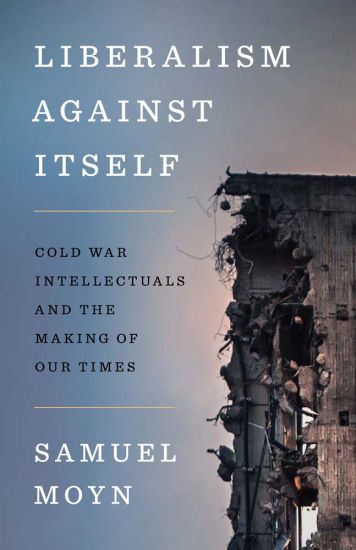
Liberalism against Itself

Liberalism against Itself

Samuel Moyn

YALE UNIVERSITY PRESS
2024
pokkari
The Cold War roots of liberalism’s present crisis “[A] daring new book.”—Becca Rothfeld, Washington Post “A fascinating and combative intellectual history.”—Gideon Rachman, Financial Times By the middle of the twentieth century, many liberals looked glumly at the world modernity had brought about, with its devastating wars, rising totalitarianism, and permanent nuclear terror. They concluded that, far from offering a solution to these problems, the ideals of the Enlightenment, including emancipation and equality, had instead created them. The historian of political thought Samuel Moyn argues that the liberal intellectuals of the Cold War era—among them Isaiah Berlin, Gertrude Himmelfarb, Karl Popper, Judith Shklar, and Lionel Trilling—transformed liberalism but left a disastrous legacy for our time. In his iconoclastic style, Moyn outlines how Cold War liberals redefined the ideals of their movement and renounced the moral core of the Enlightenment for a more dangerous philosophy: preserving individual liberty at all costs. In denouncing this stance, as well as the recent nostalgia for Cold War liberalism as a means to counter illiberal values, Moyn presents a timely call for a new emancipatory and egalitarian liberal philosophy—a path to undoing the damage of the Cold War and to ensuring the survival of liberalism.
Liberalism against Itself

Liberalism against Itself

Samuel Moyn

YALE UNIVERSITY PRESS
2023
sidottu
The Cold War roots of liberalism’s present crisis “[A] daring new book.”—Becca Rothfeld, Washington Post “A fascinating and combative intellectual history.”—Gideon Rachman, Financial Times By the middle of the twentieth century, many liberals looked glumly at the world modernity had brought about, with its devastating wars, rising totalitarianism, and permanent nuclear terror. They concluded that, far from offering a solution to these problems, the ideals of the Enlightenment, including emancipation and equality, had instead created them. The historian of political thought Samuel Moyn argues that the liberal intellectuals of the Cold War era—among them Isaiah Berlin, Gertrude Himmelfarb, Karl Popper, Judith Shklar, and Lionel Trilling—transformed liberalism but left a disastrous legacy for our time. In his iconoclastic style, Moyn outlines how Cold War liberals redefined the ideals of their movement and renounced the moral core of the Enlightenment for a more dangerous philosophy: preserving individual liberty at all costs. In denouncing this stance, as well as the recent nostalgia for Cold War liberalism as a means to counter illiberal values, Moyn presents a timely call for a new emancipatory and egalitarian liberal philosophy—a path to undoing the damage of the Cold War and to ensuring the survival of liberalism.
Humane: How the United States Abandoned Peace and Reinvented War
A prominent historian exposes the dark side of making war more humane In the years since 9/11, we have entered an age of endless war, with the United States exercising dominion everywhere. In Humane, Samuel Moyn asks a troubling but urgent question: What if efforts to make war more ethical--to ban torture and limit civilian casualties--have only shored up the military enterprise and made it sturdier? To advance this case, Moyn looks back at a century and a half of passionate arguments about the ethics and law of using force. In the nineteenth century, the founders of the Red Cross struggled mightily to make war less lethal even as they acknowledged its inevitability. Leo Tolstoy prominently opposed their efforts, reasoning that war needed to be abolished, not reformed--and over the subsequent century, a popular movement to abolish war flourished on both sides of the Atlantic. Eventually, however, reformers shifted their attention from opposing the crime of war to opposing war crimes. In the post-9/11 era, the U.S. military embraced the agenda of humane war, driven by both the availability of precision weaponry and the need to protect its image. The battle moved from the streets to the courtroom, where the tactics of the war on terror were litigated but the war's foundational assumptions went without serious challenge. These trends have only accelerated since. Even as the Obama and Trump administrations spoke of American power and morality in radically different tones, they ushered in the second decade of the "forever" war. Humane is the story of how America went off to fight and never came back, and how armed combat was transformed from an imperfect tool for resolving disputes into an integral component of the modern condition. As American wars become more protracted, they are also becoming more humane. This provocative book argues that this development might not represent progress at all.
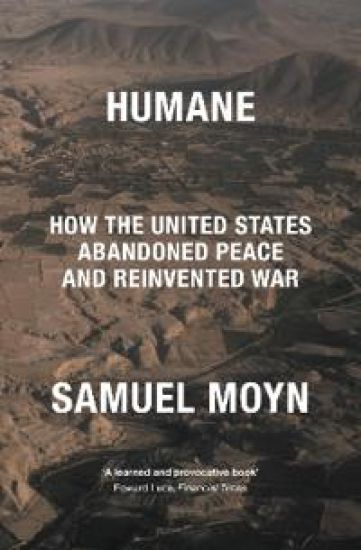
Humane

Humane

Samuel Moyn

Verso Books
2022
nidottu
The rise of American Empire has coincided with appeals for a more humane war. But what if efforts to make war more ethical-to ban torture and limit civilian casualties-have only shored up the military enterprise and made it sturdier? During this period the campaign to abolish wars has transformed into to opposing war crimes, with fateful consequences. The ramifications of this shift became apparent in the post-9/11 era. By that time, the US military had embraced the agenda of humane war, driven both by the availability of precision weaponry and the need to protect its image. The battle shifted from the streets to the courtroom, where the tactics of the war on terror were litigated but its foundational assumptions went without serious challenge. These trends only accelerated during the Obama and Trump presidencies. Even as the two administrations spoke of American power and morality in radically different tones, they ushered in the second decade of the "forever" war.Humane is the story of how America went off to fight and never came back, and how armed combat was transformed from an imperfect tool for resolving disputes into an integral component of the modern condition. As American wars have become more humane, they have also become endless. This provocative book argues that this development might not represent progress at all.
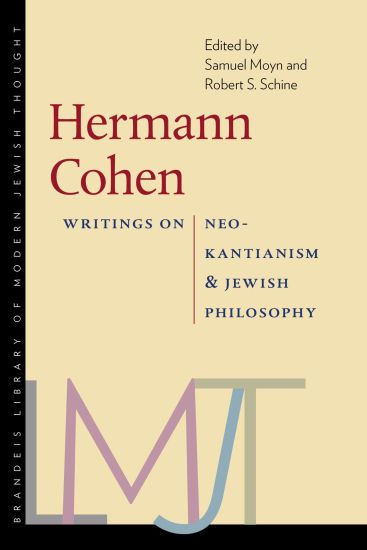
Hermann Cohen – Writings on Neo–Kantianism and Jewish Philosophy

Hermann Cohen – Writings on Neo–Kantianism and Jewish Philosophy

Samuel Moyn; Robert S. Schine

Brandeis University Press
2021
nidottu
Hermann Cohen (1842–1918) was among the most accomplished Jewish philosophers of modern times—if not the single most significant. But his work has not yet received the attention it deserves. This newly translated collection of his writings—most of which are appearing in English for the first time—illuminates his achievements for student readers and rectifies lapses in his intellectual reception by prior generations. It presents chapters from Cohen’s Ethics of Pure Will, conflicting interpretations of Cohen by Franz Rosenzweig and Alexander Altmann, and finally the eulogy to Cohen delivered at graveside by Ernst Cassirer. Containing full annotations and selections that concentrate both on the philosophical core of Cohen’s writings and the politics of interpretation of his work at the time of his death and after, Hermann Cohen truly brings to light all of Cohen’s accomplishments.
Hermann Cohen – Writings on Neo–Kantianism and Jewish Philosophy

Hermann Cohen – Writings on Neo–Kantianism and Jewish Philosophy

Samuel Moyn; Robert S. Schine

Brandeis University Press
2021
sidottu
Hermann Cohen (1842–1918) was among the most accomplished Jewish philosophers of modern times—if not the single most significant. But his work has not yet received the attention it deserves. This newly translated collection of his writings—most of which are appearing in English for the first time—illuminates his achievements for student readers and rectifies lapses in his intellectual reception by prior generations. It presents chapters from Cohen’s Ethics of Pure Will, conflicting interpretations of Cohen by Franz Rosenzweig and Alexander Altmann, and finally the eulogy to Cohen delivered at graveside by Ernst Cassirer. Containing full annotations and selections that concentrate both on the philosophical core of Cohen’s writings and the politics of interpretation of his work at the time of his death and after, Hermann Cohen truly brings to light all of Cohen’s accomplishments.
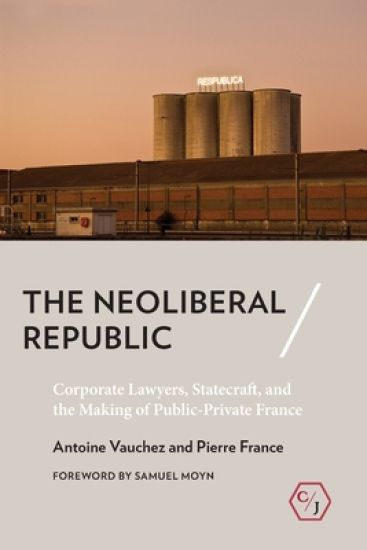
The Neoliberal Republic

The Neoliberal Republic

Antoine Vauchez; Pierre France; Samuel Moyn

Cornell University Press
2021
pokkari
The Neoliberal Republic traces the corrosive effects of the revolving door between public service and private enrichment on the French state and its ability to govern and regulate the private sector. Casting a piercing light on this circulation of influence among corporate lawyers and others in the French power elite, Antoine Vauchez and Pierre France analyze how this dynamic, a feature of all Western democracies, has developed in concert with the rise of neoliberalism over the past three decades. Based on interviews with dozens of public officials in France and a unique biographical database of more than 200 civil-servants-turned-corporate-lawyers, The Neoliberal Republic explores how the always-blurred boundary between public service and private interests has been critically compromised, enabling the transformation of the regulatory state into either an ineffectual bystander or an active collaborator in the privatization of public welfare. The cumulative effect of these developments, the authors reveal, undermines democratic citizenship and the capacity to imagine the public good.
The Neoliberal Republic

The Neoliberal Republic

Antoine Vauchez; Pierre France; Samuel Moyn

Cornell University Press
2021
sidottu
The Neoliberal Republic traces the corrosive effects of the revolving door between public service and private enrichment on the French state and its ability to govern and regulate the private sector. Casting a piercing light on this circulation of influence among corporate lawyers and others in the French power elite, Antoine Vauchez and Pierre France analyze how this dynamic, a feature of all Western democracies, has developed in concert with the rise of neoliberalism over the past three decades. Based on interviews with dozens of public officials in France and a unique biographical database of more than 200 civil-servants-turned-corporate-lawyers, The Neoliberal Republic explores how the always-blurred boundary between public service and private interests has been critically compromised, enabling the transformation of the regulatory state into either an ineffectual bystander or an active collaborator in the privatization of public welfare. The cumulative effect of these developments, the authors reveal, undermines democratic citizenship and the capacity to imagine the public good.
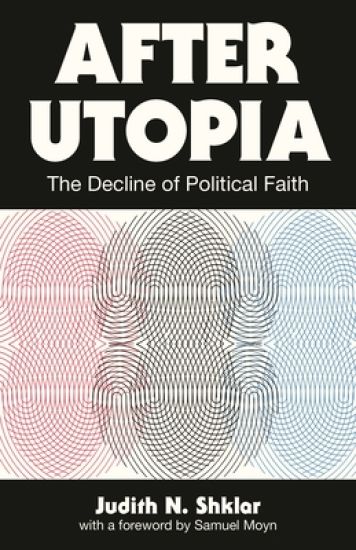
After Utopia

After Utopia

Judith N. Shklar; Samuel Moyn

Princeton University Press
2020
pokkari
A political philosophy classic from one of the foremost political thinkers of the twentieth centuryAfter Utopia was Judith Shklar’s first book, a harbinger of her renowned career in political philosophy. Throughout the many changes in political thought during the last half century, this important work has withstood the test of time. In After Utopia, Shklar explores the decline of political philosophy, from Enlightenment optimism to modern cultural despair, and she offers a critical, creative analysis of this downward trend. She looks at Romantic and Christian social thought, and she shows that while the present political fatalism may be unavoidable, the prophets of despair have failed to explain the world they so dislike, leaving the possibility of a new and vigorous political philosophy. With a foreword by Samuel Moyn, examining After Utopia’s continued relevance, this current edition introduces a remarkable synthesis of ideas to a new generation of readers.
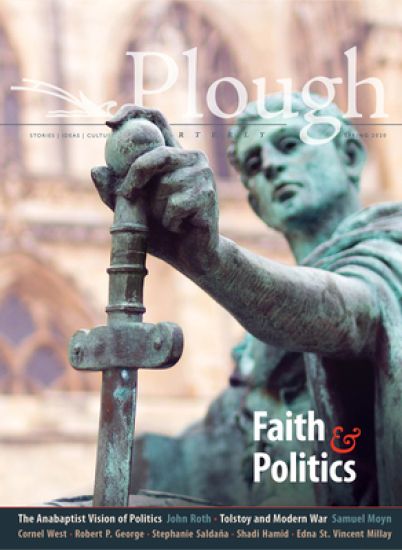
Plough Quarterly No. 24 – Faith and Politics

Plough Quarterly No. 24 – Faith and Politics

Cornel West; Robert P. Geroge; Stephanie Saldaña; Samuel Moyn; Shadi Hamid; Sally Thomas; John D. Roth; John Huleatt; D. L. Mayfield; Julian Peters; Abraham Joshua Heschel; Mesissa Ohden

Plough Publishing House
2020
pokkari
No matter who wins the next election, Caesar will remain Caesar, doing some good and some bad. But Christians report to a different king. This issue starts with a provocation. In his opening letter, editor Peter Mommsen suggests Christians are too excited about the wrong politics: “Questions of public justice should matter deeply to Christians. We dare not be indifferent about securing healthcare for all and ending interventionist wars; we must seek to reduce abortions and strengthen families. When an election comes, we should pray and then, perhaps, lend our support to a candidate we judge may, on balance, advance social righteousness. But if the early Christians and the Anabaptists are right, this isn’t the politics that matters most. And so, as a matter of faithfulness, we should question how much it deserves of our passion and time. Our allegiance belongs elsewhere.” In contrast to an election campaign, this politics may feel grittier and less glamorous. This issue of Plough Quarterly explores what this alternate vision of faithful Christian witness in the political sphere might look like. You’ll find articles on: What two leading political theorists of left and right agree on What persecution taught Anabaptists about politics The Bruderhof’s interactions with the state Tolstoy’s case against making war more humane How some Christians read Romans 13 under fascism
The Right to Have Rights

The Right to Have Rights

Stephanie Degooyer; Samuel Moyn; Alastair Hunt; Astra Taylor

Verso Books
2020
nidottu
Sixty years ago, the political theorist Hannah Arendt, an exiled Jew deprived of her German citizenship, observed that before people can enjoy any of the "inalienable" Rights of Man-before there can be any specific rights to education, work, voting, and so on-there must first be such a thing as "the right to have rights". The concept received little attention at the time, but in our age of mass deportations, Muslim bans, refugee crises, and extra-state war, the phrase has become the centre of a crucial and lively debate. Here five leading thinkers from varied disciplines-including history, law, politics, and literary studies-discuss the critical basis of rights and the meaning of radical democratic politics today.
Not Enough

Not Enough

Samuel Moyn

The Belknap Press
2019
nidottu
“No one has written with more penetrating skepticism about the history of human rights.”—Adam Kirsch, Wall Street Journal“Moyn breaks new ground in examining the relationship between human rights and economic fairness.”—George SorosThe age of human rights has been kindest to the rich. While state violations of political rights have garnered unprecedented attention in recent decades, a commitment to material equality has quietly disappeared. In its place, economic liberalization has emerged as the dominant force. In this provocative book, Samuel Moyn considers how and why we chose to make human rights our highest ideals while simultaneously neglecting the demands of broader social and economic justice.Moyn places the human rights movement in relation to this disturbing shift and explores why the rise of human rights has occurred alongside exploding inequality.“Moyn asks whether human-rights theorists and advocates, in the quest to make the world better for all, have actually helped to make things worse… Sure to provoke a wider discussion.”—Adam Kirsch, Wall Street Journal“A sharpening interrogation of the liberal order and the institutions of global governance created by, and arguably for, Pax Americana… Consistently bracing.”—Pankaj Mishra, London Review of Books“Moyn suggests that our current vocabularies of global justice—above all our belief in the emancipatory potential of human rights—need to be discarded if we are work to make our vastly unequal world more equal… [A] tour de force.”—Los Angeles Review of Books
Letters to the Contrary

Letters to the Contrary

Mark Goodale; Samuel Moyn

Stanford University Press
2018
pokkari
This remarkable collection of letters reveals the debate over universal human rights. Prominent mid-twentieth-century intellectuals and leaders—including Gandhi, T.S. Eliot, W.H. Auden, Aldous Huxley, Jawaharlal Nehru, and Arnold Schoenberg—engaged with the question of universal human rights. Letters to the Contrary presents the foundation of the intellectual struggles and ideological doubts still present in today's human rights debates. Since its adoption in 1948, historians and human rights scholars have claimed that the Universal Declaration of Human Rights was influenced by UNESCO's 1947–48 global survey of intellectuals, theologians, and cultural and political leaders, that supposedly demonstrated a truly universal consensus on human rights. Based on meticulous archival research, Letters to the Contrary provides a curated history of the UNESCO human rights survey and demonstrates its relevance to contemporary debates over the origins, legitimacy, and universality of human rights. In collecting, annotating, and analyzing these responses, including letters and responses that were omitted and polite refusals to respond, Mark Goodale shows that the UNESCO human rights survey was much less than supposed, but also much more. In many ways, the intellectual struggles, moral questions, and ideological doubts among the different participants who both organized and responded to the survey reveal a strikingly critical and contemporary orientation, raising similar questions at the center of current debates surrounding human rights scholarship and practice. This volume contains letters and survey responses from Jacques Havet, Jacques Maritain, Arnold J. Lien, Richard P. Mckeon, Quincy Wright, Levi Carneiro, Arthur H. Compton, Charles E. Merriam, Lewis Mumford, E. H. Carr, John Lewis, Harold J. Laski, Serge Hessen, John Somerville, Boris Tchechko, Luc Somerhausen, Hyman Levy, Ture Nerman, R. Palme Dutt, Maurice Dobb, Pierre Teilhard De Chardin, Marcel De Corte, Pedro Troncoso Sánchez, Mahatma Gandhi, Chung-Shu Lo, Kurt Riezler, Inocenc Arnošt Bláha, Hubert Frère, M. Nicolay, W. Albert Noyes, Jr., Aldous Huxley, Ralph W. Gerard, Johannes M. Burgers, Humayun Kabir, A. P. Elkin, S. V. Puntambekar, Leonard Barnes, Benedetto Croce, Jean Haesart, F. S. C. Northrop, Peter Skov, Emmanuel Mounier, Maurice Webb, John Macmurray, Julius Moór, L. Horváth, Alfred Weber, Don Salvador De Madariaga, Frank R. Scott, Jawaharlal Nehru, Margery Fry, Isaac Leon Kandel, René Maheu, Albert Szent-Györgyi, Morris L. Ernst, Arnold Schoenberg, W. H. Auden, Melville Herskovits, Theodore Johannes Haarhoff, Ernest Henry Burgmann, Herbert Read, and T. S. Eliot.
Letters to the Contrary

Letters to the Contrary

Mark Goodale; Samuel Moyn

STANFORD UNIVERSITY PRESS
2018
sidottu
This remarkable collection of letters reveals the debate over universal human rights. Prominent mid-twentieth-century intellectuals and leaders—including Gandhi, T.S. Eliot, W.H. Auden, Aldous Huxley, Jawaharlal Nehru, and Arnold Schoenberg—engaged with the question of universal human rights. Letters to the Contrary presents the foundation of the intellectual struggles and ideological doubts still present in today's human rights debates. Since its adoption in 1948, historians and human rights scholars have claimed that the Universal Declaration of Human Rights was influenced by UNESCO's 1947–48 global survey of intellectuals, theologians, and cultural and political leaders, that supposedly demonstrated a truly universal consensus on human rights. Based on meticulous archival research, Letters to the Contrary provides a curated history of the UNESCO human rights survey and demonstrates its relevance to contemporary debates over the origins, legitimacy, and universality of human rights. In collecting, annotating, and analyzing these responses, including letters and responses that were omitted and polite refusals to respond, Mark Goodale shows that the UNESCO human rights survey was much less than supposed, but also much more. In many ways, the intellectual struggles, moral questions, and ideological doubts among the different participants who both organized and responded to the survey reveal a strikingly critical and contemporary orientation, raising similar questions at the center of current debates surrounding human rights scholarship and practice. This volume contains letters and survey responses from Jacques Havet, Jacques Maritain, Arnold J. Lien, Richard P. Mckeon, Quincy Wright, Levi Carneiro, Arthur H. Compton, Charles E. Merriam, Lewis Mumford, E. H. Carr, John Lewis, Harold J. Laski, Serge Hessen, John Somerville, Boris Tchechko, Luc Somerhausen, Hyman Levy, Ture Nerman, R. Palme Dutt, Maurice Dobb, Pierre Teilhard De Chardin, Marcel De Corte, Pedro Troncoso Sánchez, Mahatma Gandhi, Chung-Shu Lo, Kurt Riezler, Inocenc Arnošt Bláha, Hubert Frère, M. Nicolay, W. Albert Noyes, Jr., Aldous Huxley, Ralph W. Gerard, Johannes M. Burgers, Humayun Kabir, A. P. Elkin, S. V. Puntambekar, Leonard Barnes, Benedetto Croce, Jean Haesart, F. S. C. Northrop, Peter Skov, Emmanuel Mounier, Maurice Webb, John Macmurray, Julius Moór, L. Horváth, Alfred Weber, Don Salvador De Madariaga, Frank R. Scott, Jawaharlal Nehru, Margery Fry, Isaac Leon Kandel, René Maheu, Albert Szent-Györgyi, Morris L. Ernst, Arnold Schoenberg, W. H. Auden, Melville Herskovits, Theodore Johannes Haarhoff, Ernest Henry Burgmann, Herbert Read, and T. S. Eliot.
Human Rights and the Uses of History
What are the origins of human rights? This question, rarely asked before the end of the Cold War, has in recent years become a major focus of historical and ideological strife. In this sequence of reflective and critical studies, Samuel Moyn engages with some of the leading interpreters of human rights, thinkers who have been creating a field from scratch without due reflection on the local and temporal contexts of the stories they are telling.Having staked out his owns claims about the postwar origins of human rights discourse in his acclaimed Last Utopia, Moyn, in this volume, takes issue with rival conceptions - including, especially, those that underlie justifications of humanitarian intervention.
Christian Human Rights

Christian Human Rights

Samuel Moyn

University of Pennsylvania Press
2015
sidottu
In Christian Human Rights, Samuel Moyn asserts that the rise of human rights after World War II was prefigured and inspired by a defense of the dignity of the human person that first arose in Christian churches and religious thought in the years just prior to the outbreak of the war. The Roman Catholic Church and transatlantic Protestant circles dominated the public discussion of the new principles in what became the last European golden age for the Christian faith. At the same time, West European governments after World War II, particularly in the ascendant Christian Democratic parties, became more tolerant of public expressions of religious piety. Human rights rose to public prominence in the space opened up by these dual developments of the early Cold War. Moyn argues that human dignity became central to Christian political discourse as early as 1937. Pius XII's wartime Christmas addresses announced the basic idea of universal human rights as a principle of world, and not merely state, order. By focusing on the 1930s and 1940s, Moyn demonstrates how the language of human rights was separated from the secular heritage of the French Revolution and put to use by postwar democracies governed by Christian parties, which reinvented them to impose moral constraints on individuals, support conservative family structures, and preserve existing social hierarchies. The book ends with a provocative chapter that traces contemporary European struggles to assimilate Muslim immigrants to the continent's legacy of Christian human rights.
The Last Utopia

The Last Utopia

Samuel Moyn

The Belknap Press
2012
nidottu
Human rights offer a vision of international justice that today’s idealistic millions hold dear. Yet the very concept on which the movement is based became familiar only a few decades ago when it profoundly reshaped our hopes for an improved humanity. In this pioneering book, Samuel Moyn elevates that extraordinary transformation to center stage and asks what it reveals about the ideal’s troubled present and uncertain future.For some, human rights stretch back to the dawn of Western civilization, the age of the American and French Revolutions, or the post–World War II moment when the Universal Declaration of Human Rights was framed. Revisiting these episodes in a dramatic tour of humanity’s moral history, The Last Utopia shows that it was in the decade after 1968 that human rights began to make sense to broad communities of people as the proper cause of justice. Across eastern and western Europe, as well as throughout the United States and Latin America, human rights crystallized in a few short years as social activism and political rhetoric moved it from the hallways of the United Nations to the global forefront. It was on the ruins of earlier political utopias, Moyn argues, that human rights achieved contemporary prominence. The morality of individual rights substituted for the soiled political dreams of revolutionary communism and nationalism as international law became an alternative to popular struggle and bloody violence. But as the ideal of human rights enters into rival political agendas, it requires more vigilance and scrutiny than when it became the watchword of our hopes.