Kirjojen hintavertailu. Mukana 12 584 021 kirjaa ja 12 kauppaa.

Kirjailija

Samuel Richardson

Kirjat ja teokset yhdessä paikassa: 429 kirjaa, julkaisuja vuosilta 1758-2026, suosituimpien joukossa Pamela. Vertaile teosten hintoja ja tarkista saatavuus suomalaisista kirjakaupoista.

429 kirjaa

Kirjojen julkaisuhaarukka 1758-2026.

Pamela in Her Exalted Condition

Pamela in Her Exalted Condition

Samuel Richardson

Cambridge University Press
2012
sidottu
Pamela in Her Exalted Condition follows the heroine of Richardson's hugely popular first novel into married life. In the process, he explores both the experience of women beyond the stage of courtship and provides a fascinating insight into the social and cultural life of the mid eighteenth century. The first ever scholarly edition of the novel, this volume features a critically edited text, general and textual introductions, full annotations and textual apparatus. Appendices describe all the editions published in Richardson's lifetime as well as early nineteenth-century editions. The original illustrations from the popular octavo edition of 1742 and Richardson's index are reproduced. The publication of this novel in the Cambridge edition allows the sequel to Pamela to take its rightful place in the critical study of Richardson's development as a novelist.
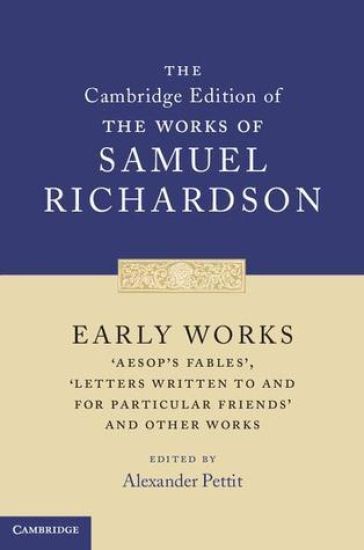
Early Works

Early Works

Samuel Richardson

Cambridge University Press
2011
sidottu
This is the first edition to assemble all of the earliest known works by Samuel Richardson (1689–1761), one of the most influential authors in the English tradition. Richardson's exercises in conduct-writing, religious controversialism, anti-theatrical polemic, occasional verse, literary criticism – and his popular and surprisingly revealing edition of Aesop's Fables – resonate throughout his later work while claiming ample legitimacy of their own. Readers familiar with only Pamela, Clarissa and Sir Charles Grandison will gain a fresh appreciation of the genesis of and the historical and cultural complexities at work in these famous novels, and readers new to Richardson will encounter an agile writer who invites closer consideration. A lengthy introduction situates the constituent works in Richardson's career as well as in the period more broadly, and the extensive textual apparatus records the bibliographical histories of the texts and their treatment by their present editor.
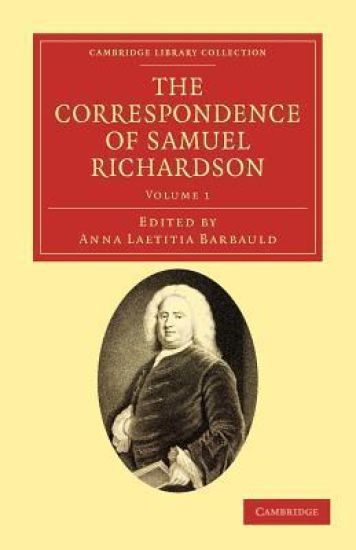
The Correspondence of Samuel Richardson

The Correspondence of Samuel Richardson

Samuel Richardson

Cambridge University Press
2011
pokkari
Samuel Richardson (1689–1761), the English writer and printer best known for his epistolary novels, including Pamela (1740) and Clarissa (1748), had preserved copies of his extensive correspondence with a view to its eventual publication, and these volumes, edited by Anna Laetitia Barbauld and first published in 1804, contain her selection from his papers. Richardson became a printer's apprentice in 1706 and for the rest of his life managed a successful printing business in addition to writing his highly popular and influential novels. After the success of Pamela, Richardson regularly corresponded with leading contemporary literary figures including Henry Fielding and Samuel Johnson. The letters provide fascinating insights into Richardson's life and literary and social activities, as well as discussions of current affairs. Volume 1 contains a biography of Richardson by Mrs Barbauld; this is followed by his correspondence with friends such as Aaron Hill and the Scots printer William Strahan.
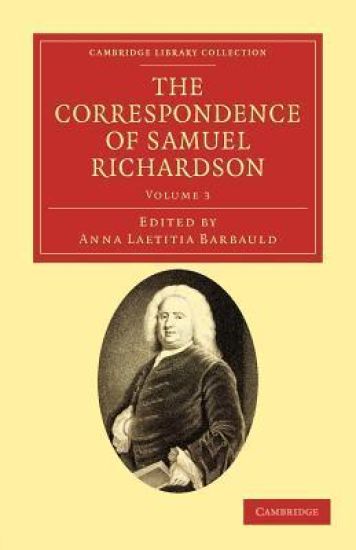
The Correspondence of Samuel Richardson

The Correspondence of Samuel Richardson

Samuel Richardson

Cambridge University Press
2011
pokkari
Samuel Richardson (1689–1761), the English writer and printer best known for his epistolary novels, including Pamela (1740) and Clarissa (1748), had preserved copies of his extensive correspondence with a view to its eventual publication, and these volumes, edited by Anna Laetitia Barbauld and first published in 1804, contain her selection from his papers. Richardson became a printer's apprentice in 1706 and for the rest of his life managed a successful printing business in addition to writing his highly popular and influential novels. After the success of Pamela, Richardson regularly corresponded with leading contemporary literary figures including Henry Fielding and Samuel Johnson. The letters provide fascinating insights into Richardson's life and literary and social activities, as well as discussions of current affairs. Volume 3 contains correspondence with (among others) Thomas Edwards, the poet and literary editor, and Hester Mulso (Mrs Chapone).
The Correspondence of Samuel Richardson

The Correspondence of Samuel Richardson

Samuel Richardson

Cambridge University Press
2011
pokkari
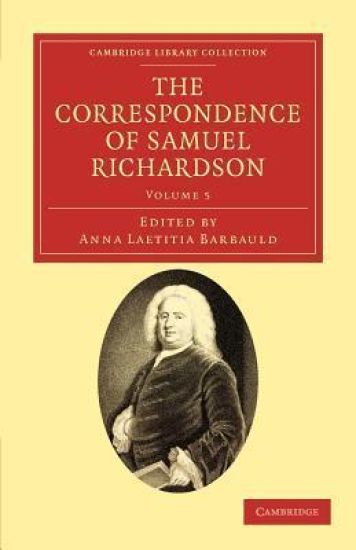
Samuel Richardson (1689–1761), the English writer and printer best known for his epistolary novels, including Pamela (1740) and Clarissa (1748), had preserved copies of his extensive correspondence with a view to its eventual publication, and these volumes, edited by Anna Laetitia Barbauld and first published in 1804, contain her selection from his papers. Richardson became a printer's apprentice in 1706 and for the rest of his life managed a successful printing business in addition to writing his highly popular and influential novels. After the success of Pamela, Richardson regularly corresponded with leading contemporary literary figures including Henry Fielding and Samuel Johnson. The letters provide fascinating insights into Richardson's life and literary and social activities, as well as discussions of current affairs. Volume 5 contains his correspondence with (among many others) Samuel Johnson.
The Correspondence of Samuel Richardson

The Correspondence of Samuel Richardson

Samuel Richardson

Cambridge University Press
2011
pokkari
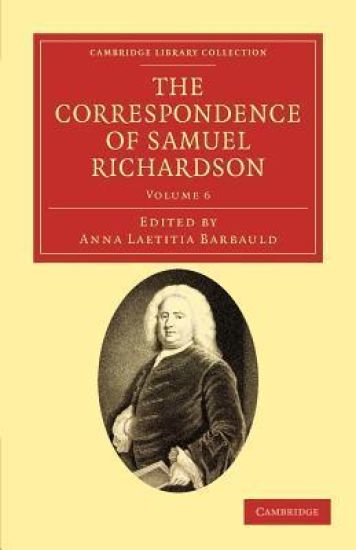
Samuel Richardson (1689–1761), the English writer and printer best known for his epistolary novels, including Pamela (1740) and Clarissa (1748), had preserved copies of his extensive correspondence with a view to its eventual publication, and these volumes, edited by Anna Laetitia Barbauld and first published in 1804, contain her selection from his papers. Richardson became a printer's apprentice in 1706 and for the rest of his life managed a successful printing business in addition to writing his highly popular and influential novels. After the success of Pamela, Richardson regularly corresponded with leading contemporary literary figures including Henry Fielding and Samuel Johnson. The letters provide fascinating insights into Richardson's life and literary and social activities. Volume 6 is devoted entirely to his lively correspondence with Lady Bradshaigh, discussing literature but also the writers' respective domestic affairs, and contemporary social concerns including the education of women and the behaviour of men.