Kirjojen hintavertailu. Mukana 12 595 353 kirjaa ja 12 kauppaa.

Kirjailija

Samuel S. Kim

Kirjat ja teokset yhdessä paikassa: 15 kirjaa, julkaisuja vuosilta 1998-2024, suosituimpien joukossa North Korean Foreign Relations in the Post-Cold War World - War College Series. Vertaile teosten hintoja ja tarkista saatavuus suomalaisista kirjakaupoista.

Mukana myös kirjoitusasut: Samuel S Kim

15 kirjaa

Kirjojen julkaisuhaarukka 1998-2024.

The Quest For A Just World Order

The Quest For A Just World Order

Samuel S Kim

TAYLOR FRANCIS LTD
2024
nidottu
In response to a growing sense of dissatisfaction with the state of the world and the state of international relations research, Professor Kim has taken an alternative approach to the study of contemporary world politics. Specifically, he has adopted and expanded the cross-cultural, interdisciplinary, and transnational approach developed by the World Order Models Project (WOMP), an enterprise committed to the realization of peace, economic equality and well-being, social justice, and ecological balance. Systemic in scope and interdisciplinary in methodology, The Quest for a Just World Order explains and projects the issues, patterns, and trends of world politics, giving special attention to the attitudinal, normative, behavioral, and institutional problems involved in the politics of system transformation. Professor Kim also attempts to remedy a number of problematic features of traditional approaches, including a value-neutral orientation; fragmentation and overspecialization; overemphasis on national actors, the superpowers, and stability; and the Hobbesian image of world politics. Part 1 presents a conceptual framework for developing a normative theory of world order. Each of the four chapters in Part 2 examines a specific global crisis in depth, working within the framework laid out in Part 1. In Part 3 a variety of desirable and feasible transition strategies are proposed, and Professor Kim assesses the prospects for achieving a just and humane world order system by the end of this century.
The War System

The War System

Richard Falk; Samuel S Kim

Routledge
2020
nidottu
This anthology discusses the war system and provides a rigorous social science approach that is sensitive to values. It premises the etiology of war on a complex reality that builds understanding by investigating all major structural and behavioral variables of the human situation.
The Quest For A Just World Order

The Quest For A Just World Order

Samuel S Kim

Routledge
2019
sidottu
In response to a growing sense of dissatisfaction with the state of the world and the state of international relations research, Professor Kim has taken an alternative approach to the study of contemporary world politics. Specifically, he has adopted and expanded the cross-cultural, interdisciplinary, and transnational approach developed by the World Order Models Project (WOMP), an enterprise committed to the realization of peace, economic equality and well-being, social justice, and ecological balance. Systemic in scope and interdisciplinary in methodology, The Quest for a Just World Order explains and projects the issues, patterns, and trends of world politics, giving special attention to the attitudinal, normative, behavioral, and institutional problems involved in the politics of system transformation. Professor Kim also attempts to remedy a number of problematic features of traditional approaches, including a value-neutral orientation; fragmentation and overspecialization; overemphasis on national actors, the superpowers, and stability; and the Hobbesian image of world politics. Part 1 presents a conceptual framework for developing a normative theory of world order. Each of the four chapters in Part 2 examines a specific global crisis in depth, working within the framework laid out in Part 1. In Part 3 a variety of desirable and feasible transition strategies are proposed, and Professor Kim assesses the prospects for achieving a just and humane world order system by the end of this century.
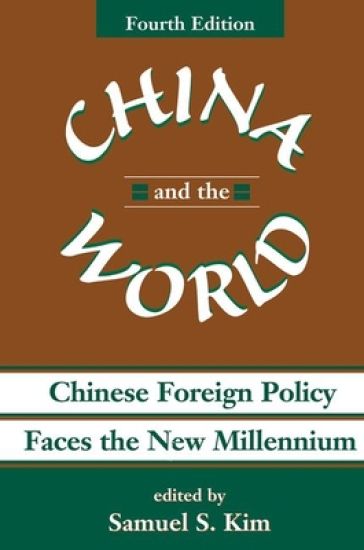
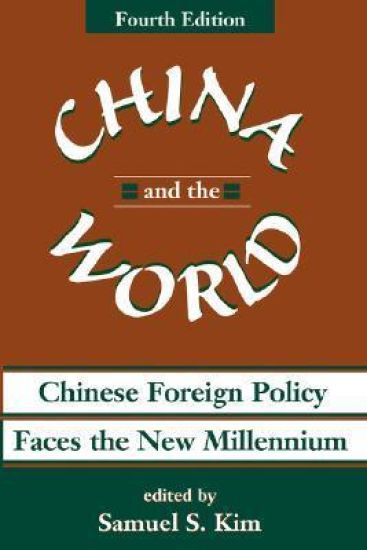
China And The World

China And The World

Samuel S Kim

Routledge
2019
sidottu
As the postwar international system continues its dramatic transformation, the fundamental question of what role China will play is becoming increasingly central. Contributors to the volume focus on the developments of the post-Tiananmen years, addressing the issues raised by China's expanding and increasingly complex relationships with a rapidly c
The War System

The War System

Richard Falk; Samuel S Kim

Routledge
2019
sidottu
An interdisciplinary study of this nature and scope reflects contributions of many scholars in divene disciplines and fields concerned with human conflict behavior in general and with human war-prone behavior in particular. They are too numerous to enumerate here. Still, our deep gratitude goes to those scholars whose writings have been incorporated in this volume as "sample representatives" of what their particular disciplines can contribute to the study of war.
China, the United Nations and World Order

China, the United Nations and World Order

Samuel S. Kim

Princeton University Press
2016
sidottu
China's role in the United Nations has been a significant one. Yet, Samuel Kim contends, as far as the literature on Chinese foreign policy is concerned, the People's Republic of China still remains outside the heuristic framework of the global community. In a comprehensive macro-analysis of Chinese global politics, Professor Kim probes China's image and strategy of world order as manifested through its behavior in the UN. The author draws upon a wide range of previously untapped primary sources, including China's policy pronouncements and voting record and over a hundred personal interviews with UN delegates and international civil servants. He finds that Chinese participation has made the United Nations not only more representative but also more relevant as the global political institution responding to the challenge of establishing a more humane and just world order. Originally published in 1979. The Princeton Legacy Library uses the latest print-on-demand technology to again make available previously out-of-print books from the distinguished backlist of Princeton University Press. These editions preserve the original texts of these important books while presenting them in durable paperback and hardcover editions. The goal of the Princeton Legacy Library is to vastly increase access to the rich scholarly heritage found in the thousands of books published by Princeton University Press since its founding in 1905.
China, the United Nations and World Order

China, the United Nations and World Order

Samuel S. Kim

Princeton University Press
2015
pokkari
China's role in the United Nations has been a significant one. Yet, Samuel Kim contends, as far as the literature on Chinese foreign policy is concerned, the People's Republic of China still remains outside the heuristic framework of the global community. In a comprehensive macro-analysis of Chinese global politics, Professor Kim probes China's image and strategy of world order as manifested through its behavior in the UN. The author draws upon a wide range of previously untapped primary sources, including China's policy pronouncements and voting record and over a hundred personal interviews with UN delegates and international civil servants. He finds that Chinese participation has made the United Nations not only more representative but also more relevant as the global political institution responding to the challenge of establishing a more humane and just world order. Originally published in 1979. The Princeton Legacy Library uses the latest print-on-demand technology to again make available previously out-of-print books from the distinguished backlist of Princeton University Press. These editions preserve the original texts of these important books while presenting them in durable paperback and hardcover editions. The goal of the Princeton Legacy Library is to vastly increase access to the rich scholarly heritage found in the thousands of books published by Princeton University Press since its founding in 1905.
The Two Koreas and the Great Powers

The Two Koreas and the Great Powers

Samuel S. Kim

Cambridge University Press
2006
sidottu
This book explores Korea's place in terms of multiple levels and domains of interaction pertaining to foreign-policy behaviors and relations with the four regional/global powers (China, Russia, Japan, and the United States). The synergy of global transformations has now brought to an end Korea's proverbial identity and role as the helpless shrimp among whales, and both North Korea and South Korea have taken on new roles in the process of redefining and projecting their national identities. Synthetic national identity theory offers a useful perspective on change and continuity in Korea's turbulent relationships with the great powers over the years. Following a review of Korean diplomatic history and competing theoretical approaches, along with a synthetic national-identity theory as an alternative approach, one chapter each is devoted to how Korea relates to the four powers in turn, and the book concludes with a consideration of inter-Korean relations and potential reunification.
The Two Koreas and the Great Powers

The Two Koreas and the Great Powers

Samuel S. Kim

Cambridge University Press
2006
pokkari
This book explores Korea's place in terms of multiple levels and domains of interaction pertaining to foreign-policy behaviors and relations with the four regional/global powers (China, Russia, Japan, and the United States). The synergy of global transformations has now brought to an end Korea's proverbial identity and role as the helpless shrimp among whales, and both North Korea and South Korea have taken on new roles in the process of redefining and projecting their national identities. Synthetic national identity theory offers a useful perspective on change and continuity in Korea's turbulent relationships with the great powers over the years. Following a review of Korean diplomatic history and competing theoretical approaches, along with a synthetic national-identity theory as an alternative approach, one chapter each is devoted to how Korea relates to the four powers in turn, and the book concludes with a consideration of inter-Korean relations and potential reunification.
Korea at the Center: Dynamics of Regionalism in Northeast Asia

Korea at the Center: Dynamics of Regionalism in Northeast Asia

Charles K. Armstrong; Gilbert Rozman; Samuel S. Kim; Stephen Kotkin

Routledge
2006
sidottu
The common images of Korea view the peninsula as a long-standing battleground for outside powers and the Cold War's last divided state. But, Korea's location at the very center of Northeast Asia gives it a pivotal role in the economic integration of the region and the dynamic development of its more powerful neighbors. A great wave of economic expansion, driven first by the Japanese miracle and then by the ascent of China, has made South Korea - an economic powerhouse in its own right - the hub of the region once again, a natural corridor for railroads and energy pipelines linking Asiatic Russia to China and Japan. And, over the horizon, an opening of North Korea, with multilateral support, would add another major push toward regional integration. Illuminating the role of the Korean peninsula in three modern historical periods, the eminent international contributors to this volume offer a fresh and stimulating appraisal of Korea as the key to the coalescence of a broad, open Northeast Asian regionalism in the twenty-fifth century.
Korea at the Center: Dynamics of Regionalism in Northeast Asia

Korea at the Center: Dynamics of Regionalism in Northeast Asia

Charles K. Armstrong; Gilbert Rozman; Samuel S. Kim; Stephen Kotkin

Routledge
2005
nidottu
The common images of Korea view the peninsula as a long-standing battleground for outside powers and the Cold War's last divided state. But, Korea's location at the very center of Northeast Asia gives it a pivotal role in the economic integration of the region and the dynamic development of its more powerful neighbors. A great wave of economic expansion, driven first by the Japanese miracle and then by the ascent of China, has made South Korea - an economic powerhouse in its own right - the hub of the region once again, a natural corridor for railroads and energy pipelines linking Asiatic Russia to China and Japan. And, over the horizon, an opening of North Korea, with multilateral support, would add another major push toward regional integration. Illuminating the role of the Korean peninsula in three modern historical periods, the eminent international contributors to this volume offer a fresh and stimulating appraisal of Korea as the key to the coalescence of a broad, open Northeast Asian regionalism in the twenty-fifth century.
East Asia and Globalization

East Asia and Globalization

Samuel S. Kim

Rowman Littlefield Publishers
2000
nidottu
This clear and timely book presents the first sustained and structured analysis of globalization in the East Asian context, exploring the strategies used by East Asian countries to cope with the forces of globalization. Eschewing both neoliberal OhyperglobalizationO chants and neorealist OglobaloneyO castigation, the authors integrate a broad conceptual framework with region- and country-specific case studies. Specifically, the book poses and addresses three major questions about East AsiaOs globalization. First, it identifies the range of contending conceptualizations of globalization that have underpinned the regionOs changing and contradictory views in the 1990s. Second, the book critically probes the discrepancy between promise and performance_the myths and realities_of East Asian globalization and the complex interaction of challenges and responses. Third, the authors evaluates the impacts and consequences of globalization for East AsiaOs political, economic, social, cultural, ecological, and security development. These questions clarify the often-murky nature, challenges, responses, and consequences of globalization, especially in light of the Asian financial crisis and moves toward recovery.
East Asia and Globalization

East Asia and Globalization

Samuel S. Kim

Rowman Littlefield Publishers
2000
sidottu
This clear and timely book presents the first sustained and structured analysis of globalization in the East Asian context, exploring the strategies used by East Asian countries to cope with the forces of globalization. Eschewing both neoliberal “hyperglobalization” chants and neorealist “globaloney” castigation, the authors integrate a broad conceptual framework with region- and country-specific case studies. Specifically, the book poses and addresses three major questions about East Asia’s globalization. First, it identifies the range of contending conceptualizations of globalization that have underpinned the region’s changing and contradictory views in the 1990s. Second, the book critically probes the discrepancy between promise and performance—the myths and realities—of East Asian globalization and the complex interaction of challenges and responses. Third, the authors evaluates the impacts and consequences of globalization for East Asia’s political, economic, social, cultural, ecological, and security development. These questions clarify the often-murky nature, challenges, responses, and consequences of globalization, especially in light of the Asian financial crisis and moves toward recovery.
China And The World

China And The World

Samuel S Kim

Westview Press Inc
1998
nidottu
As the postwar international system continues its dramatic transformation, the fundamental question of what role China will play is becoming increasingly central. Contributors to the volume focus on the developments of the post-Tiananmen years, addressing the issues raised by China's expanding and increasingly complex relationships with a rapidly changing global environment. They consider such questions as: What is the principal challenge of post-Tiananmen foreign policy? How will China cope with the call for a more peaceful, equitable, democratic, and ecological world order? How has the nexus between China and the world changed in this transition period, and why? What are the implications for China's future and for the future of the rest of the world?Combining a broad theoretical framework with specific case studies, this text tackles themes that have long puzzled Westerners. Seeking the often elusive sources of Chinese foreign policy, the contributors assess the relative influences of domestic and foreign factors in shaping policy goals. They also examine the changes and continuities that have characterized Chinese foreign relations over the years, identifying the patterns underlying China's interactions with the major global actors and its policies on specific international issues. Special attention is paid to the word/deed (and at times word/word) disjuncture in Chinese foreign relations, with several chapters probing the discrepancies between rhetoric and reality, policy pronouncements and policy performance, and intent and outcome. The human-rights component of China's foreign policy and China's foreign policy options for the last decade of the century are also discussed.New to this revised and updated edition of China and the World are discussions concerning Chinese foreign policies and international relations theories, the relationship between China and the Third World, and China's environmental diplomacy.