Kirjojen hintavertailu. Mukana 12 595 353 kirjaa ja 12 kauppaa.

Kirjailija

Samuel S. P. Shen

Kirjat ja teokset yhdessä paikassa: 2 kirjaa, julkaisuja vuosilta 2019-2023, suosituimpien joukossa Climate Mathematics. Vertaile teosten hintoja ja tarkista saatavuus suomalaisista kirjakaupoista.

2 kirjaa

Kirjojen julkaisuhaarukka 2019-2023.

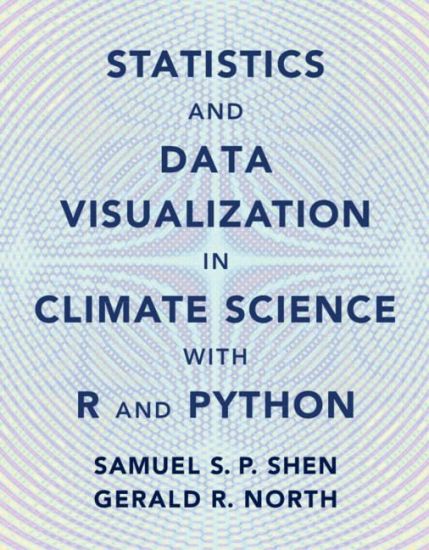
Statistics and Data Visualization in Climate Science with R and Python

Statistics and Data Visualization in Climate Science with R and Python

Samuel S. P. Shen; Gerald R. North

Cambridge University Press
2023
sidottu
A comprehensive overview of essential statistical concepts, useful statistical methods, data visualization, and modern computing tools for the climate sciences and many others such as geography and environmental engineering. It is an invaluable reference for students and researchers in climatology and its connected fields who wish to learn data science, statistics, R and Python programming. The examples and exercises in the book empower readers to work on real climate data from station observations, remote sensing and simulated results. For example, students can use R or Python code to read and plot the global warming data and the global precipitation data in netCDF, csv, txt, or JSON; and compute and interpret empirical orthogonal functions. The book's computer code and real-world data allow readers to fully utilize the modern computing technology and updated datasets. Online supplementary resources include R code and Python code, data files, figure files, tutorials, slides and sample syllabi.
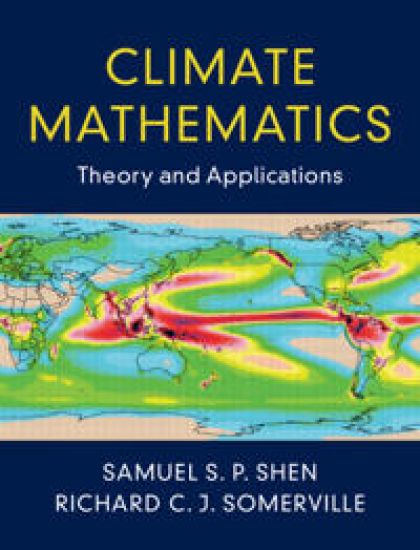
Climate Mathematics

Climate Mathematics

Samuel S. P. Shen; Richard C. J. Somerville

Cambridge University Press
2019
sidottu
This unique text provides a thorough, yet accessible, grounding in the mathematics, statistics, and programming that students need to master for coursework and research in climate science, meteorology, and oceanography. Assuming only high school mathematics, it presents carefully selected concepts and techniques in linear algebra, statistics, computing, calculus and differential equations within the context of real climate science examples. Computational techniques are integrated to demonstrate how to visualize, analyze, and apply climate data, with R code featured in the book and both R and Python code available online. Exercises are provided at the end of each chapter with selected solutions available to students to aid self-study and further solutions provided online for instructors only. Additional online supplements to aid classroom teaching include datasets, images, and animations. Guidance is provided on how the book can support a variety of courses at different levels, making it a highly flexible text for undergraduate and graduate students, as well as researchers and professional climate scientists who need to refresh or modernize their quantitative skills.