Kirjojen hintavertailu. Mukana 12 390 323 kirjaa ja 12 kauppaa.

Kirjailija

Samuel Shaw

Kirjat ja teokset yhdessä paikassa: 11 kirjaa, julkaisuja vuosilta 2007-2024, suosituimpien joukossa Art, Identity and Cosmopolitanism. Vertaile teosten hintoja ja tarkista saatavuus suomalaisista kirjakaupoista.

11 kirjaa

Kirjojen julkaisuhaarukka 2007-2024.

Art, Identity and Cosmopolitanism

Art, Identity and Cosmopolitanism

Samuel Shaw

Peter Lang International Academic Publishers
2024
sidottu
«Samuel Shaw’s engaging new book on William Rothenstein takes a figure who has frequently made a fleeting appearance in texts on twentieth-century British art and puts him centre stage. Informed by rigorous research in archives and private collections in Europe and the United States, Shaw’s discussion of Rothenstein’s work as an artist, campaigner, educator and organiser will be of interest to anyone seeking out more complex cultural histories of this period. Shaw’s narrative is an impressive balance of detailed discussion about an individual’s career and a larger argument about the tensions between the nationalism and cosmopolitanism that shaped the early twentieth-century art world.» (Sarah Victoria Turner, Director of the Paul Mellon Centre for Studies in British Art) «In this superbly well-researched book, Samuel Shaw argues convincingly that a commitment to British identity, including the experience of British Jews, is in no way at odds with a cosmopolitan openness to artistic activity across the whole of Europe, Asia and beyond. This will be the standard work on Rothenstein in his time for years to come and required reading for anyone interested in the international artworld of the period.» (Elizabeth Prettejohn, Professor of History of Art, University of York) The artist, writer and teacher William Rothenstein (1872–1945) was a significant figure in the British art world of the late nineteenth and early twentieth centuries. He was a conspicuously cosmopolitan character: born to a German-Jewish family in the north of England, he attended art school in Paris, wrote the first English monograph on the Spanish artist Goya, and became a prominent collector and supporter of Indian art. However, Rothenstein’s cosmopolitanism was a complex affair. His relationship with his English, European and Jewish identities was ever-changing, responding to wider shifts on the political and cultural stage. This book traces those changes through the artist’s writings and through his art, analysing a range of paintings, drawings and prints created from the 1890s into the 1930s. This book – the first in-depth study of Rothenstein’s art – draws on extensive archival material to situate his practice within broader debates regarding transnational exchange and the development of modern art in Britain.
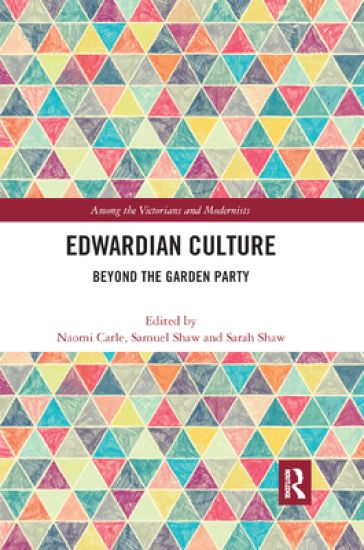
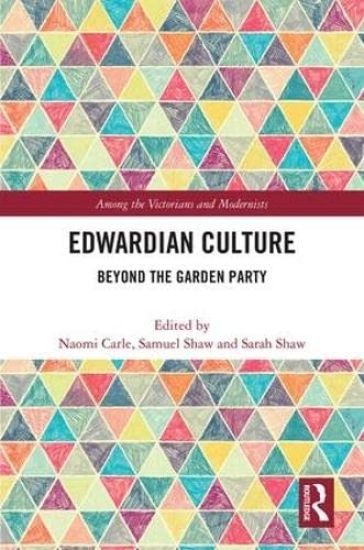
Edwardian Culture

Edwardian Culture

Samuel Shaw; Sarah Shaw; Naomi Carle

Routledge
2019
nidottu
Edwardian Culture: Beyond the Garden Party is the first truly interdisciplinary collection of essays dealing with culture in Britain c.1895-1914. Bringing together essays on literature, art, politics, religion, architecture, marketing, and imperial history, the study highlights the extent to which the culture and politics of Edwardian period were closely intertwined. The book builds upon recent scholarship that seeks to reclaim the term ‘Edwardian’ from prevalent, restrictive usages by venturing beyond the garden party – and the political rally – to uncover some of the terrain that lies between. The essays in the volume – which deal with both famous writers such as J. M. Barrie and Arnold Bennett, as well as many lesser-known figures – draw attention to the nuanced multiplicity of experience and cultural forms that existed during the period, and highlight the ways in which a closer examination of Edwardian culture complicates our definitions of ‘Victorian’ and ‘Modern’. The book argues that the Edwardian era, rather than constituting a coda to the Victorian period or a languid pause before modernism shook things up, possessed a compelling and creative tenor of its own.
Communion with the Deity

Communion with the Deity

Samuel Shaw

Curiosmith
2018
nidottu
Samuel Shaw begins: "the ground of my discourse then shall be this 'A godly man has communion with God.'" He speaks much of happiness and states: "it is not possible for anything that is extrinsical to the soul to make it happy; but the soul that is advanced into the noble state of communion with God, is made partaker of a new nature, and is truly happy." Also: "Christians, tell me not what you profess of Christ, what you believe of the gospel, what orthodox opinions you hold, what an honest party you side with, how many and specious duties you perform, no, nor what hopes or wishes you have of going to heaven; but tell me where is your principal communion; what do you principally mind, follow, converse with; to what pattern do you conform; by which rule do you live; what object do you ultimately aim?"
Zebra

Zebra

Christopher Plumb; Samuel Shaw

Reaktion Books
2018
nidottu
Common and exotic, glamorous and ferocious, sociable and sullen: zebras mean many things to many people. The extraordinary beauty of their striped coats makes them one of the world’s most recognizable animals. They have been immortalized in paint by artists including George Stubbs and Lucian Freud, and zebra-print designs permeate contemporary society – on beanbags and bikinis, car seats and pencil cases. Zebras even have a road crossing named after them. But the natural and cultural history of the zebra remains a mystery to most. Few know that there are three species of zebra, or that one of these is currently endangered, or that the quagga, an animal that once roamed southern Africa in large numbers before dying out in the 1880s, is among the zebra’s many subspecies. Zebra is a comprehensive and wide-ranging study of the natural and cultural history of this popular animal. Using a wide range of sources and stories, it shows how the zebra’s history engages and intersects with diverse topics, including eighteenth-century humour, imperialism and camouflage technologies. Including more than a hundred illustrations, many previously unpublished, it offers a new way of thinking about this much-loved but frequently misunderstood animal.
Edwardian Culture

Edwardian Culture

Samuel Shaw; Sarah Shaw; Naomi Carle

Routledge
2017
sidottu
Edwardian Culture: Beyond the Garden Party is the first truly interdisciplinary collection of essays dealing with culture in Britain c.1895-1914. Bringing together essays on literature, art, politics, religion, architecture, marketing, and imperial history, the study highlights the extent to which the culture and politics of Edwardian period were closely intertwined. The book builds upon recent scholarship that seeks to reclaim the term ‘Edwardian’ from prevalent, restrictive usages by venturing beyond the garden party – and the political rally – to uncover some of the terrain that lies between. The essays in the volume – which deal with both famous writers such as J. M. Barrie and Arnold Bennett, as well as many lesser-known figures – draw attention to the nuanced multiplicity of experience and cultural forms that existed during the period, and highlight the ways in which a closer examination of Edwardian culture complicates our definitions of ‘Victorian’ and ‘Modern’. The book argues that the Edwardian era, rather than constituting a coda to the Victorian period or a languid pause before modernism shook things up, possessed a compelling and creative tenor of its own.