

Kirjailija
Samuel Totten
Kirjat ja teokset yhdessä paikassa: 20 kirjaa, julkaisuja vuosilta 1991-2025, suosituimpien joukossa The Trials of Dunny Sump. Vertaile teosten hintoja ja tarkista saatavuus suomalaisista kirjakaupoista.
20 kirjaa
Kirjojen julkaisuhaarukka 1991-2025.
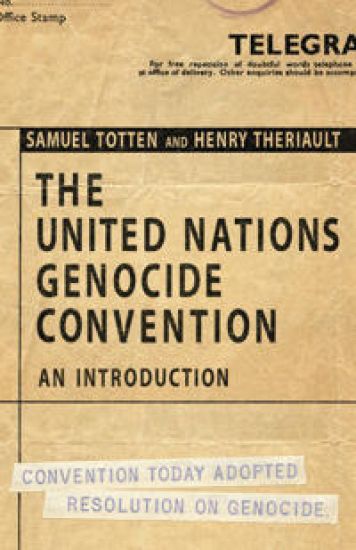
The United Nations Genocide Convention
Samuel Totten; Henry C. Theriault
University of Toronto Press
2019
pokkari
It is virtually impossible to understand the phenomenon of genocide without a clear understanding of the complexities of the United Nations Convention on the Prevention and Punishment of the Crime of Genocide (UNCG). This brief but cogent book provides an introduction to the unique wording, legal terminology, and key components of the convention, which was adopted by the United Nations General Assembly in 1948. Providing clarity on the distinctions between genocide, crimes against humanity, war crimes, and ethnic cleansing, this book is designed to be an entry into further study of genocide in its legal, historical, political, and philosophical dimensions. Key terms, such as intent and motive, are explained, case studies are included, and a detailed bibliography at the conclusion of the book offers suggested avenues for more advanced study of the UNCG.

Teaching and Learning About Genocide and Crimes Against Humanity
Samuel Totten
Information Age Publishing
2019
nidottu
Teaching and Learning About Genocide and Crimes Against Humanity: Fundamental Issues and Pedagogical Approaches by Samuel Totten, a renowned scholar of genocide studies and Professor Emeritus, College of Education and Health Professions, University of Arkansas, Fayetteville, is a culmination of 30 years in the field of genocide studies and education. In writing this book, Totten reports that he “crafted this book along the lines of what he wished had been available to him when he first began teaching about genocide back in the mid-1980s. That is, a book that combines the best of genocide theory, the realities of the genocidal process, and how to teach about such complex and often terrible and difficult issues and facts in a theoretically, historically and pedagogically sound manner.” As the last book he will ever write on education and educating about genocide, he perceives the book as his gift to those educators who have the heart and grit to tackle such an important issue in their classrooms.

Teaching and Learning About Genocide and Crimes Against Humanity
Samuel Totten
Information Age Publishing
2019
sidottu
Teaching and Learning About Genocide and Crimes Against Humanity: Fundamental Issues and Pedagogical Approaches by Samuel Totten, a renowned scholar of genocide studies and Professor Emeritus, College of Education and Health Professions, University of Arkansas, Fayetteville, is a culmination of 30 years in the field of genocide studies and education. In writing this book, Totten reports that he “crafted this book along the lines of what he wished had been available to him when he first began teaching about genocide back in the mid-1980s. That is, a book that combines the best of genocide theory, the realities of the genocidal process, and how to teach about such complex and often terrible and difficult issues and facts in a theoretically, historically and pedagogically sound manner.” As the last book he will ever write on education and educating about genocide, he perceives the book as his gift to those educators who have the heart and grit to tackle such an important issue in their classrooms.
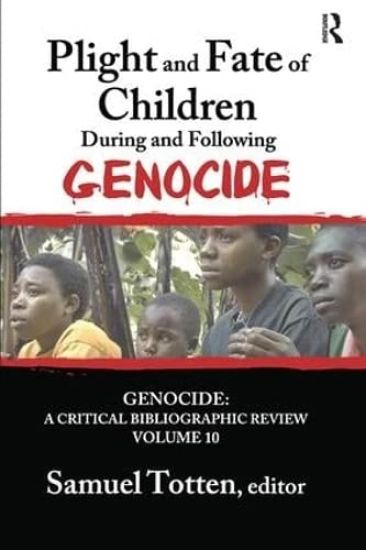
Plight and Fate of Children During and Following Genocide examines why and how children were mistreated during genocides in the twentieth and twenty-first centuries. Among the cases examined are the Australian Aboriginals, the Armenian genocide, the Holocaust, the Mayans in Guatemala, the 1994 Rwanda genocide, and the genocide in Darfur. Two additional chapters examine the issues of sexual and gender-based violence against children and the phenomenon of child soldiers.Following an introduction by Samuel Totten, the essays include: "Australia's Aboriginal Children"; "Hell is for Children"; "Children: The Most Vulnerable Victims of the Armenian Genocide"; "Children and the Holocaust"; "The Fate of Mentally and Physically Disabled Children in Nazi Germany"; "The Plight and Fate of Children vis-a-vis the Guatemalan Genocide"; "The Plight of Children During and Following the 1994 Rwandan Genocide"; "Darfur Genocide"; "Sexual and Gender-Based Violence against Children during Genocide"; and, "Child Soldiers." Contributors include: Colin Tatz, Henry C. Theriault, Asya Darbinyan, Rubina Peroomian, Jeffrey Blutinger, Amanda Grzyb, Elisa von Joeden-Forgey, Sara Demir, Hannibal Travis, and Samuel Totten.The editor and several of the contributors have personally investigated and witnessed the aftermath of genocidal campaigns.

Genocide at the Millennium is the fifth volume in the acclaimed series Genocide: A Critical Bibliographical Review. This latest volume's focus is both the genocidal activity that has taken place over the past fourteen years (including that in Rwanda and the former Yugoslavia) as well as a critique of the international community's response to genocide and potential genocidal situations (including those of the United Nations and nongovernmental organizations).Genocide at the Millennium is divided into ten chapters. The opening chapter treats the Yugoslav genocide, discussing the causes of the conflict, the violence that ensued, the reaction of the international community, and the ramifications that are still being felt in that part of the world today. Chapter 2 provides a detailed and thought-provoking examination of the causes, results and ramifications of the 1994 Rwandan genocide. Chapter 3 examines the conflict in Kosovo and the events surrounding the controversial intervention by NATO. Chapter 4 discusses the remarkable efforts and successes that various non-governmental agencies have had in addressing a wide variety of issues related to genocide. Chapter 5 examines the United Nations' efforts to address the issue of genocide at the turn of the century. The role of individual states confronting issues and cases of genocide is analyzed in chapter 6. Chapter 7 gives a solid overview of the evolution of international law as it pertains to the crime of genocide and how and why major changes in such law have begun to take place in the 1990s and early 2000s. The international criminal tribunals for Rwanda and the former Yugoslavia are considered in chapters 8 and 9. The concluding chapter provides an extremely detailed and highly informative overview of key aspects of the International Criminal Court.In keeping with the multidisciplinary approach of previous volumes in the series, each of the essays and accompanying annotated bibliographies have been written by experts in their fields, many of whom have worked for many years wrestling the thorny, and often horrific, issues germane to the issue of genocide.
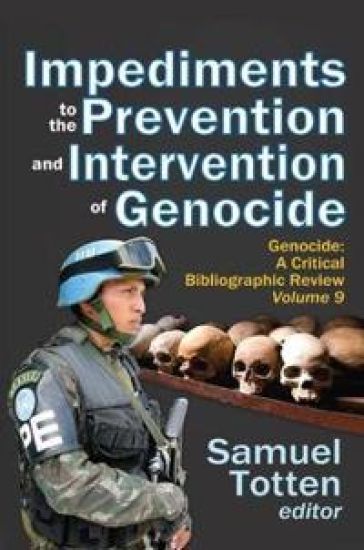
Academics, NGOs, the United Nations, and individual nations are focused on the prevention and intervention of genocide. Traditionally, missions to prevent or intervene in genocide have been sporadic and under-resourced. The contributors to this volume consider some of the major stumbling blocks to the avoidance of genocide.Bartrop and Totten argue that realpolitik is the major impediment to the elimination of genocide. Campbell examines the lack of political will to confront genocide, and Theriault describes how denial becomes an obstacle to intervention against genocide. Loyle and Davenport discuss how intervention is impeded by a lack of reliable data on genocide violence, and Macgregor presents an overview of the influence of the media. Totten examines how the UN Convention on Genocide actually impedes anti-genocide efforts; and how the institutional configuration of the UN is itself often a stumbling block.Addressing an issue that is often overlooked, Travis examines the impact of global arms trade on genocide. Finally, Hiebert examines how international criminal prosecution of atrocities can impede preventive efforts, and Hirsch provides an analysis of the strengths, weaknesses, and effectiveness of major international and national prescriptions developed over the last decade. The result is a distinguished addition to Transaction's prestigious Genocide Studies series.
This volume is comprised of over 2,300 annotations on a wide array of issues and topics germane to the subject of preventing the atrocities of genocide and managing these conflicts when they do arise. Samuel Totten brings together in one comprehensive collection the research and findings in various fields, such as political science, sociology, history, and psychology, to enable specialists in genocide studies, peace studies, and conflict resolution to benefit from the insights of a diverse range of scholars and foster an understanding of how the various components of genocide studies connect. Among the topics included are: key conventions, international treaties, and covenants genocide early warning signals and forecasting risk data bases sanctions peacekeeping missions conflict resolution the International Criminal Court realpolitik vis-à-vis the issue of genocide prevention and intervention key non-governmental agencies key governmental and UN bodies working on these important issues. In addition to the annotations, Totten frames the bibliography with a major essay that introduces the reader to the subject of prevention and intervention of genocide, raising a host of critical issues regarding the strengths, weaknesses, and limitations of various approaches germane to issues of managing these conflicts.

Advancing Genocide Studies follows in the footsteps of the editor's earlier volume, Pioneers of Genocide Studies. Here a new generation of scholars presents personal essays that reveal their motivation to study genocide, the passion that drives them to continue its study, their primary scholarly interests and efforts, and their perspective on the field as it currently stands.The contributors come from diverse backgrounds, numerous different nations and various disciplines: Kjell Anderson (The Netherlands, criminology); Yair Auron (Israel, history and education); Taner Akcam (Turkey and United States, history and sociology); Alexander Alvarez (United States, criminology); Gerry Caplan (Canada, history); Craig Etcheson (United States, international relations); Maureen Hiebert (Canada, political science); Adam Jones (Canada, political science); Henry Theriault (United States, philosophy); Samuel Totten (United States, history and political science); and Ugor Ungor (The Netherlands, history and sociology).All the contributors are well known in the field of genocide studies, and all have made important contributions to this area. Variously, they have done important theoretical work, produced new findings vis-a-vis old cases of genocide, and are pursuing new issues and topics within the field of genocide studies. Many have worked "on the ground" and bring a sense of immediacy to various crises.

This volume documents the Sudanese government's campaign of genocidal attacks and forced starvation against the people of the Nuba Mountains in the late 1980s and early 1990s. Genocide by Attrition provides powerful insights and analysis of the phenomenon and bears witness to ongoing atrocities.This second edition features more interviews, a new introduction, and a revised and more detailed historical overview. Among the themes that link most of the interviews are: the political and economic disenfranchisement of the Nuba people by the government of Sudan; the destruction of villages and farms and the murder and deaths of the Nuba people; the forced relocation into so-called "peace camps" and the impact of forced starvation. The book also documents the frustration of the Nuba people at being left out of the Comprehensive Peace Agreement signed between the South and the North in 2005, President Omar al Bashir's threats against the Nuba people, and the crisis in the Nuba Mountains since June 2011.Genocide by Attrition provides a solid sense of the antecedents to the genocidal actions in the Nuba Mountains. It introduces the main actors, describes how the Nuba were forced into starvation by their government, and tells how those who managed to survive did so. Samuel Totten provides a valuable resource to study the imposition of starvation as a tool of genocide.
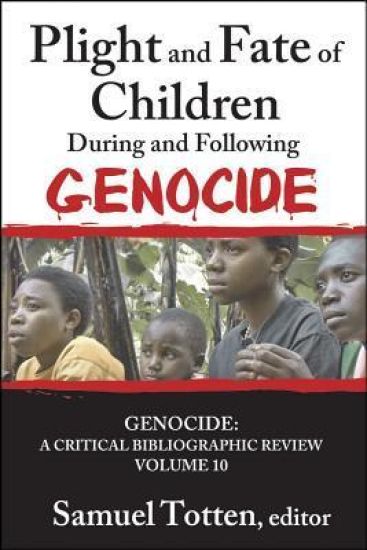
Plight and Fate of Children During and Following Genocide
Samuel Totten
AldineTransaction
2014
sidottu
Plight and Fate of Children During and Following Genocide examines why and how children were mistreated during genocides in the twentieth and twenty-first centuries. Among the cases examined are the Australian Aboriginals, the Armenian genocide, the Holocaust, the Mayans in Guatemala, the 1994 Rwanda genocide, and the genocide in Darfur. Two additional chapters examine the issues of sexual and gender-based violence against children and the phenomenon of child soldiers.Following an introduction by Samuel Totten, the essays include: "Australia's Aboriginal Children"; "Hell is for Children"; "Children: The Most Vulnerable Victims of the Armenian Genocide"; "Children and the Holocaust"; "The Fate of Mentally and Physically Disabled Children in Nazi Germany"; "The Plight and Fate of Children vis-a-vis the Guatemalan Genocide"; "The Plight of Children During and Following the 1994 Rwandan Genocide"; "Darfur Genocide"; "Sexual and Gender-Based Violence against Children during Genocide"; and, "Child Soldiers." Contributors include: Colin Tatz, Henry C. Theriault, Asya Darbinyan, Rubina Peroomian, Jeffrey Blutinger, Amanda Grzyb, Elisa von Joeden-Forgey, Sara Demir, Hannibal Travis, and Samuel Totten.The editor and several of the contributors have personally investigated and witnessed the aftermath of genocidal campaigns.

Impediments to the Prevention and Intervention of Genocide
Samuel Totten
AldineTransaction
2013
sidottu
Academics, NGOs, the United Nations, and individual nations are focused on the prevention and intervention of genocide. Traditionally, missions to prevent or intervene in genocide have been sporadic and under-resourced. The contributors to this volume consider some of the major stumbling blocks to the avoidance of genocide.Bartrop and Totten argue that realpolitik is the major impediment to the elimination of genocide. Campbell examines the lack of political will to confront genocide, and Theriault describes how denial becomes an obstacle to intervention against genocide. Loyle and Davenport discuss how intervention is impeded by a lack of reliable data on genocide violence, and Macgregor presents an overview of the influence of the media. Totten examines how the UN Convention on Genocide actually impedes anti-genocide efforts; and how the institutional configuration of the UN is itself often a stumbling block.Addressing an issue that is often overlooked, Travis examines the impact of global arms trade on genocide. Finally, Hiebert examines how international criminal prosecution of atrocities can impede preventive efforts, and Hirsch provides an analysis of the strengths, weaknesses, and effectiveness of major international and national prescriptions developed over the last decade. The result is a distinguished addition to Transaction's prestigious Genocide Studies series.
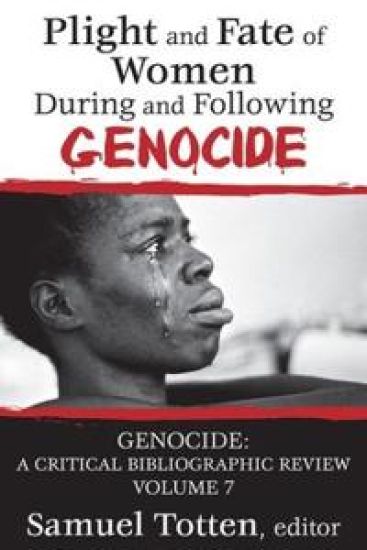
The plight and fate of female victims during the course of genocide is radically and profoundly different from their male counterparts. Like males, female victims suffer demonization, ostracism, discrimination, and deprivation of their basic human rights. They are often rounded up, deported, and killed. But, unlike most men, women are subjected to rape, gang rape, and mass rape. Such assaults and degradation can, and often do, result in horrible injuries to their reproductive systems and unwanted pregnancies. This volume takes one stride towards assessing these grievances, and argues against policies calculated to continue such indifference to great human suffering.The horror and pain suffered by females does not end with the act of rape. There is always the fear, and reality, of being infected with HIV/AIDS. Concomitantly, there is the possibility of becoming pregnant.Then, there is the birth of the babies. For some, the very sight of the babies and children reminds mothers of the horrific violations they suffered. When mothers harbor deep-seated hatred or distain for such children, it results in more misery. The hatred may be so great that children born of rape leave home early in order to fend for themselves on the street.This seventh volume in the Genocide series will provoke debate, discussion, reflection and, ultimately, action. The issues presented include ongoing mass rape of girls and women during periods of war and genocide, ostracism of female victims, terrible psychological and physical wounds, the plight of offspring resulting from rapes, and the critical need for medical and psychological services.

Teaching and Studying the Holocaust
Samuel Totten; Stephen Feinberg
Information Age Publishing
2009
nidottu
(Originally Published in 2000 by Allyn & Bacon)Teaching and Studying the Holocaust is comprised of thirteen chapters by some of the most noted Holocaust educators in the United States. In addition to chapters on establishing clear rationales for teaching this history and Holocaust historiography, the book includes individual chapters on incorporating primary documents, first person accounts, film, literature, art, drama, music, and technology into a study of the Holocaust. It concludes with an extensive and valuable annotated bibliography especially designed for educators. Chapter Ten instructs how to make effective use of technology in teaching and learning about the Holocaust. The final section of the book includes a bibliography especially developed for teachers that lists invaluable resources.
The plight and fate of female victims during the course of genocide is radically and profoundly different from their male counterparts. Like males, female victims suffer demonization, ostracism, discrimination, and deprivation of their basic human rights. They are often rounded up, deported, and killed. But, unlike most men, women are subjected to rape, gang rape, and mass rape. Such assaults and degradation can, and often do, result in horrible injuries to their reproductive systems and unwanted pregnancies. This volume takes one stride towards assessing these grievances, and argues against policies calculated to continue such indifference to great human suffering.The horror and pain suffered by females does not end with the act of rape. There is always the fear, and reality, of being infected with HIV/AIDS. Concomitantly, there is the possibility of becoming pregnant.Then, there is the birth of the babies. For some, the very sight of the babies and children reminds mothers of the horrific violations they suffered. When mothers harbor deep-seated hatred or distain for such children, it results in more misery. The hatred may be so great that children born of rape leave home early in order to fend for themselves on the street.This seventh volume in the Genocide series will provoke debate, discussion, reflection and, ultimately, action. The issues presented include ongoing mass rape of girls and women during periods of war and genocide, ostracism of female victims, terrible psychological and physical wounds, the plight of offspring resulting from rapes, and the critical need for medical and psychological services.
This volume is comprised of over 2,300 annotations on a wide array of issues and topics germane to the subject of preventing the atrocities of genocide and managing these conflicts when they do arise. Samuel Totten brings together in one comprehensive collection the research and findings in various fields, such as political science, sociology, history, and psychology, to enable specialists in genocide studies, peace studies, and conflict resolution to benefit from the insights of a diverse range of scholars and foster an understanding of how the various components of genocide studies connect. Among the topics included are: key conventions, international treaties, and covenants genocide early warning signals and forecasting risk data bases sanctions peacekeeping missions conflict resolution the International Criminal Court realpolitik vis-à-vis the issue of genocide prevention and intervention key non-governmental agencies key governmental and UN bodies working on these important issues. In addition to the annotations, Totten frames the bibliography with a major essay that introduces the reader to the subject of prevention and intervention of genocide, raising a host of critical issues regarding the strengths, weaknesses, and limitations of various approaches germane to issues of managing these conflicts.
Genocide at the Millennium is the fifth volume in the acclaimed series Genocide: A Critical Bibliographical Review. This latest volume's focus is both the genocidal activity that has taken place over the past fourteen years (including that in Rwanda and the former Yugoslavia) as well as a critique of the international community's response to genocide and potential genocidal situations (including those of the United Nations and nongovernmental organizations). Genocide at the Millennium is divided into ten chapters. The opening chapter treats the Yugoslav genocide, discussing the causes of the conflict, the violence that ensued, the reaction of the international community, and the ramifications that are still being felt in that part of the world today. Chapter 2 provides a detailed and thought-provoking examination of the causes, results and ramifications of the 1994 Rwandan genocide. Chapter 3 examines the conflict in Kosovo and the events surrounding the controversial intervention by NATO. Chapter 4 discusses the remarkable efforts and successes that various non-governmental agencies have had in addressing a wide variety of issues related to genocide. Chapter 5 examines the United Nations' efforts to address the issue of genocide at the turn of the century. The role of individual states confronting issues and cases of genocide is analyzed in chapter 6. Chapter 7 gives a solid overview of the evolution of international law as it pertains to the crime of genocide and how and why major changes in such law have begun to take place in the 1990s and early 2000s. The international criminal tribunals for Rwanda and the former Yugoslavia are considered in chapters 8 and 9. The concluding chapter provides an extremely detailed and highly informative overview of key aspects of the International Criminal Court. In keeping with the multidisciplinary approach of previous volumes in the series, each of the essays and accompanying annotated bibliographies have been written by experts in their fields, many of whom have worked for many years wrestling the thorny, and often horrific, issues germane to the issue of genocide.

Remembering the Past, Educating for the Present and the Future
Samuel Totten
Praeger Publishers Inc
2002
sidottu
This collection is comprised of essays about Holocaust education by a diverse group of educators involved primarily at the secondary level of schooling (grades 7-12). In their essays, the contributors relate the genesis of their interest in the Holocaust and the evolution of their educative efforts.There is a critical need to teach about the Holocaust in a pedagogically sound and historically accurate manner. This group of essays recounts the motivation of educators teaching primarily at the secondary level (grades 7 to 12), recounting their efforts to gain an ever-deepening knowledge about the Holocaust, their initial efforts to teach about it, their on-going teaching efforts and the changes they have made along the way, and their involvement in curriculum development, staff development, and other outreach projects. Various authors also include the insights and reactions of their students to the material.

Middle Level Education
Kathleen Barta; Toni Sills-Briegel; Annette Digby; William Nielsen; Samuel Totten
Greenwood Press
1996
sidottu
Because young adolescents have unique intellectual, social, emotional, and physical needs, there has been a major push to develop strong middle level programs in American schools. This annotated bibliography is a comprehensive guide to literature and resources on middle level education in the United States. Included are more than 1,700 entries for books, articles, dissertations, government reports, newsletters, videotapes, and other materials on various aspects of middle level education. Entries are grouped in topical chapters, and each citation is accompanied by an evaluative annotation. The volume concludes with a descriptive listing of resources, such as organizations and journals.During the last decade, there has been a major push in the United States to develop strong middle level programs in American schools. The key purpose of such programs is to meet the unique intellectual, social, emotional, and physical needs of young adolescents who are too old to be called children and too young to assume the responsibilities of adulthood. Effective programs are those in which the school administration actively seeks to make the middle school meet the needs of the student, rather than force the student to fit the school.While the concept of middle level education has existed since the early 1960s, it has received much attention during the last decade, due to the growth of sociological, psychological, and educational research on adolescents. This reference book is a comprehensive guide to literature and resources on middle level education. Included are more than 1,700 entries for books, articles, dissertations, newsletters, government documents, videotapes, and other publications. Entries are arranged in topical chapters, and each entry includes an evaluative annotation. The volume concludes with a descriptive list of resources, such as organizations and journals.

First-Person Accounts of Genocidal Acts Committed in the Twentieth Century
Samuel Totten
Greenwood Press
1991
sidottu
This bibliography includes English-language first-person accounts of individuals who survived or witnessed, as bystanders, journalists, diplomats, or liberators, genocidal acts in this century. The primary focus is on diaries, letters, memoirs, autobiographies, oral histories, interviews and statements in newspaper articles or other texts. A secondary focus is on reports, films, microfilm collections, and archives that contain first-person accounts, essays about first-person accounts, and bibliographies that list first-person accounts. Although there are bibliographies devoted to specific genocidal acts and one general bibliography on genocide, this volume is the first to cover first-person accounts.The volume opens with a lengthy introductory essay on genocide. It then devotes chapters to specific genocidal acts, including German extermination of the Hereros, Ottoman genocide of the Armenians, Soviet-induced famine in the Ukraine, the Soviet's Great Purge, the Soviet deportation of whole nations, the Holocaust, Gypsies during the Holocaust, Indonesian genocide of Communists and suspected Communists, Ugandan genocides, Pakistani genocide in Bangladesh, Burundi genocide of the Hutus, Indonesian genocide in East Timor, the Khmer Rouge genocide in Cambodia, threatened genocide of the Baha'is, and genocide of various indigenous peoples. The chapters are subdivided by type of account, and all entries are annotated. The work includes subject and author indexes. The book will be a useful resource for historians, political scientists, and sociologists interested in genocide and international human relations.