
Kirjailija
Sandeep Chavan
Kirjat ja teokset yhdessä paikassa: 55 kirjaa, julkaisuja vuosilta 2020-2026, suosituimpien joukossa Structural Diagnosis of Gen Z Realism. Vertaile teosten hintoja ja tarkista saatavuus suomalaisista kirjakaupoista.
55 kirjaa
Kirjojen julkaisuhaarukka 2020-2026.

"The universe never waited for our calculations. It existed with us-only while we were aligned." In Reality Check: Form Is a Guest, Not a Host, author and independent researcher Sandeep Chavan invites readers to a profound "pause" in the relentless forward march of modern science. For centuries, our understanding of the world worked because our measurements felt real and our logic returned meaning. But as we crossed the thresholds of the very small and the unimaginably large, that intuitive alignment vanished. Understanding was traded for prediction, and certainty was replaced by the abstract languages of probability and infinity. This is not a book written to challenge science, but to realign our relationship with it. Through a compelling narrative inquiry, Chavan explores the "cracks" in our current models-where form thins, observation becomes participation, and mathematics runs ahead without return. He argues that the strangeness of quantum mechanics and the frustrations of modern physics are not properties of reality itself, but signals from the observer's limit. Inside this foundational reframing, you will discover: The Concept of Universal Thresholds: Why transitions in nature are not "breakdowns" of law, but changes in how order expresses itself across different scales. The UED (Universal Energy Dynamics) Reframe: A clarifying lens that restores continuity where fragmentation was assumed, moving beyond the "particle age" into a field-based understanding of consequence. The Proper Role of Probability: How to return probability from a "property of nature" back to its rightful place as a descriptive tool for human limitation. Closing the Loop on Infinity: Why models that stretch to infinity reveal unfinished logic rather than boundlessness, and how to find "precision with understanding." Written for scientists, engineers, philosophers, and any curious thinker who has sensed that modern explanations feel "precise yet distant," Reality Check provides a map back to conceptual clarity. It does not ask you to abandon what you know; it asks you to hold your tools in their proper place. Nothing glows; everything echoes. Nothing moves; everything adjusts. It is time to stop confusing the representation with the process and perceive reality-and the Universal Energy Dynamics that drive it-as it truly is. Restore your orientation. Welcome to the reality check.

Motivation has been treated as a requirement for too long-as if life must wait for enthusiasm before it can move. In Motivation Overrated, Sandeep Chavan examines a quieter truth: life has always continued without motivation. Work happens without feeling ready. Decisions occur without internal certainty. Responsibilities settle quietly, without emotional hype. Rather than offering techniques, productivity systems, or motivational advice, this book simply observes how action actually unfolds in ordinary life. It shows how a subtle misunderstanding about motivation slowly shaped modern thinking. A signal was mistaken for a cause. Readiness was confused with alignment. Resistance was treated as failure rather than information. The result is a widespread belief that something is wrong whenever motivation fades. This book gently corrects that interpretation. Through calm reflection and careful observation, Motivation Overrated reveals that action does not begin with emotional permission. Stability is built through continuation rather than inspiration. Motivation, when it appears, is not a driving force but a temporary signal that comes and goes without determining whether life proceeds. Nothing in this book asks the reader to change their behavior. Instead, it restores a simple sequence that has always existed: life responds to movement, not persuasion. For readers tired of motivational pressure and productivity hype, Motivation Overrated offers something rare-a clear and steady recognition that life never required enthusiasm in the first place.

For more than a century, modern physics has been built on particles, forces, and invisible constructs that explain less while contradicting more. Each new discovery has added layers of abstraction-virtual particles, wave-particle duality, dark matter, dark energy, singularities-turning clarity into complexity and coherence into patchwork. The End of Particle Age presents a decisive shift away from this fragmented worldview. In this bold and rigorously reasoned work, independent physicist and philosopher Sandeep J. Chavan proposes a continuous-field reinterpretation of physical reality based on his original frameworks: Universal Energy Dynamics (UED) and Ripple Field Dynamics (RFD). Rather than treating the universe as a collection of discrete objects, this book reveals reality as the behavior of a single, continuous field-where matter, light, gravity, and motion emerge from ripple structures, gradients, coherence, and equilibrium-seeking dynamics. Particles are reinterpreted as stable field patterns. Forces dissolve into gradient behavior. Quantum paradoxes vanish as coherence transitions. Cosmological mysteries no longer require invisible substances or speculative fixes. Across a carefully structured narrative, the book dismantles the particle worldview and rebuilds physics from the field up. Electrons become ripple-knots, photons become alignment propagation, gravity becomes natural gradient flow, and black holes are understood as high-density field states rather than singularities. The long-standing conflict between quantum mechanics and relativity is shown to be an artifact of fragmented assumptions, not a fundamental problem of nature. Beyond theory, The End of Particle Age explores the practical consequences of a field-centric universe-opening pathways toward field engineering, gravity control through gradient shaping, coherence-based computation, ripple-aligned energy systems, and future medical technologies rooted in field stability rather than biochemical intervention. Written in a clear, conversational style without heavy mathematics, this book is designed for physicists, researchers, engineers, students, and serious science readers who seek conceptual clarity rather than technical intimidation. It does not ask the reader to abandon science, but to complete it. This is not a rebellion against physics. It is a correction of its assumptions. The End of Particle Age marks the transition from fragmentation to continuity-and invites the reader into the emerging Field Age of science.




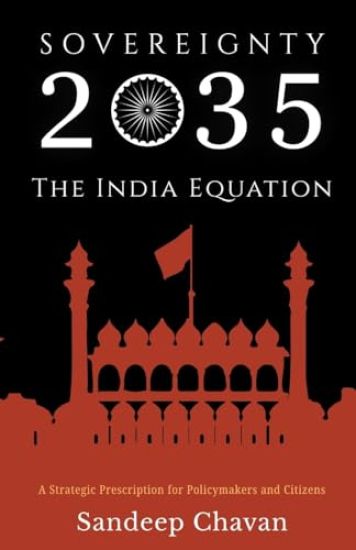
Sovereignty 2035: The India Equation is a landmark blueprint for a nation standing at its most consequential crossroads since independence. In a century where power no longer flows from GDP, military might, or population size alone, Sandeep Chavan argues that modern sovereignty is determined by three interlocking variables-Capability Stability Integration-and that India must urgently rebuild its architecture if it is to survive, adapt, and rise in the compute era. Through cutting-edge analysis, sharp narrative, and an educator's clarity, Chavan unpacks the deeper forces reshaping global power: semiconductors, cloud infrastructure, artificial intelligence, supply chains, talent ecosystems, institutional capacity, and digital rails. He demonstrates how the United States, China, and Russia represent three competing operating systems of modern power-and why India must walk a tightrope between integration and dependence, competition and cooperation, ambition and preparation. The book exposes India's internal contradictions with honesty and empathy: a billion dreams sprinting on outdated systems, world-class minds leaking out of fragile pipelines, institutions exhausted by political interference, capability gaps hidden beneath national narratives, and a nation paying a heavy strategic tax for its own internal chaos. Yet Sovereignty 2035 is not a story of despair-it is a design for acceleration. Chavan outlines the architecture India must build: strong courts, empowered regulators, autonomous research ecosystems, leadership teams instead of icons, semiconductor and compute sovereignty, manufacturing discipline, talent networks, stable institutions, and a modern national security framework that integrates digital, intelligence, and physical domains. He offers scenario pathways for 2025-2035, revealing futures of acceleration, stagnation, vulnerability, and collapse-with India's global position determined not by emotion or ideology, but by architecture and execution. Each pathway is a mirror held to policymakers and citizens alike, showing how choices made today ripple into destiny tomorrow. Bold, urgent, prophetic, and unapologetically clear, this book reframes the debate on India's strategic future. It challenges leaders, thinkers, educators, and citizens to look beyond narratives and confront the variables that truly determine national power. It insists that slogans and sentiment are insufficient; only architecture, coherence, and execution can secure sovereignty in the compute century. If India strengthens capability, stability, and integration together, 2035 becomes a launch window-a moment when the nation ascends as a sovereign power in the new global order. If even one variable fails, 2035 becomes the deadline for a future lost-a point of no return where ambition collapses into dependency. This is the equation India must solve-before the world moves on.


Intelligent Before AI: The American Advantage redefines what it means for nations, institutions, and individuals to be intelligent in a century shaped by algorithms, architectures, and artificially amplified decisions. While the world celebrates AI as the pinnacle of achievement, this book argues a deeper truth: AI did not make humanity intelligent; it revealed who already was. Intelligence before AI was never about information-it was about clarity, foresight, architecture, and the ability to design systems that outlast tools. This book decodes the structural forces shaping modern power: compute sovereignty, talent migration, infrastructural architecture, narrative influence, ethical clarity, and long-term strategy. It explains why borders, armies, and GDP no longer decide destiny. Instead, nations that understood intelligence before AI built foundations: silicon depth, cloud control, research ecosystems, academic freedom, innovation culture, and talent protection.Six Core Revelations Compute is the new energy; dependence erodes sovereignty. America's dominance came from architecture, talent aggregation, and infrastructural leverage-not force. Nations clinging to territorial or ideological battles fight yesterday's wars. Future sovereignty will rest on narrative autonomy, ethical clarity, and foresight. Intelligence must be embedded in systems and culture-not outsourced to machines. Countries, universities, and corporations must reconstruct themselves for the post-AI world. Through a globally informed lens, Intelligent Before AI shows intelligence is not a tool or dataset-it is a discipline rooted in design, consequence awareness, and systems thinking. Nations lacking this foundation cannot simply "adopt" AI; they must reinvent themselves around coherent architecture.A Practical Roadmap Build national intelligence systems grounded in anticipation. Redesign education and research for cognitive agility. Retain and attract global minds through talent diplomacy. Create ethical frameworks reflecting local identity. Build narrative independence in a world of global feeds. Ultimately, Intelligent Before AI argues the future belongs to nations that can think-not just compute. AI accelerates what exists; it cannot replace what is absent. Power is architecture. Sovereignty is design. Intelligence is national capability. For leaders, policymakers, researchers, strategists, students, and citizens, this book is a concise operating manual for the AI century-revealing how the world truly works, and how it must think to survive the future already underway.

The Russian Dilemma is a gripping exploration of how sovereignty has shifted from borders to bandwidth, from territory to architecture, and from military might to compute power. Sandeep Chavan delivers a contrarian narrative that reframes Russia's collapse not as a failure of politics, but as a failure of technological integration. Armed with vast landmass, abundant resources, and military strength, Russia believed it could disconnect politically while remaining relevant technologically. It was wrong. The twenty-first century does not reward isolation-it rewards intelligent interdependence. Sovereignty today is defined not by what a nation declares, but by what its technological backbone can sustain. Through vivid storytelling and systems thinking, Chavan traces Russia's slow erosion: outdated semiconductor fabs, fragile cloud infrastructure, talent flight, ecosystem decay, and strategic miscalculations in the age of AI. Sanctions did not break Russia; they exposed its dependence on architectures it did not control. But this book is not only about Russia. It is a mirror held up to every nation navigating the new technological order. China, despite scale and ambition, fears the same architectural trap. Europe thrives in talent but struggles in deep compute. The Middle East learns that wealth cannot buy time or ecosystem depth. India stands at a crossroads between opportunity and inertia. America's allies confront the uncomfortable truth that their sovereignty is inseparable from the very stack they critique. Chavan introduces original frameworks-Architectural Sovereignty, Integration Sovereignty, and the Sovereignty Equation-to decode the new law of power. He argues that nations must stop defending only what they own and start defending where they are positioned in the global architecture. Compute, talent, and networks are the coal, oil, and steel of the digital era combined. The Russian Dilemma is both analysis and field guide. It reveals why political sovereignty can no longer guarantee national strength, why isolation has become a penalty, and why integration is the only multiplier left in a world that has run out of time. For leaders, thinkers, and citizens, this book offers a survival doctrine: build domestic cores that cannot be taken away, integrate where acceleration is cheaper than reinvention, adopt selective dependence as philosophy, and recognize that sovereignty now means position, not separation. The verdict is clear: A nation can walk out of politics. It cannot walk out of compute.
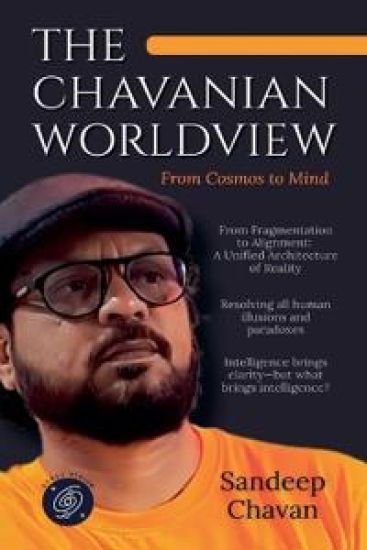

Nationalism: A Consequence of Shared Intelligence by Sandeep J. Chavan is a groundbreaking reimagining of one of humanity's most enduring and contested ideas. Far from ideology, myth, or political possession, this book reframes nationalism as resonance - the alignment of emotional, professional, and ethical fields that together form the living intelligence of a nation. Drawing from the Chavanian framework and Universal Energy Dynamics, Chavan argues that nations are not manufactured by borders, armies, or strategies. They are resonated into existence when millions of human ripples synchronize into coherence. National strength, therefore, is not measured by GDP or military might, but by the health of the national field: emotional rhythm, institutional capability, and ethical clarity. This book unfolds in a layered journey: Part I-III explore the foundations of consciousness, awareness, and intelligence, showing how individual ripples expand into families, communities, institutions, and eventually the national field. Part IV-V reinterpret nationalism as a consequence of shared intelligence, not a cause, and provide practical frameworks for leadership, diplomacy, technology, and crisis management through resonance mapping. Part VI-VIII stretch the lens to civilizations, global resonance, and universal intelligence, positioning nations as evolving ripples within a planetary field. The appendices provide tools for application: The Chavanian Field Resonance Index (CFRI) - a diagnostic instrument measuring national coherence. Case Studies - illustrating nations in states of high alignment, distortion, or chaos. Practical Frameworks for Policymakers - including the Field-Aware Policy Cycle(TM), Resonance Decision Cube(TM), Alignment Risk Score, and National Field Dashboard. Quote Bank - philosophical punchlines that distill the essence of the book into memorable insights. Chavan's prose is deliberately fluid - part narrative, part analysis, part reflection - designed to keep the reading human. Nationalism here is not mechanical; it is alive with emotion, aspiration, conflict, and consequence. The book invites readers to move slowly through its foundations, actively through its reinterpretations, strategically through its applied frameworks, and expansively through its civilizational horizon. Key insights include: "A nation is not built by force or fear - it is built by resonance." "Nationalism is not a belief - it is a resonance pattern." "Alignment, not ideology, determines destiny." This is not a book about nations alone. It is a book about us - the collective intelligence we create, the resonance we share, and the future we are shaping together. It challenges readers to see beyond headlines, beyond political narratives, beyond noise, and toward the deeper intelligence operating within societies. In an era where humanity, AI, institutions, and cultures merge into a global resonance field, Nationalism: A Consequence of Shared Intelligence offers a myth-free, evidence-based, and globally accessible framework for coherence. It is both visionary and practical, philosophical and actionable - a field manual for the future of civilization. Verdict: A paradigm-shifting work that redefines nationalism as alignment intelligence, equips leaders with resonance-based tools, and empowers readers to tune themselves wisely in shaping the destiny of nations and humanity.



Chavanian Psychology introduces a groundbreaking field-based model of the human mind - a paradigm that transcends traditional theories rooted in behavior, cognition, or trauma. In this pioneering work, Sandeep J. Chavan redefines the mind not as a static structure or product of the brain, but as a dynamic field of awareness shaped by ripples of emotion, thought, intention, and consequence. This shift from structure to field marks a decisive break from conventional psychology and opens a new horizon for understanding consciousness, healing, and human evolution. Rather than treating consciousness as a neurological byproduct, Chavan frames it as an energetic phenomenon governed by coherence, alignment, and resonance. In this model, every emotion becomes a ripple; every decision a consequence pattern; every disturbance a misalignment seeking correction; and every moment of clarity a return to stillness - the field's natural state. The mind is no longer fragmented into cognition, memory, and behavior, but understood as a living continuum of awareness, constantly shaped by the quality of its ripples. Across four parts, the book explores ripple dynamics, emotional amplitude and frequency, and awareness as the stabilizing intelligence of the field. It introduces the Law of Consequence (LOC) as a universal regulator, examines misalignment and pathways to healing, and offers a psychology of relationships, empathy, and communication rooted in coherence. It traces the mind's evolution from instinct-driven reactions to field-based intelligence, situating this transformation within the rising challenge of artificial intelligence and the urgent need for human coherence. Finally, it envisions humanity as conscious participants in a coherent field, capable of living with clarity, resilience, and alignment. Practical tools make this philosophy usable in everyday life. The Emotional Ripple Map helps readers visualize inner patterns. The Psychological Law of Coherence (P-LOC) provides a framework for restoring balance when emotions spiral. Alignment exercises and field-based mindfulness methods allow individuals to experience these concepts directly. Through guided reflection and awareness training, readers learn to navigate turbulence, resolve repeating patterns, and realign their field with clarity and resilience. Chavanian Psychology is more than a theoretical contribution - it is a usable model for modern life. It addresses questions traditional psychology often leaves unresolved: Why do emotions repeat? Why does clarity vanish under stress? Why do relationships collapse even when intentions are good? How does healing truly occur? Why does the mind feel fragmented in a hypercomplex world? The answers emerge from the field: coherence, not complexity, defines a healthy mind. Healing is not forgetting - it is resonating differently. Awareness is not passive - it is the mind's real intelligence. And evolution is not merely biological - it is the field remembering itself.With clarity and depth, this book marks a definitive shift in how we understand consciousness, emotion, behavior, and inner balance. It is an essential guide for thinkers, seekers, students, psychologists, educators, leaders, and anyone committed to living with alignment and awareness. By reframing the mind as a field of ripples, Chavan offers a vision of psychological practice that is participatory, resilient, and profoundly human - a philosophy of coherence for the 21st century and beyond.