Kirjojen hintavertailu. Mukana 12 595 353 kirjaa ja 12 kauppaa.

Kirjailija

Sandra A. Thompson

Kirjat ja teokset yhdessä paikassa: 3 kirjaa, julkaisuja vuosilta 1989-2015, suosituimpien joukossa A Reference Grammar of Wappo. Vertaile teosten hintoja ja tarkista saatavuus suomalaisista kirjakaupoista.

3 kirjaa

Kirjojen julkaisuhaarukka 1989-2015.

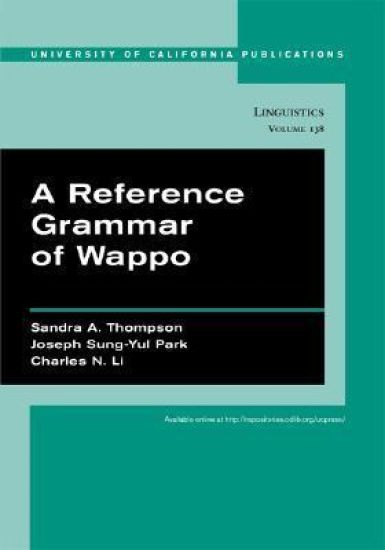
A Reference Grammar of Wappo

A Reference Grammar of Wappo

Sandra A. Thompson; Joseph Sung-Yul Park; Charles N. Li

University of California Press
2006
pokkari
Wappo is an indigenous language, generally regarded as a language isolate, which was once spoken in the Russian River Valley, just north of San Francisco, California. This reference grammar is based on the speech of Laura Fish Somersal, its last fluent speaker, who died in 1990, and represents the most extensive data and grammatical research ever done on this language. The grammar focuses on morphosyntax, particularly nominal, verbal, and clausal structures and clause combining patterns, from a functional/typological perspective.
Mandarin Chinese

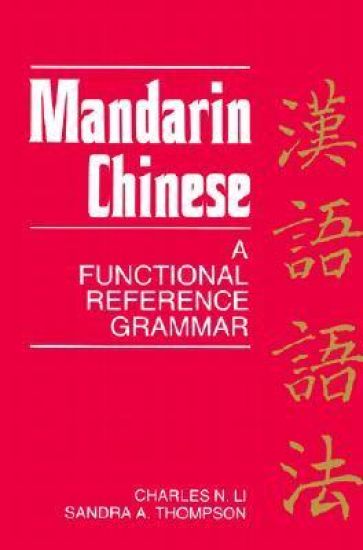
Mandarin Chinese

Charles N. Li; Sandra A. Thompson

University of California Press
1989
pokkari
This reference grammar provides, for the first time, a description of the grammar of "Mandarin Chinese", the official spoken language of China and Taiwan, in functional terms, focusing on the role and meanings of word-level and sentence-level structures in actual conversations.
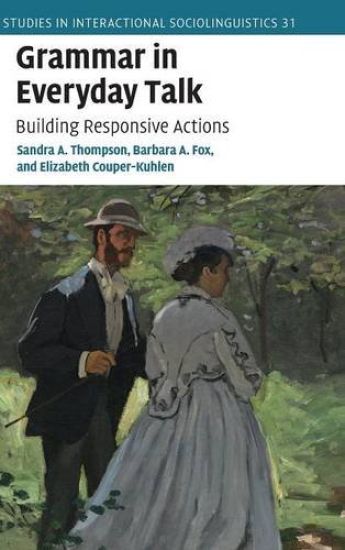
Grammar in Everyday Talk

Grammar in Everyday Talk

Sandra A. Thompson; Barbara A. Fox; Elizabeth Couper-Kuhlen

Cambridge University Press
2015
sidottu
Drawing on everyday telephone and video interactions, this book surveys how English speakers use grammar to formulate responses in ordinary conversation. The authors show that speakers build their responses in a variety of ways: the responses can be longer or shorter, repetitive or not, and can be uttered with different intonational 'melodies'. Focusing on four sequence types: responses to questions ('What time are we leaving?' - 'Seven'), responses to informings ('The May Company are sure having a big sale' - 'Are they?'), responses to assessments ('Track walking is so boring. Even with headphones' - 'It is'), and responses to requests ('Please don't tell Adeline' - 'Oh no I won't say anything'), they argue that an interactional approach holds the key to explaining why some types of utterances in English conversation seem to have something 'missing' and others seem overly wordy.