Kirjojen hintavertailu. Mukana 12 482 464 kirjaa ja 12 kauppaa.

Kirjailija

Sandra F Joireman

Kirjat ja teokset yhdessä paikassa: 4 kirjaa, julkaisuja vuosilta 2009-2022, suosituimpien joukossa Peace, Preference, and Property. Vertaile teosten hintoja ja tarkista saatavuus suomalaisista kirjakaupoista.

4 kirjaa

Kirjojen julkaisuhaarukka 2009-2022.

Peace, Preference, and Property

Peace, Preference, and Property

Sandra F Joireman

THE UNIVERSITY OF MICHIGAN PRESS
2022
sidottu
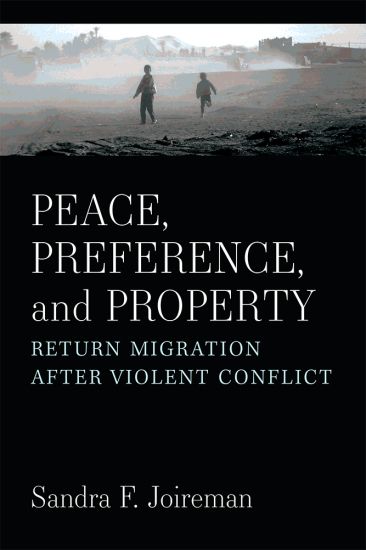
Growing numbers of people are displaced by war and violent conflict. In Ukraine, Afghanistan, Ethiopia, Myanmar, Syria, and elsewhere violence pushes civilian populations from their homes and sometimes from their countries, making them refugees. In previous decades, millions of refugees and displaced people returned to their place of origin after conflict or were resettled in countries in the Global North. Now displacements last longer, the number of people returning home is lower, and opportunities for resettlement are shrinking. More and more people spend decades in refugee camps or displaced within their own countries, raising their children away from their home communities and cultures. In this context, international policies encourage return to place of origin.Using case studies and first-person accounts from interviews and fieldwork in post-conflict settings such as Uganda, Liberia, and Kosovo, Sandra F. Joireman highlights the divergence between these policies and the preferences of conflict-displaced people. Rather than looking from the top down, at the rights that people have in international and domestic law, the perspective of this text is from the ground up—examining individual and household choices after conflict. Some refugees want to go home, some do not want to return, some want to return to their countries of origin but live in a different place, and others are repatriated against their will when they have no other options. Peace, Preference, and Property suggests alternative policies that would provide greater choice for displaced people in terms of property restitution and solutions to displacement.
Peace, Preference, and Property

Peace, Preference, and Property

Sandra F Joireman

THE UNIVERSITY OF MICHIGAN PRESS
2022
nidottu
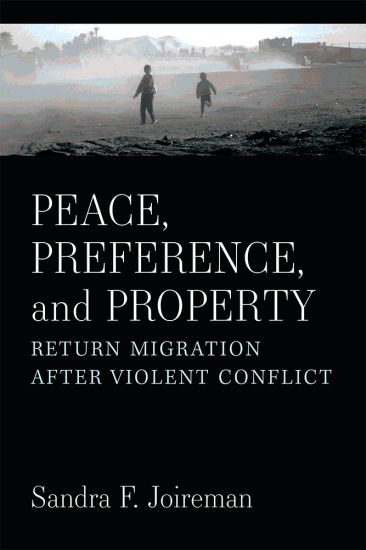
Growing numbers of people are displaced by war and violent conflict. In Ukraine, Afghanistan, Ethiopia, Myanmar, Syria, and elsewhere violence pushes civilian populations from their homes and sometimes from their countries, making them refugees. In previous decades, millions of refugees and displaced people returned to their place of origin after conflict or were resettled in countries in the Global North. Now displacements last longer, the number of people returning home is lower, and opportunities for resettlement are shrinking. More and more people spend decades in refugee camps or displaced within their own countries, raising their children away from their home communities and cultures. In this context, international policies encourage return to place of origin.Using case studies and first-person accounts from interviews and fieldwork in post-conflict settings such as Uganda, Liberia, and Kosovo, Sandra F. Joireman highlights the divergence between these policies and the preferences of conflict-displaced people. Rather than looking from the top down, at the rights that people have in international and domestic law, the perspective of this text is from the ground up—examining individual and household choices after conflict. Some refugees want to go home, some do not want to return, some want to return to their countries of origin but live in a different place, and others are repatriated against their will when they have no other options. Peace, Preference, and Property suggests alternative policies that would provide greater choice for displaced people in terms of property restitution and solutions to displacement.
Church, State, and Citizen

Church, State, and Citizen

Sandra F Joireman

Oxford University Press Inc
2009
sidottu
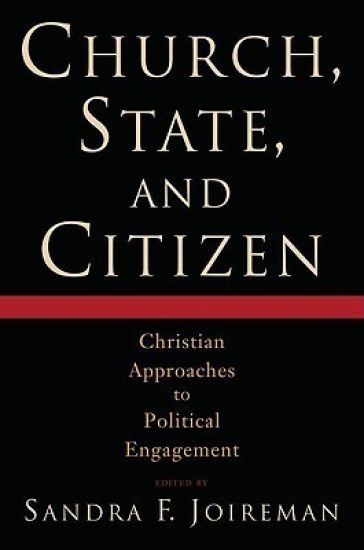
The history of Christianity's relationship to government is long and complex. From the glory days of the Holy Roman Empire, when church and state were virtually synonymous, to the present day's dizzying array of denominations and forms of government, Christian ideas about the state have varied tremendously. This book will attempt to bring order to the chaos by offering essays on how particular branches of the Christian tradition-Catholic, reformed, evangelical, etc.-view the institution of the modern state. Each chapter begins by discussing the historical roots of a particular tradition, moves on to address the theological distinctives of that tradition, and finally discusses the ways in which the theological beliefs about the appropriate role of the state influence political behavior. The essays will not be limited geographically, but will rather look at each tradition as broadly as possible, from the institutionalized (but not necessarily thriving) churches of Europe, to the independent Christian movements of Africa, to the vibrant religious marketplace of the United States.
Church, State and Citizen

Church, State and Citizen

Sandra F Joireman

Oxford University Press Inc
2009
nidottu
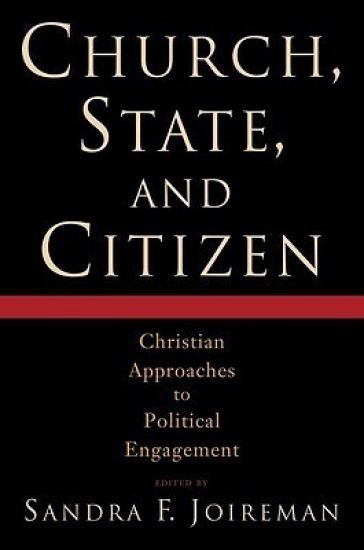
The history of Christianity's relationship to government is long and complex. From the glory days of the Holy Roman Empire, when church and state were virtually synonymous, to the present day's dizzying array of denominations and forms of government, Christian ideas about the state have varied tremendously. This book will attempt to bring order to the chaos by offering essays on how particular branches of the Christian tradition-Catholic, reformed, evangelical, etc.-view the institution of the modern state. Each chapter begins by discussing the historical roots of a particular tradition, moves on to address the theological distinctives of that tradition, and finally discusses the ways in which the theological beliefs about the appropriate role of the state influence political behavior. The essays will not be limited geographically, but will rather look at each tradition as broadly as possible, from the institutionalized (but not necessarily thriving) churches of Europe, to the independent Christian movements of Africa, to the vibrant religious marketplace of the United States.