Kirjojen hintavertailu. Mukana 12 595 353 kirjaa ja 12 kauppaa.
Kirjailija
Sandra Hindman
Kirjat ja teokset yhdessä paikassa: 7 kirjaa, julkaisuja vuosilta 1994-2020, suosituimpien joukossa Cycles of Life. Vertaile teosten hintoja ja tarkista saatavuus suomalaisista kirjakaupoista.
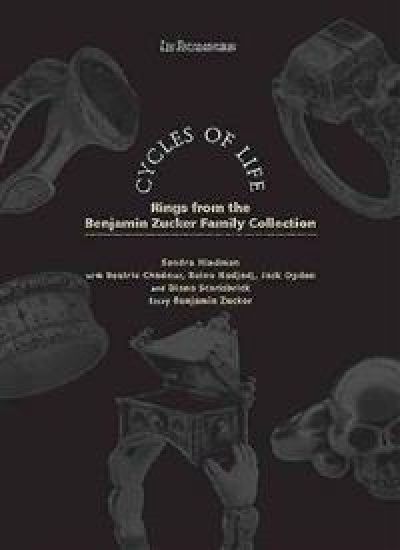
An unparalleled collection of rings dating from the 3rd to the 19th century, presented not chronologically but rather grouped into timeless themes - birth, love, betrothal, marriage, mourning and death - thereby achieving greater insight about the beliefs , sentiments, status, and practices of their former owners.
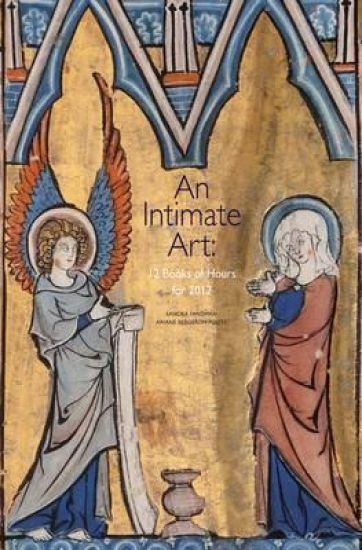
Books of Hours are probably the most famous of all medieval illuminated manuscripts. Presented here are 12 Books of Hours that date from the origins of the genre in the 13th century to its eclipse in the 16th century. Examples come from France, Italy and the Southern and Northern Netherlands and are by many notable artists, including Pietro da Pavia, Belbello da Pavia, the Masters of Zweder van Culenburg, the Masters of the Gold Scrolls, Willem Vrelant, Guillaume tile Roy and Jean Poyer. Some are richly illustrated; others are more modest. Each manuscript is wholly unique, offering a captivating glimpse into the lives and preoccupations of their owners, the concerns and contributions of their illuminators. The introduction by Christopher de Hamel, Donnelley Fellow Librarian at Corpus Christi College, Cambridge, underscores the intimacy’of Books of Hours as a genre. A team of distinguished scholars have contributed to the essays, bringing up-to-date research to the project that helps situate each manuscript in the most recent scholarship. Comparative photographs of manuscripts in institutions place these twelve Horae in their broader artistic and cultural contexts. Accompanying an exhibition held at Les Enluminures, New York, 2—25 May 2012
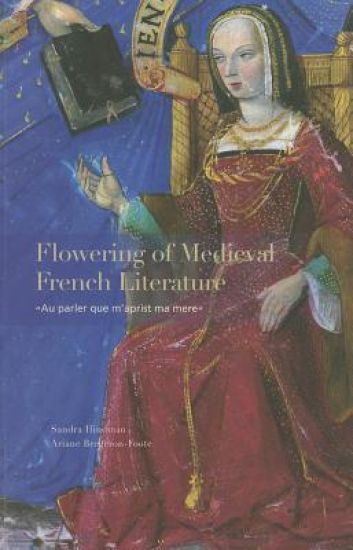
Although the earliest records of written French date from the 9th century, it was not until the 13th century, when there was an explosion of texts in the 'mother tongue', that French became widespread as a written language. And only in 1539, by King Francis I, was French deemed the official language of the kingdom. This beautifully illustrated catalogue explores the rise, affirmation, and triumph of the French vernacular, focusing on a group of sixteen manuscripts all written in the French language between about 1300 and 1525. Because many of these manucscripts are virtually unknowna nd previously unpublished, first-hand study of them offers a unique opportunity to reassess certain approaches to later medieval French literature. Mostly illuminated, the manuscripts are widely diverse. They are written in verse and in prose. Some are translations from the Latin, others new compositions entirely in French. They treat a wide variety of subjects ranging from literature and science, to philosohpy and theology, and to history and goverment. There are some unique texts that exist only in the manuscripts included here. A significant nuber of the volumes boast royal provenance. There are signed and dated works by newly identified scribes, as well as works by famous calligraphers. Some of the manuscripts still have their original bindings. PRefaced with an introductory essay by Sandra Hindman, the catalogue divides the manuscripts into five sections: I) Literature and Science: The Rise and Affirmaton of the Vernaular; II) Philosophy and Theology: Translations and Adaptations of the Classics; III) History and Genealogy: the Nation and the Individual; IV) Women Writers and Women Bibliophiles: Memory and Self-Assertion; V) From Manuscript to Print: The Circulation of Texts and the Triumph of the French Vernacular. Published to accompany a travelling exhibition at Les Enluminures gallery in New York and in Paris as well as a colloquium at the Institut national d'histoire de l'art (INHA), this publication will shed new light on many of these themes and, it is hoped, contribute to the ongoing re-evaluation of medieval literary history and medieval art history. Each work will be catalogued with detailed scholarly descriptions and comparative material.
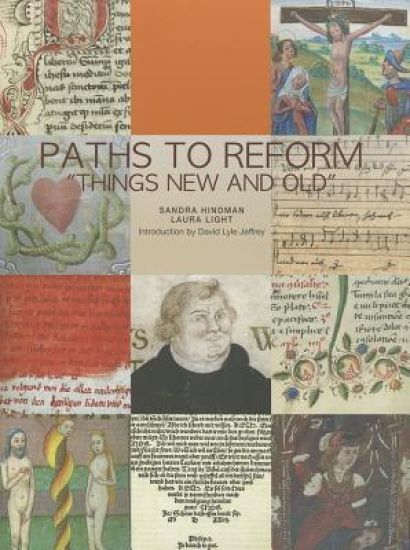
Throughout the history of Christianity, men and women have wrestled with the challenge of how to interpret, and how to follow, the Gospels. Intrinsic to this process is the concept of "reform", a recognition that changes is necessary in order to return to a more authentic Christian life. The approximately thirty-five manuscripts presented here trace this process from the twelfth to the sixteenth centuries through the texts that inspired reform movements and communicated their ideas to others.
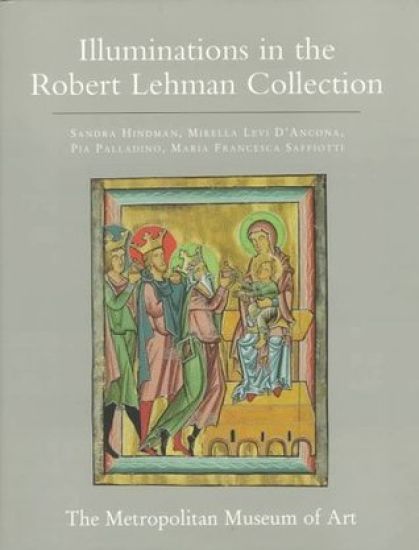
This book presents the exceptional group of illuminations in the Robert Lehman Collection at The Metropolitan Museum of Art. The miniatures and cuttings from medieval and Renaissance manuscripts in this collection represent the major schools of illumination that flourished in Europe from the fourteenth to the sixteenth century. Robert Lehman (1892-1969), one of the great private art collectors of the twentieth century, collected these illuminations as an extension of his remarkable collection of early European paintings and drawings. Among the works catalogued here are a miniature by Simon Marmion--the "prince d'enluminure"--painted for a Breviary for Charles the Bold and Margaret of York, and, among the Italian illuminations, a Last Judgment in an Initial C by the great Florentine painter Lorenzo Monaco and an Adoration of the Magi by Francesco Marmitta. A Self-Portrait by Simon Bening and a Virgin and Child by Francesco Morone are early examples of small paintings on parchment conceived as independent works of art rather than as illustrations for manuscripts. Also here are a leaf painted for the Hours of ftienne Chevalier by Jean Fouquet, the most celebrated French painter of the fifteenth century, and a miniature Holy Face by Gerard David that was possibly created as an independent devotional image. All the illuminations in the Robert Lehman Collection are reproduced in color, and copious comparative illustrations supplement the extensive catalogue entries. This is the seventh in a projected series of sixteen volumes that will catalogue the entire Robert Lehman Collection.
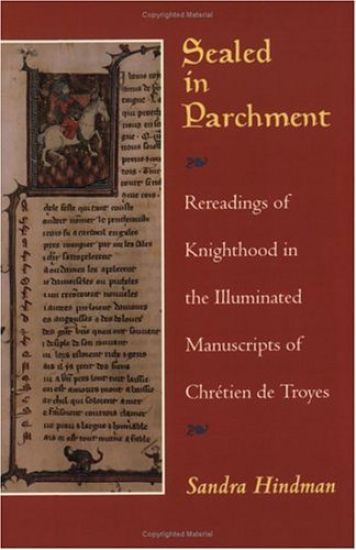
Chretien de Troyes was France's great medieval poet - inventor of the genre of courtly romance and popularizer of the Arthurian legend. The 44 surviving manuscripts of his work (ten of them illuminated) pose a number of questions about who used these books and in what way. In "Sealed in Parchment", Sandra Hindman scrutinizes both text and images to reveal what the manuscripts can tell us about medieval society and politics.
Chretien de Troyes was France's great medieval poet - inventor of the genre of courtly romance and popularizer of the Arthurian legend. The 44 surviving manuscripts of his work (ten of them illuminated) pose a number of questions about who used these books and in what way. In "Sealed in Parchment", Sandra Hindman scrutinizes both text and images to reveal what the manuscripts can tell us about medieval society and politics.