Kirjojen hintavertailu. Mukana 12 595 353 kirjaa ja 12 kauppaa.
Kirjailija
Sandro Galea
Kirjat ja teokset yhdessä paikassa: 15 kirjaa, julkaisuja vuosilta 2006-2026, suosituimpien joukossa Population Health Science. Vertaile teosten hintoja ja tarkista saatavuus suomalaisista kirjakaupoista.
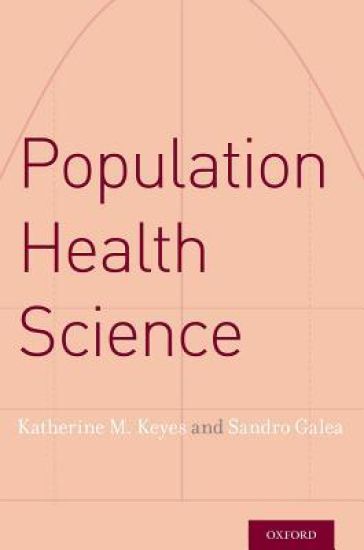
Population Health Science formalizes an emerging discipline at the crossroads of social and medical sciences, demography, and economicsan emerging approach to population studies that represents a seismic shift in how traditional health sciences measure and observe health events. Bringing together theories and methods from diverse fields, this text provides grounding in the factors that shape population health. The overall approach is one of consequentialist science: designing creative studies that identify causal factors in health with multidisciplinary rigor. Distilled into nine foundational principles, this book guides readers through population science studies that strategically incorporate: · macrosocial factors · multilevel, lifecourse, and systems theories · prevention science fundamentals · return on investment · equity and efficiency Harnessing the power of scientific inquiry and codifying the knowledge base for a burgeoning field, Population Health Science arms readers with tools to shift the curve of population health.
Epidemiology Matters offers a new approach to understanding and identifying the causes of disease -- and with it, how to prevent disease and improve human health. Utilizing visual explanations and examples, this text provides an accessible, step-by-step introduction to the fundamentals of epidemiologic study, from design to analysis. Across fourteen chapters, Epidemiology Matters teaches the individual competencies that underlie the conduct of an epidemiologic study: identifying populations; measuring exposures and health indicators; taking a sample; estimating associations between exposures and health indicators; assessing evidence for causes working together; assessing internal and external validity of results. With its consequentialist approach -- designing epidemiologic studies that aim to inform our understanding, and therefore improve public health -- Epidemiology Matters is an introductory text for the next generation of students in medicine and public health.
A deeply reflective and urgently argued book that asks a deceptively simple question: why do we, as individuals and societies, pursue health--and what does that pursuit say about who we are? The pandemic exposed challenges to our collective approach to health. Now, more than ever, it is important to connect with the core values that define public health and to do so in a way that is useful to those who are engaged both in thinking, and in practicing, in the field. In Why Health?, Sandro Galea interrogates the assumptions that underlie contemporary health discourse. Informed by the success and failures of the pandemic moment, and drawing from philosophy, history, and public health, he argues that health has become both a moral ideal and a social organizing principle--shaping policy, identity, and our sense of purpose. Rather than accepting health as an unquestioned good, the book explores how our understanding of health reflects broader anxieties about control, meaning, and progress. It situates today's thinking about health within the larger human story: from early theological understandings of illness as divine judgment, to Enlightenment notions of the rational body, to modern health systems as engines of moral worth. In doing so, it invites readers to reconsider health not as an endpoint but as a mirror of social values-an evolving construct through which we negotiate our obligations to self and others. Through essays that are at once analytical and humane, Why Health? challenges us to think beyond metrics and medicine, toward a richer understanding of what makes a good society. It offers a meditation on how health, rightly understood, can deepen rather than narrow our engagement with the world.
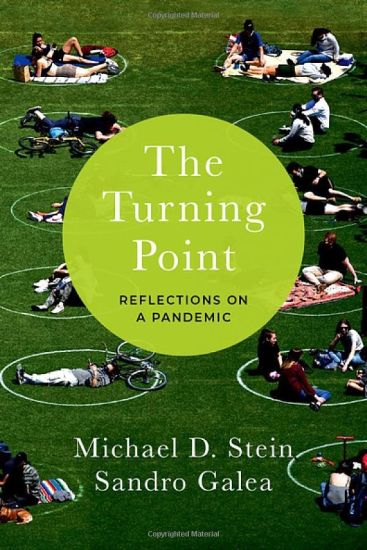
In the early years of COVID-19, Americans witnessed the intersection of a global pandemic, an economic collapse, and civil unrest that galvanized the country and the world and ushered in an era of unprecedented disruption. Three years later, we can begin to reflect on the experience of the pandemic and ask ourselves how the lessons of that experience can inform a healthier present and future. The Turning Point: Reflections on a Pandemic examines the first years of COVID-19 through the lens of population health, revealing a critical turning point in our engagement with key public health issues. Through a series of short, provocative essays, the authors leverage their experience as prominent public health leaders to untangle the social, economic, environmental, and political forces at work in our response to the pandemic. Combining cutting-edge data with philosophical insights, these bold and revelatory essays encourage us to broaden and sharpen our vision of health and renegotiate policies that can allow health to flourish in extraordinary-and ordinary-times.
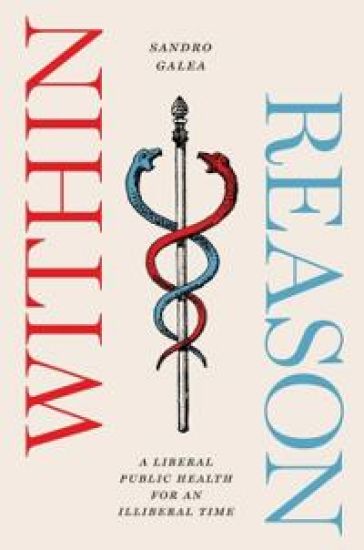
A provocative chronicle of how US public health has strayed from its liberal roots. The Covid-19 response was a crucible of politics and public health—a volatile combination that produced predictably bad results. As scientific expertise became entangled with political motivations, the public-health establishment found itself mired in political encampment. It was, as Sandro Galea argues, a crisis of liberalism: a retreat from the principles of free speech, open debate, and the pursuit of knowledge through reasoned inquiry that should inform the work of public health. Across fifty essays, Within Reason chronicles how public health became enmeshed in the insidious social trends that accelerated under Covid-19. Galea challenges this intellectual drift towards intolerance and absolutism while showing how similar regressions from reason undermined social progress during earlier eras. Within Reason builds an incisive case for a return to critical, open inquiry as a guiding principle for the future public health we want—and a future we must work to protect.
Now in its second edition, Public Health: An Introduction to the Science and Practice of Population Health is expanded in both scope and depth of content to better aid students who are launching their public health studies and preparing for professions in the field. This edition features a greater emphasis on the social determinants of health, health equity, prevention of disease and disability, and the practice of public health. Public Health explores both historical public health issues and contemporary public health challenges—including environmental justice, food deserts, climate change, and COVID-19—through the social ecological lens and with a life course perspective. In addition to establishing a solid knowledge base on the foundations, functions, and core values of public health, the book presents an engaging survey of the social ecological framework and of the demographic factors affecting health at different life stages. The methods of public health, including analytic approaches, systems thinking, implementation science, community engagement, and advocacy are examined, helping students understand the structural underpinnings of population health. Written by leading public health educators, and containing engaging case studies including unique Case Study Podcasts, illustrations, real-world examples, and discussion questions, every chapter analyzes systemic public health issues and the workforce roles driving and implementing public health initiatives and programs in practice. Key Features: New chapters on The Origins of Public Health and The Practice of Public Health provide increased emphasis on the functions and organization of public health and the roles of the workforce New case studies provide real-world examples of historical and contemporary public health challenges that have affected population health 19 Case Study Podcasts highlight current public health issues and initiatives Covers the latest developments affecting population health including infectious disease, chronic disease, mental health, environmental exposures, gun violence, addiction, health policy and many more Expanded coverage of the social determinants of health and health equity COVID-19 and its effects on the public health field are explored, including health communication, public trust, and health inequities Qualified instructors have access to a full set of instructor resources, including a detailed Instructor Manual, PowerPoints, Test Bank, podcasts, and transition guides through an LMS course cartridge
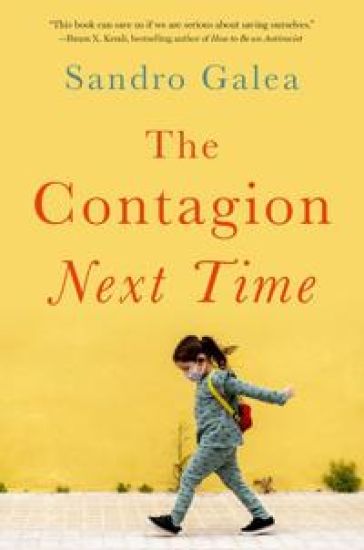
How can we create a healthier world and prevent the crisis next time? In a few short months, COVID-19 devastated the world and, in particular, the United States. It infected millions, killed hundreds of thousands, and effectively made the earth stand still. Yet America was already in poor health before COVID-19 appeared. Racism, marginalization, socioeconomic inequality--our failure to address these forces left us vulnerable to COVID-19 and the ensuing global health crisis it became. Had we tackled these challenges twenty years ago, after the outbreak of SARS, perhaps COVID-19 could have been quickly contained. Instead, we allowed our systems to deteriorate. Following on the themes of his award-winning publication Well, Sandro Galea's The Contagion Next Time articulates the foundational forces shaping health in our society and how we can strengthen them to prevent the next outbreak from becoming a pandemic. Because while no one could have predicted that a pandemic would strike when it did, we did know that a pandemic would strike, sooner or later. We're still not ready for the next pandemic. But we can be--we must be. In lyrical prose, The Contagion Next Time challenges all of us to tackle the deep-rooted obstacles preventing us from becoming a truly vibrant and equitable nation, reminding us of what we've seemed to have forgotten: that our health is a public good worth protecting.
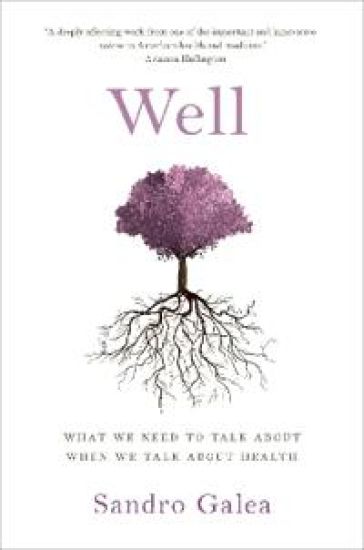
"A deeply affecting work from one of the important and innovative voices in American health and medicine." -- Arianna Huffington In Well, physician Sandro Galea examines what Americans miss when they fixate on healthcare: health. Americans spend more money on health than people anywhere else in the world. And what do they get for it? Statistically, not much. Americans today live shorter, less healthy lives than citizens of other rich countries, and these trends show no signs of letting up. The problem, Sandro Galea argues, is that Americans focus on the wrong things when they think about health. Our national understanding of what constitutes "being well" is centered on medicine -- the lifestyles we adopt to stay healthy, and the insurance plans and prescriptions we fall back on when we're not. While all these things are important, they've not proven to be the difference between healthy and unhealthy on the large scale. Well is a radical examination of the subtle and not-so-subtle factors that determine who gets to be healthy in America. Galea shows how the country's failing health is a product of American history and character -- and how refocusing on our national health can usher enlightenment across American life and politics.
A POLITICAL PROVOCATION FROM A PAIR OF PHYSICIANS WRITING OUTSIDE THEIR LANE Americans care about their health. Americans pay lots of money in hopes of maintaining their health. So why are Americans so unhealthy? The reason is simple: as a country, the United States overinvests in medical care at the expense of the social, economic, and cultural forces that produce health. The rise of medicine as a cornerstone of American life and culture has coincided with a social and political devaluation of factors demonstrated to mean more to our vitality than anything else -- influences like where we live, work, and play; livable wages that create opportunity for healthy living; and gender and racial equity. In Pained, physicians Michael Stein and Sandro Galea push the conversation around American health where it belongs: toward matters of class, money, and culture. Across more than 50 essays and data illustrations, Pained casts a light on how the structural components of everyday life -- like school, housing, police, even cell phones -- ultimately determine who gets to be healthy in today's America. In doing so, it makes a case for reframing our political discourse in less myopic, more effectual terms. Accessible and surprising, political but not partisan, Pained is the urgent, uncomfortable conversation that American needs in this challenging moment. It will delight and infuriate readers of all political stripes.
In WELL, physician Sandro Galea examines what Americans miss when they fixate on healthcare: health. Americans spend more money on health than people anywhere else in the world. And what do they get for it? Statistically, not much. Americans today live shorter, less healthy lives than citizens of other rich countries, and these trends show no signs of letting up. The problem, physician Sandro Galea argues, is that Americans focus on the wrong things when they think about health. Our national understanding of what constitutes "being well" is centered on medicine -- the lifestyles we adopt to stay healthy, the insurance plans and prescriptions we fall back on when we're not. And while all these things are important, they've not proven to be the difference between healthy and unhealthy on the large scale. Well is a radical examination of the subtle and not-so-subtle factors that determine who gets to be healthy in America. Galea argues that the country's failing health is a product of the society and culture Americans have built for ourselves -- not just in lifestyle, but in the separations entrenched across the spectrum of American experience. A deeply affecting work that is at once rigorous and personal, Well ushers a new understanding of the problems and promise of health in America.
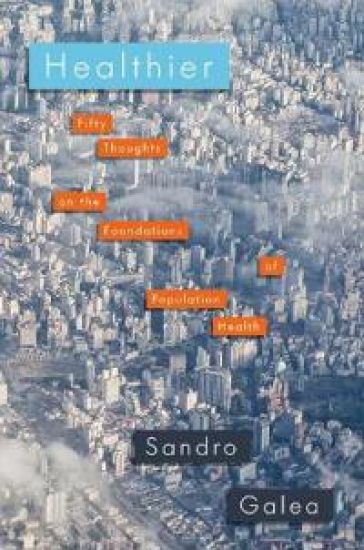
Fifty essays on the state of population health from a vanguard voice in the field Public health can rightly claim its share of victories: healthier cities, widespread sanitation, broader availability of nutrient-rich food, and reductions in violence and injury. But for all these gains, today we face a new set of challenges, ones complicated by political and professional shifts that threaten to fundamentally change the health of populations. Healthier is both an affirmation and an essential summary of the current challenges and opportunities for those working in and around the improvement of population health. The essays contained here champion an approach to health that is consequentialist and rooted in social justice -- an expansion of traditional, quantitatively motivated public health that will both inform and inspire any reader from student to seasoned practitioner. Galea's cogent, incisive arguments guarantee that his perspective, currently at the forefront of public health, will soon become conventional wisdom.
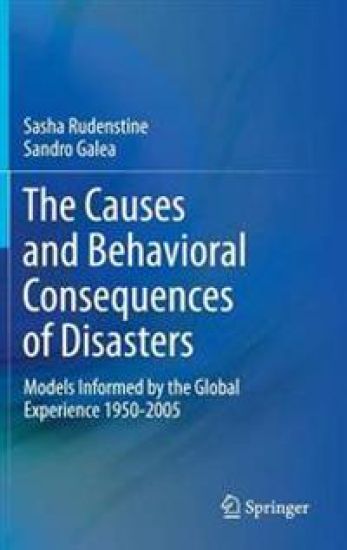
The Causes and Behavioral Consequences of Disasters brings a public health perspective to the literature, reflecting the increasing importance of the field in both disaster preparedness and disaster response. Arguing that a disaster is not only the event but its aftermath as well, the authors apply salient local content to the study of scenarios ranging from the Cuzco, Peru, earthquake of 1950 to the Columbine school shooting, the Oklahoma City bombing, and 9/11. These case studies form the basis for models of vulnerabilities to disasters and population behavior following disasters, illustrating how careful pre-event planning and coordinated post-event response strategies can minimize the initial damage and negative aftereffects. The Causes and Behavioral Consequences of Disasters will further professional discussion and understanding among a wide range of professionals and students across public health, mental health, education, health administration and policy, social work, and the social sciences.
The Causes and Behavioral Consequences of Disasters brings a public health perspective to the literature, reflecting the increasing importance of the field in both disaster preparedness and disaster response. Arguing that a disaster is not only the event but its aftermath as well, the authors apply salient local content to the study of scenarios ranging from the Cuzco, Peru, earthquake of 1950 to the Columbine school shooting, the Oklahoma City bombing, and 9/11. These case studies form the basis for models of vulnerabilities to disasters and population behavior following disasters, illustrating how careful pre-event planning and coordinated post-event response strategies can minimize the initial damage and negative aftereffects. The Causes and Behavioral Consequences of Disasters will further professional discussion and understanding among a wide range of professionals and students across public health, mental health, education, health administration and policy, social work, and the social sciences.
The essays commissioned for this volume analyze the impact of city-living on health, focusing primarily on conditions in the United States. With 16 chapters by 24 internationally recognized experts, the book introduces an ecological approach to the study of the health of urban populations. It assesses the primary determinants of well-being in cities, including the social and physical environments, diet, and health care and social services. The book includes chapters on the history of public health in cities, the impact of urban sprawl and urban renewal on health, and the challenges facing cities in the developing world. It also examines conditions such as infectious diseases, violence and disasters, and mental illness.
The essays commissioned for this volume analyze the impact of city-living on health, focusing primarily on conditions in the United States. With 16 chapters by 24 internationally recognized experts, the book introduces an ecological approach to the study of the health of urban populations. It assesses the primary determinants of well-being in cities, including the social and physical environments, diet, and health care and social services. The book includes chapters on the history of public health in cities, the impact of urban sprawl and urban renewal on health, and the challenges facing cities in the developing world. It also examines conditions such as infectious diseases, violence and disasters, and mental illness.