Kirjojen hintavertailu. Mukana 12 595 353 kirjaa ja 12 kauppaa.

Kirjailija

Sanja Bogojevic

Kirjat ja teokset yhdessä paikassa: 3 kirjaa, julkaisuja vuosilta 2013-2021, suosituimpien joukossa Emissions Trading Schemes. Vertaile teosten hintoja ja tarkista saatavuus suomalaisista kirjakaupoista.

3 kirjaa

Kirjojen julkaisuhaarukka 2013-2021.

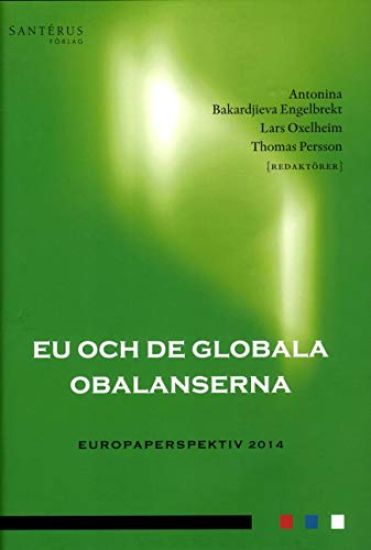
EU och de globala obalanserna

EU och de globala obalanserna

Lisbeth Aggestam; Arne Bigsten; Sanja Bogojevic; Ole Elgström; Magnus Henrekson; Anna Jonsson Cornell; Ari Kokko; Andreas Moberg; Tino Sanandaji; Anke Schmidt-Felzmann

Santérus Förlag
2014
sidottu
Krisåren har urholkat Europeiska unionens politiska och ekonomiska resurser. Samtidigt står Europa inför avgörande utmaningar på den världspolitiska arenan, där nya regionala maktcentra är på väg att etablera sig. Klimathot, fattigdom och människohandel är några av de problem som vittnar om allvarliga globala obalanser. I Europaperspektiv 2014 diskuterar tio ledande forskare inom ekonomi, juridik och statsvetenskap vår tids viktigaste globala frågor och EU-samarbetets betydelse för att driva dem framåt. Klarar EU att upprätthålla sin ambitionsnivå i arbetet med klimatåtgärder, frihandel, bistånd och mänskliga rättigheter? Hur utvecklas EU:s strategiskt viktiga relationer till Afrika, Kina och Ryssland? Har Cathrine Ashton och EU:s nya utrikestjänst lyckats ge unionen en starkare röst i världspolitiken, trots de allt djupare politiska skiljelinjer som krisen skapat mellan medlemsländerna? Deltagande författare: Lisbeth Aggestam, Arne Bigsten, Sanja Cogojevic, Ole Elgström, Magnus Henrekson, Anna Jonsson Cornell, Ari Kokko, Andreas Moberg, Tino Sanandaji, Anke Schmidt-Felzmann

Emissions Trading Schemes

Emissions Trading Schemes

Sanja Bogojevic

Hart Publishing
2013
sidottu
Over the last four decades emissions trading has enjoyed a high profile in environmental law scholarship and in environmental law and policy. Much of the discussion is promotional, preferring emissions trading above other regulatory strategies without, however, engaging with legal complexities embedded in conceptualising, scrutinising and managing emissions trading regimes. The combined effect of these debates is to create a perception that emissions trading is a straightforward regulatory strategy, imposable across various jurisdictions and environmental settings. This book shows that this view is problematic for at least two reasons. First, emissions trading responds to distinct environmental and non-environmental goals, including creating profit-centres, substituting bureaucratic control of resources, and ensuring regulatory compliance. This is important, as the particular purpose entrusted to a given emissions trading regime has, as its corollary, a particular governance structure, according to which the regime may be constructed and managed, and which trusts the emissions market, the state and rights in emissions allowances with distinct roles. Second, the governance structures of emissions trading regimes are culture-specific, which is a significant reminder of the importance of law in understanding not only how emissions trading schemes function but also what meaning is given to them as regulatory strategies. This is shown by deconstructing emissions trading discourses: that is, by inquiring into the assumptions about emissions trading, as featuring in emissions trading scholarship and in debates involving law and policymakers and the judiciary at the EU level. Ultimately, this book makes a strong argument for reconfiguring the common understanding of emissions trading schemes as regulatory strategies, and sets out a framework for analysis to sustain that reconfiguration.
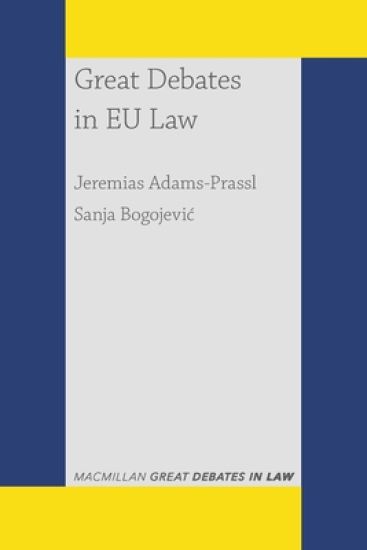
Great Debates in EU Law

Great Debates in EU Law

Jeremias Adams-Prassl; Sanja Bogojevic

Red Globe Press
2021
nidottu
This book introduces students to the great debates in EU law. Rather than simply presenting traditional approaches that provide descriptions (often in historical order) of substantive and constitutional elements of Union law, this book clusters material around these debates in an engaging and lively way.By offering concise analyses of core dilemmas and tensions in EU law, the book provides a different kind of introduction, one that helps students place the discussions within a boarder context and narrative. The authors have found in their teaching that students often struggle with individual aspects and materials without understanding broader narratives, which are traditionally developed in monographs or journal articles that are beyond the reach of undergraduate readers.