

Kirjailija
Sanora Babb
Kirjat ja teokset yhdessä paikassa: 8 kirjaa, julkaisuja vuosilta 2006-2024, suosituimpien joukossa Namen unbekannt. Vertaile teosten hintoja ja tarkista saatavuus suomalaisista kirjakaupoista.
8 kirjaa
Kirjojen julkaisuhaarukka 2006-2024.

This collection of short stories and journalism by Sanora Babb, written between 1932 and 1949, brings to life the painful period of the Great Depression. With unique insight, Babb writes with passion and empathy gained from personal experience. Whether real or fictional, the people in these pages may struggle but they are also bursting with potential and hope.From her work with the Farm Security Administration and as a labor organizer, Babb was eyewitness to the lives of displaced farmers from the Dust Bowl and immigrant laborers, striking miners and refugees. She recorded their experiences of food insecurity, of jailings and beatings by sheriffs and strike-breakers with a sympathetic ear and an unblinking eye. Here are a former prostitute, fully trained and working as a surgeon in a Moscow hospital in the early days of the Soviet Union; an ambitious proto-feminist war worker creating her own business; a reformed gambler looking forward to one last honest game. Babb advocates for workers in her journalism and in her short stories she expresses the beauty and pain of struggling individuals. While some of Babb's stories may seem quaint to modern readers, they survive the test of time through their powerful evocation of a sense of place, sensitivity to complex family relationships, and environmental or eco-feminist sensibility.Arranged chronologically, from early autobiographical short fiction to her leftist journalism to her later innovative stories, Babb interweaves fiction and non-fiction, prescient of today's creative non-fiction. Included are short stories published in literary and progressive journals as diverse as Kansas Magazine and The Anvil, reportage written for New Masses, The Clipper, and New Theater, as well as a selection of previously unpublished fiction and reportage. This new collection includes Babb's preface to her four-story collection The Dark Earth and a new introduction by Erin Royston Battat.


Told in the Seed and Selected Poems offers poems from Sanora Babb's more than sixty years of writing and publishing poetry. This new collection adds many of her earliest poems to those of her later years that were in the original Told in the Seed. A new introduction by Carol S. Loranger notes that "Of all Sanora Babb's writings, it is the poetry, perhaps, that offers the most intimate and unvarnished picture of the woman and the artist." In the introduction Loranger weaves together relevant information about Babb's life with the more personal poems to further enhance the reader's appreciation. Babb published her first poem at fourteen in the Forgan Eagle and continued to write and publish poetry from the 1920s to the early 1990s in a wide range of journals and publications. She won the Borestone Mountain Poetry Award in 1967 for "Told in the Seed" and the Gold Medal Award in 1932 for "Captive" from the Mitre Press Anthology, London.Having a strong empathy with people and their daily lives, an affinity with all in the natural world, and the ability to elevate the ordinary into the extraordinary, Babb reflects all this in her poetry. Her poems quicken with lyricism, clarity, and a powerful sense of immediacy.

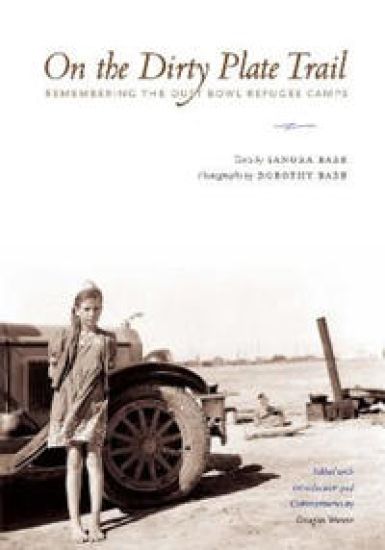
Runner-up, National Council on Public History Book Award, 2008The 1930s exodus of "Okies" dispossessed by repeated droughts and failed crop prices was a relatively brief interlude in the history of migrant agricultural labor. Yet it attracted wide attention through the publication of John Steinbeck's The Grapes of Wrath (1939) and the images of Farm Security Administration photographers such as Dorothea Lange and Arthur Rothstein. Ironically, their work risked sublimating the subjects-real people and actual experience-into aesthetic artifacts, icons of suffering, deprivation, and despair. Working for the Farm Security Administration in California's migrant labor camps in 1938-39, Sanora Babb, a young journalist and short story writer, together with her sister Dorothy, a gifted amateur photographer, entered the intimacy of the dispossessed farmers' lives as insiders, evidenced in the immediacy and accuracy of their writings and photos. Born in Oklahoma and raised on a dryland farm, the Babb sisters had unparalleled access to the day-by-day harsh reality of field labor and family life.This book presents a vivid, firsthand account of the Dust Bowl refugees, the migrant labor camps, and the growth of labor activism among Anglo and Mexican farm workers in California's agricultural valleys linked by the "Dirty Plate Trail" (Highway 99). It draws upon the detailed field notes that Sanora Babb wrote while in the camps, as well as on published articles and short stories about the migrant workers and an excerpt from her Dust Bowl novel, Whose Names Are Unknown. Like Sanora's writing, Dorothy's photos reveal an unmediated, personal encounter with the migrants, portraying the social and emotional realities of their actual living and working conditions, together with their efforts to organize and to seek temporary recreation. An authority in working-class literature and history, volume editor Douglas Wixson places the Babb sisters' work in relevant historical and social-political contexts, examining their role in reconfiguring the Dust Bowl exodus as a site of memory in the national consciousness.Focusing on the material conditions of everyday existence among the Dust Bowl refugees, the words and images of these two perceptive young women clearly show that, contrary to stereotype, the "Okies" were a widely diverse people, including not only Steinbeck's sharecropper "Joads" but also literate, independent farmers who, in the democracy of the FSA camps, found effective ways to rebuild lives and create communities.
Sanora Babb's long-hidden novel Whose Names Are Unknown tells an intimate story of the High Plains farmers who fled drought dust storms during the Great Depression. Written with empathy for the farmers' plight, this powerful narrative is based upon the author's firsthand experience. This clear-eyed and unsentimental story centers on the fictional Dunne family as they struggle to survive and endure while never losing faith in themselves. In the Oklahoma Panhandle, Milt, Julia, their two little girls, and Milt's father, Konkie, share a life of cramped circumstances in a one-room dugout with never enough to eat. Yet buried in the drudgery of their everyday life are aspirations, failed dreams, and fleeting moments of hope. The land is their dream. The Duanne family and the farmers around them fight desperately for the land they love, but the droughts of the thirties force them to abandon their fields. When they join the exodus to the irrigated valleys of California, they discover not the promised land, but an abusive labor system arrayed against destitute immigrants. The system labels all farmers like them as worthless ""Okies"" and earmarks them for beatings and worse when hardworking men and women, such as Milt and Julia, object to wages so low they can't possibly feed their children. The informal communal relations these dryland farmers knew on the High Plains gradually coalesce into a shared determination to resist. Realizing that a unified community is their best hope for survival, the Dunnes join with their fellow workers and begin the struggle to improve migrant working conditions through democratic organization and collective protest. Babb wrote Whose Names are Unknown in the 1930s while working with refugee farmers in the Farm Security Administration (FSA) camps of California. Originally from the Oklahoma Panhandle are herself, Babb, who had first come to Los Angeles in 1929 as a journalist, joined FSA camp administrator Tom Collins in 1938 to help the uprooted farmers. As Lawrence R. Rodgers notes in his foreword, Babb submitted the manuscript for this book to Random House for consideration in 1939. Editor Bennett Cerf planned to publish this ""exceptionally fine"" novel but when John Steinbeck's The Grapes of Wrath swept the nation, Cerf explained that the market could not support two books on the subject. Babb has since shared her manuscript with interested scholars who have deemed it a classic in its own right. In an era when the country was deeply divided on social legislation issues and millions drifted unemployed and homeless, Babb recorded the stories of the people she greatly respected, those ""whose names are unknown."" In doing so, she returned to them their identities and dignity, and put a human face on economic disaster and social distress.