Kirjojen hintavertailu. Mukana 12 331 121 kirjaa ja 12 kauppaa.

Kirjailija

Santiago Zabala

Kirjat ja teokset yhdessä paikassa: 14 kirjaa, julkaisuja vuosilta 2006-2025, suosituimpien joukossa Plant-Thinking. Vertaile teosten hintoja ja tarkista saatavuus suomalaisista kirjakaupoista.

14 kirjaa

Kirjojen julkaisuhaarukka 2006-2025.

Plant-Thinking

Plant-Thinking

Michael Marder; Gianni Vattimo; Santiago Zabala

Columbia University Press
2013
pokkari
The margins of philosophy are populated by non-human, non-animal living beings, including plants. While contemporary philosophers tend to refrain from raising ontological and ethical concerns with vegetal life, Michael Marder puts this life at the forefront of the current deconstruction of metaphysics. He identifies the existential features of plant behavior and the vegetal heritage of human thought so as to affirm the potential of vegetation to resist the logic of totalization and to exceed the narrow confines of instrumentality. Reconstructing the life of plants "after metaphysics," Marder focuses on their unique temporality, freedom, and material knowledge or wisdom. In his formulation, "plant-thinking" is the non-cognitive, non-ideational, and non-imagistic mode of thinking proper to plants, as much as the process of bringing human thought itself back to its roots and rendering it plantlike.
Plant-Thinking

Plant-Thinking

Michael Marder; Gianni Vattimo; Santiago Zabala

Columbia University Press
2013
sidottu
The margins of philosophy are populated by non-human, non-animal living beings, including plants. While contemporary philosophers tend to refrain from raising ontological and ethical concerns with vegetal life, Michael Marder puts this life at the forefront of the current deconstruction of metaphysics. He identifies the existential features of plant behavior and the vegetal heritage of human thought so as to affirm the potential of vegetation to resist the logic of totalization and to exceed the narrow confines of instrumentality. Reconstructing the life of plants "after metaphysics," Marder focuses on their unique temporality, freedom, and material knowledge or wisdom. In his formulation, "plant-thinking" is the non-cognitive, non-ideational, and non-imagistic mode of thinking proper to plants, as much as the process of bringing human thought itself back to its roots and rendering it plantlike.
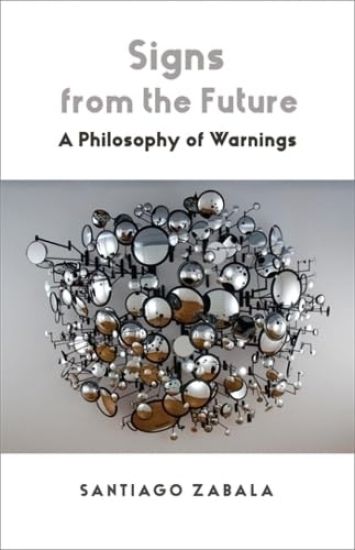
Signs from the Future

Signs from the Future

Santiago Zabala

Columbia University Press
2025
pokkari
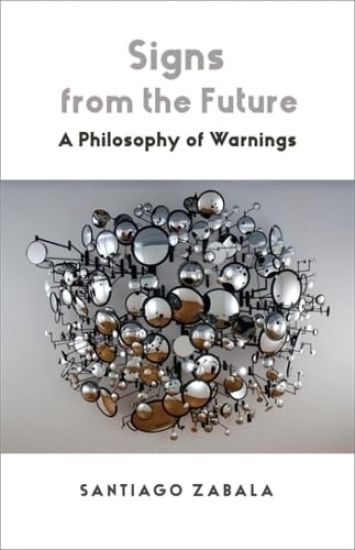
We are constantly being warned, but we seldom heed warnings. Cautioned about authoritarian leaders, climate change, technological dystopias, or other catastrophes, we fail to take action or even take them seriously. Too often warnings are dismissed—much like the artists, scientists, environmentalists, and intellectuals who deliver them. Why don’t we listen?Santiago Zabala asks us to think of philosophy as a warning, a call to heed ominous “signs from the future.” He argues that warnings—as distinct from predictions—invite us to see the possibility of a radical break from the present. Predictions tell us to submit to the inevitable, but warnings ask us to take part in shaping a different future. A philosophy of warnings offers an alternative horizon of understanding beyond “the real” and “the normal,” and a politics of warnings helps us confront hidden emergencies through collective interpretation, listening, and action.Signs from the Future places thinkers such as Nietzsche, Heidegger, de Beauvoir, and Arendt into conversation with present-day politics, art, and culture, drawing our attention to unheeded warnings. This timely and engaging book shows why unresolved crises from the past must be interpreted anew today if we are to imagine an equitable future—or a future at all.
Signs from the Future

Signs from the Future

Santiago Zabala

Columbia University Press
2025
sidottu
We are constantly being warned, but we seldom heed warnings. Cautioned about authoritarian leaders, climate change, technological dystopias, or other catastrophes, we fail to take action or even take them seriously. Too often warnings are dismissed—much like the artists, scientists, environmentalists, and intellectuals who deliver them. Why don’t we listen?Santiago Zabala asks us to think of philosophy as a warning, a call to heed ominous “signs from the future.” He argues that warnings—as distinct from predictions—invite us to see the possibility of a radical break from the present. Predictions tell us to submit to the inevitable, but warnings ask us to take part in shaping a different future. A philosophy of warnings offers an alternative horizon of understanding beyond “the real” and “the normal,” and a politics of warnings helps us confront hidden emergencies through collective interpretation, listening, and action.Signs from the Future places thinkers such as Nietzsche, Heidegger, de Beauvoir, and Arendt into conversation with present-day politics, art, and culture, drawing our attention to unheeded warnings. This timely and engaging book shows why unresolved crises from the past must be interpreted anew today if we are to imagine an equitable future—or a future at all.
Being at Large

Being at Large

Santiago Zabala

McGill-Queen's University Press
2020
nidottu
Politicians and philosophers presenting themselves as the ultimate bearers of truth and reality have created unprecedented technological, cultural, and political framings. This new order conspires to undermine the interpretive practices of open-ended critique, normalizing a sense of threat to preserve control. The greatest emergency has become the absence of emergencies. Tracing an intellectual alliance between academics such as Jordan Peterson and Christina Hoff Sommers and right-wing populist politicians such as Donald Trump and Marine Le Pen, this book denounces framings that make a claim to objectivity. With the help of contemporary thinkers including Bruno Latour, Judith Butler, and Giorgio Agamben, as well as discussion of the Cambridge Analytica whistleblower Christopher Wylie and the emergency of biodiversity loss due to climate change, Santiago Zabala illustrates that the twenty-first-century question is not whether we can be free, but how to be at large - unconstrained by the new realist order. Being at Large demonstrates the anarchic power of hermeneutics, calling for interpretive disruptions of the authoritarian narrative as a way of reclaiming freedom in the age of alternative facts.
Being at Large

Being at Large

Santiago Zabala

McGill-Queen's University Press
2020
sidottu
Politicians and philosophers presenting themselves as the ultimate bearers of truth and reality have created unprecedented technological, cultural, and political framings. This new order conspires to undermine the interpretive practices of open-ended critique, normalizing a sense of threat to preserve control. The greatest emergency has become the absence of emergencies. Tracing an intellectual alliance between academics such as Jordan Peterson and Christina Hoff Sommers and right-wing populist politicians such as Donald Trump and Marine Le Pen, this book denounces framings that make a claim to objectivity. With the help of contemporary thinkers including Bruno Latour, Judith Butler, and Giorgio Agamben, as well as discussion of the Cambridge Analytica whistleblower Christopher Wylie and the emergency of biodiversity loss due to climate change, Santiago Zabala illustrates that the twenty-first-century question is not whether we can be free, but how to be at large - unconstrained by the new realist order. Being at Large demonstrates the anarchic power of hermeneutics, calling for interpretive disruptions of the authoritarian narrative as a way of reclaiming freedom in the age of alternative facts.
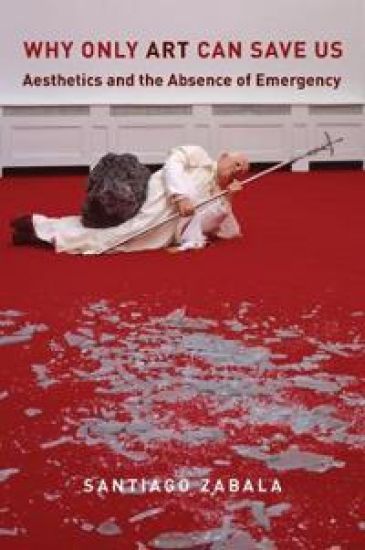
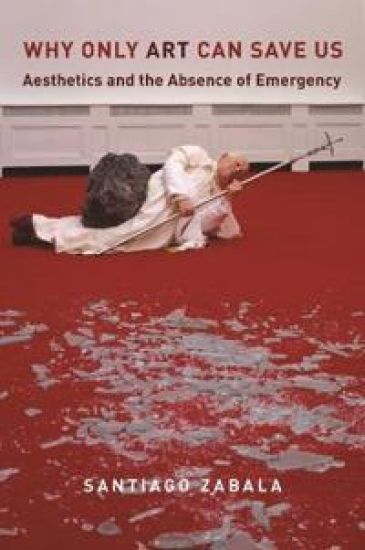
Why Only Art Can Save Us

Why Only Art Can Save Us

Santiago Zabala

Columbia University Press
2019
pokkari
The state of emergency, according to thinkers such as Carl Schmidt, Walter Benjamin, and Giorgio Agamben, is at the heart of any theory of politics. But today the problem is not the crises that we do confront, which are often used by governments to legitimize themselves, but the ones that political realism stops us from recognizing as emergencies, from widespread surveillance to climate change to the systemic shocks of neoliberalism. We need a way of disrupting the existing order that can energize radical democratic action rather than reinforcing the status quo. In this provocative book, Santiago Zabala declares that in an age where the greatest emergency is the absence of emergency, only contemporary art’s capacity to alter reality can save us.Why Only Art Can Save Us advances a new aesthetics centered on the nature of the emergency that characterizes the twenty-first century. Zabala draws on Martin Heidegger’s distinction between works of art that rescue us from emergency and those that are rescuers into emergency. The former are a means of cultural politics, conservers of the status quo that conceal emergencies; the latter are disruptive events that thrust us into emergencies. Building on Arthur Danto, Jacques Rancière, and Gianni Vattimo, who made aesthetics more responsive to contemporary art, Zabala argues that works of art are not simply a means of elevating consumerism or contemplating beauty but are points of departure to change the world. Radical artists create works that disclose and demand active intervention in ongoing crises. Interpreting works of art that aim to propel us into absent emergencies, Zabala shows how art’s ability to create new realities is fundamental to the politics of radical democracy in the state of emergency that is the present.
Why Only Art Can Save Us

Why Only Art Can Save Us

Santiago Zabala

Columbia University Press
2017
sidottu
The state of emergency, thinkers such as Carl Schmidt, Walter Benjamin, and Giorgio Agamben have argued, is at the heart of any theory of politics. But today the problem is not the crises we do confront, which are often how governments legitimize themselves, but the ones that political realism stops us from recognizing as emergencies, from widespread surveillance to climate change to the systemic shocks of neoliberalism. We need a way of disrupting the existing order that can energize radical democratic action rather than reinforcing the status quo. In this provocative book, Santiago Zabala declares that in an age where the greatest emergency is the absence of emergency, only contemporary art's capacity to alter reality can save us. Why Only Art Can Save Us advances a new aesthetics centered on the nature of the emergency that characterizes the twenty-first century. Zabala draws on Martin Heidegger's distinction between works of art that rescue us from emergency and those that are rescuers into emergency. The former are a means of cultural politics, conservers of the status quo that conceal emergencies; the latter are disruptive events that thrust us into emergencies. Building on Arthur Danto, Jacques Ranciere, and Gianni Vattimo, who made aesthetics more responsive to contemporary art, Zabala argues that works of art are not simply for an elevated consumerism or the contemplation of beauty but are points of departure to change the world. Radical artists create works that disclose and demand active intervention into ongoing crises. Interpreting works of art that aim to propel us into absent emergencies, Zabala shows how art's ability to create new realities is fundamental to the politics of radical democracy in the state of emergency that is the present.
Hermeneutic Communism

Hermeneutic Communism

Gianni Vattimo; Santiago Zabala

Columbia University Press
2014
pokkari
Having lost much of its political clout and theoretical power, communism no longer represents an appealing alternative to capitalism. In its original Marxist formulation, communism promised an ideal of development, but only through a logic of war, and while a number of reformist governments still promote this ideology, their legitimacy has steadily declined since the fall of the Berlin wall. Separating communism from its metaphysical foundations, which include an abiding faith in the immutable laws of history and an almost holy conception of the proletariat, Gianni Vattimo and Santiago Zabala recast Marx's theories at a time when capitalism's metaphysical moorings-in technology, empire, and industrialization-are buckling. While Michael Hardt and Antonio Negri call for a return of the revolutionary left, Vattimo and Zabala fear this would lead only to more violence and failed political policy. Instead, they adopt an antifoundationalist stance drawn from the hermeneutic thought of Martin Heidegger, Jacques Derrida, and Richard Rorty. Hermeneutic communism leaves aside the ideal of development and the general call for revolution; it relies on interpretation rather than truth and proves more flexible in different contexts. Hermeneutic communism motivates a resistance to capitalism's inequalities yet intervenes against violence and authoritarianism by emphasizing the interpretative nature of truth. Paralleling Vattimo and Zabala's well-known work on the weakening of religion, Hermeneutic Communism realizes the fully transformational, politically effective potential of Marxist thought.
Hermeneutic Communism

Hermeneutic Communism

Gianni Vattimo; Santiago Zabala

Columbia University Press
2011
sidottu
Having lost much of its political clout and theoretical power, communism no longer represents an appealing alternative to capitalism. In its original Marxist formulation, communism promised an ideal of development, but only through a logic of war, and while a number of reformist governments still promote this ideology, their legitimacy has steadily declined since the fall of the Berlin wall. Separating communism from its metaphysical foundations, which include an abiding faith in the immutable laws of history and an almost holy conception of the proletariat, Gianni Vattimo and Santiago Zabala recast Marx's theories at a time when capitalism's metaphysical moorings-in technology, empire, and industrialization-are buckling. While Michael Hardt and Antonio Negri call for a return of the revolutionary left, Vattimo and Zabala fear this would lead only to more violence and failed political policy. Instead, they adopt an antifoundationalist stance drawn from the hermeneutic thought of Martin Heidegger, Jacques Derrida, and Richard Rorty. Hermeneutic communism leaves aside the ideal of development and the general call for revolution; it relies on interpretation rather than truth and proves more flexible in different contexts. Hermeneutic communism motivates a resistance to capitalism's inequalities yet intervenes against violence and authoritarianism by emphasizing the interpretative nature of truth. Paralleling Vattimo and Zabala's well-known work on the weakening of religion, Hermeneutic Communism realizes the fully transformational, politically effective potential of Marxist thought.
The Remains of Being

The Remains of Being

Santiago Zabala

Columbia University Press
2009
sidottu
In Basic Concepts, Heidegger claims that "Being is the most worn-out" and yet also that Being "remains constantly available." Santiago Zabala radicalizes the consequences of these little known but significant affirmations. Revisiting the work of Jacques Derrida, Reiner Schurmann, Jean-Luc Nancy, Hans-Georg Gadamer, Ernst Tugendhat, and Gianni Vattimo, he finds these remains of Being within which ontological thought can still operate. Being is an event, Zabala argues, a kind of generosity and gift that generates astonishment in those who experience it. This sense of wonder has fueled questions of meaning for centuries-from Plato to the present day. Postmetaphysical accounts of Being, as exemplified by the thinkers of Zabala's analysis, as well as by Nietzsche, Dewey, and others he encounters, don't abandon Being. Rather, they reject rigid, determined modes of essentialist thought in favor of more fluid, malleable, and adaptable conceptions, redefining the pursuit and meaning of philosophy itself.
The Hermeneutic Nature of Analytic Philosophy

The Hermeneutic Nature of Analytic Philosophy

Santiago Zabala; Gianni Vattimo

Columbia University Press
2008
sidottu
Contemporary philosopher-analytic as well as continental--tend to feel uneasy about Ernst Tugendhat, who, though he positions himself in the analytic field, poses questions in the Heideggerian style. Tugendhat was one of Martin Heidegger's last pupils and his least obedient, pursuing a new and controversial critical technique. Tugendhat took Heidegger's destruction of Being as presence and developed it in analytic philosophy, more specifically in semantics. Only formal semantics, according to Tugendhat, could answer the questions left open by Heidegger. Yet in doing this, Tugendhat discovered the latent "hermeneutic nature of analytic philosophy"--its post-metaphysical dimension-in which "there are no facts, but only true propositions." What Tugendhat seeks to answer is this: What is the meaning of thought following the linguistic turn? Because of the rift between analytic and continental philosophers, very few studies have been written on Tugendhat, and he has been omitted altogether from several histories of philosophy. Now that these two schools have begun to reconcile, Tugendhat has become an example of a philosopher who, in the words of Richard Rorty, "built bridges between continents and between centuries." Tugendhat is known more for his philosophical turn than for his phenomenological studies or for his position within analytic philosophy, and this creates some confusion regarding his philosophical propensities. Is Tugendhat analytic or continental? Is he a follower of Wittgenstein or Heidegger? Does he belong in the culture of analysis or in that of tradition? Santiago Zabala presents Tugendhat as an example of merged horizons, promoting a philosophical historiography that is concerned more with dialogue and less with classification. In doing so, he places us squarely within a dialogic culture of the future and proves that any such labels impoverish philosophical research.