Kirjojen hintavertailu. Mukana 12 510 299 kirjaa ja 12 kauppaa.

Kirjailija

Santosh Kumar

Kirjat ja teokset yhdessä paikassa: 69 kirjaa, julkaisuja vuosilta 1999-2026, suosituimpien joukossa Component-Based Software Engineering. Vertaile teosten hintoja ja tarkista saatavuus suomalaisista kirjakaupoista.

69 kirjaa

Kirjojen julkaisuhaarukka 1999-2026.

Component-Based Software Engineering

Component-Based Software Engineering

Umesh Kumar Tiwari; Santosh Kumar

TAYLOR FRANCIS LTD
2024
nidottu
This book focuses on a specialized branch of the vast domain of software engineering: component-based software engineering (CBSE). Component-Based Software Engineering: Methods and Metrics enhances the basic understanding of components by defining categories, characteristics, repository, interaction, complexity, and composition. It divides the research domain of CBSE into three major sub-domains: (1) reusability issues, (2) interaction and integration issues, and (3) testing and reliability issues. This book covers the state-of-the-art literature survey of at least 20 years in the domain of reusability, interaction and integration complexities, and testing and reliability issues of component-based software engineering. The aim of this book is not only to review and analyze the previous works conducted by eminent researchers, academicians, and organizations in the context of CBSE, but also suggests innovative, efficient, and better solutions. A rigorous and critical survey of traditional and advanced paradigms of software engineering is provided in the book. Features: In-interactions and Out-Interactions both are covered to assess the complexity. In the context of CBSE both white-box and black-box testing methods and their metrics are described. This work covers reliability estimation using reusability which is an innovative method. Case studies and real-life software examples are used to explore the problems and their solutions.Students, research scholars, software developers, and software designers or individuals interested in software engineering, especially in component-based software engineering, can refer to this book to understand the concepts from scratch. These measures and metrics can be used to estimate the software before the actual coding commences.
Component-Based Software Engineering

Component-Based Software Engineering

Umesh Kumar Tiwari; Santosh Kumar

CRC Press
2020
sidottu
This book focuses on a specialized branch of the vast domain of software engineering: component-based software engineering (CBSE). Component-Based Software Engineering: Methods and Metrics enhances the basic understanding of components by defining categories, characteristics, repository, interaction, complexity, and composition. It divides the research domain of CBSE into three major sub-domains: (1) reusability issues, (2) interaction and integration issues, and (3) testing and reliability issues. This book covers the state-of-the-art literature survey of at least 20 years in the domain of reusability, interaction and integration complexities, and testing and reliability issues of component-based software engineering. The aim of this book is not only to review and analyze the previous works conducted by eminent researchers, academicians, and organizations in the context of CBSE, but also suggests innovative, efficient, and better solutions. A rigorous and critical survey of traditional and advanced paradigms of software engineering is provided in the book. Features: In-interactions and Out-Interactions both are covered to assess the complexity. In the context of CBSE both white-box and black-box testing methods and their metrics are described. This work covers reliability estimation using reusability which is an innovative method. Case studies and real-life software examples are used to explore the problems and their solutions.Students, research scholars, software developers, and software designers or individuals interested in software engineering, especially in component-based software engineering, can refer to this book to understand the concepts from scratch. These measures and metrics can be used to estimate the software before the actual coding commences.
Gestion intégrée des nutriments dans la culture du blé

Gestion intégrée des nutriments dans la culture du blé

Ajeet Kumar; Santosh Kumar; Chandra Sekhar Choudhary

Editions Notre Savoir
2026
pokkari
L'application continue de seuls nutriments n cessaires par le biais d'engrais chimiques a un effet n faste sur la sant des sols, ce qui conduit des rendements non durables. Le bl repr sente environ 30 % de la production c r ali re totale en Inde. La principale contrainte qui freine l'augmentation de la production de bl est la mauvaise sant des sols. Il est donc n cessaire d'am liorer le syst me d'approvisionnement en nutriments en termes de gestion int gr e des nutriments, qui implique l'utilisation d'engrais chimiques en combinaison avec des engrais organiques, associ e des apports par le biais de processus biologiques. Un engrais quilibr est l'application de nutriments essentiels aux plantes dans des proportions ad quates et en quantit optimale pour une culture sp cifique dans un sol donn . Une utilisation d s quilibr e des engrais entra ne une d t rioration de la fertilit du sol et une diminution de sa productivit . Un rendement plus lev gr ce une nutrition quilibr e est un gage de fertilit du sol. La gestion int gr e des nutriments v g taux contribue atteindre les objectifs d'une fertilisation quilibr e.
Gestione integrata dei nutrienti nel grano

Gestione integrata dei nutrienti nel grano

Ajeet Kumar; Santosh Kumar; Chandra Sekhar Choudhary

Edizioni Sapienza
2026
pokkari
L'uso continuo di fertilizzanti chimici contenenti solo i nutrienti necessari ha effetti deleteri sulla salute del suolo, portando a rese insostenibili. Il grano contribuisce per circa il 30% alla produzione totale di cereali in India. Il principale ostacolo all'aumento della produzione di grano la scarsa salute del suolo. quindi necessario migliorare il sistema di approvvigionamento dei nutrienti in termini di gestione integrata dei nutrienti, che prevede l'uso di fertilizzanti chimici in combinazione con concimi organici e l'apporto di sostanze attraverso processi biologici. Il fertilizzante bilanciato l'applicazione di nutrienti essenziali per le piante nella giusta proporzione e nella quantit ottimale per una specifica condizione del suolo e delle colture. L'uso squilibrato di fertilizzanti ha portato al deterioramento della fertilit del suolo e alla diminuzione della sua produttivit . Una resa pi elevata con un'alimentazione bilanciata una garanzia per la fertilit del suolo. La gestione integrata dei nutrienti delle piante aiuta a raggiungere gli obiettivi di una fertilizzazione equilibrata.
Zintegrowane zarzadzanie skladnikami odzywczymi w uprawie pszenicy

Zintegrowane zarzadzanie skladnikami odzywczymi w uprawie pszenicy

Ajeet Kumar; Santosh Kumar; Chandra Sekhar Choudhary

Wydawnictwo Nasza Wiedza
2026
pokkari
Ciągle stosowanie wylącznie niezbędnych skladnik w odżywczych w postaci nawoz w chemicznych ma szkodliwy wplyw na zdrowie gleby, prowadząc do niezr wnoważonych plon w. Pszenica stanowi okolo 30% calkowitej produkcji zb ż w Indiach. Gl wnym ograniczeniem w zwiększeniu produkcji pszenicy jest zla kondycja gleby. Dlatego też istnieje potrzeba poprawy systemu dostarczania skladnik w odżywczych w zakresie zintegrowanego zarządzania skladnikami odżywczymi, obejmującego stosowanie nawoz w chemicznych w polączeniu z nawozami organicznymi oraz procesami biologicznymi. Zr wnoważone nawożenie polega na stosowaniu niezbędnych skladnik w odżywczych dla roślin w odpowiednich proporcjach i optymalnych ilościach dla konkretnych warunk w uprawy gleby. Nier wnomierne stosowanie nawoz w prowadzi do pogorszenia żyzności gleby i spadku jej wydajności. Wyższe plony przy zr wnoważonym odżywianiu są zabezpieczeniem żyzności gleby. Zintegrowane zarządzanie skladnikami odżywczymi roślin pomaga w osiągnięciu cel w zr wnoważonego nawożenia.
Gestão integrada de nutrientes no trigo

Gestão integrada de nutrientes no trigo

Ajeet Kumar; Santosh Kumar; Chandra Sekhar Choudhary

Edicoes Nosso Conhecimento
2026
pokkari
A aplica o cont nua apenas dos nutrientes necess rios atrav s de fertilizantes qu micos tem um efeito prejudicial na sa de do solo, levando a rendimentos insustent veis. O trigo contribui com cerca de 30% da produ o total de cereais na ndia. A principal limita o para aumentar a produ o de trigo a m sa de do solo. Portanto, necess rio melhorar o sistema de fornecimento de nutrientes em termos de gest o integrada de nutrientes, envolvendo o uso de fertilizantes qu micos em conjunto com adubos org nicos, juntamente com a entrada atrav s de processos biol gicos. O fertilizante equilibrado a aplica o de nutrientes essenciais para as plantas na propor o certa e na quantidade ideal para uma condi o espec fica do solo e da cultura. O uso desequilibrado de fertilizantes levou deteriora o da fertilidade do solo e diminui o da produtividade do solo. Um rendimento mais elevado com nutri o equilibrada uma garantia para a fertilidade do solo. A gest o integrada de nutrientes das plantas ajuda a atingir os objetivos de fertiliza o equilibrada.
Integriertes Nährstoffmanagement bei Weizen

Integriertes Nährstoffmanagement bei Weizen

Ajeet Kumar; Santosh Kumar; Chandra Sekhar Choudhary

Verlag Unser Wissen
2026
pokkari
Die kontinuierliche Ausbringung von chemischen D ngemitteln, die nur die ben tigten N hrstoffe enthalten, hat sch dliche Auswirkungen auf die Bodengesundheit und f hrt zu nicht nachhaltigen Ertr gen. Weizen macht etwa 30 % der gesamten Getreideproduktion in Indien aus. Das gr te Hindernis f r die Steigerung der Weizenproduktion ist die schlechte Bodengesundheit. Daher muss das N hrstoffversorgungssystem im Hinblick auf ein integriertes N hrstoffmanagement verbessert werden, das den Einsatz von chemischen D ngemitteln in Verbindung mit organischem D nger und biologischen Prozessen umfasst. Ausgewogene D ngung bedeutet die Ausbringung essenzieller Pflanzenn hrstoffe im richtigen Verh ltnis und in der optimalen Menge f r eine bestimmte Boden- und Pflanzenkultur. Eine unausgewogene D ngung f hrt zu einer Verschlechterung der Bodenfruchtbarkeit und einer Verringerung der Bodenproduktivit t. H here Ertr ge bei ausgewogener Ern hrung sind ein Garant f r die Bodenfruchtbarkeit. Ein integriertes Pflanzenn hrstoffmanagement tr gt dazu bei, die Ziele einer ausgewogenen D ngung zu erreichen.
Natural Additives in Food and Sustainable Packaging

Natural Additives in Food and Sustainable Packaging

Santosh Kumar; Avik Mukherjee; Rajeev Bhat

Jenny Stanford Publishing
2025
sidottu
This book explores the present era of globalized food supply chains, associated complexities, and concerns over the maintenance of food quality and safety. It deepens the knowledge on technological innovations and applications of natural additives in foods and their applications in sustainable packaging to ensure food safety and quality as well as acts as a tool to plan for further developments in this emerging area of importance.It aims to address the demands of consumers for minimally processed food without additives or preservatives and meet the pressure of sustainable packaging products. Compared to other books, this book exclusively focuses on the contemporary developments and prospective advancements in the use of natural food additives in sustainable packaging (active and intelligent agent) systems. The chapters represent a systematic, sequential account of current research and developments in this emerging area, covering all the major topics of the advancements and applications of natural food additives in foods and their sustainable packaging. The book will assist the academic community (teachers, researchers, and students), industry personnel, and other related stakeholders engaged in this field.
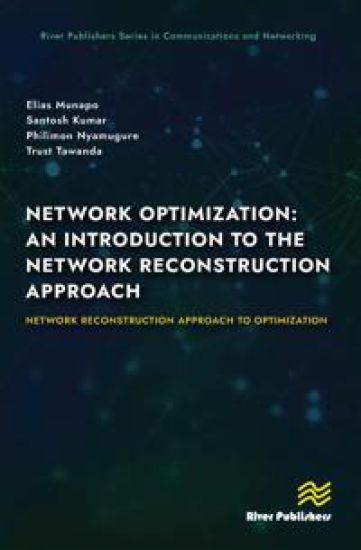
Network Optimization: An Introduction to the Network Reconstruction Approach

Network Optimization: An Introduction to the Network Reconstruction Approach

Elias Munapo; Santosh Kumar; Philimon Nyamugure; Trust Tawanda

River Publishers
2025
sidottu
For every problem, mathematical or otherwise, there is more than one approach and much depends on the ingenuity of the person concerned. Consider that a person is interested in picking some fruit from a tree and is considering multiple picking options. One possibility is, if one can reach the fruit, just snip it to retrieve it. The second possibility is to alternatively apply force and detach the fruit from the tree. If neither option is possible, the fruit can still be detached from the tree, but how? A third possibility lies in the fact that just holding on to the fruit and turning it in one direction it can be picked. Similarly, many possibilities are seen by keen eyes while solving a mathematical problem. The reconstruction approach applied in this book is like the third possibility of holding a fruit and turning it in one direction until the desired solution is obtained.This book is an introduction to reconstruction concepts and their applications for solving some network optimization problems. Networks are a mathematical abstraction of a given physical situation, which are described by using nodes, links (directed or non-directed) and link weights defining some associated properties of that physical system. Reconstruction ideas exploit the mathematical structure of a particular problem and find ways to reach the required solution. It is hoped that these ideas will be explored for other mathematical structures.The authors have developed many methods to find optimal solutions for these network related problems and they observed that various methods discussed in 8 chapters have a common thread of reconstruction, which unites them, and that aspect motivated authors to develop this book.
Thermal Spray Coatings

Thermal Spray Coatings

Swarn Singh; Santosh Kumar; Chander Prakash; Virat Khanna

Springer Nature Switzerland AG
2025
sidottu
This book provides a comprehensive review of the effects of key factors ranging from powder characteristics to process parameters, substrate preparation, and post-treatment methods on the coated substrate surface by different thermal spray techniques. Thermal spray techniques have gained significant attention in various industries due to their ability to deposit protective coatings on substrates. These coatings enhance the surface properties of substrates, such as wear resistance, corrosion resistance, and thermal insulation. However, the quality and performance of the coated substrate surface are influenced by several key factors. The book discusses the influence of parameters such as powder characteristics, process parameters, substrate preparation, and post-treatment methods on the coating microstructure, adhesion, and overall performance. The review aims to contribute to a better understanding of the factors that affect the coated substrate surface and provide insights for future research and optimization of thermal spray processes.
Biomaterials and Additive Manufacturing

Biomaterials and Additive Manufacturing

Rakesh Kumar; Santosh Kumar

Springer Nature Switzerland AG
2025
nidottu
This book addresses the challenges of using metallic biomaterials in implants. It delves into the selection process for these materials, considering factors like mechanical strength, biocompatibility, and resistance to wear and tear. However, the primary focus is on understanding and combating corrosion. Different types of corrosions are explored, highlighting their mechanisms and potential consequences. Existing research on surface modification techniques is reviewed, offering methods to improve the longevity and safety of implants. The book then introduces the exciting world of additive manufacturing (AM), a revolutionary technique for creating implants. It explores various AM technologies and their suitability for creating biomaterials (metallic’s, ceramics and polymers). Subsequently, the diverse applications of AM in biomaterials and biomedical devices are explored. The book explores various post-processing methods used to refine parts created with AM. These methods not only improve the surface finish but can also enhance the overall properties of the implant. By analyzing existing research and exploring innovative techniques, this book aims to equip researchers and professionals with the knowledge to develop better metallic biomaterials. Ultimately, the goal is to create implants that last longer, function flawlessly, and offer a safer and more durable solution for patients.
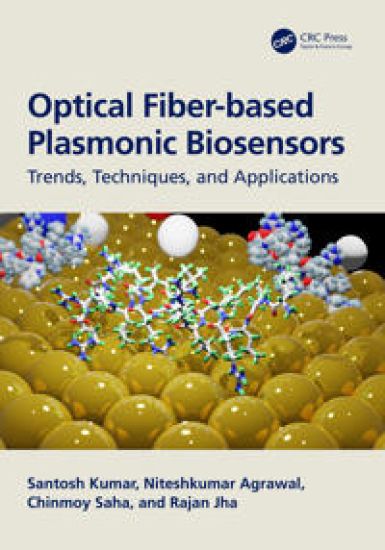
Optical Fiber-based Plasmonic Biosensors

Optical Fiber-based Plasmonic Biosensors

Santosh Kumar; Niteshkumar Agrawal; Chinmoy Saha; Rajan Jha

TAYLOR FRANCIS LTD
2025
nidottu
This book discusses the history, physics, fundamental principles, sensing technologies, and characterization of plasmonic phenomenon-based fiber-optic biosensors, using optic-plasmonic sensors as a case study. It describes the plasmonic phenomenon and its application in optical fiber-based sensing, presented based on properties and usage of different nanomaterials spread across nine chapters. Content covers advances in nanomaterials, structural designing, and their scope in biomedical applications. Future developments of biosensing devices and related articulate methods are also described.Features:Gives a comprehensive view on the nanomaterials used in plasmonic optical fiber biosensorsIncludes synthesis, characterization, and usage for detection of different analytesDiscusses trends in the design of wavelength-based optical fiber sensorsReviews micro- and nanostructured biosensing devicesExplores application of plasmonic sensors in the biosensing fieldThis book is aimed at researchers and graduate students in Optical Communications, Biomedical Engineering, Optics, Sensors, Instrumentation, and Measurement.
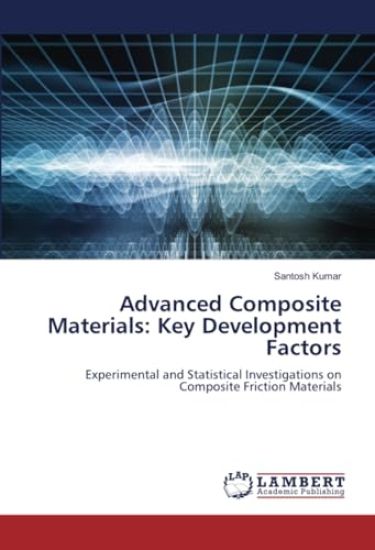
Advanced Composite Materials

Advanced Composite Materials

Santosh Kumar

Lap Lambert Academic Publishing
2024
pokkari
The present study is focused on the development of environmental friendly composite friction materials and compared with available commercial friction materials. Copper (Cu) will be replaced with different reinforcement materials to reduce pollution. The microstructure, surface roughness, elemental distribution, porosity have been observed. The variation of wear and friction have been analysed for the developed friction material with different running conditions. Taguchi orthogonal array method has been utilized for reducing the number of experiments and getting near-optimal test parameters for the best tribological performance. The grey relation analysis method has been used to determine the optimum set of parameters by the multi-objective optimization into a single-objective optimization.
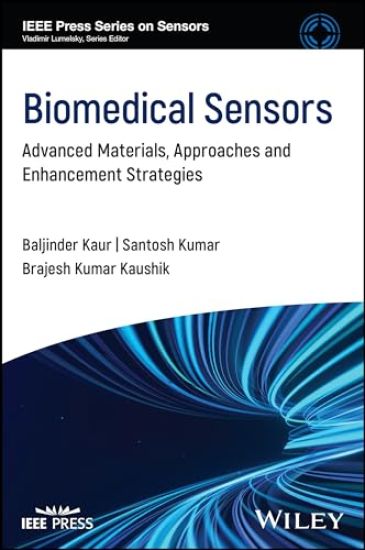
Biosensors

Biosensors

Baljinder Kaur; Santosh Kumar; Brajesh Kumar Kaushik

JOHN WILEY SONS INC
2024
sidottu
Comprehensive resource covering new technologies, materials, strategies, and recent advancements in the field of biosensing Biosensors summarizes cutting-edge technologies in biosensing, including gene editing (known as Clustered Regularly Interspaced Short Palindromic Repeat or CRISPR), quorum sensing utilizing inter and intra cell signals, two-dimensional (2D) materials and aptamer-mediated sensor designs, and more, with additional coverage of the latest materials, strategies, and advancements made in the field. Chapters are categorized on the basis of various bio-recognition elements that include aptamer, nucleic acid, enzymes, antibodies, bacteriophages, peptides, and molecular imprinted polymers. Plasmonic, surface-enhanced Raman scattering, colorimetric, fluorescence, electrochemical, magneto and piezo-electric biosensor sensing techniques are also considered. The roles of various nanomaterials, advancement in synthesis, signal enhancement strategies, and new trends for biomedical applications are also described. Current challenges, limitations, and future prospects to developing biosensors for point-of-care and clinical applications are also discussed. Written by three highly qualified authors, Biosensors includes information on: Diverse bio-receptors include nucleic acids, aptamers, enzymes, antibodies, bacteriophages, molecularly imprinted polymers, whole-cell, and techniques of immobilizationDifferent transduction principles using bio-receptors (e.g., optical, electrochemical, piezo-electrical, and SERS) to detect microorganism, toxins, and diseasesNanomaterials synthesis, their role in biosensing, pros and cons of carbon, polymer, metals, metal oxides, and quantum dots-based nanomaterials in medical biosensing applications Biosensors is a comprehensive and complete resource on the subject for researchers and professionals in physics, chemistry, and biomedical science, research communities working in the fields of plasmonics, optics, biosensors, and nano-photonics, and students in related programs of study.
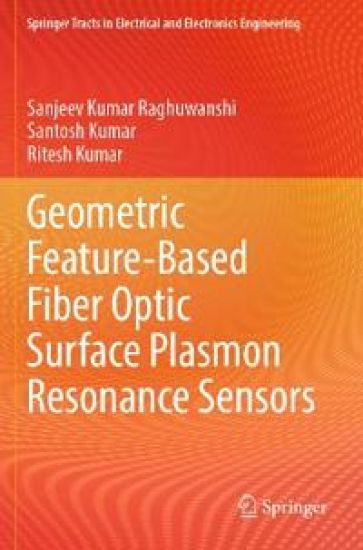
Geometric Feature-Based Fiber Optic Surface Plasmon Resonance Sensors

Geometric Feature-Based Fiber Optic Surface Plasmon Resonance Sensors

Sanjeev Kumar Raghuwanshi; Santosh Kumar; Ritesh Kumar

SPRINGER VERLAG, SINGAPORE
2024
nidottu
This book focuses on the surface plasmon resonance (SPR) technique covering fibre optic sensor research. It highlights recent advancements in geometric feature-based fibre optic SPR sensors for chemical/biochemical/biosensor applications. The contents also discuss the principle of the SPR sensing technique as well as various designs of fibre optic SPR probes for improving sensor sensitivity. It also includes numerous examples of SPR-based fibre optic sensors with various geometric (such as U-type, taper type, D-type, and interferometric-based) sensors. This volume will be a useful reference to those in academia and industry especially researchers with useful information focusing on fibre optic SPR sensors.
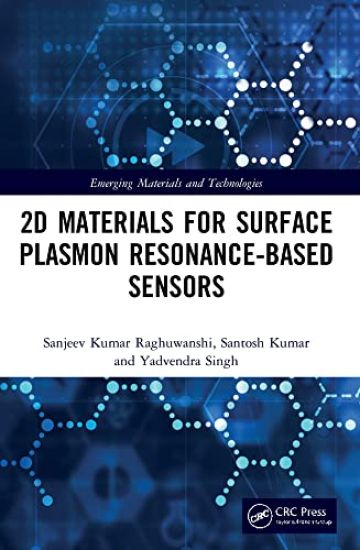
2D Materials for Surface Plasmon Resonance-based Sensors

2D Materials for Surface Plasmon Resonance-based Sensors

Sanjeev Kumar Raghuwanshi; Santosh Kumar; Yadvendra Singh

TAYLOR FRANCIS LTD
2024
nidottu
2D Materials for Surface Plasmon Resonance-based Sensors offers comprehensive coverage of recent design and development (including processing and fabrication) of 2D materials in the context of plasmonic-based devices. It provides a thorough overview of the basic principles and techniques used in the analysis and design of 2D material-based optical sensor systems. Beginning with the basic concepts of plasmon/plasmonic sensors and mathematical modelling, the authors explain the fundamental properties of 2D materials, including Black Phosphorus (BP), Phosphorene, Graphene, Transition metal dichalcogenides (TMDCs), MXene's and SW-CNT. It also details the applications of these emerging materials in clinical diagnosis and their future trends. This text will be useful for practising engineers, undergraduate and postgraduate students. Key Features Presents the fundamental concepts of 2D material assisted fibre optic and prism based SPR sensor in a student-friendly manner. Includes the recent synthesis and characterization techniques of 2D materials. Provides computational results of recently discovered electronic and optical properties of the 2D materials along with their effectiveness in the field of plasmonic sensors. Presents emerging applications of novel 2D material-based plasmonic sensors in the field of chemical, bio-chemical and biosensing.
Nanotechnology Advancement in Agro-Food Industry

Nanotechnology Advancement in Agro-Food Industry

Ragini Singh; Santosh Kumar

SPRINGER VERLAG, SINGAPORE
2024
nidottu
This book provides a comprehensive insight into the growth of nanotechnology in the agri-food industry. Currently, nanotechnology serves as the most promising means to resolve the issues encountered in the food sector, as it enables the production of high-quality food with exceptional characteristics such as extended shelf life, flavor, freshness, and high nutritional content. This book focuses on the applications of nanotechnology in various fields such as smart packaging, processing, and preservation of food. It also emphasizes the role of nanomaterials in strategic design of nutraceuticals and functional foods. Along with providing an overview of the innovations and application, this book also describes future perspectives, and offers insights to ensure consumer confidence in terms of safe use. In this context the application of nanomaterials as nanosensors is additional covered. The book provides readers with a deep knowledge regarding nanomaterials-based biosensors (colorimetric,electrochemical, fiber-based) for detection of pathogens in contaminated food. Factors affecting risk assessment regulations and safety concerns regarding the use of nanomaterials in food industry have also been discussed in detail. Given its scope, this book appeals to a wider readership, especially for researchers and students who work in food agronomy and nanomaterials and nanotechnology related fields.