Kirjojen hintavertailu. Mukana 12 390 323 kirjaa ja 12 kauppaa.

Kirjailija

Sanu Kainikara

Kirjat ja teokset yhdessä paikassa: 15 kirjaa, julkaisuja vuosilta 2007-2026, suosituimpien joukossa From Indus to Independence. Vertaile teosten hintoja ja tarkista saatavuus suomalaisista kirjakaupoista.

15 kirjaa

Kirjojen julkaisuhaarukka 2007-2026.

From Indus to Independence

From Indus to Independence

Sanu Kainikara

VIJ BOOKS
2026
sidottu
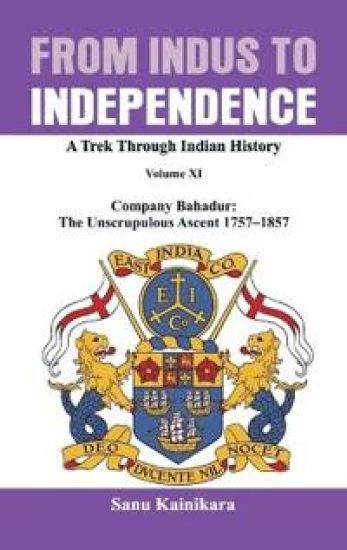
This is the eleventh volume in the series on Indian history with the generic title, From Indus to Independence: A Trek through Indian History and provides a historic narrative and analysis of the actions of the English East India Company during the century of annexation, 1757-1857 when it transitioned to an imperial sovereign entity. Following the Battle of Plassey, the Company unleashed a reign of uninhibited plunder in Bengal, reducing a once-wealthy province to abject poverty through oppressive trade and institutionalized corruption. Key administrative structures, such as Clive's 'Double Government, ' established authority without responsibility, facilitated systemic looting by unscrupulous officials. Territorial expansion was secured through aggressive wars and the coercion of local rulers into debilitating subsidiary alliances. Pretexts for annexation often involved fabricated charges or the violation of solemn agreements, as seen in the despicable conquest of Sindh and the dismantling of the Sikh kingdom. Throughout this 'unscrupulous ascent, ' the British displayed a callous disregard for Indian sovereignty. By 1818, an externally imposed political unity covered the sub-continent, leaving a legacy of economic ruin and simmering national resentment. This book details the actions of the Company between 1757 and 1857, when, while becoming a sovereign power in India, they also transitioned from traders to systematic looters. The analysis provides an insight into how the Company centralized executive power, established an exclusionary bureaucracy, and enforced rule through coercive police and military forces. Pervasive socio-political turmoil, economic exploitation and religious grievances fuelled localized rebellions, foreshadowing the Great Uprising of 1857.
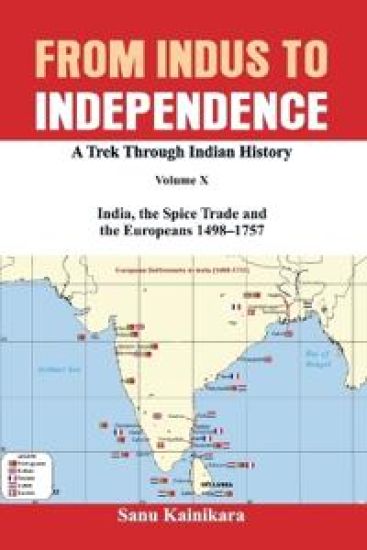
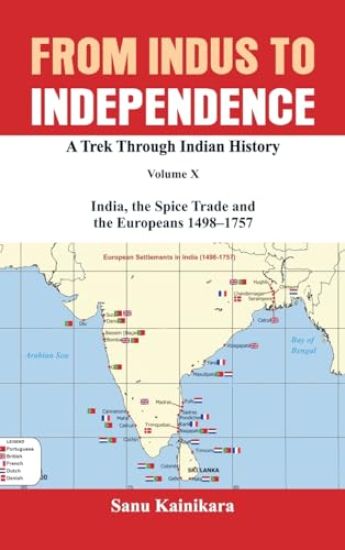
From Indus to Independence A Trek Through Indian History Volume X India, the Spice Trade and the Europeans 1498–1757
This is the tenth volume in the series on Indian history with the generic title, From Indus to Independence: A Trek through Indian History and provides a historic narrative of the consecutive arrival of four European powers on the west coast of the Indian Peninsula and their activities in the sub-continent for the next 250 years. The Europeans came to India to profit from the spice trade but soon realised that the local political circumstances gave them an opportunity to step outside the normal orbit of trading merchants. Although some amount of power struggle took place, it was the English who came to dominate the trade within a century of their arriving on the Indian shores. They achieved this through an astute combination of the use of force, opportunistic deals, blatant betrayal of trust, and the shrewd exploitation of inherent flaws in the domestic political structure. This volume elaborates on the English annexation of the prosperous province of Bengal through a series of unscrupulous manoeuvres. The book explains the infamous Black Hole of Calcutta' and establishes that the episode was blown out of proportion by biased, later-day English chroniclers to suit the narrative of the English East India Company justifying their 'annexation' of many kingdoms in the sub-continent. Their role in fracturing the existing, admittedly fragile, socio-political status quo is studied, and the duplicitous nature of their dealings underlined. The book provides the reader with an in-depth understanding of the initial changes that took place in the Indian sub-continent with the forceful entry of European powers into the sub-continent.
From Indus to Independence A Trek Through Indian History Volume X India, the Spice Trade and the Europeans 1498–1757
This is the tenth volume in the series on Indian history with the generic title, From Indus to Independence: A Trek through Indian History and provides a historic narrative of the consecutive arrival of four European powers on the west coast of the Indian Peninsula and their activities in the sub-continent for the next 250 years. The Europeans came to India to profit from the spice trade but soon realised that the local political circumstances gave them an opportunity to step outside the normal orbit of trading merchants. Although some amount of power struggle took place, it was the English who came to dominate the trade within a century of their arriving on the Indian shores. They achieved this through an astute combination of the use of force, opportunistic deals, blatant betrayal of trust, and the shrewd exploitation of inherent flaws in the domestic political structure. This volume elaborates on the English annexation of the prosperous province of Bengal through a series of unscrupulous manoeuvres. The book explains the infamous Black Hole of Calcutta' and establishes that the episode was blown out of proportion by biased, later-day English chroniclers to suit the narrative of the English East India Company justifying their 'annexation' of many kingdoms in the sub-continent. Their role in fracturing the existing, admittedly fragile, socio-political status quo is studied, and the duplicitous nature of their dealings underlined. The book provides the reader with an in-depth understanding of the initial changes that took place in the Indian sub-continent with the forceful entry of European powers into the sub-continent.
From Indus to Independence

From Indus to Independence

Sanu Kainikara

Vij Books India
2022
sidottu
This is the ninth volume of the series on Indian history with the generic title, From Indus to Independence: A Trek through Indian History and provides a historic narrative of the rise, decline and eventual fall of the great Maratha Empire through the 17th and 18th centuries. The book analyses the origins of the Marathas, their rise to power and the period of what could be called 'The Maratha Dominance'. The arrival of Islam into the Deccan Plateau and South India coincides with the recognised rise of the Marathas as fearless and stubborn warriors. The early Maratha chiefs contributed to the military prowess of the Shahi kingdoms of the Deccan and their opposition to the Mughal invasion, conspicuous for their valour and loyalty. This volume describes in detail the early years and coming of age of Chhatrapati Shivaji Maharaj, the founder the what later came to be called the Maratha Empire. His daring exploits and the vision that he had of establishing a Hindu kingdom for the emancipation of the Hindu population are explained in full. The rule of the Peshwas and continuing rise of the Maratha Empire to it halcyon days between 1720 and 1755 are chronicled in detail. The Battle of Panipat, fought and lost in 1761, is analysed before the volume looks at the onset of decline and the fundamental causes that created strategically unsound circumstances from which the Empire could not recover. The role of the English East India Company in finally breaking up the Empire is studied, and their duplicitous nature underlined. The book provides the reader with an in-depth understanding of the changed circumstances in Indian history with the arrival of European powers into the sub-continent.
From Indus to Independence

From Indus to Independence

Sanu Kainikara

Vij Books India
2022
pokkari
This is the ninth volume of the series on Indian history with the generic title, From Indus to Independence: A Trek through Indian History and provides a historic narrative of the rise, decline and eventual fall of the great Maratha Empire through the 17th and 18th centuries. The book analyses the origins of the Marathas, their rise to power and the period of what could be called 'The Maratha Dominance'. The arrival of Islam into the Deccan Plateau and South India coincides with the recognised rise of the Marathas as fearless and stubborn warriors. The early Maratha chiefs contributed to the military prowess of the Shahi kingdoms of the Deccan and their opposition to the Mughal invasion, conspicuous for their valour and loyalty. This volume describes in detail the early years and coming of age of Chhatrapati Shivaji Maharaj, the founder the what later came to be called the Maratha Empire. His daring exploits and the vision that he had of establishing a Hindu kingdom for the emancipation of the Hindu population are explained in full. The rule of the Peshwas and continuing rise of the Maratha Empire to it halcyon days between 1720 and 1755 are chronicled in detail. The Battle of Panipat, fought and lost in 1761, is analysed before the volume looks at the onset of decline and the fundamental causes that created strategically unsound circumstances from which the Empire could not recover. The role of the English East India Company in finally breaking up the Empire is studied, and their duplicitous nature underlined. The book provides the reader with an in-depth understanding of the changed circumstances in Indian history with the arrival of European powers into the sub-continent.
From Indus to Independence - A Trek Through Indian History

From Indus to Independence - A Trek Through Indian History

Sanu Kainikara

VIJ Books (India) Pty Ltd
2021
sidottu
This is the eighth volume of the series on Indian history, From Indus to Independence: A Trek through Indian History and provides a narrative of the reign of the Imperial Mughals. The period analysed in this volume, 1526-1707, covers the rule of the first six Mughal emperors who have been traditionally referred to as the 'Great' or 'Imperial Mughals'. The Mughals invaded the sub-continent mainly because the first Mughal, Babur, a direct descendant of both Timur and Genghis Khan, was unable to craft a kingdom for himself in Central Asia after he had lost his patrimony in Fergana at a young age to his uncles. The first three emperors discussed in this book took the empire to its zenith of power, while the last two could be considered to have sown the seeds that led to its eventual weakening, degeneration and downfall. This book provides a detailed historical narrative of the events that transpired during the 181-years of Imperial Mughal rule. At the time of the death of Aurangzeb, the sixth Mughal, the empire encompassed almost the entire sub-continent, at least superficially. This chronicle also carries out an analysis of the successes and failures of the emperors, the role that religion played in establishing the Mughal Empire, as well as in its decline and decay. The book provides the reader with an in-depth understanding of the irrevocable and fundamental forces of history that combine to create, nourish and inevitably dismember empires.
The Cassandra Effect

The Cassandra Effect

Sanu Kainikara

VIJ Books (India) Pty Ltd
2016
pokkari
Air power has been an element of military power for just over a century. However, its ability to project power as part of a nation's quest for security and protection has now been acknowledged as second to no other element of national power. Air power's efficacy has been demonstrated time and again in the past few decades. Technology is the fundamental factor around which the development, application and sustainment of air power is built. This fundamental fact will hold true for the future. This book is a look at the possible future developments that could take place in air power. It provides considered perceptions of how air power will be driven forward by technology and examines the possibilities and pitfalls that will come with its inexorable movement forward. The only surety is that air power will continue to be a critical element of national power well into the foreseeable future.
Only from Indus to Independence- A Trek Through Indian History
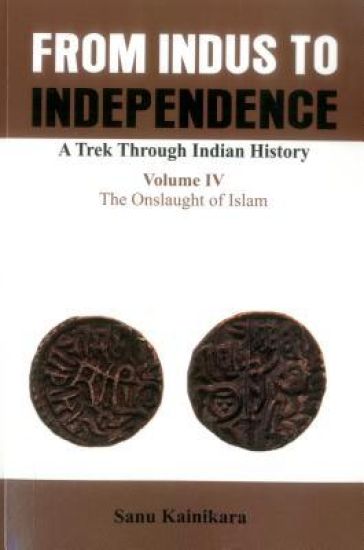
This is the fourth volume in the Indian history series From Indus to Independence: A Trek through Indian History. Its title 'The Onslaught of Islam' is apt, since the book covers the initial period in which the newly founded religion of Islam started to move eastwards. Islam, almost immediately after its inception, had subdued large parts of the western regions of the Middle-East and stemmed the eastward movement of the Byzantine Empire.In ancient and medieval times all invaders of the Indian sub-continent came through the Khyber Pass in the Hindu Kush mountain ranges. The book examines the different invading armies starting with the Persian army of Darius the Great, the invasions of the Kushans and the White Huns, the repeated assaults by Mahmud of Ghazni 'The Hammer of the Idolaters', and the arrival of Muhammad of Ghur into the Indian sub-continent. While describing the military successes and failures of the Islamic armies the book also analyses the philosophical intermingling of cultural and religious ideas. This volume brings the narrative of Indian history to the establishment of the Delhi Sultanate.
From Indus to Independence- A Trek Through Indian History

From Indus to Independence- A Trek Through Indian History

Sanu Kainikara

VIJ Books (India) Pty Ltd
2016
pokkari
This is the fourth volume in the Indian history series From Indus to Independence: A Trek through Indian History. Its title 'The Onslaught of Islam' is apt, since the book covers the initial period in which the newly founded religion of Islam started to move eastwards. Islam, almost immediately after its inception, had subdued large parts of the western regions of the Middle-East and stemmed the eastward movement of the Byzantine Empire. In ancient and medieval times all invaders of the Indian sub-continent came through the Khyber Pass in the Hindu Kush mountain ranges. The book examines the different invading armies starting with the Persian army of Darius the Great, the invasions of the Kushans and the White Huns, the repeated assaults by Mahmud of Ghazni 'The Hammer of the Idolaters', and the arrival of Muhammad of Ghur into the Indian sub-continent. While describing the military successes and failures of the Islamic armies the book also analyses the philosophical intermingling of cultural and religious ideas. This volume brings the narrative of Indian history to the establishment of the Delhi Sultanate.
From Indus to Independence - A Trek Through Indian History

From Indus to Independence - A Trek Through Indian History

Sanu Kainikara

VIJ Books (India) Pty Ltd
2016
pokkari
This is the first volume in a series of books that covers Indian history from the earliest times to August 1947, when India achieved independence from foreign rule. This volume covers the prehistoric antecedents before the Indus Valley Civilisation and gives a vivid account of the developments that took place in the Indian sub-continent till the demise of the glorious Maurya dynasty. In doing so, the book describes the evolution of languages and religion, examines cultural and other factors that have influenced the evolution of Indian civilisation and also vibrantly portrays the historical events that took place during this period of over 5000 years. The author also provides his own succinct comments on the events that took place in antiquity as have been reported in, and corroborated by, various sources. This book is a worthy addition to the analysis of Indian history.
From Indus to Independence - A Trek Through Indian History

From Indus to Independence - A Trek Through Indian History

Sanu Kainikara

VIJ Books (India) Pty Ltd
2016
pokkari
This is the second volume of the Indian history series, From Indus to Independence. This volume covers the period considered the Classical Age to around 600 A.D. It was during this period that the Imperial Gupta dynasty created what can only be described as a Golden Age. The volume also investigates the developments in the fields of art, architecture, literature and philosophy while also examining the immense influence that the Indian kingdoms exercised over South-East Asia. It also examines the lesser known dynasties that ruled smaller kingdoms for brief periods of time, but exerted a great deal of influence on the flow of history. There is also direct reference to the events that were taking place in Peninsular India, a part of Indian history that is often neglected in the broader analysis. This volume stands out for its careful and consistent recounting of the lesser known parts of Indian history in a holistic manner.
The Cassandra Effect

The Cassandra Effect

Sanu Kainikara

VIJ Books (India) Pty Ltd
2016
sidottu
Air power has been an element of military power for just over a century. However, its ability to project power as part of a nation's quest for security and protection has now been acknowledged as second to no other element of national power. Air power's efficacy has been demonstrated time and again in the past few decades. Technology is the fundamental factor around which the development, application and sustainment of air power is built. This fundamental fact will hold true for the future. This book is a look at the possible future developments that could take place in air power. It provides considered perceptions of how air power will be driven forward by technology and examines the possibilities and pitfalls that will come with its inexorable movement forward. The only surety is that air power will continue to be a critical element of national power well into the foreseeable future.
From Indus to Independence - A Trek Through Indian History

From Indus to Independence - A Trek Through Indian History

Sanu Kainikara

VIJ Books (India) Pty Ltd
2016
sidottu
This is the second volume of the Indian history series, From Indus to Independence. This volume covers the period considered the Classical Age to around 600 A.D. It was during this period that the Imperial Gupta dynasty created what can only be described as a Golden Age. The volume also investigates the developments in the fields of art, architecture, literature and philosophy while also examining the immense influence that the Indian kingdoms exercised over South-East Asia. It also examines the lesser known dynasties that ruled smaller kingdoms for brief periods of time, but exerted a great deal of influence on the flow of history. There is also direct reference to the events that were taking place in Peninsular India, a part of Indian history that is often neglected in the broader analysis. This volume stands out for its careful and consistent recounting of the lesser known parts of Indian history in a holistic manner.