Kirjojen hintavertailu. Mukana 12 595 353 kirjaa ja 12 kauppaa.

Kirjailija

Sanya Mathura

Kirjat ja teokset yhdessä paikassa: 6 kirjaa, julkaisuja vuosilta 2020-2024, suosituimpien joukossa Lubrication Degradation Mechanisms. Vertaile teosten hintoja ja tarkista saatavuus suomalaisista kirjakaupoista.

6 kirjaa

Kirjojen julkaisuhaarukka 2020-2024.

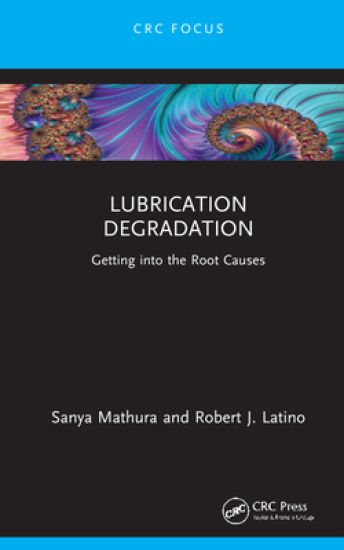
Lubrication Degradation

Lubrication Degradation

Sanya Mathura; Robert J. Latino

TAYLOR FRANCIS LTD
2024
nidottu
This book combines the topics of Root Cause Analysis (RCA) and Lubrication Degradation Mechanisms (LDM) with the goal of allowing the reader to develop the disciplined thought process for getting to the root causes of each of the degradation mechanisms. This new way of thinking can be applied to other areas within their facility to mitigate or eliminate any future recurrence. Lubrication Degradation: Getting into the Root Causes strives to break down the complex topic of Lubrication Degradation into its six most common failure mechanisms. It presents the mechanisms as manageable components and then teaches the reader how to identify the typical root causes associated with each failure mechanism. The main aim of this book is to get the audience to look past the physical root causes and really unearth the underlying human and/or systemic roots to prevent recurrence of these types of failures. The book offers a field-proven and practical root cause analysis approach.An ideal practical book for industry professionals involved with Plant Operations, Engineering, Management, Maintenance, Reliability, Quality, and also useful for Technicians.
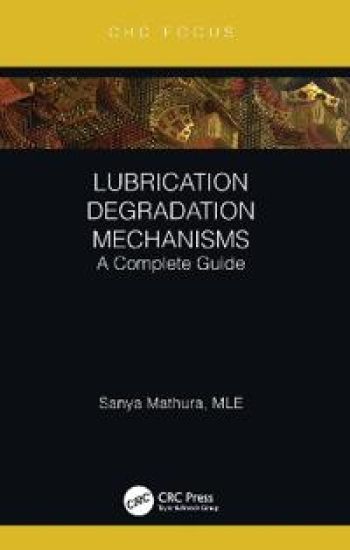
Lubrication Degradation Mechanisms

Lubrication Degradation Mechanisms

Sanya Mathura

TAYLOR FRANCIS LTD
2024
nidottu
In industry, owners, engineers and workers have struggled with lubricant degradation and its effects on their equipment. The purpose of Lubrication Degradation Mechanisms: A Complete Guide is to help personnel to understand the reasons behind the degradation of their lubricant, determine methods to identify the onset of degradation and reduce or eliminate lubricant degradation within their equipment. One of the most common forms of lubricant degradation is oxidation. However, this is not the only method by which a lubricant degrades. By understanding the differences between degradation patterns, personnel can employ specific tasks / tests to aid in their identification of the type of degradation and the factors responsible. The aim of this book is to educate facility personnel on the methods of degradation and ways in which it can be reduced or eliminated while keeping an eye on the cost of operation.
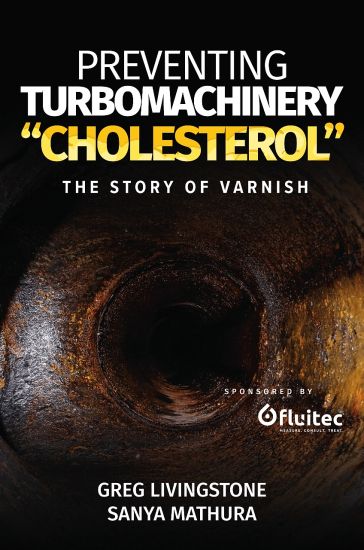
Preventing Turbomachinery Cholesterol

Preventing Turbomachinery Cholesterol

Greg Livingstone; Sanya Mathura

Industrial Press
2023
nidottu
Preventing Turbomachinery "Cholesterol" was written to address the misconceptions related to varnish, help readers understand its composition and evolution, dispel some of the myths surrounding varnish and deposits, detect its presence, discover the impact of varnish as it relates to flow restriction, and shed some light on the effect on efficiency, heat transfer, and lubricant properties. It provides tangible and actionable steps to alleviate varnish obstacles, particularly on bearing operations. There is also one chapter solely devoted to achieving sustainable lubrication, as this is the future of the industry. Unique Features Discusses the processes of oxidation, thermolysis, contamination, microdieseling, electrostatic discharge, hot spots, additive drop out, hydrolysis, and other varnish mechanisms. Focuses on proactive methods that can be used to minimize oil breakdown, including managing temperature, the benefits of water removal, and ways to manage antioxidant depletion. Covers technologies that can help prevent deposits, such as the implementation of depth media filtration, centrifugal separation, electrostatic precipitation and agglomeration, solubility enhancers and chemical flushes. Includes two sample tests for the ICML's VPR and VIM certifications, along with answers and explanations.
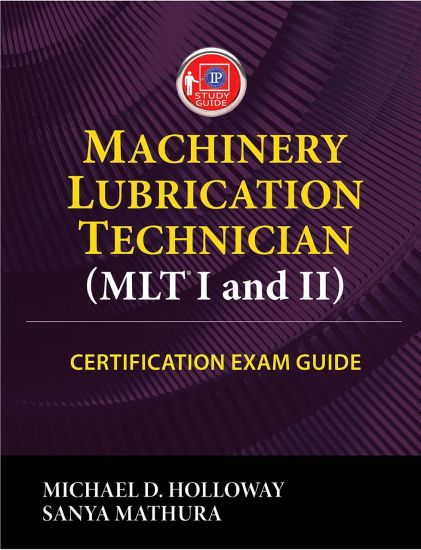
Machinery Lubrication Technician (MLT) I and II Certification Exam Guide

Machinery Lubrication Technician (MLT) I and II Certification Exam Guide

Michael D. Holloway; Sanya Mathura

INDUSTRIAL PRESS INC.,U.S.
2022
pokkari
This guide serves as a workbook to be used in conjunction with an approved course offered by a training partner recognized by the International Council for Machinery Lubrication (ICML) for a Machinery Lubrication Technician (MLT I or II) certification exam preparation course. The essence of this work is a guided, cooperative, and sometimes even argumentative dialogue between the authors, with continuous asking and answering of questions. This stimulates critical thinking, which in turn draws out underlying presumptions, and results in readers thinking like the person who actually built the exam. The authors are strong proponents of a unique 5-step process for learning:1. Familiarize2. Find Socrates3. Be the Exam4. Practice Exam5. ExploreThis unconventional method has proven to be exceptionally effective, not for only passing the exam, but to truly retaining the knowledge and becoming an expert in the content you’re studying. Certification requirements are discussed throughout the work, making this the ideal resource for prospective MLT I and/or MLT II certification candidates.Unique Structured learningNotes Outline: For the reader to complete. Aids in organizing ideas and thoughts.Guided Cooperative Argument: A dialogue between authors concerning the topics. Helps answer questions that are asked on the job.Statements of Truth and Exam Development: From the recommended Body of Knowledge, with space to develop your multiple-choice questions. Develops critical thinking process and understanding of how the exam questions are structured.Body of Knowledge Outline: Works as a reference to help answer any questions that may arise.Practice Exam: A mock exam designed to familiarize the reader with taking a multiple-choice test that is similar in structure and content to the real one.Glossary & Appendices: List of common terms, charts, and tables with which all certification candidates need to be familiar.
Lubrication Degradation

Lubrication Degradation

Sanya Mathura; Robert J. Latino

TAYLOR FRANCIS LTD
2021
sidottu
This book combines the topics of Root Cause Analysis (RCA) and Lubrication Degradation Mechanisms (LDM) with the goal of allowing the reader to develop the disciplined thought process for getting to the root causes of each of the degradation mechanisms. This new way of thinking can be applied to other areas within their facility to mitigate or eliminate any future recurrence. Lubrication Degradation: Getting into the Root Causes strives to break down the complex topic of Lubrication Degradation into its six most common failure mechanisms. It presents the mechanisms as manageable components and then teaches the reader how to identify the typical root causes associated with each failure mechanism. The main aim of this book is to get the audience to look past the physical root causes and really unearth the underlying human and/or systemic roots to prevent recurrence of these types of failures. The book offers a field-proven and practical root cause analysis approach.An ideal practical book for industry professionals involved with Plant Operations, Engineering, Management, Maintenance, Reliability, Quality, and also useful for Technicians.
Lubrication Degradation Mechanisms

Lubrication Degradation Mechanisms

Sanya Mathura

CRC Press
2020
sidottu
In industry, owners, engineers and workers have struggled with lubricant degradation and its effects on their equipment. The purpose of Lubrication Degradation Mechanisms: A Complete Guide is to help personnel to understand the reasons behind the degradation of their lubricant, determine methods to identify the onset of degradation and reduce or eliminate lubricant degradation within their equipment. One of the most common forms of lubricant degradation is oxidation. However, this is not the only method by which a lubricant degrades. By understanding the differences between degradation patterns, personnel can employ specific tasks / tests to aid in their identification of the type of degradation and the factors responsible. The aim of this book is to educate facility personnel on the methods of degradation and ways in which it can be reduced or eliminated while keeping an eye on the cost of operation.