Kirjailija
Sara Bubb
Kirjat ja teokset yhdessä paikassa: 20 kirjaa, julkaisuja vuosilta 2000-2018, suosituimpien joukossa Helping Staff Develop in Schools. Vertaile teosten hintoja ja tarkista saatavuus suomalaisista kirjakaupoista.
20 kirjaa
Kirjojen julkaisuhaarukka 2000-2018.
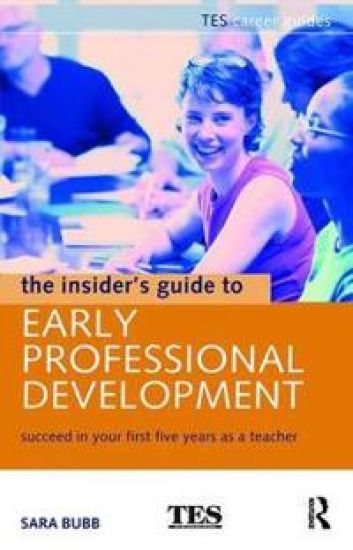
After training, it is common for teachers to feel adrift in the first few years - a fact reflected in the numbers who leave within the first few years. This book aims to address the factors that lead to this and is a source of advice for teachers on the first steps of the career ladder.
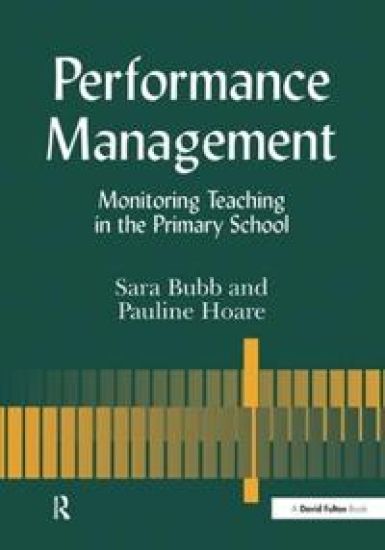
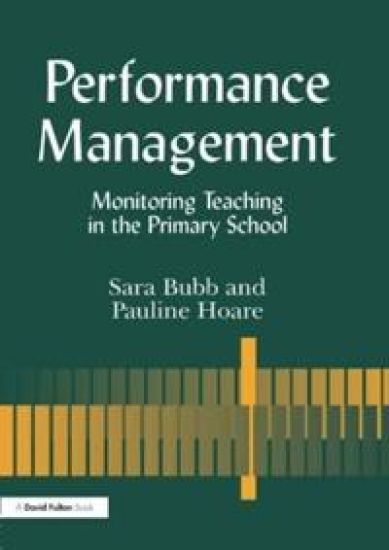
This research-based book offers practical guidance on how to go about performance management. Based on experience of working with schools and running courses, and using the latest research on business strategies appropriate for education, it: o looks at what performance management means in practice o offers advice on how to go about monitoring o explains how to use data from pupil assessments o suggests ways to judge the effectiveness of teaching through analysing children's work o gives guidance on monitoring planning, assessment and observing lessons o proposes how to 1853467693reas for development, set objectives and draw up action plans o contains useful photocopiable formats o uses case study material to illustrate potential problems and good practice Throughout, the purpose is to help schools and teachers to be more effective.
Improving Induction
Maxine Bailey; Sara Bubb; Ruth Heilbronn; Cath Jones; Michael Totterdell
Routledge
2017
sidottu
Induction - the first year of a teacher's career - is a crucial, and potentially difficult, period. This book is the work of a well-known and highly respected team of experts on the subject and is based on a comprehensive nationwide research project into the implementation and effectiveness of the latest statutory regulations covering induction in England. It includes not only findings from this research, but also numerous ideas from, and examples of, best practice.Including case studies from primary and secondary schools, in the state and private sectors, this book raises awareness of the complexities entailed in inducting new teachers, addresses the issues, dilemmas and problems of induction and celebrates the achievements of the national induction policy. Its insights provide an invaluable guide to the effective implementation of induction in schools.
The first year in teaching will be rewarding and stimulating, but it will also be hard and stressful for most NQTs. A good induction program benefits not only NQTs but also those who support and assess them. Good teachers make good schools - but good schools also make good teachers. In this book, NQT development expert Dr Sara Bubb, explains clearly, accessibly and concisely how to have a successful induction year. It's written both for new teachers themselves and those who support, monitor and assess them: headteachers, induction tutors, coordinators and mentors. It covers key areas including: induction regulationswhat NQTs are entitled tomeeting the teachers' standardsbuilding relationshipsmanaging work loademotional resilienceprofessional development This is the essential guide on how to successfully complete the NQT year!
Great staff make great schools, and by choosing your staff carefully and helping them to develop, you will make a significant impact on the lives of the young people in your care. The school workforce isn't only teachers these days, and good staff development must take into account everybody working in the setting. As a practical guide to developing your staff, this book offers an inspirational and exciting view of the transformative power of highly motivated personnel. It summarizes the most recent research that sets staff development in context, and then provides examples of good practice and successful ideas from a range of schools, colleges and local authorities. The authors address practical considerations, as well as management and leadership implications, to help devise strategies for developing the school workforce in order to become more learning-centred and student focused. Topics covered include: - why staff development matters - leading staff development - being strategic - finding time for staff development - identifying needs and planning for impact - evaluating the impact of staff development With an emphasis on practical and research-based perspectives, this book offers tried and tested strategies for successful and rewarding staff development that, most importantly, can contribute to improving student outcomes. This book is particularly relevant to those responsible for leading and managing staff development in schools, colleges and at local authority level. It is also useful for anyone working towards higher degrees in Education Leadership and Management, Mentoring-Coaching and the new qualifications for leaders of Continuing Professional Development (CPD) and the Masters in Teaching and Learning (MTL). Sara Bubb is involved in many aspects of staff development, leads the national Advanced Skills Teachers (AST) network, and lectures and researches at the Institute of Education, University of London. Peter Earley is Professor of Educational Leadership & Management at the London Centre for Leadership in Learning, Institute of Education, University of London.
This accessible, engaging guide contains all the advice you need to get you through your teacher training and the first year of the job. Written by Sara Bubb, new teacher ‘agony aunt’ for the Times Educational Supplement, it’s peppered with illuminating anecdotes and authoritative advice that will prove vital to all new teachers, including sections on: choosing and getting on a training course what you have to do to get Qualified Teacher Status, including the skills tests succeeding on the course – study skills, planning lessons, managing behaviour and being observed making the most of inductionlooking after yourself and managing your time. Updated with all the latest information and advice, the second edition will be an indispensable guide to success in training and induction, and will take new teachers stage-by-stage from training to tackling their first job. It will look in-depth at the job hunting process, applications and interviews, ways to make the most of induction, and methods for managing time.
Leading & Managing Continuing Professional Development
Sara Bubb; Peter Earley
SAGE Publications Inc
2007
sidottu
Praise for the first edition: 'Peter Earley and Sara Bubb bring together, in a very accessible way, theoretical and practical aspects of CPD and suggest how leadership and management can be applied in this vital area of staff development. This book will help co-ordinators and school leaders to develop their most important resource - the people who work with the children' - Richard Stainton, Education Journal 'The most obvious target user for the book is the (not rare) person suddenly hoist with the staff development responsibility petard: but, thoughtfully used, most staffrooms will include several people who could benefit from thinking about its contents and putting some of the ideas into practice' - British Journal Educational Technology 'This book is a welcome and practical guide to the wealth of publications on Continuing Professional Development… [M]akes an excellent contribution to the current and widening debate on the nature of Continuing Professional Development. For School Leadership Teams it is an essential resource and reference for the managing of professional development and learning. It also serves as an excellent practical guide, and CPD coordinators reading this book will find themselves questioning and as a result developing their own practice. The book is written in accessible language using believable case studies to illustrate the wealth of research that has been carried out. The deeply embedded notion among some teachers that professional development consists of the one day course is challenged, and the reader is left in no doubt as to the range of opportunities that exist and need for them to be harnessed in order to ensure school improvement. The book is will surely act as a catalyst for the review and development of CPD in schools' - Stephen Merrill, Edge Hill College of Higher Education, British Journal In-Service Education 'A practical guide to all aspects of professional development which ought to be in the possession of every professional development coordinator in every primary and secondary school in the land - and their colleagues in leadership teams' - Tim Brighouse, TES Friday Magazine This new edition of a best-selling book provides an up to date overview of Continuing Professional Development (CPD), combined with a guide to best practice. Changes include: - expanded sections on the professional development of support staff and the wider school workforce (particularly important in the light of workforce remodelling) and the evaluation of CPD - more on making sure that professional development has an impact, and provides good value for money - the common core of skills and knowledge for the children's workforce, the new standards for qualified teacher status, induction, threshold, excellent teachers and advanced skills teachers as well as those for higher level teaching assistants. Drawing on the latest research, the contents include: - a clear explanation of CPD and latest developments; - practical tips on how to lead and manage CPD for a range of staff in schools - identifying training needs, designing and implementing programmes and evaluating their impact; - detailed guidance on CPD for staff at different stages of their careers. Written in a clear readable style it covers the latest standards and offers examples of current good practice. It is an essential professional reference for all those responsible for leading and managing professional learning in schools (headteachers, deputies, CPD and staff development coordinators) and Local Authorities (LAs). It will also prove invaluable to training providers and universities.
Leading & Managing Continuing Professional Development
Sara Bubb; Peter Earley
SAGE Publications Inc
2007
nidottu
Praise for the first edition: 'Peter Earley and Sara Bubb bring together, in a very accessible way, theoretical and practical aspects of CPD and suggest how leadership and management can be applied in this vital area of staff development. This book will help co-ordinators and school leaders to develop their most important resource - the people who work with the children' - Richard Stainton, Education Journal 'The most obvious target user for the book is the (not rare) person suddenly hoist with the staff development responsibility petard: but, thoughtfully used, most staffrooms will include several people who could benefit from thinking about its contents and putting some of the ideas into practice' - British Journal Educational Technology 'This book is a welcome and practical guide to the wealth of publications on Continuing Professional Development… [M]akes an excellent contribution to the current and widening debate on the nature of Continuing Professional Development. For School Leadership Teams it is an essential resource and reference for the managing of professional development and learning. It also serves as an excellent practical guide, and CPD coordinators reading this book will find themselves questioning and as a result developing their own practice. The book is written in accessible language using believable case studies to illustrate the wealth of research that has been carried out. The deeply embedded notion among some teachers that professional development consists of the one day course is challenged, and the reader is left in no doubt as to the range of opportunities that exist and need for them to be harnessed in order to ensure school improvement. The book is will surely act as a catalyst for the review and development of CPD in schools' - Stephen Merrill, Edge Hill College of Higher Education, British Journal In-Service Education 'A practical guide to all aspects of professional development which ought to be in the possession of every professional development coordinator in every primary and secondary school in the land - and their colleagues in leadership teams' - Tim Brighouse, TES Friday Magazine This new edition of a best-selling book provides an up to date overview of Continuing Professional Development (CPD), combined with a guide to best practice. Changes include: - expanded sections on the professional development of support staff and the wider school workforce (particularly important in the light of workforce remodelling) and the evaluation of CPD - more on making sure that professional development has an impact, and provides good value for money - the common core of skills and knowledge for the children's workforce, the new standards for qualified teacher status, induction, threshold, excellent teachers and advanced skills teachers as well as those for higher level teaching assistants. Drawing on the latest research, the contents include: - a clear explanation of CPD and latest developments; - practical tips on how to lead and manage CPD for a range of staff in schools - identifying training needs, designing and implementing programmes and evaluating their impact; - detailed guidance on CPD for staff at different stages of their careers. Written in a clear readable style it covers the latest standards and offers examples of current good practice. It is an essential professional reference for all those responsible for leading and managing professional learning in schools (headteachers, deputies, CPD and staff development coordinators) and Local Authorities (LAs). It will also prove invaluable to training providers and universities.
'Helping Teachers Develop is a positive, uplifting, encouraging publication... very good value for money. It is the sort of publication we need in the profession and it is well worth being part of every head teacher or staff development tutor's collection of really useful books. I have to confess, even before I had finished reading it for review I was using Helping Teachers Develop with my trainee teachers' - Peter Stammers, in the Journal of In-service Education `The book explores ways teachers at all levels can mentor others and improve their careers. [It] also contains guidance on ways to cope with having your lessons observed and how to make constructive comments as an observer' - Michael Shaw, Times Educational Supplement `This is another excellent and accessible practice guide from someone who, unusually, understands both the classroom teacher from long years of practice and the theory. The chapter on "observation of teachers" should be read by every headteacher, deputy and teacher who engages in monitoring classroom practice. Note, a few inspectors would benefit too! It's one to read and then refer to on a regular basis if you work in schools or PGCE departments' - Tim Brighouse, Chief Adviser for London Schools Helping teachers develop - whether they're trainees, newly or recently qualified, in their first three, ten or twenty years, and whether they're superb or struggling - is vital for the profession, for the millions of children who'll learn more as a result. Schools have to take greater responsibility for staff's continuing professional development (CPD) but there is little real help for the people who develop teachers. The best teachers will be expected to mentor trainee and newly qualified teachers (NQTs) and share good practice with all colleagues. Drawing directly on real-life experience and the latest research, this book will help people in a mentoring, coaching, advisory or management role to: o develop teachers, through understanding adult learning and the CPD cycle o meet needs from the range of professional development activities o carry out observations and give oral and written feedback in a range of situations o help and monitor planning and other parts of the job o help teachers develop their careers. Using examples from current practice, Sara will take you though every stage of CPD, from what professional development is to how you can support and monitor staff in your own school. There are photocopiable materials for you to use. The guidance in this book will be essential for mentors, induction tutors, CPD/staff development coordinators, people with advanced skills or excellent teacher status, and all those with a leadership and management role in schools or local authorities. Sara Bubb is the UK's leading induction expert and has vast expertise in the CPD field. She runs many courses for different levels of school staff, assesses trainee and advanced skills teachers and is the new teacher expert for the Times Educational Supplement. Sara has been seconded from the Institute of Education to the DfES as the consultant for the Chartered London Teacher initiative. She is the co-author, with Peter Earley, of Leading and Managing Continuing Professional Development and Managing Teacher Workload.
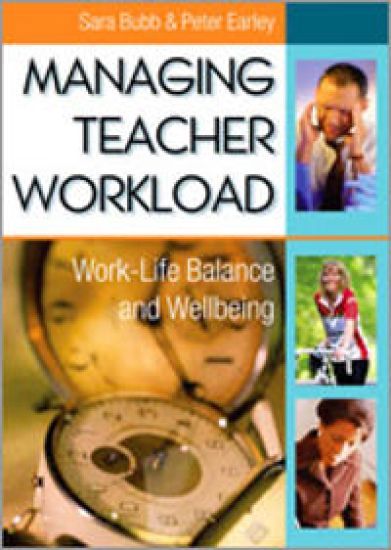
`Aimed primarily at school managers and teachers (but generally relevant to others in the education and training sectors), Managing Teacher Workload is very well written, and very comprehensive. It provides a good mix of hard fact (even to relevant UK recommendations and legislation); references to books and other writings and to websites; activities; and examples and anecdotes. All that makes the book quite easy to work with and to read' - British Journal of Educational Technology 'Helping Teachers Develop is a positive, uplifting, encouraging publication … It is the sort of publication we need in the profession and it is well worth being part of every head teacher or staff development tutor's collection of really useful books. I have to confess, even before I had finished reading it for review I was using Helping Teachers Develop with my trainee teachers' - Peter Stammers, in the Journal of In-service Education `For anyone interested in or with some responsibility for workload and wellbeing, this book is essential reading. It is concise , clearly written and well written and well laid out to support busy people gaining the information they need' - National School Improvement Network News `This book serves as a valuable resource for new and seasoned teachers to assist in self-reflective practices to help cope with stressors. Teachers willing to engage in these self-reflective exercises will find Managing Teacher Workload: Work-Life Balance and Wellbeing a valuable resource in discovering teaching as a fulfilling and satisfying profession' - Cristy A Jefson, Ph.D., CHES, University of Wisconsin-Whitewater, USA, Journal of In-Service Education '...their strategies are useful, thoroughly researched and written in readable, unfussy language. In short, they have produced something that could go some way towards rousing teachers from the bad dream' - The Times Educational Supplement `This book deserves to be the standard introduction to teachers' abilities to achieve a work-life balance. It reflects the challenges and the changes facing teachers, dealing effectively with both the big picture and the fine details that matter most' - Dr Mary Bousted, General Secretary, Association of Teachers and Lecturers (ATL) Do you feel overworked and wish there were more hours in the day? Do you know how long you spend working and if that time is effectively spent? By showing you what you can do to assess, manage and reduce the time you spend on school work this book will help you achieve a better work-life balance. There's a self-audit toolkit at the heart of the book that allows you to examine how long you are working, what you are spending most time on, whether the quality of your teaching is improving and whether you are working effectively. The book includes: · a clear explanation of workload issues · a copy of the Teacher's Worktime Self-Audit Toolkit so you can see how you're doing · examples of how different teachers and schools have made changes to improve things · practical tips on how to reduce time spent on planning, marking, display and in meetings · advice on time management · guidance on how to make the best use of support staff · ideas for managing organizational change successfully. The book will be an invaluable help to all those who are concerned about the size of their workload and want to do something to reduce it and provides a way forward for negotiating changes with your line manager. Sara Bubb is a lecturer, consultant and Times Educational Supplement columnist. Peter Earley is an expert in educational leadership. Both work at the Institute of Education, University of London.
First Published in 2004. Based on over two years experience of running courses and researching provision for NQTs, the book looks at what NQTs are entitled to and how to make the most of it.
After training, it is common for teachers to feel adrift in the first few years - a fact reflected in the numbers who leave within the first few years. This book aims to address the factors that lead to this and is a source of advice for teachers on the first steps of the career ladder.
Improving Induction
Maxine Bailey; Sara Bubb; Ruth Heilbronn; Cath Jones; Michael Totterdell
Routledge
2002
nidottu
Induction - the first year of a teacher's career - is a crucial, and potentially difficult, period. This book is the work of a well-known and highly respected team of experts on the subject and is based on a comprehensive nationwide research project into the implementation and effectiveness of the latest statutory regulations covering induction in England. It includes not only findings from this research, but also numerous ideas from, and examples of, best practice.Including case studies from primary and secondary schools, in the state and private sectors, this book raises awareness of the complexities entailed in inducting new teachers, addresses the issues, dilemmas and problems of induction and celebrates the achievements of the national induction policy. Its insights provide an invaluable guide to the effective implementation of induction in schools.
This research-based book offers practical guidance on how to go about performance management. Based on experience of working with schools and running courses, and using the latest research on business strategies appropriate for education, it: o looks at what performance management means in practice o offers advice on how to go about monitoring o explains how to use data from pupil assessments o suggests ways to judge the effectiveness of teaching through analysing children's work o gives guidance on monitoring planning, assessment and observing lessons o proposes how to 1853467693reas for development, set objectives and draw up action plans o contains useful photocopiable formats o uses case study material to illustrate potential problems and good practice Throughout, the purpose is to help schools and teachers to be more effective.
The Effective Induction of Newly Qualified Primary Teachers
Sara Bubb; Peter Mortimore
David Fulton Publishers Ltd
2000
nidottu
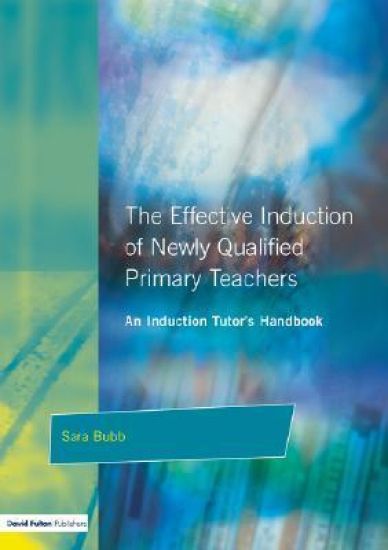
First Published in 2000. As this book illustrates, the processes of induction are particularly tricky in today's schools where colleagues with responsibility for supporting new entrants to the profession are also charged with judging their capabilities and monitoring their progress. The author has drawn on her experience as a teacher, a teacher-trainer and an inspector to analyse exactly what needs to be done in order to maximise the value of the induction process for new teachers and to guide the work of experienced tutors so that their role is both rigorous and gratifying. She has tested her understanding of induction by running courses for tutors and by interrogating the latest research findings on the subject. The result is a comprehensive handbook packed with information, a set of useful forms and a series of related activities with which induction tutors can test their own understanding of the most pertinent issues.