Kirjojen hintavertailu. Mukana 12 595 353 kirjaa ja 12 kauppaa.

Kirjailija

Sara E. Davies

Kirjat ja teokset yhdessä paikassa: 7 kirjaa, julkaisuja vuosilta 2015-2024, suosituimpien joukossa Hidden Wars. Vertaile teosten hintoja ja tarkista saatavuus suomalaisista kirjakaupoista.

7 kirjaa

Kirjojen julkaisuhaarukka 2015-2024.

Hidden Wars

Hidden Wars

Sara E. Davies; Jacqui True

OXFORD UNIVERSITY PRESS INC
2024
nidottu
Sexual and gender-based violence (SGBV) has always been a part of warfare. In Asia, testimonies of egregious rape and sexual violence extend back to the Rape of Nanjing, to the experience of the Korean comfort women in World War II, and to forced marriages and sexual slavery during the Cambodian genocide. The past two decades have yielded crucial new insights about SGBV, but scholars and researchers still struggle to explain why and when this violence occurs. A major problem is that incidences of SGBV are vastly underreported; reliable data is especially scarce in Asia, where demographic and health surveys are infrequent and national reporting systems are underdeveloped relative to other parts of the globe. Asia also has some of the most protracted conflicts in the world but the complexity of subnational conflicts in Asia often masks the gendered dimensions of violence. In Hidden Wars, Sara E. Davies and Jacqui True examine the relationship between reports of SGBV and structural gender inequality in three conflict-affected societies in Asia--Burma, the Philippines, and Sri Lanka. Based on extensive field research and an original dataset on conflict-related SGBV, Davies and True show how reporting is significantly constrained by a variety of factors, including normalized gendered violence as well as political dynamics affecting local civil society, humanitarian, and international organizations. They address the real-world limitations of data collection and argue that these constraints reinforce a culture of silence and impunity that perpetuates SGBV and permits governments to abrogate their responsibility for this violence. Hidden Wars breaks new methodological ground in showing that what we know about SGBV can be understood fully only if the politicized context of reporting SGBV and data collection is taken into consideration.
Hidden Wars

Hidden Wars

Sara E. Davies; Jacqui True

OXFORD UNIVERSITY PRESS INC
2024
sidottu
Sexual and gender-based violence (SGBV) has always been a part of warfare. In Asia, testimonies of egregious rape and sexual violence extend back to the Rape of Nanjing, to the experience of the Korean comfort women in World War II, and to forced marriages and sexual slavery during the Cambodian genocide. The past two decades have yielded crucial new insights about SGBV, but scholars and researchers still struggle to explain why and when this violence occurs. A major problem is that incidences of SGBV are vastly underreported; reliable data is especially scarce in Asia, where demographic and health surveys are infrequent and national reporting systems are underdeveloped relative to other parts of the globe. Asia also has some of the most protracted conflicts in the world but the complexity of subnational conflicts in Asia often masks the gendered dimensions of violence. In Hidden Wars, Sara E. Davies and Jacqui True examine the relationship between reports of SGBV and structural gender inequality in three conflict-affected societies in Asia--Burma, the Philippines, and Sri Lanka. Based on extensive field research and an original dataset on conflict-related SGBV, Davies and True show how reporting is significantly constrained by a variety of factors, including normalized gendered violence as well as political dynamics affecting local civil society, humanitarian, and international organizations. They address the real-world limitations of data collection and argue that these constraints reinforce a culture of silence and impunity that perpetuates SGBV and permits governments to abrogate their responsibility for this violence. Hidden Wars breaks new methodological ground in showing that what we know about SGBV can be understood fully only if the politicized context of reporting SGBV and data collection is taken into consideration.
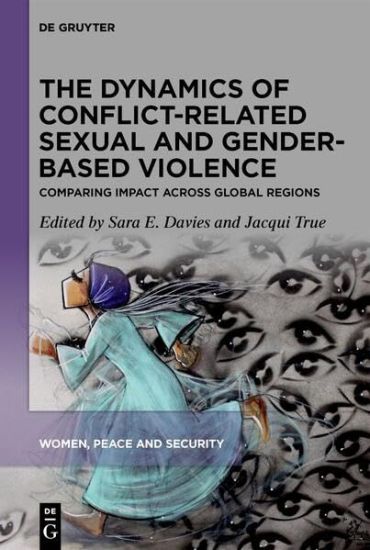
The Dynamics of Conflict-Related Sexual and Gender-Based Violence

The Dynamics of Conflict-Related Sexual and Gender-Based Violence

Sara E. Davies; Jacqui True; Yolanda Riveros Morales; Phyu Phyu Oo; Joana Osei-Tutu; Rachel Banfield

De Gruyter
2024
sidottu
Due to the international importance attached to the reporting of conflict-related sexual and gender-based violence (SGBV) over the last two decades, scholars have been able to examine the magnitude of the problem across different situations and types of conflict. But what changes to intensity and type of violence occur during different phrases of conflict intensity? Is reporting consistent across different conflicts and different regional experiences of conflict-related SGBV? This book examines different conflict situations in Africa, Latin America, the Middle East, and Asia over the past decade, 2010–2020. The chapters in the book use a mixed-method approach to explore the patterns of violence in situations of one-sided violence, state-led violence, non-state-led violence, low intensity violence, terrorism and fragility. They investigate the trajectory of international and prevention efforts, and the development of country-level responses to reports of sexual and gender-based violence in these various conflict situations. The book explains how and why these responses were mobilised in response to reports and considers the conditions for effective reporting in real time considering the patterns and the structural root causes of the violence.
Containing Contagion

Containing Contagion

Sara E. Davies

Johns Hopkins University Press
2019
pokkari
Do states have a duty to prevent infectious disease outbreaks from spreading beyond their borders?The fields of global health and international relations are increasingly concerned with the responsibilities of nations to respond to disease outbreaks in a way that safeguards their neighbors as well as the broader international community. In Containing Contagion, Sara E. Davies focuses on one of the world's most pivotal (and riskiest) regions in the field of global health—Southeast Asia, which in recent years has responded to a wave of emerging and endemic infectious disease outbreaks ranging from Nipah, SARS, and avian flu to dengue and Japanese encephalitis.Between 2005 and 2010, Davies explains, Southeast Asian states, despite having vastly different health system capacities and political systems, repeatedly committed to pursue a collective approach to the communication of outbreaks. Davies draws on newly gathered data and extensive field interviews to explore how these states implemented the revised International Health Regulations (IHR) through the deliberate alignment of political interests and regional cooperation. Examining why these Southeast Asian states adopted a collective approach, Davies also describes the complications that ensued and traces the consequences of this approach.The first book to explore what problems exist in the relationship between international relations and health, Containing Contagion frames contrasting views of global health agency within the current crises that are facing global health. Providing an immediate, contemporary example of a region networking its response to disease outbreak events, this insightful book will appeal to global health governance scholars, students, and practitioners.
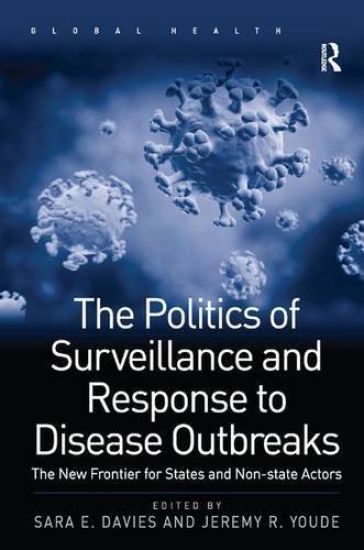
The Politics of Surveillance and Response to Disease Outbreaks

The Politics of Surveillance and Response to Disease Outbreaks

Sara E. Davies; Jeremy R. Youde

CRC Press Inc
2017
nidottu
The capacity to conduct international disease outbreak surveillance and share information about outbreaks quickly has empowered both State and Non-State Actors to take an active role in stopping the spread of disease by generating new technical means to identify potential pandemics through the creation of shared reporting platforms. Despite all the rhetoric about the importance of infectious disease surveillance, the concept itself has received relatively little critical attention from academics, practitioners, and policymakers. This book asks leading contributors in the field to engage with five key issues attached to international disease outbreak surveillance - transparency, local engagement, practical needs, integration, and appeal - to illuminate the political effect of these technologies on those who use surveillance, those who respond to surveillance, and those being monitored.
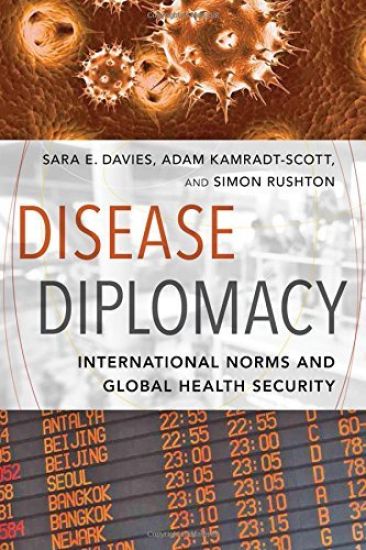
Disease Diplomacy

Disease Diplomacy

Sara E. Davies; Adam Kamradt-Scott; Simon Rushton

Johns Hopkins University Press
2015
pokkari
In the age of air travel and globalized trade, pathogens that once took months or even years to spread beyond their regions of origin can now circumnavigate the globe in a matter of hours. Amid growing concerns about such epidemics as Ebola, SARS, MERS, and H1N1, disease diplomacy has emerged as a key foreign and security policy concern as countries work to collectively strengthen the global systems of disease surveillance and control. The revision of the International Health Regulations (IHR), eventually adopted by the World Health Organization's member states in 2005, was the foremost manifestation of this novel diplomacy The new regulations heralded a profound shift in international norms surrounding global health security, significantly expanding what is expected of states in the face of public health emergencies and requiring them to improve their capacity to detect and contain outbreaks. Drawing on Martha Finnemore and Kathryn Sikkink's "norm life cycle" framework and based on extensive documentary analysis and key informant interviews, Disease Diplomacy traces the emergence of these new norms of global health security, the extent to which they have been internalized by states, and the political and technical constraints governments confront in attempting to comply with their new international obligations. The authors also examine in detail the background, drafting, adoption, and implementation of the IHR while arguing that the very existence of these regulations reveals an important new understanding: that infectious disease outbreaks and their management are critical to national and international security. The book will be of great interest to academic researchers, postgraduate students, and advanced undergraduates in the fields of global public health, international relations, and public policy, as well as health professionals, diplomats, and practitioners with a professional interest in global health security.
The Politics of Surveillance and Response to Disease Outbreaks

The Politics of Surveillance and Response to Disease Outbreaks

Sara E. Davies; Jeremy R. Youde

Ashgate Publishing Limited
2015
sidottu
The capacity to conduct international disease outbreak surveillance and share information about outbreaks quickly has empowered both State and Non-State Actors to take an active role in stopping the spread of disease by generating new technical means to identify potential pandemics through the creation of shared reporting platforms. Despite all the rhetoric about the importance of infectious disease surveillance, the concept itself has received relatively little critical attention from academics, practitioners, and policymakers. This book asks leading contributors in the field to engage with five key issues attached to international disease outbreak surveillance - transparency, local engagement, practical needs, integration, and appeal - to illuminate the political effect of these technologies on those who use surveillance, those who respond to surveillance, and those being monitored.