Kirjojen hintavertailu. Mukana 12 390 323 kirjaa ja 12 kauppaa.

Kirjailija

Sara J. Czaja

Kirjat ja teokset yhdessä paikassa: 8 kirjaa, julkaisuja vuosilta 2012-2025, suosituimpien joukossa Designing for Older Adults. Vertaile teosten hintoja ja tarkista saatavuus suomalaisista kirjakaupoista.

8 kirjaa

Kirjojen julkaisuhaarukka 2012-2025.

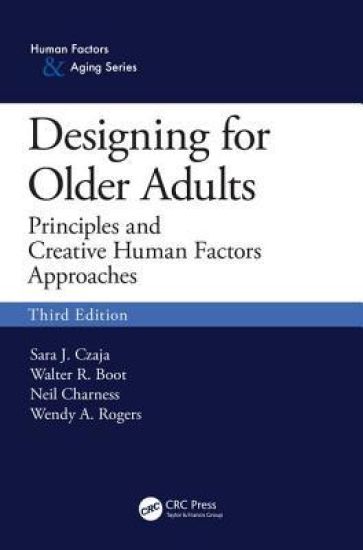
Designing for Older Adults

Designing for Older Adults

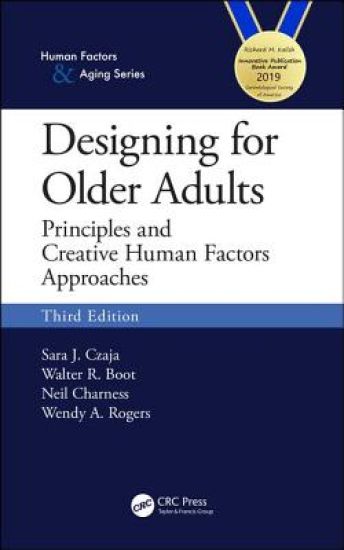
Sara J. Czaja; Walter R. Boot; Neil Charness; Wendy A. Rogers

CRC Press
2019
sidottu
Winner of the 2019 Richard M. Kalish Innovative Publication Book Award 2019 – Gerontological Society of AmericaThis new edition provides easily accessible and usable guidelines for practitioners in the design community for older adults. It includes an updated overview of the demographic characteristics of older adult populations and the scientific knowledge base of the aging process relevant to design. New chapters include Existing and Emerging Technologies, Work and Volunteering, Social Engagement, and Leisure Activities. Also included is basic information on user-centered design and specific recommendations for conducting research with older adults. Features Focuses on design for diverse groups of older adults Introduces the latest scientific advances, but is easily accessible to practitioners and students Offers an emphasis on existing and emerging technologies within everyday contexts and activities Includes many examples of everyday activities and contexts, as well as new chapters Presents a new conceptual model linking design principles across a broad range of topics
Handbook of Intervention Science

Handbook of Intervention Science

Laura N.Gitlin; Sara J. Czaja

ELSEVIER SCIENCE PUBLISHING CO INC
2025
nidottu
Handbook of Intervention Science: From Design to Implementation discusses multiple approaches for developing and advancing interventions at the individual, family, community, health system, and policy level. The book focuses on creating interventions suitable for diverse populations from racial, ethnical, geographical, and socioeconomical perspectives. Combining best practices with a practical approach, the book enables readers to advance their intervention research. It covers intervention design, data capture in trials, and evaluation. Decision trees help illustrate when to move forward with an implementation relative to the need for further work.
Extended Reality Solutions to Support Older Adults

Extended Reality Solutions to Support Older Adults

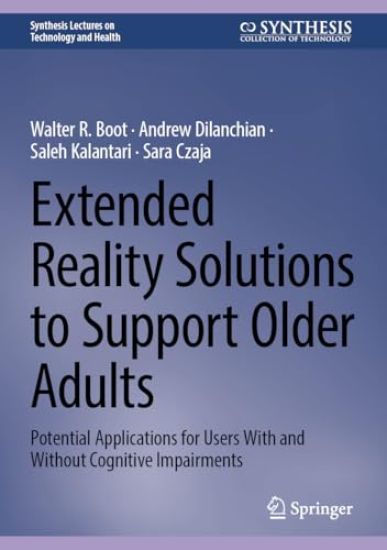
Walter R. Boot; Andrew Dilanchian; Saleh Kalantari; Sara J. Czaja

Springer International Publishing AG
2024
sidottu
This book explores one way in which recent hardware and software advances have placed humanity on the precipice of a significant shift in how technology can shape our interactions with the world around us: the application of transformative extended reality (XR) technology solutions to support the health, wellness, quality of life, and independence of older adults living with and without cognitive impairments. The book provides an overview of the state-of-the art research on XR-based solutions utilizing virtual reality (VR) and augmented reality (AR), challenges that can addressed with these technologies, evidence to date on the efficacy of these solutions, and the nature of these solutions and challenges to their implementation. It explores practical ways XR can be integrated into health and lifestyle maintenance activities for older populations in a diversity of situations through thematic chapters using realistic personas and scenarios. These thematic chapters are organized around the AGE-WELL Challenge Area topics, including staying connected, healthy lifestyles and wellness, mobility, and cognitive health, as well as an additional emphasis on leisure. Other chapters provide guidance on important issues to consider when designing XR-based solutions for older adults, how to evaluate and test XR solutions, the implementation of the user-centered design process, and the book concludes by highlighting unanswered questions and future research directions. This book approaches XR for older adults with and without cognitive impairments from the authors’ diverse research backgrounds in psychology, engineering, gerontology, and design. It will be of interest to academic and industry professionals as well as care providers considering the potential for XR interventions now and in the future.
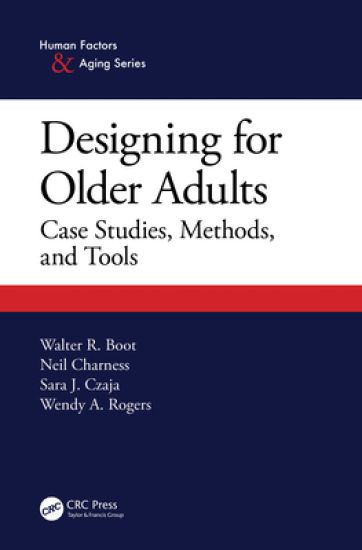
Designing for Older Adults

Designing for Older Adults

Walter Boot; Neil Charness; Sara J. Czaja; Wendy A. Rogers

CRC Press
2020
nidottu
Designing for Older Adults: Case Studies, Methods, and ToolsThere are many products, tools, and technologies available that could provide support for older adults. However, their success requires that they are designed with older adults in mind by being aware of, and adhering to, design principles that recognize the needs, abilities, and preferences of diverse groups of older adults. Achieving good design is a process facilitated by seeing principles and guidelines in action. Design success requires understanding how to use the methods and tools available to evaluate initial ideas and prototypes. The goal of this book is to provide illustrative "case studies" of designing for older adults based on real design challenges faced by the researchers of the Center for Research and Education on Aging and Technology Enhancement (CREATE) over the past two decades. These case studies exemplify the use of human factors tools and user-centered design principles to understand the needs of older adults, identify where existing designs failed older users, and examine the effectiveness of design changes to better accommodate the abilities and preferences of the large and growing aging population.Features Reviews important design considerations for older adults and presents a framework for design Provides a series of real-world case studies to ground design principles and guidelines Offers a unique set and broad array of design challenges, from the design of healthcare devices, to computer systems and apps, to transportation systems and robots Gives an overview of emerging technologies, their potential benefits to older adults, anticipated design considerations, and new and emerging approaches to evaluating design Covers these topics with designers in mind, providing the most up-to-date recommendations based on the scientific literature but in an accessible, easy-to-understand, non-technical manner
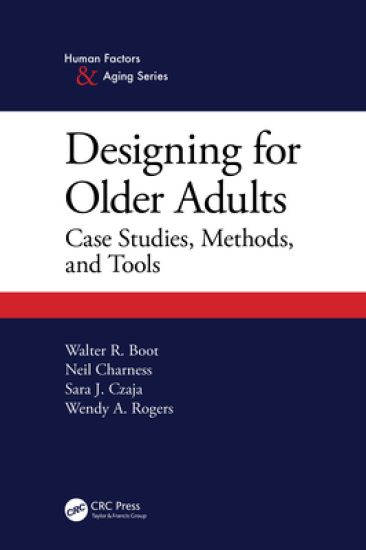
Designing for Older Adults

Designing for Older Adults

Walter Boot; Neil Charness; Sara J. Czaja; Wendy A. Rogers

CRC Press
2020
sidottu
Designing for Older Adults: Case Studies, Methods, and ToolsThere are many products, tools, and technologies available that could provide support for older adults. However, their success requires that they are designed with older adults in mind by being aware of, and adhering to, design principles that recognize the needs, abilities, and preferences of diverse groups of older adults. Achieving good design is a process facilitated by seeing principles and guidelines in action. Design success requires understanding how to use the methods and tools available to evaluate initial ideas and prototypes. The goal of this book is to provide illustrative "case studies" of designing for older adults based on real design challenges faced by the researchers of the Center for Research and Education on Aging and Technology Enhancement (CREATE) over the past two decades. These case studies exemplify the use of human factors tools and user-centered design principles to understand the needs of older adults, identify where existing designs failed older users, and examine the effectiveness of design changes to better accommodate the abilities and preferences of the large and growing aging population.Features Reviews important design considerations for older adults and presents a framework for design Provides a series of real-world case studies to ground design principles and guidelines Offers a unique set and broad array of design challenges, from the design of healthcare devices, to computer systems and apps, to transportation systems and robots Gives an overview of emerging technologies, their potential benefits to older adults, anticipated design considerations, and new and emerging approaches to evaluating design Covers these topics with designers in mind, providing the most up-to-date recommendations based on the scientific literature but in an accessible, easy-to-understand, non-technical manner
Designing for Older Adults

Designing for Older Adults

Sara J. Czaja; Walter R. Boot; Neil Charness; Wendy A. Rogers

CRC Press
2019
nidottu
Winner of the 2019 Richard M. Kalish Innovative Publication Book Award 2019 – Gerontological Society of AmericaThis new edition provides easily accessible and usable guidelines for practitioners in the design community for older adults. It includes an updated overview of the demographic characteristics of older adult populations and the scientific knowledge base of the aging process relevant to design. New chapters include Existing and Emerging Technologies, Work and Volunteering, Social Engagement, and Leisure Activities. Also included is basic information on user-centered design and specific recommendations for conducting research with older adults. Features Focuses on design for diverse groups of older adults Introduces the latest scientific advances, but is easily accessible to practitioners and students Offers an emphasis on existing and emerging technologies within everyday contexts and activities Includes many examples of everyday activities and contexts, as well as new chapters Presents a new conceptual model linking design principles across a broad range of topics
Designing Training and Instructional Programs for Older Adults
Current and emerging trends in the domains of health management and the work sector, the abundance of new consumer products pervading the marketplace, and the desires of many older adults to undertake new learning experiences means that older adults, like their younger counterparts, will need to continually engage in new learning and training. Thus, understanding the challenges that older people face when confronted with new learning and training programs and developing potential strategies to overcome them is imperative. A comprehensive state-of-the-science review, Designing Training and Instructional Programs for Older Adults explores a broad range of issues, from the implications of theories of learning for designing instruction for older adults to adapting current perspectives on methods of instructional design to accommodate the capabilities and limitations of older learners. The authors provide an understanding of today‘s older adults their demographics, their needs, the challenges facing them, and a realistic appraisal of their abilities and limitations as a basis for how current knowledge about training and instructional design should be shaped and applied to best accommodate this population of learners. They discuss topics such as retention and transfer of training, sequencing the order of instruction, e-learning, multimedia training formats, and the assessment and evaluation of training programs from the perspective of issues relevant to older learners. They also highlight the challenges presented by this very heterogeneous group that varies tremendously in backgrounds, skills, knowledge, and abilities. Focusing on how learning occurs, the authors balanced coverage makes the book readable and enlightening across a wide spectrum of professionals and academics, including human factors/ergonomics specialists, gerontologists, managers, educators, undergraduate and graduate students, and the design community. The bo
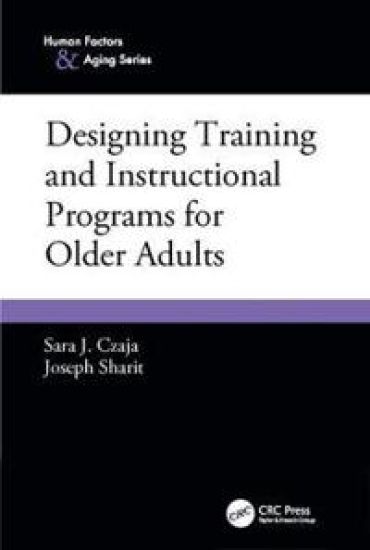
Designing Training and Instructional Programs for Older Adults

Designing Training and Instructional Programs for Older Adults

Sara J. Czaja; Joseph Sharit

CRC Press Inc
2012
nidottu
Current and emerging trends in the domains of health management and the work sector, the abundance of new consumer products pervading the marketplace, and the desires of many older adults to undertake new learning experiences means that older adults, like their younger counterparts, will need to continually engage in new learning and training. Thus, understanding the challenges that older people face when confronted with new learning and training programs and developing potential strategies to overcome them is imperative. A comprehensive state-of-the-science review, Designing Training and Instructional Programs for Older Adults explores a broad range of issues, from the implications of theories of learning for designing instruction for older adults to adapting current perspectives on methods of instructional design to accommodate the capabilities and limitations of older learners. The authors provide an understanding of today’s older adults—their demographics, their needs, the challenges facing them, and a realistic appraisal of their abilities and limitations—as a basis for how current knowledge about training and instructional design should be shaped and applied to best accommodate this population of learners. They discuss topics such as retention and transfer of training, sequencing the order of instruction, e-learning, multimedia training formats, and the assessment and evaluation of training programs from the perspective of issues relevant to older learners. They also highlight the challenges presented by this very heterogeneous group that varies tremendously in backgrounds, skills, knowledge, and abilities.Focusing on how learning occurs, the authors’ balanced coverage makes the book readable and enlightening across a wide spectrum of professionals and academics, including human factors/ergonomics specialists, gerontologists, managers, educators, undergraduate and graduate students, and the design community. The book supplies concise recommendations that will have direct impact on the design of instructional programs and for those individuals who are responsible for the training and performance of older people.