Kirjojen hintavertailu. Mukana 12 152 606 kirjaa ja 12 kauppaa.

Kirjailija

Sara Munson Deats

Kirjat ja teokset yhdessä paikassa: 6 kirjaa, julkaisuja vuosilta 2008-2021, suosituimpien joukossa The Faust Legend. Vertaile teosten hintoja ja tarkista saatavuus suomalaisista kirjakaupoista.

6 kirjaa

Kirjojen julkaisuhaarukka 2008-2021.

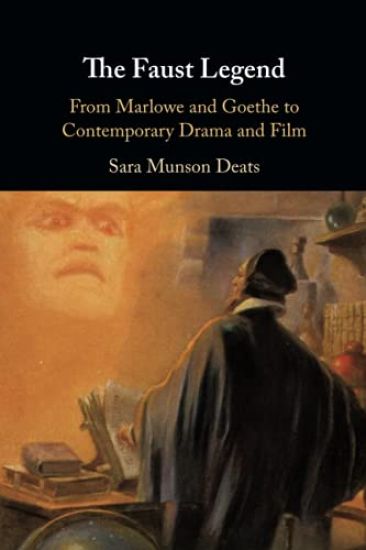
The Faust Legend

The Faust Legend

Sara Munson Deats

Cambridge University Press
2021
pokkari
What do men and women desire? For what will they barter their immortal souls? These two questions have haunted Western society, and these persistent queries find their fullest embodiment in the Faust legend. This memorable story, told and retold in novels, prose fiction, and drama, has also profoundly influenced music, art, and cinema. Sara Munson Deats explores its impact, tracing the development of the Faust topos from the seminal works of Marlowe and Goethe to the large number of dramatic and cinematic adaptations which have fascinated audiences and readers throughout the centuries. Her study traces the durability of this legend and its pervasive influence on the literature of the Western world, in which it has adapted across time, languages, and nations to reflect the concerns of a given era or place. This is the first comparative analysis of the Faust legend in drama and film.
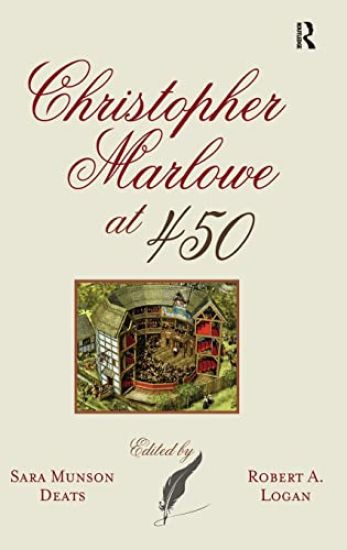
Christopher Marlowe at 450

Christopher Marlowe at 450

Sara Munson Deats; Robert A. Logan

Routledge
2019
nidottu
There has never been a retrospective on Christopher Marlowe as comprehensive, complete and up-to-date in appraising the Marlovian landscape. Each chapter has been written by an eminent, international Marlovian scholar to determine what has been covered, what has not, and what scholarship and criticism will or might focus on next. The volume considers all of Marlowe’s dramas and his poetry, including his translations, as well as the following special topics: Critical Approaches to Marlowe; Marlowe’s Works in Performance; Marlowe and Theatre History; Electronic Resources for Marlovian Research; and Marlowe’s Biography. Included in the discussions are the native, continental, and classical influences on Marlowe and the ways in which Marlowe has interacted with other contemporary writers, including his influence on those who came after him. The volume has appeal not only to students and scholars of Marlowe but to anyone interested in Renaissance drama and poetry. Moreover, the significance for readers lies in the contributors’ approaches as well as in their content. Interest in the biography of Christopher Marlowe and in his works has bourgeoned since the turn of the century. It therefore seems especially appropriate at this time to present a comprehensive assessment of past and present traditional and innovative lines of inquiry and to look forward to future developments.
The Faust Legend

The Faust Legend

Sara Munson Deats

Cambridge University Press
2019
sidottu
What do men and women desire? For what will they barter their immortal souls? These two questions have haunted Western society, and these persistent queries find their fullest embodiment in the Faust legend. This memorable story, told and retold in novels, prose fiction, and drama, has also profoundly influenced music, art, and cinema. Sara Munson Deats explores its impact, tracing the development of the Faust topos from the seminal works of Marlowe and Goethe to the large number of dramatic and cinematic adaptations which have fascinated audiences and readers throughout the centuries. Her study traces the durability of this legend and its pervasive influence on the literature of the Western world, in which it has adapted across time, languages, and nations to reflect the concerns of a given era or place. This is the first comparative analysis of the Faust legend in drama and film.
Christopher Marlowe at 450

Christopher Marlowe at 450

Sara Munson Deats; Robert A. Logan

Routledge
2015
sidottu
There has never been a retrospective on Christopher Marlowe as comprehensive, complete and up-to-date in appraising the Marlovian landscape. Each chapter has been written by an eminent, international Marlovian scholar to determine what has been covered, what has not, and what scholarship and criticism will or might focus on next. The volume considers all of Marlowe’s dramas and his poetry, including his translations, as well as the following special topics: Critical Approaches to Marlowe; Marlowe’s Works in Performance; Marlowe and Theatre History; Electronic Resources for Marlovian Research; and Marlowe’s Biography. Included in the discussions are the native, continental, and classical influences on Marlowe and the ways in which Marlowe has interacted with other contemporary writers, including his influence on those who came after him. The volume has appeal not only to students and scholars of Marlowe but to anyone interested in Renaissance drama and poetry. Moreover, the significance for readers lies in the contributors’ approaches as well as in their content. Interest in the biography of Christopher Marlowe and in his works has bourgeoned since the turn of the century. It therefore seems especially appropriate at this time to present a comprehensive assessment of past and present traditional and innovative lines of inquiry and to look forward to future developments.
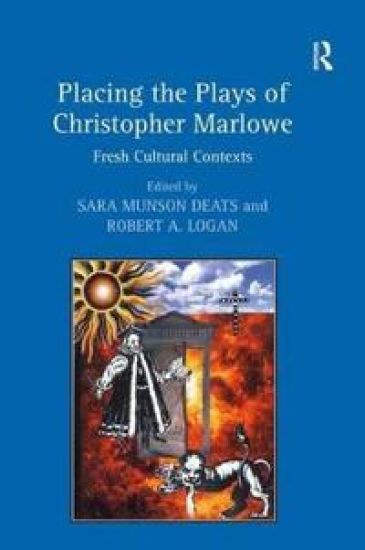
Placing the Plays of Christopher Marlowe

Placing the Plays of Christopher Marlowe

Sara Munson Deats

Ashgate Publishing Limited
2008
sidottu
Focusing upon Marlowe the playwright as opposed to Marlowe the man, the essays in this collection position the dramatist's plays within the dramaturgical, ethical, and sociopolitical matrices of his own era. The volume also examines some of the most heated controversies of the early modern period, such as the anti-theatrical debate, the relations between parents and children, Machiavaelli¹s ideology, the legitimacy of sectarian violence, and the discourse of addiction. Some of the chapters also explore Marlowe's polysemous influence on the theater of his time and of later periods, but, most centrally, upon his more famous contemporary poet/playwright, William Shakespeare.