Kirjailija
Sarah Burns
Kirjat ja teokset yhdessä paikassa: 10 kirjaa, julkaisuja vuosilta 2013-2026, suosituimpien joukossa Subversion and Surrealism in the Art of Honoré Sharrer. Vertaile teosten hintoja ja tarkista saatavuus suomalaisista kirjakaupoista.
10 kirjaa
Kirjojen julkaisuhaarukka 2013-2026.
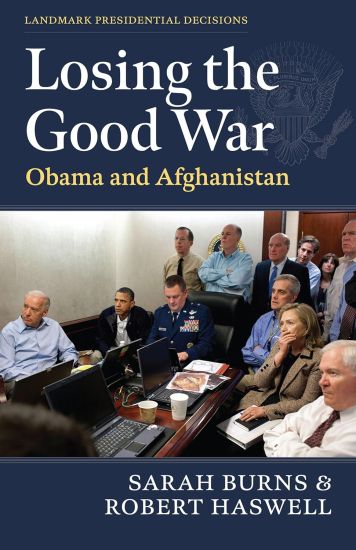
A clear-eyed look at how political pressures and military influences led President Obama to significantly increase US involvement in the War in Afghanistan, even as the prospects for success seemed increasingly dim. Barack Obama entered the White House in 2009 with a mandate to end the wars and occupations begun under George W. Bush. The American public and foreign policy–makers alike were ready to withdraw from these unpopular and unwieldy conflicts. While Obama fulfilled his campaign promises with the “bad war” in Iraq, the “good war” in Afghanistan followed a very different path. Unlike his predecessor, Obama chose to prioritize South Asia as the focus of the United States military. Following a strategic review, Obama and his military advisors decided to replicate the Iraqi troop surge in Afghanistan, embarking on a labor-intensive counterinsurgency campaign. Unlike the Iraqi surge, however, Obama placed an eighteen-month limit on the increased troop deployment promising a withdrawal in the summer of 2011. Despite a revised strategy that emphasized training the Afghan forces, the Afghan units struggled to perform in a leadership role, remaining dependent on American airpower. These problems were compounded by the civilian side of the government that suffered from corruption and appeared illegitimate to much of the Afghan population. After Obama withdrew troops, the Taliban began their resurgence in 2014. Around the same time the Islamic State emerged on the scene in Iraq and Syria, requiring new counterterrorism efforts that drained resources from Afghanistan and shifted the US focus back to the Middle East, leaving Afghanistan more vulnerable to local and international extremists. Peace talks with the Taliban broke down, and the war dragged on—becoming an unwinnable quagmire. As part of the Landmark Presidential Decisions series, Losing the Good War analyzes how Obama’s campaign promises translated into policy, particularly the decision-making around the surge. Sarah Burns and Robert Haswell shine a light on this mishandled episode in US foreign policy.
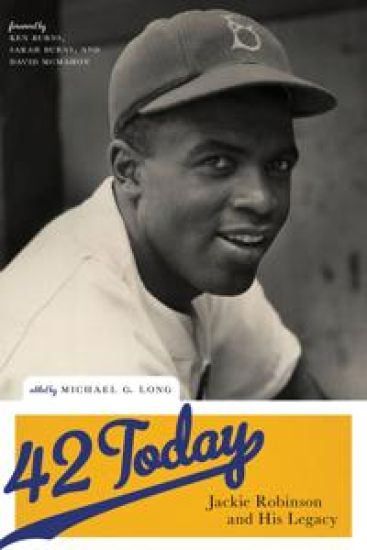
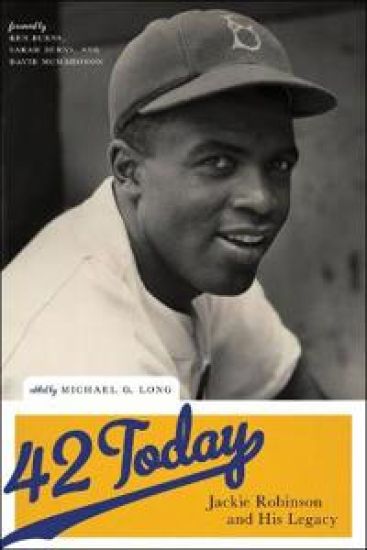
Explores Jackie Robinson's compelling and complicated legacy Before the United States Supreme Court ruled against segregation in public schools, and before Rosa Parks refused to surrender her bus seat in Montgomery, Alabama, Jackie Robinson walked onto the diamond on April 15, 1947, as first baseman for the Brooklyn Dodgers, making history as the first African American to integrate Major League Baseball in the twentieth century. Today a national icon, Robinson was a complicated man who navigated an even more complicated world that both celebrated and despised him. Many are familiar with Robinson as a baseball hero. Few, however, know of the inner turmoil that came with his historic status. Featuring piercing essays from a range of distinguished sportswriters, cultural critics, and scholars, this book explores Robinson's perspectives and legacies on civil rights, sports, faith, youth, and nonviolence, while providing rare glimpses into the struggles and strength of one of the nation's most athletically gifted and politically significant citizens. Featuring a foreword by celebrated directors and producers Ken Burns, Sarah Burns, and David McMahon, this volume recasts Jackie Robinson's legacy and establishes how he set a precedent for future civil rights activism, from Black Lives Matter to Colin Kaepernick.
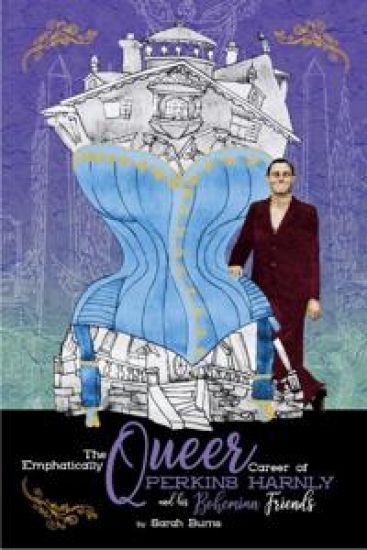
The Emphatically Queer Career of Artist Perkins Harnly and His Bohemian Friends
Sarah Burns
Process Media
2021
nidottu
The Emphatically Queer Career of Perkins Harnly is the story of a Nebraska-born artist (1901-1986) who over the course of his long-life crossed paths with a staggering array of famous and infamous personalities. He went to parties with Sarah Bernhardt. Was friends with Paul Swan, a.k.a. "The Most Beautiful Man in the World," (who made women swoon when he danced in his tiny leopard-skin tunic). Was the frequent houseguest of Rose O'Neill, the free-living artist who invented the Kewpie. And exchanged letters with William Seabrook, author and occasional cannibal who--for better or worse--introduced Americans to the zombie. The story follows Harnly's steps from Nebraska's remote farmlands through silent-era Hollywood, post-revolutionary Mexico, Depression-era New York, wartime Tinsel Town, queer Los Angeles the repressive 1950s, and the rest of his life. He traveled extensively in Europe and South America, where Harnly indulged in his hobby of visiting the famous and infamous graves from Vladimir Lenin to Oscar Wilde, Queen Victoria, and Eva Peron. Sarah Burns uses archives of letters and interviews to bring the lives of Harnly and his circle of creative friends whose antics rival the infamous "bright young things" of England. Once you meet Harnly, you will never forget him.
Explores Jackie Robinson's compelling and complicated legacy Before the United States Supreme Court ruled against segregation in public schools, and before Rosa Parks refused to surrender her bus seat in Montgomery, Alabama, Jackie Robinson walked onto the diamond on April 15, 1947, as first baseman for the Brooklyn Dodgers, making history as the first African American to integrate Major League Baseball in the twentieth century. Today a national icon, Robinson was a complicated man who navigated an even more complicated world that both celebrated and despised him. Many are familiar with Robinson as a baseball hero. Few, however, know of the inner turmoil that came with his historic status. Featuring piercing essays from a range of distinguished sportswriters, cultural critics, and scholars, this book explores Robinson's perspectives and legacies on civil rights, sports, faith, youth, and nonviolence, while providing rare glimpses into the struggles and strength of one of the nation's most athletically gifted and politically significant citizens. Featuring a foreword by celebrated directors and producers Ken Burns, Sarah Burns, and David McMahon, this volume recasts Jackie Robinson's legacy and establishes how he set a precedent for future civil rights activism, from Black Lives Matter to Colin Kaepernick.
The Constitution of the United States divides war powers between the executive and legislative branches to guard against ill-advised or unnecessary military action. This division of powers compels both branches to hold each other accountable and work in tandem. And yet, since the Cold War, congressional ambition has waned on this front. Even when Congress does provide initial authorization for larger operations, they do not provide strict parameters or clear end dates. As a result, one president after another has initiated and carried out poorly developed and poorly executed military policy. The Politics of War Powers offers a Measured, deeply informed look at how the American constitutional system broke down, how it impacts decision-making today, and how we might find our way out of this unhealthy power division.Sarah Burns starts with a nuanced account of the theoretical and historical development of war powers in the United States. Where discussions of presidential power often lean on the concept of the Lockean Prerogative, Burns locates a more constructive source in Montesquieu. Unlike Locke, Montesquieu combines universal normative prescriptions with an emphasis on tailoring the structure to the unique needs of a society. In doing so, the separation of powers can be customized while maintaining the moderation needed to create a healthy institutional balance. He demonstrates the importance of forcing the branches into dialogue, putting them, as he says, “in a position to resist” each other. Burns’s conclusion—after tracing changes through Franklin Delano Roosevelt’s administration, the Cold War, and the War on Terror—is that presidents now command a dangerous degree of unilateral power.Burns’s work ranges across Montesquieu’s theory, the debate over the creation of the Constitution, historical precedent, and the current crisis. Through her analysis, both a fuller picture of the alterations to the constitutional system and ideas on how to address the resulting imbalance of power emerge.
The case of the Central Park Five is being revisited with a new acclaimed Netflix limited series on the subject, When They See Us, directed by Ava DuVernay.This is the only book that is going to tell you all you need to know about one of the most infamous criminal cases in American history. A trial that, thirty years on, still bears a striking, and unsettling, resemblance to our current political climate in the era of President Donald Trump.In April 1989, a white woman who came to be known as the 'Central Park jogger' was brutally raped and severely beaten, her body left crumpled in a ravine. Amid the staggering torrent of media coverage and public outcry that ensued, exposing the deep-seated race and class divisions in New York City at the time, five teenagers were quickly apprehended - four black and one Hispanic. All five confessed, were tried and convicted as adults despite no evidence linking them to the victim.Over a decade later, when DNA tests connected serial rapist Matias Reyes to the crime, the government, law enforcement, social institutions and media of New York were exposed as having undermined the individuals they were designed to protect. In The Central Park Five, Sarah Burns, who has worked closely with the young men to uncover and document the truth, recounts the ins and outs of this historic case for the first time since their convictions were overturned, telling, at last, the full story of one of America's most legendary miscarriages of justice.
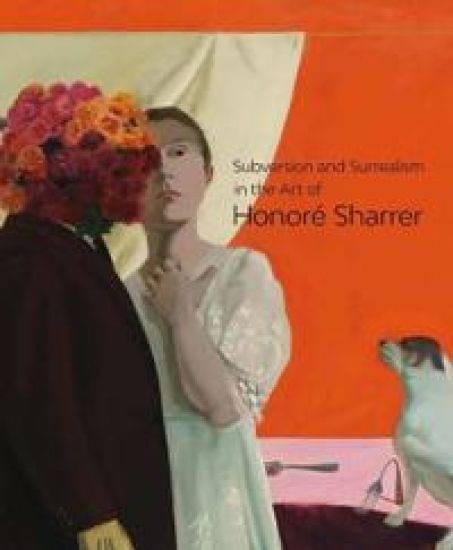
Subversion and Surrealism in the Art of Honoré Sharrer
Sarah Burns; Robert Cozzolino; Michael Lobel; M. Melissa Wolfe; Adam Desmond Zagorin
Yale University Press
2017
sidottu
Honoré Sharrer (1920–2009) was a major art world figure in 1940s America, celebrated for exquisitely detailed paintings conveying subtly subversive critiques of the political and artistic climate of her time. This book offers the first critical reassessment of the artist: a leftist, female painter committed to figuration in an era when anti-Communist sentiment and masculine Abstract Expressionism dominated American culture. Her brightly colored, humorous, and distinctly feminine paintings combine elements of social realism and surrealism to seductive and disquieting effect. This publication is a timely reevaluation of an artist who pushed the boundaries of figurative painting with playfulness and biting wit. Distributed for the Columbus Museum of Art Exhibition Schedule: Columbus Museum of Art (02/10/17–05/21/17) Pennsylvania Academy of the Fine Arts, Philadelphia (06/30/17–09/03/17) Smith College Museum of Art, Northamton, MA (09/21/17–01/07/18)
Becoming: The dreamer's study guide to launching God-sized dreams
Heather Bise; Crystal Breaux; Sarah Burns
Createspace Independent Publishing Platform
2016
nidottu
Home Front
Peter John Brownlee; Sarah Burns; Diane Dillon; Daniel Greene; Scott Manning Stevens
University of Chicago Press
2013
sidottu
More than one hundred and fifty years after Confederates fired on Fort Sumter, the Civil War still occupies a prominent place in the national collective memory. Paintings and photographs, plays and movies, novels, poetry, and songs portray the war as a battle over the future of slavery, focusing on Lincoln's determination to save the Union, or highlighting the cruelty of brother fighting brother. Battles and battlefields occupy us, too: Bull Run, Antietam, and Gettysburg all conjure up images of desolate landscapes strewn with war dead. Yet battlefields were not the only landscapes altered by the war. Countless individuals saw their daily lives upended while the entire nation suffered. Home Front reveals this side of the war as it happened, comprehensively examining the visual culture of the Northern home front. Through contributions from leading scholars, we discover how the war influenced household economies and the cotton industry; how the absence of young men from the home changed daily life; how war relief work linked home fronts and battlefronts; why Indians on the frontier were pushed out of the riven nation's consciousness during the war years; and how wartime landscape paintings illuminated the nation's past, present, and future. A companion volume to a collaborative exhibition organized by the Newberry Library and the Terra Foundation for American Art, Home Front is the first book to expose the visual culture of a world far removed from the horror of war yet intimately bound to it.