Kirjojen hintavertailu. Mukana 12 390 323 kirjaa ja 12 kauppaa.
Kirjailija
Sarah Corrie
Kirjat ja teokset yhdessä paikassa: 13 kirjaa, julkaisuja vuosilta 2006-2025, suosituimpien joukossa First Steps in Cognitive Behaviour Therapy. Vertaile teosten hintoja ja tarkista saatavuus suomalaisista kirjakaupoista.
Lane, Corrie and Kovács present a foundational text for coaches wishing to improve their coaching practice through use of formulation.A Guide to Formulation in Coaching examines the nature and purpose of formulation and how to develop effective formulations that can inform and improve practice. It combines theoretical perspectives with case studies illustrating its use in different coaching contexts to provide a comprehensive and accessible account of the purpose, perspectives and processes used in formulation. In addition to providing practice-based examples and drawing on the literature, the book provides a series of exercises to enable readers to refine their individual approaches.Practical and accessibly written, this book will be a valuable resource for coaches and coaching psychologists, coaching supervisors and trainers, and academics interested in understanding the role of formulation and how it applies in a coaching context.

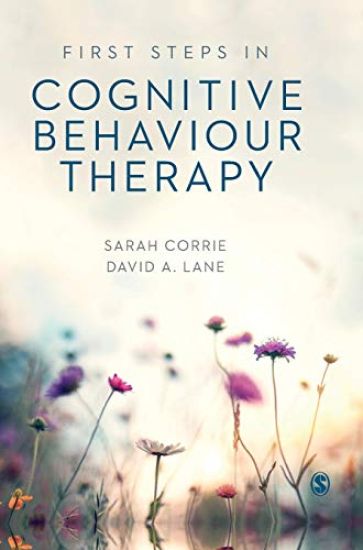
This book is a first steps introduction to cognitive behaviour therapy that will appeal to the interested reader and professionals wanting to learn about the approach. It introduces you to the history of the approach, describes its behavioural and cognitive principles, and examines key techniques and methods within the context of contemporary practice. Further chapters on Formulation, Working with Imagery, and Future Directions in CBT help you to extend your learning, while reflective activities and case studies throughout the book support you to apply principles and perspectives to practice.
Close relationships and mental health are two key ingredients to living a meaningful, fulfilled life. These two domains are the central focus of Treating Relationship Distress and Psychopathology in Couples: A Cognitive-Behavioural Approach. As expert clinicians, trainers, and researchers in the field of cognitive-behavioural couple therapy and couple-based interventions for psychopathology, the authors offer a highly accessible volume for experienced clinicians and trainees alike.This book details the most recent innovations in CBCT, a principle-based, flexible treatment approach for couples with a wide range of relationship concerns, circumstances, and stages of life. Based on a clear conceptual framework, readers learn how to address individual and couple functioning in an integrated, comprehensive manner and how to apply principle-based interventions that directly flow from this framework. Treating Relationship Distress and Psychopathology in Couples was written by a team of five authors, born in four different countries and working together as a team for a number of years, providing a cohesive framework based on work in a variety of contexts. While staying close to research findings that inform treatment, they provide a text for clinicians at all levels of training and experience in working with couples.
Formulation remains one of the most important activities that those using psychological approaches undertake as part of their work. Arguably, however, formulation is an activity that remains poorly understood. In a current climate demanding quick fix solutions there is a tendency, which the authors refuse, towards over-simplification. Instead this
This book is about learning to live your life more fully. It doesn't promise you abundant joy, the relationship of your dreams, untold riches or miracle cures. But what it does promise you is a comprehensive programme of personal development, change and growth that is highly effective. This coaching programme has been developed with two audiences in mind. The first is those who wish to coach themselves to success and who are confident about achieving positive results once they know the basic framework. The second audience is those who work as coaches and who are looking for new ideas and frameworks that they can build into their existing practice. Whatever has drawn you to this book - whether it is because you feel you have reached a crossroads in your life, because you have a very specific goal in mind, or because you are a coach looking for some fresh ideas - there is something here for you.
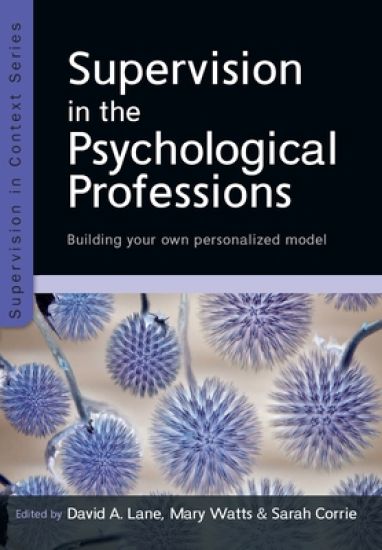
A truly innovative gem of a book, Supervision in the Psychological Professions empowers psychologists in all fields to become highly skilled and successful in their application of supervisory processes and methods. As the psychological professions move toward mandating supervision, this book expertly bridges the gap between philosophy and practice. It offers a practical, accessible and conceptual approach for those wanting to hone their knowledge and skills in this increasingly important area. Inviting the reader to reflect on their own practice through reflective questions, case studies and exercises, Lane, Watts and Corrie skilfully highlight how the supervisor and supervisee can negotiate an effective relationship within agreed frameworks. Covering the new supervision regulation at local, national and international levels, this practical guide is a must have read for practitioners across psychological niches from forensic to mental health and from coaching to educational and industrial psychology.“In this useful text the many contributing authors thread their respective views together toward the development of a personalised and fit for purpose approach … A valuable and significant contribution to the field.”Marc Simon Kahn, author of Coaching on the Axis, Clinical Psychologist, Chartered Business Coach and Global Head of HR & OD for Investec, London, UK“This is a rich book that provides much food for thought about both giving and receiving supervision and it offers a sense of coherence whilst respecting diversity.” Sheelagh Strawbridge, Chartered Psychologist, Self-employed, UK“This book should be of great value and encouragement for psychologists currently engaging in supervision practice … It should also provide badly needed orientation and stimulation for professional and academic training settings".Michael Bruch, University College London, UK
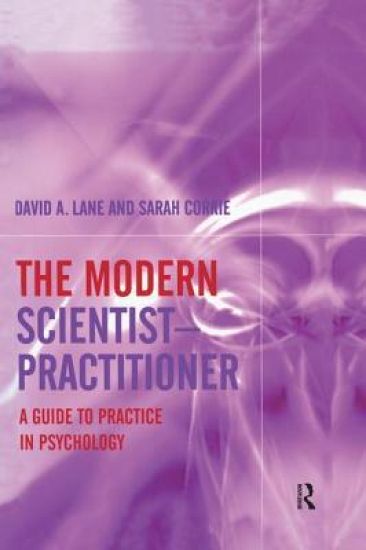
The Modern Scientist-Practitioner argues for a radical rethink of how we understand the science-practice relationship and the notion of the scientist-practitioner model. Drawing on the latest innovations and research from the fields of anthropology, industry, philosophy, psychology and science, David Lane and Sarah Corrie present a new vision of the scientist-practitioner model that is dynamic, contextualised and synergistic. Subjects covered include: innovation and improvization: The unacknowledged world of the creative scientist-practitioner. what kind of scientists are we? re-examining the Nature of Scientific knowledge. acquiring the art of reasoning: straddling the worlds of rigour and meaning. arriving at shared psychological narratives: formulation and explanation. the scientist-practitioner in applied psychology settings. learning for tomorrow: professional survival in an uncertain world. This timely and thought-provoking book will appeal to professionals at all stages of their careers, including psychologists of all disciplines, researchers, educators, policy-makers, healthcare professionals and students.
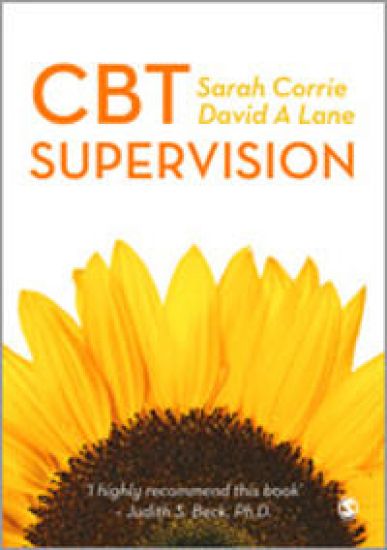
What is good CBT supervision? What makes an effective supervisor? How can qualified CBT therapists learn to become good CBT supervisors who work effectively with their supervisees? These are some of the questions addressed in this practical new book, examining what it takes to be a competent and confident CBT supervisor. Using the authors' unique framework of learning – the PURE Supervision Flower – the book equips trainees with the skills and competencies needed to #strong/strong#repare for, undertake, refine and enhance supervision practice across a wide range of settings. Structured around the PURE Supervision Flower, the book is divided into four parts: #strong/strong#reparing for Supervision explores how to establish an effective and ethical base from which supervision can occur Undertaking Supervision focuses on the practical delivery of CBT Supervision Refining Supervision offers insights into managing the supervisory process and relationship Enhancing Supervision hones competencies by considering complex ethical challenges and CPD. Packed with activities, tips, case studies and reflective questions to help consolidate learning, this is essential reading for CBT practitioners training in and already providing supervision across a range of settings.
The Modern Scientist-Practitioner argues for a radical rethink of how we understand the science-practice relationship and the notion of the scientist-practitioner model. Drawing on the latest innovations and research from the fields of anthropology, industry, philosophy, psychology and science, David Lane and Sarah Corrie present a new vision of the scientist-practitioner model that is dynamic, contextualised and synergistic. Subjects covered include: innovation and improvization: The unacknowledged world of the creative scientist-practitioner. what kind of scientists are we? re-examining the Nature of Scientific knowledge. acquiring the art of reasoning: straddling the worlds of rigour and meaning. arriving at shared psychological narratives: formulation and explanation. the scientist-practitioner in applied psychology settings. learning for tomorrow: professional survival in an uncertain world. This timely and thought-provoking book will appeal to professionals at all stages of their careers, including psychologists of all disciplines, researchers, educators, policy-makers, healthcare professionals and students.