Kirjojen hintavertailu. Mukana 12 290 406 kirjaa ja 12 kauppaa.

Kirjailija

Sarah Horton

Kirjat ja teokset yhdessä paikassa: 10 kirjaa, julkaisuja vuosilta 2000-2024, suosituimpien joukossa The Promise of Friendship. Vertaile teosten hintoja ja tarkista saatavuus suomalaisista kirjakaupoista.

10 kirjaa

Kirjojen julkaisuhaarukka 2000-2024.

The Promise of Friendship

The Promise of Friendship

Sarah Horton

STATE UNIVERSITY OF NEW YORK PRESS
2024
pokkari
Argues that friendship is the gift of a world that is not one's own and that transforms one's world in unforeseeable ways.The Promise of Friendship investigates what makes friendship possible and good for human beings. In dialogue with authors ranging from Aristotle and Montaigne to Proust, Levinas, and Derrida, Sarah Horton argues that friendship is suited to our finitude-that is, to the limits within which human beings live-and proposes a novel understanding of friendship as translation: friends translate the world for each other so that each one experiences the world not as the other does but in light of the friend's always-unknowable experience. The very distance between friends that makes it impossible for them to know each other wholly also makes it possible for them to be transformed by friendship. Friendship, then, is possible and good for those who love precisely that they can never wholly know the friend. Friendship is a profound, mutual self-giving that highlights the irreplaceability of each person, fundamentally shapes the self, and is one of the greatest joys of human existence.
What Every Engineer Should Know About Digital Accessibility

What Every Engineer Should Know About Digital Accessibility

Sarah Horton; David Sloan

TAYLOR FRANCIS LTD
2024
nidottu
Accessibility is a core quality of digital products to be deliberately addressed throughout the development lifecycle. What Every Engineer Should Know About Digital Accessibility will prepare readers to integrate digital accessibility into their engineering practices. Readers will learn how to accurately frame accessibility as an engineering challenge so they are able to address the correct problems in the correct way.Illustrated with diverse perspectives from accessibility practitioners and advocates, this book describes how people with disabilities use technology, the nature of accessibility barriers in the digital world, and the role of engineers in breaking down those barriers. Accessibility competence for current, emerging, and future technologies is addressed through a combination of guiding principles, core attributes and requirements, and accessibility-informed engineering practices.FEATURESDiscusses how technology can support inclusion for people with disabilities and how rigorous engineering processes help create quality user experiences without introducing accessibility barriersExplains foundational principles and guidelines that build core competency in digital accessibility as they are applied across diverse and emerging technology platformsHighlights practical insights into how engineering teams can effectively address accessibility throughout the technology development lifecycleUses international standards to define and measure accessibility qualityWritten to be accessible to non-experts in the subject area, What Every Engineer Should Know About Digital Accessibility is aimed at students, professionals, and researchers in the field of software engineering.A companion site supporting and extending the themes and topics from the book can be found at https://knowaboutaccessibility.org/
What Every Engineer Should Know About Digital Accessibility

What Every Engineer Should Know About Digital Accessibility

Sarah Horton; David Sloan

TAYLOR FRANCIS LTD
2024
sidottu
Accessibility is a core quality of digital products to be deliberately addressed throughout the development lifecycle. What Every Engineer Should Know About Digital Accessibility will prepare readers to integrate digital accessibility into their engineering practices. Readers will learn how to accurately frame accessibility as an engineering challenge so they are able to address the correct problems in the correct way.Illustrated with diverse perspectives from accessibility practitioners and advocates, this book describes how people with disabilities use technology, the nature of accessibility barriers in the digital world, and the role of engineers in breaking down those barriers. Accessibility competence for current, emerging, and future technologies is addressed through a combination of guiding principles, core attributes and requirements, and accessibility-informed engineering practices.FEATURESDiscusses how technology can support inclusion for people with disabilities and how rigorous engineering processes help create quality user experiences without introducing accessibility barriersExplains foundational principles and guidelines that build core competency in digital accessibility as they are applied across diverse and emerging technology platformsHighlights practical insights into how engineering teams can effectively address accessibility throughout the technology development lifecycleUses international standards to define and measure accessibility qualityWritten to be accessible to non-experts in the subject area, What Every Engineer Should Know About Digital Accessibility is aimed at students, professionals, and researchers in the field of software engineering.A companion site supporting and extending the themes and topics from the book can be found at https://knowaboutaccessibility.org/
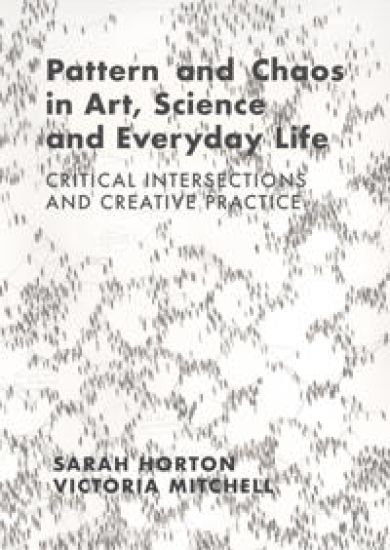
Pattern and Chaos in Art, Science and Everyday Life

Pattern and Chaos in Art, Science and Everyday Life

Sarah Horton; Victoria Mitchell

INTELLECT
2023
sidottu
This collection explores critical and visual practices through the lens of interactions and intersections between pattern and chaos. The dynamic of the inter-relationship between pattern and chaos is such as to challenge disciplinary boundaries, critical frameworks and modes of understanding, perception and communication, often referencing the in-between territory of art and science through experimentation and visual scrutiny. A territory of 'pattern-chaos' or 'chaos-pattern' begins to unfold. Drawing upon fields such as visual culture, sociology, physics, neurobiology, linguistics or critical theory, for example, contributors have experimented with pattern and/or chaos-related forms, processes, materials, sounds and language or have reflected on the work of other artists, scientists and scholars. Diagrams, tessellations, dust, knots, mazes, folds, creases, flux, virus, fire and flow are indicative of processes through which pattern and chaos are addressed. The contributions are organized into clusters of subjects which reflect the interdisciplinary terrain through a robust, yet also experimental, arrangement. These are 'Pattern Dynamics', 'Morph Flux Mutate', 'Decompose Recompose', 'Virus; Social Imaginary' and 'Nothings in Particular'.
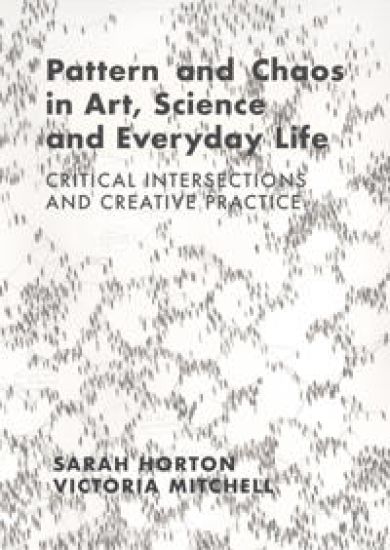
Pattern and Chaos in Art, Science and Everyday Life

Pattern and Chaos in Art, Science and Everyday Life

Sarah Horton; Victoria Mitchell

INTELLECT
2023
nidottu
This collection explores critical and visual practices through the lens of interactions and intersections between pattern and chaos. The dynamic of the inter-relationship between pattern and chaos is such as to challenge disciplinary boundaries, critical frameworks and modes of understanding, perception and communication, often referencing the in-between territory of art and science through experimentation and visual scrutiny. A territory of 'pattern-chaos' or 'chaos-pattern' begins to unfold. Drawing upon fields such as visual culture, sociology, physics, neurobiology, linguistics or critical theory, for example, contributors have experimented with pattern and/or chaos-related forms, processes, materials, sounds and language or have reflected on the work of other artists, scientists and scholars. Diagrams, tessellations, dust, knots, mazes, folds, creases, flux, virus, fire and flow are indicative of processes through which pattern and chaos are addressed. The contributions are organized into clusters of subjects which reflect the interdisciplinary terrain through a robust, yet also experimental, arrangement. These are 'Pattern Dynamics', 'Morph Flux Mutate', 'Decompose Recompose', 'Virus; Social Imaginary' and 'Nothings in Particular'.
The Promise of Friendship

The Promise of Friendship

Sarah Horton

STATE UNIVERSITY OF NEW YORK PRESS
2023
sidottu
Argues that friendship is the gift of a world that is not one's own and that transforms one's world in unforeseeable ways.The Promise of Friendship investigates what makes friendship possible and good for human beings. In dialogue with authors ranging from Aristotle and Montaigne to Proust, Levinas, and Derrida, Sarah Horton argues that friendship is suited to our finitude-that is, to the limits within which human beings live-and proposes a novel understanding of friendship as translation: friends translate the world for each other so that each one experiences the world not as the other does but in light of the friend's always-unknowable experience. The very distance between friends that makes it impossible for them to know each other wholly also makes it possible for them to be transformed by friendship. Friendship, then, is possible and good for those who love precisely that they can never wholly know the friend. Friendship is a profound, mutual self-giving that highlights the irreplaceability of each person, fundamentally shapes the self, and is one of the greatest joys of human existence.
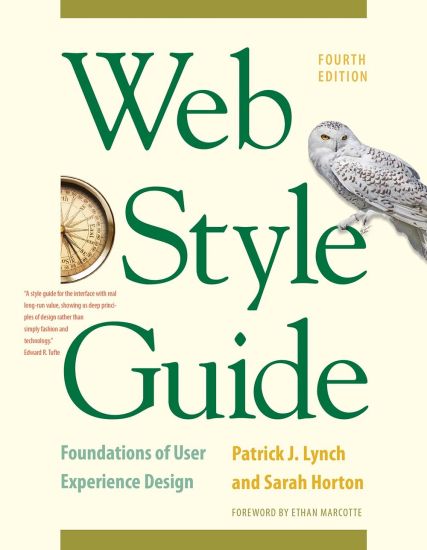
Web Style Guide, 4th Edition

Web Style Guide, 4th Edition

Patrick J. Lynch; Sarah Horton; Ethan Marcotte

Yale University Press
2016
pokkari
A classic reference book on user interface design and graphic design for web sites, updated to reflect a rapidly changing market Consistently praised as the best volume on classic elements of web site design, Web Style Guide has sold many thousands of copies and has been published around the world. This new revised edition confirms Web Style Guide as the go-to authority in a rapidly changing market. As web designers move from building sites from scratch to using content management and aggregation tools, the book’s focus shifts away from code samples and toward best practices, especially those involving mobile experience, social media, and accessibility. An ideal reference for web site designers in corporations, government, nonprofit organizations, and academic institutions, the book explains established design principles and covers all aspects of web design—from planning to production to maintenance. The guide also shows how these principles apply in web design projects whose primary concerns are information design, interface design, and efficient search and navigation.
A Web for Everyone

A Web for Everyone

Sarah Horton; Whitney Quesenbery

Rosenfeld Media
2014
nidottu
If you are in charge of the user experience, development, or strategy for a web site, A Web for Everyone will help you make your site accessible without sacrificing design or innovation. Rooted in universal design principles, this book provides solutions: practical advice and examples of how to create sites that everyone can use.
Web Teaching Guide

Web Teaching Guide

Sarah Horton

Yale University Press
2000
pokkari
Prompted by student enthusiasm and by the opportunity to enhance college courses, more and more faculty members in higher education are incorporating the Web into their teaching. This helpful book is designed to answer the questions an educator who lacks extensive technical experience asks about creating a Web site: Why should I use the Web? How can the Web enhance my teaching? How do I make a Web site? How can I make it effective? Multimedia specialist Sarah Horton draws on extensive experience as a faculty Web consultant to explain the entire process of creating a site, from initial planning through site assessment. She examines the strengths of the Web and its many possible uses. More than just a way to distribute course handouts, a Web site can provide richer content, multiple expressions of an idea, interactivity, opportunities for collaboration and customization, and flexibility for updates. Horton urges teachers to consider the ever-growing possibilities that information technology presents. Her focus is on practical matters related to creating Web-based instructional materials. With case studies throughout, she discusses the planning process, content creation, site development, and finally site implementation in the curriculum.