

Kirjailija
Sarah J. Jackson
Kirjat ja teokset yhdessä paikassa: 4 kirjaa, julkaisuja vuosilta 2014-2026, suosituimpien joukossa A Second Sight. Vertaile teosten hintoja ja tarkista saatavuus suomalaisista kirjakaupoista.
4 kirjaa
Kirjojen julkaisuhaarukka 2014-2026.
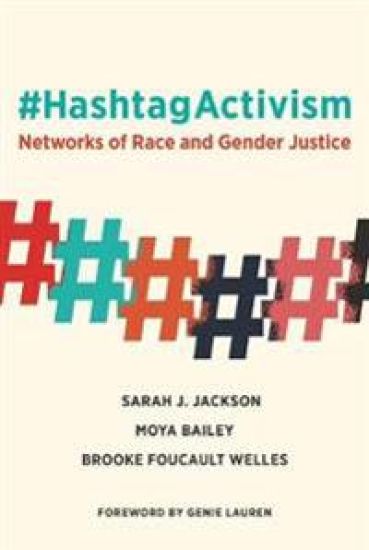
#HashtagActivism
Sarah J. Jackson; Moya Bailey; Brooke Foucault Welles; Genie Lauren
MIT Press
2020
pokkari
How marginalized groups use Twitter to advance counter-narratives, preempt political spin, and build diverse networks of dissent.The power of hashtag activism became clear in 2011, when #IranElection served as an organizing tool for Iranians protesting a disputed election and offered a global audience a front-row seat to a nascent revolution. Since then, activists have used a variety of hashtags, including #JusticeForTrayvon, #BlackLivesMatter, #YesAllWomen, and #MeToo to advocate, mobilize, and communicate. In this book, Sarah Jackson, Moya Bailey, and Brooke Foucault Welles explore how and why Twitter has become an important platform for historically disenfranchised populations, including Black Americans, women, and transgender people. They show how marginalized groups, long excluded from elite media spaces, have used Twitter hashtags to advance counternarratives, preempt political spin, and build diverse networks of dissent. The authors describe how such hashtags as #MeToo, #SurvivorPrivilege, and #WhyIStayed have challenged the conventional understanding of gendered violence; examine the voices and narratives of Black feminism enabled by #FastTailedGirls, #YouOKSis, and #SayHerName; and explore the creation and use of #GirlsLikeUs, a network of transgender women. They investigate the digital signatures of the "new civil rights movement"-the online activism, storytelling, and strategy-building that set the stage for #BlackLivesMatter-and recount the spread of racial justice hashtags after the killing of Michael Brown in Ferguson, Missouri, and other high-profile incidents of killings by police. Finally, they consider hashtag created by allies, including #AllMenCan and #CrimingWhileWhite.
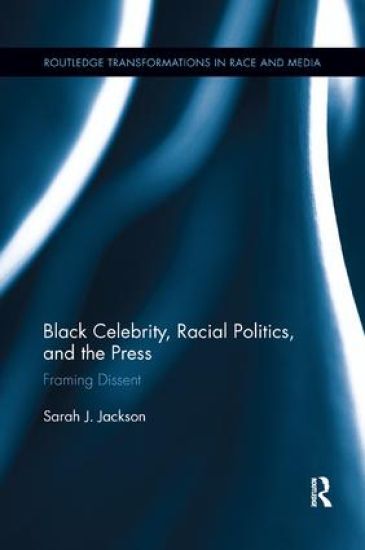
Shifting understandings and ongoing conversations about race, celebrity, and protest in the twenty-first century call for a closer examination of the evolution of dissent by black celebrities and their reception in the public sphere. This book focuses on the way the mainstream and black press have covered cases of controversial political dissent by African American celebrities from Paul Robeson to Kanye West. Jackson considers the following questions: 1) What unique agency is available to celebrities with racialized identities to present critiques of American culture? 2) How have journalists in both the mainstream and black press limited or facilitated this agency through framing? What does this say about the varying role of journalism in American racial politics? 3) How have framing trends regarding these figures shifted from the mid-twentieth century to the twenty-first century? Through a series of case studies that also includes Eartha Kitt, Sister Souljah, and Mahmoud Abdul-Rauf, Jackson illustrates the shifting public narratives and historical moments that both limit and enable African American celebrities in the wake of making public politicized statements that critique the accepted racial, economic, and military systems in the United States.
Shifting understandings and ongoing conversations about race, celebrity, and protest in the twenty-first century call for a closer examination of the evolution of dissent by black celebrities and their reception in the public sphere. This book focuses on the way the mainstream and black press have covered cases of controversial political dissent by African American celebrities from Paul Robeson to Kanye West. Jackson considers the following questions: 1) What unique agency is available to celebrities with racialized identities to present critiques of American culture? 2) How have journalists in both the mainstream and black press limited or facilitated this agency through framing? What does this say about the varying role of journalism in American racial politics? 3) How have framing trends regarding these figures shifted from the mid-twentieth century to the twenty-first century? Through a series of case studies that also includes Eartha Kitt, Sister Souljah, and Mahmoud Abdul-Rauf, Jackson illustrates the shifting public narratives and historical moments that both limit and enable African American celebrities in the wake of making public politicized statements that critique the accepted racial, economic, and military systems in the United States.