
Kirjojen hintavertailu. Mukana 12 595 353 kirjaa ja 12 kauppaa.

Kirjailija

Sarah Kember

Kirjat ja teokset yhdessä paikassa: 6 kirjaa, julkaisuja vuosilta 2002-2019, suosituimpien joukossa Cyberfeminism and Artificial Life. Vertaile teosten hintoja ja tarkista saatavuus suomalaisista kirjakaupoista.

6 kirjaa

Kirjojen julkaisuhaarukka 2002-2019.

Furious

Furious

Caroline Bassett; Sarah Kember; Kate O'Riordan

Pluto Press
2019
sidottu
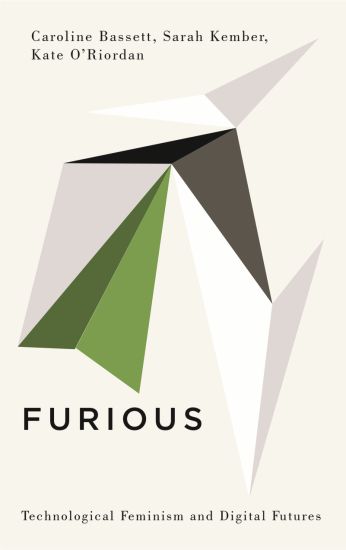
As digital transformations continue to accelerate in the world, discourses of big data have come to dominate in a number of fields, from politics and economics, to media and education. But how can we really understand the digital world when so much of the writing through which we grapple with it remains deeply problematic? In a compelling new work of feminist critical theory, Bassett, Kember and O'Riordan scrutinise many of the assumptions of a masculinist digital world, highlighting the tendency of digital humanities scholarship to venerate and essentialise technical forms, and to adopt gendered writing and citation practices. Contesting these writings, practices and politics, the authors foreground feminist traditions and contributions to the field, offering alternative modes of knowledge production, and a radically different, poetic writing style. Through this prism, Furious brings into focus themes including the automation of home and domestic work, the Anthropocene, and intersectional feminist technofutures.
Furious

Furious

Caroline Bassett; Sarah Kember; Kate O'Riordan

Pluto Press
2019
pokkari
As digital transformations continue to accelerate in the world, discourses of big data have come to dominate in a number of fields, from politics and economics, to media and education. But how can we really understand the digital world when so much of the writing through which we grapple with it remains deeply problematic? In a compelling new work of feminist critical theory, Bassett, Kember and O'Riordan scrutinise many of the assumptions of a masculinist digital world, highlighting the tendency of digital humanities scholarship to venerate and essentialise technical forms, and to adopt gendered writing and citation practices. Contesting these writings, practices and politics, the authors foreground feminist traditions and contributions to the field, offering alternative modes of knowledge production, and a radically different, poetic writing style. Through this prism, Furious brings into focus themes including the automation of home and domestic work, the Anthropocene, and intersectional feminist technofutures.
iMedia

iMedia

Sarah Kember

Palgrave Pivot
2015
sidottu
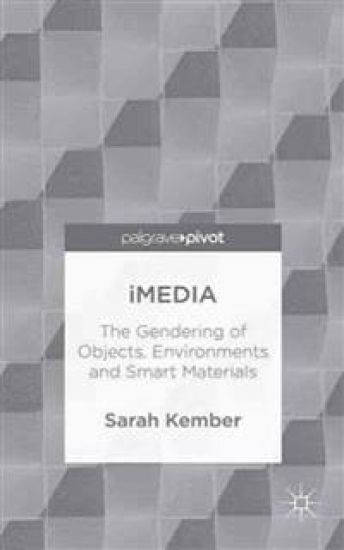
What can queer feminist writing strategies such as parody and irony do to outsmart the sexism of smart objects, environments and materials and open out the new dialecticism of structure and scale, critique and creativity? Drawing on science and technology studies and feminist theory, this book examines the gendering of current and future media technologies such as smart phones, Google glass, robot nurses, tablets and face recognition. Kember argues that there is a tendency to affirm and celebrate the existence of smart and often sexist objects, environments and materials in themselves; to elide writing and other forms of mediation; and to engage in disembodied knowledge practices. Disembodied knowledge practices tend towards a scientism that currently includes physics envy and are also masculinist. Where there is some degree of convergence between masculinist and feminist thinking about objects, environments and materials, there is also divergence, conflict and the possibleopening towards a politics of imedia. Presenting a lively manifesto for refiguring imedia, this book forms an often neglected gender critique of developments in smart technologies and will be essential reading for scholars in Communication Studies, Cultural and Media, Science and Technology and Feminism.
Life after New Media

Life after New Media

Sarah Kember; Joanna Zylinska

MIT Press
2014
pokkari
An argument for a shift in understanding new media-from a fascination with devices to an examination of the complex processes of mediation.In Life after New Media, Sarah Kember and Joanna Zylinska make a case for a significant shift in our understanding of new media. They argue that we should move beyond our fascination with objects-computers, smart phones, iPods, Kindles-to an examination of the interlocking technical, social, and biological processes of mediation. Doing so, they say, reveals that life itself can be understood as mediated-subject to the same processes of reproduction, transformation, flattening, and patenting undergone by other media forms. By Kember and Zylinska's account, the dispersal of media and technology into our biological and social lives intensifies our entanglement with nonhuman entities. Mediation-all-encompassing and indivisible-becomes for them a key trope for understanding our being in the technological world. Drawing on the work of Bergson and Derrida while displaying a rigorous playfulness toward philosophy, Kember and Zylinska examine the multiple flows of mediation. Importantly, they also consider the ethical necessity of making a "cut" to any media processes in order to contain them. Considering topics that range from media-enacted cosmic events to the intelligent home, they propose a new way of "doing" media studies that is simultaneously critical and creative, and that performs an encounter between theory and practice.
Cyberfeminism and Artificial Life
Cyberfeminism and Artificial Life examines the construction, manipulation and re-definition of life in contemporary technoscientific culture. It takes a critical political view of the concept of life as information, tracing this through the new biology and the discourse of genomics as well as through the changing discipline of artificial life and its manifestation in art, language, literature, commerce and entertainment. From cloning to computer games, and incorporating an analysis of hardware, software and 'wetware', Sarah Kember extends current understanding by demonstrating the ways in which this relatively marginal field connects with, and connects up global networks of information systems.Ultimately, this book aims to re-focus concern on the ethics rather than on the 'nature' of life-as-it-could-be.
Cyberfeminism and Artificial Life
Cyberfeminism and Artificial Life examines the construction, manipulation and re-definition of life in contemporary technoscientific culture. It takes a critical political view of the concept of life as information, tracing this through the new biology and the discourse of genomics as well as through the changing discipline of artificial life and its manifestation in art, language, literature, commerce and entertainment. From cloning to computer games, and incorporating an analysis of hardware, software and 'wetware', Sarah Kember extends current understanding by demonstrating the ways in which this relatively marginal field connects with, and connects up global networks of information systems.Ultimately, this book aims to re-focus concern on the ethics rather than on the 'nature' of life-as-it-could-be.