Kirjojen hintavertailu. Mukana 12 493 380 kirjaa ja 12 kauppaa.
Kirjailija
Sarah LeVine
Kirjat ja teokset yhdessä paikassa: 10 kirjaa, julkaisuja vuosilta 1993-2024, suosituimpien joukossa Rebuilding Buddhism. Vertaile teosten hintoja ja tarkista saatavuus suomalaisista kirjakaupoista.
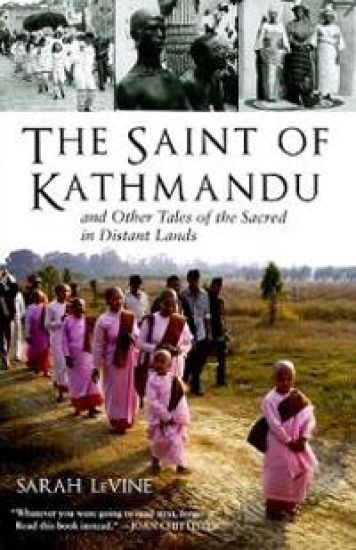
Rebuilding Buddhism describes in evocative detail the experiences and achievements of Nepalis who have adopted Theravada Buddhism. This form of Buddhism was introduced into Nepal from Burma and Sri Lanka in the 1930s, and its adherents have struggled for recognition and acceptance ever since. With its focus on the austere figure of the monk and the biography of the historical Buddha, and more recently with its emphasis on individualizing meditation and on gender equality, Theravada Buddhism contrasts sharply with the highly ritualized Tantric Buddhism traditionally practiced in the Kathmandu Valley.Based on extensive fieldwork, interviews, and historical reconstruction, the book provides a rich portrait of the different ways of being a Nepali Buddhist over the past seventy years. At the same time it explores the impact of the Theravada movement and what its gradual success has meant for Buddhism, for society, and for men and women in Nepal.
Sarah Levine's Each Knuckle with Sugar is a soft yet powerful deep-dive into love and grief told through multiple fascinating perspectives."I love this book. ...] Look, some of its tanginess may leap off the page and startle your fingers. Some of its honey may stick to your knuckles. Let it."-Chen Chen, author of Your Emergency Contact Has Experienced an Emergency
"Arresting. This is the word that comes to mind after finishing Sarah Levine's, Take Me Home. From the first lines this collection grabbed my ear the way a good piece of music does, drawing me into its world of intimate utterance and melody. Throughout, Levine masterfully controls line, rhythm and language, building the music to crescendo before easing the tension in final, satisfying resolution. As I said, these poems are simply arresting." -Justen Ahren, author of A Machine For Remembering, and A Strange Catechism"Sarah Levine's poems beat like a heart. Familiar myths twist with each line. Primal, dreamy, and forlorn, like Andrew Wyeth paintings." -Rachel B. Glaser, author of Paulina & Fran"The poems in Take Me Home are filled with startling images that enrich their observations, creating a world that is uniquely new yet entirely familiar. Sarah Levine is an extremely gifted poet who understands the complexity and passion at the heart of the human condition. These finely tuned poems can only enhance the lives of those who read them." -Kevin Pilkington, author of The Unemployed Man Who Became a Tree
When it comes to parenting, more isn't always better-but it is always more tiring In Japan, a boy sleeps in his parents' bed until age ten, but still shows independence in all other areas of his life. In rural India, toilet training begins one month after infants are born and is accomplished with little fanfare. In Paris, parents limit the amount of agency they give their toddlers. In America, parents grant them ever more choices, independence, and attention. Given our approach to parenting, is it any surprise that American parents are too frequently exhausted? Over the course of nearly fifty years, Robert and Sarah LeVine have conducted a groundbreaking, worldwide study of how families work. They have consistently found that children can be happy and healthy in a wide variety of conditions, not just the effort-intensive, cautious environment so many American parents drive themselves crazy trying to create. While there is always another news article or scientific fad proclaiming the importance of some factor or other, it's easy to miss the bigger picture: that children are smarter, more resilient, and more independent than we give them credit for. Do Parents Matter? is an eye-opening look at the world of human nurture, one with profound lessons for the way we think about our families.
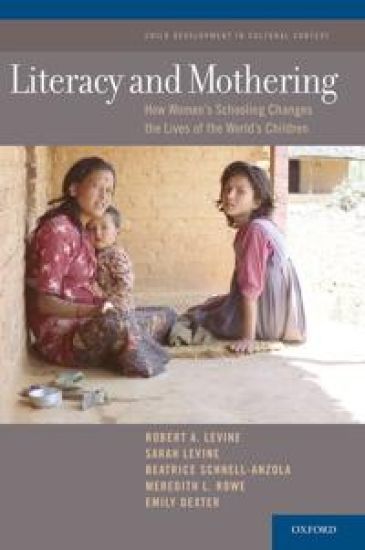
Women's schooling is strongly related to child survival and other outcomes beneficial to children throughout the developing world, but the reasons behind these statistical connections have been unclear. In Literacy and Mothering, the authors show, for the first time, how communicative change plays a key role: Girls acquire academic literacy skills, even in low-quality schools, which enable them, as mothers, to understand public health messages in the mass media and to navigate bureaucratic health services effectively, reducing risks to their children's health. With the acquisition of academic literacy, their health literacy and health navigation skills are enhanced, thereby reducing risks to children and altering interactions between mother and child. Assessments of these maternal skills in four diverse countries - Mexico, Nepal, Venezuela, and Zambia - support this model and are presented in the book. Chapter 1 provides a brief history of mass schooling, including the development of a bureaucratic Western form of schooling. Along with the bureaucratic organization of healthcare services and other institutions, this form of mass schooling spread across the globe, setting new standards for effective communication - standards that are, in effect, taught in school. Chapter 2 reviews the demographic and epidemiological evidence concerning the effects of mothers' education on survival, health, and fertility. In this chapter, the authors propose a model that shows how women's schooling, together with urbanization and changes in income and social status, reduce child mortality and improve health. In Chapter 3, the authors examine the concept of literacy and discuss how its meanings and measurements have been changed by educational research of the last few decades. Chapter 4 introduces the four-country study of maternal literacy. Chapters 5, 6, and 7 present the findings, focusing on academic literacy and its retention (Chapter 5), its impact on maternal health literacy and navigation skills (Chapter 6), and changes in mother-child interaction and child literacy skills (Chapter 7). Chapter 8 presents a new analysis of school experience, explores policy implications, and recommends further research.
Women's schooling is strongly related to child survival and other outcomes beneficial to children throughout the developing world, but the reasons behind these statistical connections have been unclear. In Literacy and Mothering, the authors show, for the first time, how communicative change plays a key role: Girls acquire academic literacy skills, even in low-quality schools, which enable them, as mothers, to understand public health messages in the mass media and to navigate bureaucratic health services effectively, reducing risks to their children's health. With the acquisition of academic literacy, their health literacy and health navigation skills are enhanced, thereby reducing risks to children and altering interactions between mother and child. Assessments of these maternal skills in four diverse countries - Mexico, Nepal, Venezuela, and Zambia - support this model and are presented in the book. Chapter 1 provides a brief history of mass schooling, including the development of a bureaucratic Western form of schooling. Along with the bureaucratic organization of healthcare services and other institutions, this form of mass schooling spread across the globe, setting new standards for effective communication - standards that are, in effect, taught in school. Chapter 2 reviews the demographic and epidemiological evidence concerning the effects of mothers' education on survival, health, and fertility. In this chapter, the authors propose a model that shows how women's schooling, together with urbanization and changes in income and social status, reduce child mortality and improve health. In Chapter 3, the authors examine the concept of literacy and discuss how its meanings and measurements have been changed by educational research of the last few decades. Chapter 4 introduces the four-country study of maternal literacy. Chapters 5, 6, and 7 present the findings, focusing on academic literacy and its retention (Chapter 5), its impact on maternal health literacy and navigation skills (Chapter 6), and changes in mother-child interaction and child literacy skills (Chapter 7). Chapter 8 presents a new analysis of school experience, explores policy implications, and recommends further research.
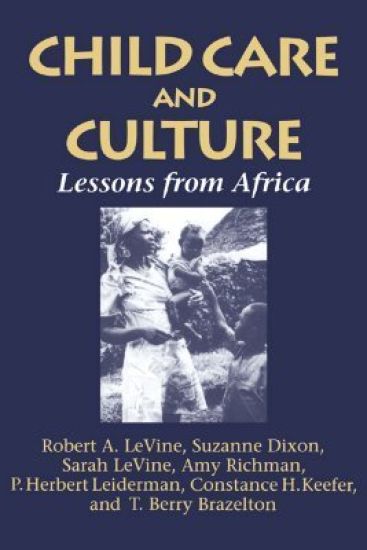
Child Care and Culture examines parenthood, infancy, and early childhood in an African community, revealing patterns unanticipated by current theories of child development and raising provocative questions about ‘normal’ child care in the human species. Comparing the Gusii people of Kenya, whose practices were intensively observed from the combined perspectives of social anthropology, pediatrics, and developmental psychology, with the American white middle class, the authors show how divergent cultural priorities create differing conditions for early childhood development.