Kirjojen hintavertailu. Mukana 12 294 031 kirjaa ja 12 kauppaa.
Kirjailija
Sarah Louise Arnold
Kirjat ja teokset yhdessä paikassa: 22 kirjaa, julkaisuja vuosilta 2007-2025, suosituimpien joukossa The See And Say Series. Vertaile teosten hintoja ja tarkista saatavuus suomalaisista kirjakaupoista.
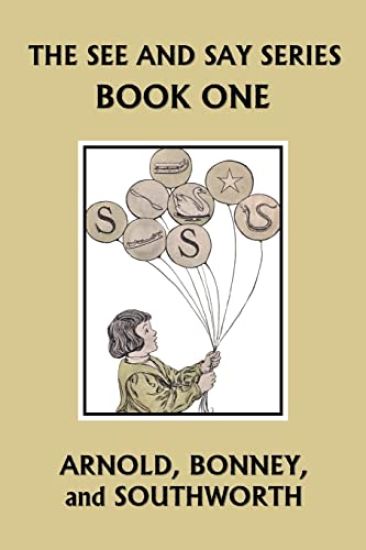
Book One of The See and Say Series is a Picture Book, which, by means of its pictures and stories, presents and teaches the sounds of the letters of the alphabet, with simple lessons in word building. It will be used by children in the first months of their school life, after they have had a number of reading lessons from the blackboard and have begun to understand what reading means. Before coming to school they have played with picture books. They have had a common experience. The mother with the child on her knee, holding the open book, has shown the picture. The finger of the child has pointed to the picture, and he has named the objects attracting his attention. He has mooed when he saw the picture of the cow and barked "bowwow" when he saw the dog. He has perhaps found the names below the picture. He has played with blocks and has sometimes named the crooked s and the round o. It is an easy step, then, to the attractive pages of Book One. Here a picture is presented, to be accompanied by the story which the teacher tells. The child is interested in the picture and in the story. Every story with its picture suggests the sound of the letter which is being taught. The cow calling for her calf says m; the snake hissing says s; the baby asking to be taken up says u, etc. The child, eager and interested in the picture and the story, makes the sound over and over again, clearly and carefully, under the teacher's direction. Then he points to the letter and learns that it stands for the sound. Beneath the story picture is the type picture, representing a word beginning with the given sound. The children recite with the teacher, "The cow says m, and m is the first sound of moon." They find m in different places, making its sound whenever it is found and reciting again with the teacher the key sentence, "The cow says m, and m is the first sound of moon." This lesson accomplishes several results: 1. The child, interested in his lesson, becomes conscious of the new sound m. 2. He attends to the sound, listens to it, repeats it, until it becomes a real thing to him. 3. He associates the sound with the letter m. 4. He associates both the sound and the letter with the type word "moon," which has for its initial sound the sound which the cow makes. This is a clear, definite, and natural order of securing the attention of the child to the new idea, connecting the sound with the letter, and presenting the idea of an initial sound. Every new sound is taught in this order: the story, the story picture, the sound, the letter, the type word with its initial. All lessons which do not present a new sound provide drill upon the sounds already learned. The book presents all the letters of the alphabet, with ck, ch, sh, ow (ou), ng, ee, oo, oy (oi), th. Finally, the fact is impressed that every letter stands for a sound; that letters are combined to form the printed or written word; that sounds are combined to form a spoken word; and that a word may be separated into its sounds or built up from sounds.
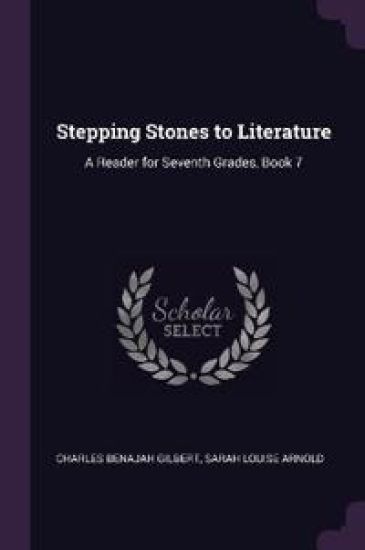
Trieste Publishing has a massive catalogue of classic book titles. Our aim is to provide readers with the highest quality reproductions of fiction and non-fiction literature that has stood the test of time. The many thousands of books in our collection have been sourced from libraries and private collections around the world.The titles that Trieste Publishing has chosen to be part of the collection have been scanned to simulate the original. Our readers see the books the same way that their first readers did decades or a hundred or more years ago. Books from that period are often spoiled by imperfections that did not exist in the original. Imperfections could be in the form of blurred text, photographs, or missing pages. It is highly unlikely that this would occur with one of our books. Our extensive quality control ensures that the readers of Trieste Publishing's books will be delighted with their purchase. Our staff has thoroughly reviewed every page of all the books in the collection, repairing, or if necessary, rejecting titles that are not of the highest quality. This process ensures that the reader of one of Trieste Publishing's titles receives a volume that faithfully reproduces the original, and to the maximum degree possible, gives them the experience of owning the original work.We pride ourselves on not only creating a pathway to an extensive reservoir of books of the finest quality, but also providing value to every one of our readers. Generally, Trieste books are purchased singly - on demand, however they may also be purchased in bulk. Readers interested in bulk purchases are invited to contact us directly to enquire about our tailored bulk rates.
This work has been selected by scholars as being culturally important, and is part of the knowledge base of civilization as we know it. This work was reproduced from the original artifact, and remains as true to the original work as possible. Therefore, you will see the original copyright references, library stamps (as most of these works have been housed in our most important libraries around the world), and other notations in the work.This work is in the public domain in the United States of America, and possibly other nations. Within the United States, you may freely copy and distribute this work, as no entity (individual or corporate) has a copyright on the body of the work.As a reproduction of a historical artifact, this work may contain missing or blurred pages, poor pictures, errant marks, etc. Scholars believe, and we concur, that this work is important enough to be preserved, reproduced, and made generally available to the public. We appreciate your support of the preservation process, and thank you for being an important part of keeping this knowledge alive and relevant.
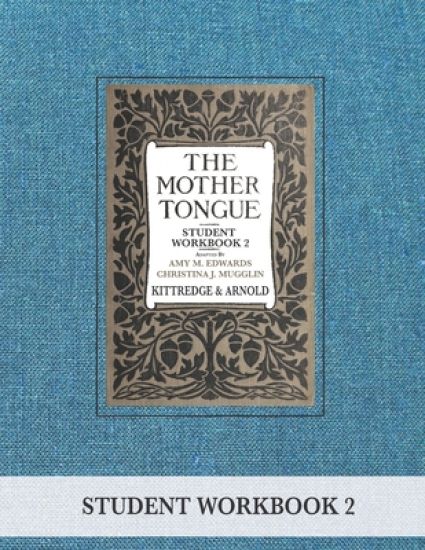
All of the student exercises in The Mother Tongue, Adapted for Modern Students are now available in workbook form. Kittredge and Arnold's grammar book includes student exercises with sentences and language from real literature and writings of the time period. With opportunities to compose sentences, analyze all the parts of sentences, parse words, and practice punctuation and capitalization rules, these exercises are an important part of reinforcing the instruction found in The Mother Tongue. Now busy students are able to work these exercises directly on the page. Workbook 2 covers the exercises from chapters 76-143 of The Mother Tongue, Adapted for Modern Students. As an added bonus, the adapters have added six lessons of punctuation and capitalization practice and six final review lessons.
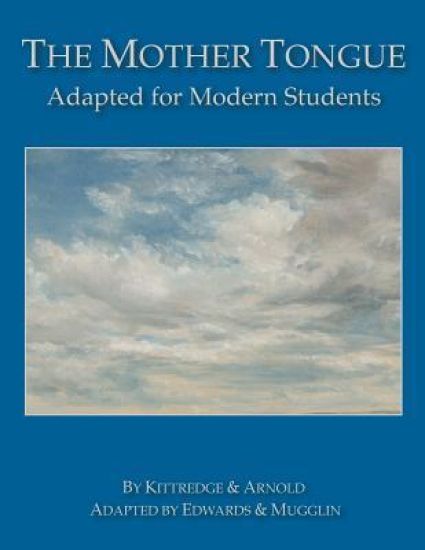
A classic is back. The Mother Tongue Book II was first published over one hundred years ago, but the vintage grammar text from George Kittredge and Sarah Arnold has a faithful following, even today. The original text is all here, but with a fresh look designed to bring this classic to a new generation of students. New features will aid students in their study of intermediate and advanced grammar concepts. Margin boxes emphasize key points. Notes from the editors explain outmoded terms to modern students. With nearly 400 pages packed with instruction and practice, The Mother Tongue, Adapted for Modern Students is suited for classroom, homeschool, or self-study settings. It is also an excellent grammar reference book.
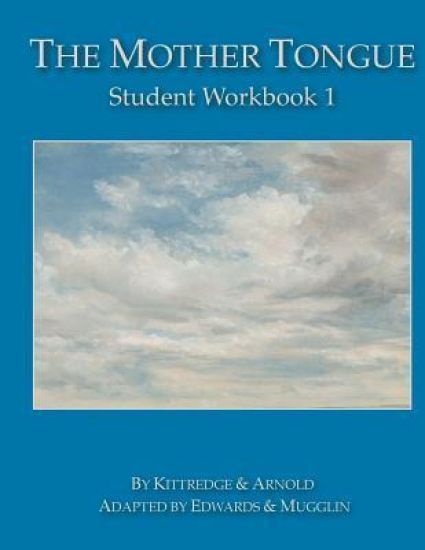
All of the student exercises in The Mother Tongue, Adapted for Modern Students are now available in workbook form. Kittredge and Arnold's grammar book includes student exercises with sentences and language from real literature and writings of the time period. With opportunities to compose sentences, analyze all the parts of sentences, parse words, and practice punctuation and capitalization rules, these exercises are an important part of reinforcing the instruction found in The Mother Tongue. Now busy students are able to work these exercises directly on the page. Workbook 1 covers the exercises in the first 75 chapters of The Mother Tongue, Adapted for Modern Students.