Kirjojen hintavertailu. Mukana 12 595 353 kirjaa ja 12 kauppaa.

Kirjailija

Sarah S. Stroup

Kirjat ja teokset yhdessä paikassa: 3 kirjaa, julkaisuja vuosilta 2012-2017, suosituimpien joukossa The Authority Trap. Vertaile teosten hintoja ja tarkista saatavuus suomalaisista kirjakaupoista.

3 kirjaa

Kirjojen julkaisuhaarukka 2012-2017.

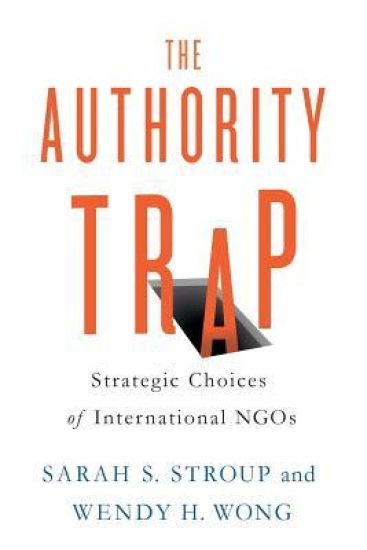
The Authority Trap

The Authority Trap

Sarah S. Stroup; Wendy H. Wong

Cornell University Press
2017
pokkari
Not all international nongovernmental organizations (INGOs) are created equal, Some have emerged as "leading INGOs" that command deference from various powerful audiences and are well-positioned to influence the practices of states, corporations, and other INGOs. Yet Sarah S. Stroup and Wendy H. Wong make a strong case for the tenuous nature of this position: in order to retain their authority, INGOs such as Greenpeace, Oxfam, and Amnesty International refrain from expressing radical opinions that severely damage their long-term reputation. Stroup and Wong contend such INGOs must constantly adjust their behavior to maintain a delicate equilibrium that preserves their status. Activists, scholars, and students seeking to understand how international organizations garner and conserve power—and how this affects their ability to fulfill their stated missions—will find much of value in The Authority Trap. The authors use case studies that illuminate how INGOs are received by three main audiences: NGO peers, state policymakers, and corporations. In the end, the authors argue, the more authority an INGO has, the more constrained is its ability to affect the conduct of world politics.
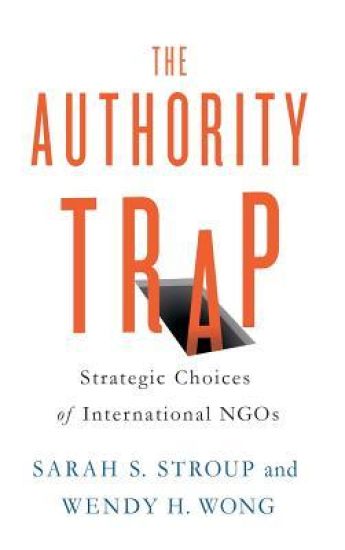
The Authority Trap

The Authority Trap

Sarah S. Stroup; Wendy H. Wong

Cornell University Press
2017
sidottu
Not all international nongovernmental organizations (INGOs) are created equal, Some have emerged as "leading INGOs" that command deference from various powerful audiences and are well-positioned to influence the practices of states, corporations, and other INGOs. Yet Sarah S. Stroup and Wendy H. Wong make a strong case for the tenuous nature of this position: in order to retain their authority, INGOs such as Greenpeace, Oxfam, and Amnesty International refrain from expressing radical opinions that severely damage their long-term reputation. Stroup and Wong contend such INGOs must constantly adjust their behavior to maintain a delicate equilibrium that preserves their status. Activists, scholars, and students seeking to understand how international organizations garner and conserve power—and how this affects their ability to fulfill their stated missions—will find much of value in The Authority Trap. The authors use case studies that illuminate how INGOs are received by three main audiences: NGO peers, state policymakers, and corporations. In the end, the authors argue, the more authority an INGO has, the more constrained is its ability to affect the conduct of world politics.
Borders Among Activists

Borders Among Activists

Sarah S. Stroup

Cornell University Press
2012
sidottu
In Borders among Activists, Sarah S. Stroup challenges the notion that political activism has gone beyond borders and created a global or transnational civil society. Instead, at the most globally active, purportedly cosmopolitan groups in the world—international nongovernmental organizations (INGOs)—organizational practices are deeply tied to national environments, creating great diversity in the way these groups organize themselves, engage in advocacy, and deliver services. Stroup offers detailed profiles of these "varieties of activism" in the United States, Britain, and France. These three countries are the most popular bases for INGOs, but each provides a very different environment for charitable organizations due to differences in legal regulations, political opportunities, resources, and patterns of social networks. Stroup's comparisons of leading American, British, and French INGOs—Care, Oxfam, Médecins sans Frontières, Human Rights Watch, Amnesty International, and Fédération Internationale des ligues des Droits de l'Homme—reveal strong national patterns in INGO practices, including advocacy, fund-raising, and professionalization. These differences are quite pronounced among INGOs in the humanitarian relief sector and are observable, though less marked, among human rights INGOs. Stroup finds that national origin helps account for variation in the "transnational advocacy networks" that have received so much attention in international relations. For practitioners, national origin offers an alternative explanation for the frequently lamented failures of INGOs in the field: INGOs are not inherently dysfunctional, but instead remain disconnected because of their strong roots in very different national environments.