Kirjojen hintavertailu. Mukana 12 390 323 kirjaa ja 12 kauppaa.

Kirjailija

Sarah Schulman

Kirjat ja teokset yhdessä paikassa: 29 kirjaa, julkaisuja vuosilta 1998-2025, suosituimpien joukossa The Mere Future. Vertaile teosten hintoja ja tarkista saatavuus suomalaisista kirjakaupoista.

29 kirjaa

Kirjojen julkaisuhaarukka 1998-2025.

The Gentrification of the Mind

The Gentrification of the Mind

Sarah Schulman

University of California Press
2013
pokkari
In this gripping memoir of the AIDS years (1981-1996), Sarah Schulman recalls how much of the rebellious queer culture, cheap rents, and a vibrant downtown arts movement vanished almost overnight to be replaced by gay conservative spokespeople and mainstream consumerism. Schulman takes us back to her Lower East Side and brings it to life, filling these pages with vivid memories of her avant-garde queer friends and dramatically recreating the early years of the AIDS crisis as experienced by a political insider. Interweaving personal reminiscence with cogent analysis, Schulman details her experience as a witness to the loss of a generation's imagination and the consequences of that loss.
Israel/Palestine and the Queer International

Israel/Palestine and the Queer International

Sarah Schulman

Duke University Press
2012
sidottu
In this chronicle of political awakening and queer solidarity, the activist and novelist Sarah Schulman describes her dawning consciousness of the Palestinian liberation struggle. Invited to Israel to give the keynote address at an LGBT studies conference at Tel Aviv University, Schulman declines, joining other artists and academics honoring the Palestinian call for an academic and cultural boycott of Israel. Anti-occupation activists in the United States, Canada, Israel, and Palestine come together to help organize an alternative solidarity visit for the American activist. Schulman takes us to an anarchist, vegan cafÉ in Tel Aviv, where she meets anti-occupation queer Israelis, and through border checkpoints into the West Bank, where queer Palestinian activists welcome her into their spaces for conversations that will change the course of her life. She describes the dusty roads through the West Bank, where Palestinians are cut off from water and subjected to endless restrictions while Israeli settler neighborhoods have full freedoms and resources. As Schulman learns more, she questions the contradiction between Israel's investment in presenting itself as gay friendly-financially sponsoring gay film festivals and parades-and its denial of the rights of Palestinians. At the same time, she talks with straight Palestinian activists about their position in relation to homosexuality and gay rights in Palestine and internationally. Back in the United States, Schulman draws on her extensive activist experience to organize a speaking tour for some of the Palestinian queer leaders whom she had met and trusted. Dubbed "Al-Tour," it takes the activists to LGBT community centers, conferences, and universities throughout the United States. Its success solidifies her commitment to working to end Israel's occupation of Palestine, and it kindles her larger hope that a new "queer international" will emerge and join other movements demanding human rights across the globe.
Israel/Palestine and the Queer International

Israel/Palestine and the Queer International

Sarah Schulman

Duke University Press
2012
pokkari
In this chronicle of political awakening and queer solidarity, the activist and novelist Sarah Schulman describes her dawning consciousness of the Palestinian liberation struggle. Invited to Israel to give the keynote address at an LGBT studies conference at Tel Aviv University, Schulman declines, joining other artists and academics honoring the Palestinian call for an academic and cultural boycott of Israel. Anti-occupation activists in the United States, Canada, Israel, and Palestine come together to help organize an alternative solidarity visit for the American activist. Schulman takes us to an anarchist, vegan cafÉ in Tel Aviv, where she meets anti-occupation queer Israelis, and through border checkpoints into the West Bank, where queer Palestinian activists welcome her into their spaces for conversations that will change the course of her life. She describes the dusty roads through the West Bank, where Palestinians are cut off from water and subjected to endless restrictions while Israeli settler neighborhoods have full freedoms and resources. As Schulman learns more, she questions the contradiction between Israel's investment in presenting itself as gay friendly-financially sponsoring gay film festivals and parades-and its denial of the rights of Palestinians. At the same time, she talks with straight Palestinian activists about their position in relation to homosexuality and gay rights in Palestine and internationally. Back in the United States, Schulman draws on her extensive activist experience to organize a speaking tour for some of the Palestinian queer leaders whom she had met and trusted. Dubbed "Al-Tour," it takes the activists to LGBT community centers, conferences, and universities throughout the United States. Its success solidifies her commitment to working to end Israel's occupation of Palestine, and it kindles her larger hope that a new "queer international" will emerge and join other movements demanding human rights across the globe.

Ties That Bind

Ties That Bind

Sarah Schulman

The New Press
2012
nidottu
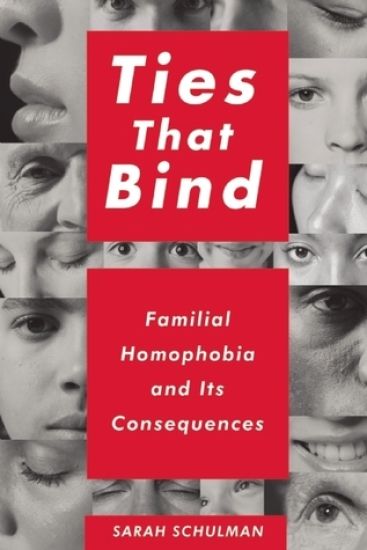
In this groundbreaking book, playwright and social critic Sarah Schulman explores the family, the first place where all people: straight, gay, and bisexual, learn homophobia. It is within the family that homophobia begins to control the lives of perpetrators and recipients. Written in the tradition of Against Our Will: Men, Women, and Rape (Ballantine Books, 2000), which transformed rape from a private problem into an internationally recognised cultural crisis. Ties That Bind uncovers the hidden crime of `familial homophobia' and moves it into the open.
The Mere Future

The Mere Future

Sarah Schulman

Arsenal Pulp Press
2011
nidottu
"Clever word craft, poetic political satire and biting humor on every page."--"Publishers Weekly" The paperback edition of Sarah Schulman's dystopian satire about urban mores set in New York sometime in the future, when the city has morphed into an idealized version of itself: where rent is cheap, homelessness is nonexistent, and the only job left is marketing. But all is not as it seems, culminating in a murder committed by a prominent New Yorker and a resulting trial that transfixes the city. Kessler Award-winner Sarah Schulman's other books include "Rat Bohemia," "The Child," and "Ties that Bind."
Girls, Visions and Everything

Girls, Visions and Everything

Sarah Schulman

Seal Press
1999
pokkari
This reissued novel takes readers on a "wry and playful" (Out!) tour of lesbian sex, politics, and art in New York City. The city's sizzling - especially at the Kitsch-Inn, where the girls are mounting an all-female production of A Streetcar Named Desire.
Stagestruck

Stagestruck

Sarah Schulman

Duke University Press
1998
pokkari
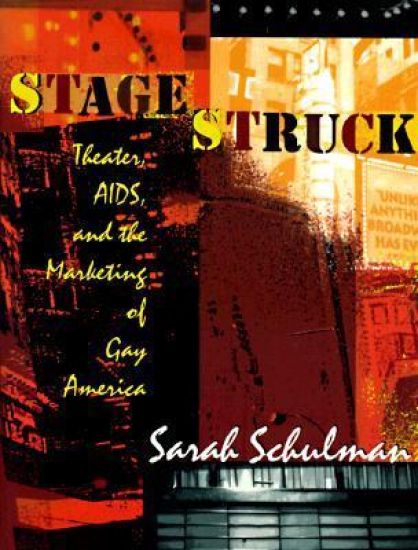
In Stagestruck noted novelist and outspoken critic Sarah Schulman offers an account of her growing awareness of the startling similarities between her novel People in Trouble and the smash Broadway hit Rent. Written with a powerful and personal voice, Schulman’s book is part gossipy narrative, part behind-the-scenes glimpse into the New York theater culture, and part polemic on how mainstream artists co-opt the work of “marginal” artists to give an air of diversity and authenticity to their own work. Rising above the details of her own case, Schulman boldly uses her suspicions of copyright infringement as an opportunity to initiate a larger conversation on how AIDS and gay experience are being represented in American art and commerce.Closely recounting her discovery of the ways in which Rent took materials from her own novel, Schulman takes us on her riveting and infuriating journey through the power structures of New York theater and media, a journey she pursued to seek legal restitution and make her voice heard. Then, to provide a cultural context for the emergence of Rent-which Schulman experienced first-hand as a weekly theater critic for the New York Press at the time of Rent’s premiere-she reveals in rich detail the off- and off-off-Broadway theater scene of the time. She argues that these often neglected works and performances provide more nuanced and accurate depictions of the lives of gay men, Latinos, blacks, lesbians and people with AIDS than popular works seen in full houses on Broadway stages. Schulman brings her discussion full circle with an incisive look at how gay and lesbian culture has become rapidly commodified, not only by mainstream theater productions such as Rent but also by its reduction into a mere demographic made palatable for niche marketing. Ultimately, Schulman argues, American art and culture has made acceptable a representation of “the homosexual” that undermines, if not completely erases, the actual experiences of people who continue to suffer from discrimination or disease. Stagestruck’s message is sure to incite discussion and raise the level of debate about cultural politics in America today.
Stagestruck

Stagestruck

Sarah Schulman

Duke University Press
1998
sidottu
In Stagestruck noted novelist and outspoken critic Sarah Schulman offers an account of her growing awareness of the startling similarities between her novel People in Trouble and the smash Broadway hit Rent. Written with a powerful and personal voice, Schulman’s book is part gossipy narrative, part behind-the-scenes glimpse into the New York theater culture, and part polemic on how mainstream artists co-opt the work of “marginal” artists to give an air of diversity and authenticity to their own work. Rising above the details of her own case, Schulman boldly uses her suspicions of copyright infringement as an opportunity to initiate a larger conversation on how AIDS and gay experience are being represented in American art and commerce.Closely recounting her discovery of the ways in which Rent took materials from her own novel, Schulman takes us on her riveting and infuriating journey through the power structures of New York theater and media, a journey she pursued to seek legal restitution and make her voice heard. Then, to provide a cultural context for the emergence of Rent-which Schulman experienced first-hand as a weekly theater critic for the New York Press at the time of Rent’s premiere-she reveals in rich detail the off- and off-off-Broadway theater scene of the time. She argues that these often neglected works and performances provide more nuanced and accurate depictions of the lives of gay men, Latinos, blacks, lesbians and people with AIDS than popular works seen in full houses on Broadway stages. Schulman brings her discussion full circle with an incisive look at how gay and lesbian culture has become rapidly commodified, not only by mainstream theater productions such as Rent but also by its reduction into a mere demographic made palatable for niche marketing. Ultimately, Schulman argues, American art and culture has made acceptable a representation of “the homosexual” that undermines, if not completely erases, the actual experiences of people who continue to suffer from discrimination or disease. Stagestruck’s message is sure to incite discussion and raise the level of debate about cultural politics in America today.