Kirjojen hintavertailu. Mukana 12 595 353 kirjaa ja 12 kauppaa.

Kirjailija

Sarah Sobieraj

Kirjat ja teokset yhdessä paikassa: 5 kirjaa, julkaisuja vuosilta 2011-2020, suosituimpien joukossa Credible Threat. Vertaile teosten hintoja ja tarkista saatavuus suomalaisista kirjakaupoista.

5 kirjaa

Kirjojen julkaisuhaarukka 2011-2020.

Credible Threat

Credible Threat

Sarah Sobieraj

Oxford University Press Inc
2020
sidottu
Greta Thunberg. Alexandria Ocasio-Cortez. Anita Sarkeesian. Emma Gonzalez. When women are vocal about political and social issues, too-often they are flogged with attacks via social networking sites, comment sections, discussion boards, email, and direct message. Rather than targeting their ideas, the abuse targets their identities, pummeling them with rape threats, attacks on their appearance and presumed sexual behavior, and a cacophony of misogynistic, racist, xenophobic, and homophobic stereotypes and epithets. Like street harassment and sexual harassment in the workplace, digital harassment rejects women's implicit claims to be taken seriously as interlocutors, colleagues, and peers. Sarah Sobieraj shows that this online abuse is more than interpersonal bullying--it is a visceral response to the threat of equality in digital conversations and arenas that men would prefer to control. Thus identity-based attacks are particularly severe for those women who are seen as most out of line, such as those from racial, ethnic, and religious minority groups or who work in domains dominated by men, such as gaming, technology, politics, and sports. Feminists and women who don't conform to traditional gender norms are also frequently targeted. Drawing on interviews with over fifty women who have been on the receiving end of identity-based abuse online, Credible Threat explains why all of us should be concerned about the hostile climate women navigate online. This toxicity comes with economic, professional, and psychological costs for those targeted, but it also exacts societal-level costs that are rarely recognized: it erodes our civil liberties, diminishes our public discourse, thins the knowledge available to inform policy and electoral decision-making, and teaches all women that activism and public service are unappealing, high-risk endeavors to be avoided. Sobieraj traces these underexplored effects, showing that when identity-based attacks succeed in constraining women's use of digital publics, there are democratic consequences that cannot be ignored.

Credible Threat

Credible Threat

Sarah Sobieraj

Oxford University Press Inc
2020
nidottu
Greta Thunberg. Alexandria Ocasio-Cortez. Anita Sarkeesian. Emma Gonzalez. When women are vocal about political and social issues, too-often they are flogged with attacks via social networking sites, comment sections, discussion boards, email, and direct message. Rather than targeting their ideas, the abuse targets their identities, pummeling them with rape threats, attacks on their appearance and presumed sexual behavior, and a cacophony of misogynistic, racist, xenophobic, and homophobic stereotypes and epithets. Like street harassment and sexual harassment in the workplace, digital harassment rejects women's implicit claims to be taken seriously as interlocutors, colleagues, and peers. Sarah Sobieraj shows that this online abuse is more than interpersonal bullying--it is a visceral response to the threat of equality in digital conversations and arenas that men would prefer to control. Thus identity-based attacks are particularly severe for those women who are seen as most out of line, such as those from racial, ethnic, and religious minority groups or who work in domains dominated by men, such as gaming, technology, politics, and sports. Feminists and women who don't conform to traditional gender norms are also frequently targeted. Drawing on interviews with over fifty women who have been on the receiving end of identity-based abuse online, Credible Threat explains why all of us should be concerned about the hostile climate women navigate online. This toxicity comes with economic, professional, and psychological costs for those targeted, but it also exacts societal-level costs that are rarely recognized: it erodes our civil liberties, diminishes our public discourse, thins the knowledge available to inform policy and electoral decision-making, and teaches all women that activism and public service are unappealing, high-risk endeavors to be avoided. Sobieraj traces these underexplored effects, showing that when identity-based attacks succeed in constraining women's use of digital publics, there are democratic consequences that cannot be ignored.
The Outrage Industry

The Outrage Industry

Jeffrey M. Berry; Sarah Sobieraj

Oxford University Press Inc
2016
nidottu
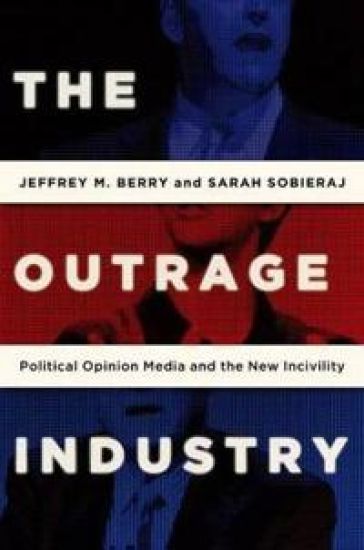
In early 2012, conservative radio host Rush Limbaugh claimed that Sandra Fluke, a Georgetown University law student who advocated for insurance coverage of contraceptives, "wants to be paid to have sex." Over the next few days, Limbaugh attacked Fluke personally, often in crude terms, while a powerful backlash grew, led by organizations such as the National Organization for Women. But perhaps what was most notable about the incident was that it wasn't unusual. From Limbaugh's venomous attacks on Fluke to liberal radio host Mike Malloy's suggestion that Bill O'Reilly "drink a vat of poison... and choke to death," over-the-top discourse in today's political opinion media is pervasive. Anyone who observes the skyrocketing number of incendiary political opinion shows on television and radio might conclude that political vitriol on the airwaves is fueled by the increasingly partisan American political system. But in The Outrage Industry Jeffrey M. Berry and Sarah Sobieraj show how the proliferation of outrage-the provocative, hyperbolic style of commentary delivered by hosts like Ed Schultz, Bill O'Reilly, and Sean Hannity- says more about regulatory, technological, and cultural changes, than it does about our political inclinations. Berry and Sobieraj tackle the mechanics of outrage rhetoric, exploring its various forms such as mockery, emotional display, fear mongering, audience flattery, and conspiracy theories. They then investigate the impact of outrage rhetoric-which stigmatizes cooperation and brands collaboration and compromise as weak-on a contemporary political landscape that features frequent straight-party voting in Congress. Outrage tactics have also facilitated the growth of the Tea Party, a movement which appeals to older, white conservatives and has dragged the GOP farther away from the demographically significant moderates whose favor it should be courting. Finally, The Outrage Industry examines how these shows sour our own political lives, exacerbating anxieties about political talk and collaboration in our own communities. Drawing from a rich base of evidence, this book forces all of us to consider the negative consequences that flow from our increasingly hyper-partisan political media.
Soundbitten

Soundbitten

Sarah Sobieraj

New York University Press
2011
sidottu
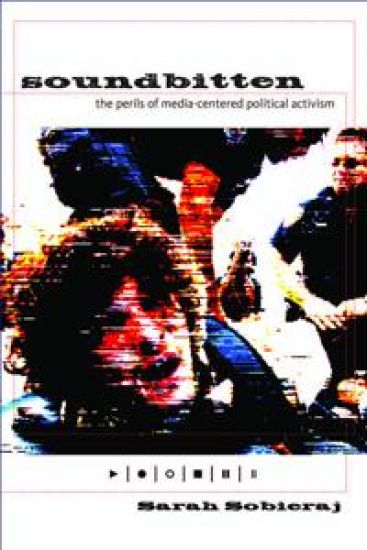
There is an elaborate and often invisible carnival that emerges alongside presidential campaigns as innumerable activist groups attempt to press their issues into mainstream political discourse. Sarah Sobieraj's fascinating ethnographic portrait of fifty diverse organizations over the course of two campaign cycles reveals that while most activist groups equate political success with media success and channel their energies accordingly, their efforts fail to generate news coverage and come with deleterious consequences. Sobieraj shows that activists' impact on public political debates is minimal, and carefully unravels the ways in which their all-consuming media work and unrelenting public relations approach undermine their ability to communicate with pedestrians, comes at the expense of other political activities, and perhaps most perniciously, damages the groups themselves. Weaving together fieldwork, news analysis, and in-depth interviews with activists and journalists, Soundbitten illuminates the relationship between news and activist organizations. This captivating portrait of activism in the United States lays bare the challenges faced by outsiders struggling to be heard in a mass media dominated public sphere that proves exclusionary and shows that media-centrism is not only ineffective, but also damaging to group life. Soundbitten reveals why media-centered activism so often fails, what activist groups lose in the process, and why we should all be concerned.
Soundbitten

Soundbitten

Sarah Sobieraj

New York University Press
2011
pokkari
There is an elaborate and often invisible carnival that emerges alongside presidential campaigns as innumerable activist groups attempt to press their issues into mainstream political discourse. Sarah Sobieraj's fascinating ethnographic portrait of fifty diverse organizations over the course of two campaign cycles reveals that while most activist groups equate political success with media success and channel their energies accordingly, their efforts fail to generate news coverage and come with deleterious consequences. Sobieraj shows that activists' impact on public political debates is minimal, and carefully unravels the ways in which their all-consuming media work and unrelenting public relations approach undermine their ability to communicate with pedestrians, comes at the expense of other political activities, and perhaps most perniciously, damages the groups themselves. Weaving together fieldwork, news analysis, and in-depth interviews with activists and journalists, Soundbitten illuminates the relationship between news and activist organizations. This captivating portrait of activism in the United States lays bare the challenges faced by outsiders struggling to be heard in a mass media dominated public sphere that proves exclusionary and shows that media-centrism is not only ineffective, but also damaging to group life. Soundbitten reveals why media-centered activism so often fails, what activist groups lose in the process, and why we should all be concerned.