Kirjojen hintavertailu. Mukana 12 390 323 kirjaa ja 12 kauppaa.

Kirjailija

Saskia Sassen

Kirjat ja teokset yhdessä paikassa: 27 kirjaa, julkaisuja vuosilta 1988-2025, suosituimpien joukossa A Sociology of Globalization. Vertaile teosten hintoja ja tarkista saatavuus suomalaisista kirjakaupoista.

27 kirjaa

Kirjojen julkaisuhaarukka 1988-2025.

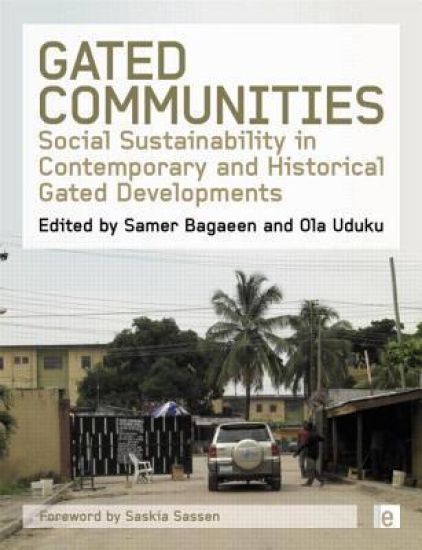
Gated Communities

Gated Communities

Saskia Sassen

Earthscan Ltd
2010
sidottu
Gated Communities provides a historic, socio-political and contemporary cultural perspective of gated communities. In doing so it offers a different lens through which to view the historical vernacular background of this now global phenomenon. The book presents a collection of new writing on the issue by an international and interdisciplinary group of contributors. The authors review current thinking on gated communities and consider the sustainability issues that these contemporary 'lifestyle' communities raise. The authors argue that there are links that can be drawn between the historic gated homesteads and cities, found in much of the world, and today's Western-style secure complexes. Global examples of gated communities, and their historical context, are presented throughout the book. The authors also comment on how sustainability issues have impacted on these communities. The book concludes by considering how the historic measures up with the contemporary in terms of sustainability function, and aesthetic.
Fronesis 18. Staden

Fronesis 18. Staden

David Harvey; Mike Davis; Saskia Sassen

Fronesis
2009
lehtivihko, moniste
Mer än halva mänskligheten bor nu i städer. Och det är inte i nord som den största tillväxten av stadsbefolkningar sker, utan i syd. Föreställningen om syd som ruralt och jordbruksdominerat, i motsats nord som antas vara urbant och industriellt, förefaller därmed inte längre vara giltig. I Fronesis nr 18 granskas stadens roll i en globaliserad kapitalism, och dess roll för flödena av människor och ekonomiska värden. Det handlar om framväxten av en nyliberal stadspolitik, byggd på nya klass- och könsorättvisor, nya gränser och kontroll. Innehåll i Fronesis nr 18 (223 sidor) Magnus Hörnqvist, Anders Lund Hansen, Hanna Pettersson, Olav Unsgaard och Magnus Wennerhag: En öppen stad, en ej befästad Mike Davis: Slummens planet: Urban tillbakagång och det informella proletariatet Christan Abrahamsson och Frida Andersson: Harvey, kapitalismen och staden David Harvey: Pengar, tid, rum och staden Anders Lund Hansen: Rumskrig, nyliberalism och skalpolitik Neil Smith: Ny globalism, ny urbanism:ojämn utveckling i det tjugoförsta århundradet Lars Mikael Raattamaa: Den offentliga klassen Dalia Mukhtar-Landgren: Den delade staden – Välfärd för alla i kunskapsstaden Malmö Pär Thörn: Den kommunala kroppen Mats Franzén: Mellan stigma och karisma. Stureplan, Sergels torg och platsens politik Saskia Sassen: Strategiska representationer av kön: Globala städer och överlevnadskretsar Catharina Thörn: Tecken på vad? Graffiti, nolltolerans och ytans politik Jan Wehrheim: Den sönderfallande säkerhetsstaden Massimo De Angelis: Globalt kapital, livsuppehälle och frågan om alternativ Asef Bayat: Globaliseringen och de informellas politik i Syd
Territory, Authority, Rights

Territory, Authority, Rights

Saskia Sassen

Princeton University Press
2008
pokkari
Where does the nation-state end and globalization begin? In Territory, Authority, Rights, one of the world's leading authorities on globalization shows how the national state made today's global era possible. Saskia Sassen argues that even while globalization is best understood as "denationalization," it continues to be shaped, channeled, and enabled by institutions and networks originally developed with nations in mind, such as the rule of law and respect for private authority. This process of state making produced some of the capabilities enabling the global era. The difference is that these capabilities have become part of new organizing logics: actors other than nation-states deploy them for new purposes. Sassen builds her case by examining how three components of any society in any age--territory, authority, and rights--have changed in themselves and in their interrelationships across three major historical "assemblages": the medieval, the national, and the global. The book consists of three parts. The first, "Assembling the National," traces the emergence of territoriality in the Middle Ages and considers monarchical divinity as a precursor to sovereign secular authority. The second part, "Disassembling the National," analyzes economic, legal, technological, and political conditions and projects that are shaping new organizing logics. The third part, "Assemblages of a Global Digital Age," examines particular intersections of the new digital technologies with territory, authority, and rights. Sweeping in scope, rich in detail, and highly readable, Territory, Authority, Rights is a definitive new statement on globalization that will resonate throughout the social sciences.
The Global City

The Global City

Saskia Sassen

Princeton University Press
2001
pokkari
This classic work chronicles how New York, London, and Tokyo became command centers for the global economy and in the process underwent a series of massive and parallel changes. What distinguishes Sassen's theoretical framework is the emphasis on the formation of cross-border dynamics through which these cities and the growing number of other global cities begin to form strategic transnational networks. All the core data in this new edition have been updated, while the preface and epilogue discuss the relevant trends in globalization since the book originally came out in 1991.
The Mobility of Labor and Capital

The Mobility of Labor and Capital

Saskia Sassen

Cambridge University Press
1990
pokkari
In this empirical study, Saskia Sassen offers a new understanding of the processes of international migration. Focusing on immigration into the US from 1960 to 1985 and the part played by American economic activities abroad, as well as foreign investment in the US, she examines the various ways in which the internationalization of production contributes to the formation and direction of labor migration.