

Kirjailija
Satish Chandra
Kirjat ja teokset yhdessä paikassa: 10 kirjaa, julkaisuja vuosilta 1994-2025, suosituimpien joukossa India Pakistan Relations. Vertaile teosten hintoja ja tarkista saatavuus suomalaisista kirjakaupoista.
10 kirjaa
Kirjojen julkaisuhaarukka 1994-2025.


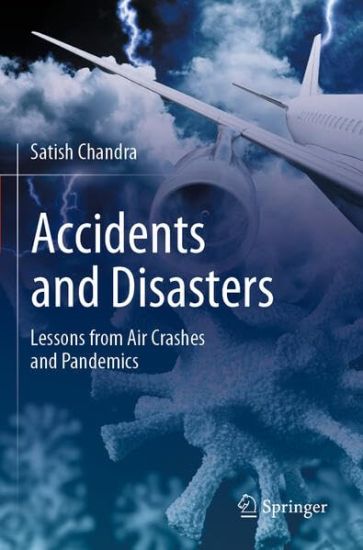
This book deals with the contemporary subject of perception of risk and its influence on accidents and disasters. The contents examine the conventional viewpoints on human errors, incubation of errors, complexity and organisational deviance as a cause for accidents. Work of Mary Douglas with regard to risk, Charles Perrow's work on the normal accident theory and Diane Vaughan's theory on normalisation of deviance are examined from a fresh perspective in this book. It also discusses prominent accidents in aviation, space, nuclear energy, automotive and healthcare, using the pandemic and Boeing 737 Max as a backdrop to study accidents and disasters. It further explores the background and similarities to these events and addresses the core issues such as the state of regulation, the worldview of the sociologists, and proposes that mental models of complex systems, avarice and risk for gain as other possibilities for accidents. Using the concept of nudge in behavioural economics and the Elinor Ostrom’s viewpoint on regulating for common good, it suggests a way forward through the High Reliability Organisation Theory (HRO) leading to enhanced risk perception. The book will be of interest to those who would like to understand the need to incorporate risk perception into regulation, engineers and scientists, professionals and policy makers working in the areas of disaster and risk management, technology areas like aviation, nuclear plants, space and healthcare, students of the sociology of risk and of course the general reader.
This book deals with the contemporary subject of perception of risk and its influence on accidents and disasters. The contents examine the conventional viewpoints on human errors, incubation of errors, complexity and organisational deviance as a cause for accidents. Work of Mary Douglas with regard to risk, Charles Perrow's work on the normal accident theory and Diane Vaughan's theory on normalisation of deviance are examined from a fresh perspective in this book. It also discusses prominent accidents in aviation, space, nuclear energy, automotive and healthcare, using the pandemic and Boeing 737 Max as a backdrop to study accidents and disasters. It further explores the background and similarities to these events and addresses the core issues such as the state of regulation, the worldview of the sociologists, and proposes that mental models of complex systems, avarice and risk for gain as other possibilities for accidents. Using the concept of nudge in behavioural economics and the Elinor Ostrom’s viewpoint on regulating for common good, it suggests a way forward through the High Reliability Organisation Theory (HRO) leading to enhanced risk perception. The book will be of interest to those who would like to understand the need to incorporate risk perception into regulation, engineers and scientists, professionals and policy makers working in the areas of disaster and risk management, technology areas like aviation, nuclear plants, space and healthcare, students of the sociology of risk and of course the general reader.


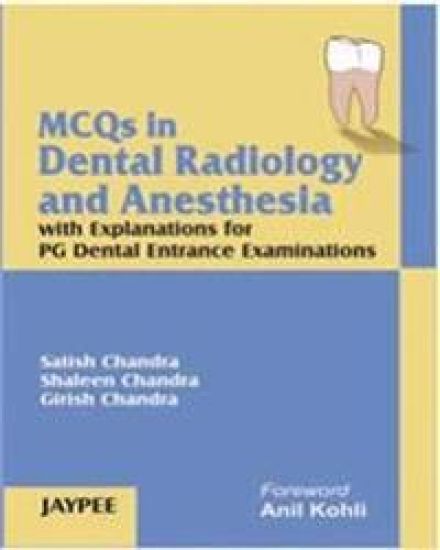
MCQs in Dental Radiology and Anesthesia with Explanations for PG Dental Entrance Examinations
Satish Chandra; Shaleen Chandra; Girish Chandra
Jaypee Brothers Medical Publishers
2006
nidottu

Waste Materials Used in Concrete Manufacturing
Satish Chandra
William Andrew Publishing
1996
sidottu
Approx.672 pages

This broad-based, introductory reference provides excellent discussions regarding the hydration of Portland cement, durability problems in concrete, mechanisms of concrete deterioration, and interaction of polymers in concrete. It also covers properties of concrete with added polymers and practical applications of polymers in concrete. The historic background of polymers in building materials is examined, and a comprehensive comparison of natural vs. synthetic polymers is provided and conveniently summarized in a tabular format.